

United Nations Sustainable Development Goals

Annual SDG Impact Report
Our inaugural Annual SDG Impact Report brings together evidence of how Keele supports the United Nations Sustainable Development Goals. The report highlights examples from across the University, showcasing the impact of our teaching, research, campus operations, student experience and civic partnerships, and the positive environmental, social and economic value they create locally, nationally and globally.
SDG Governance at Keele
Our SDG Impact Committee provides strategic oversight of the University's contribution to the Sustainable Development Goals, helping to coordinate activity, share best practice and monitor progress across the institution. Supported by a series of thematic sub-groups, the Committee brings together staff from across academic and professional services areas and student members, to identify opportunities, strengthen collaboration and ensure that evidence of SDG impact is embedded across our teaching, research, operations and civic engagement activities.
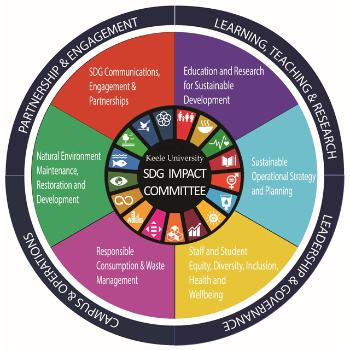
Further information on our approach, priorities and progress can be found in our Environmental and Social Sustainability Framework.
Keele's SDG Impact at a glance
- Keele provides financial assistance to students who need it the most.
- Hardship fund
- Food voucher scheme
- Emergency loans
- Access & success fund
- Rent guarantor scheme
- Bursaries and scholarships
- Start up of financially and socially sustainable businesses
- Higher Horizons – delivers free and impartial higher education outreach to schools and colleges across Staffordshire, Shropshire and Cheshire
- Community financial support
- Local start-up assistance: Provide assistance in the local community supporting the start-up of sustainable businesses through relevant education or resources (e.g. mentorship programmes, training workshops, access to university facilities).
- Policy addressing poverty
- Our academics participate in policy making at local, regional, national and/or global level to implement programmes and policies to end poverty in all its dimensions.
Read more about Goal 1 on the UN website.
- The University has been certified by the Soil Association Food for Life Served Here Standards
- Events and Conferencing certified ECOsmart Platinum by Greengage and 3 Star Gold 'Food Made Good Standard' from the Sustainable Restaurants Association
- The University provide a food growing space for staff, students and local residents. Find out more about the allotments here
- The University has a Green Delegate Packages with the ability to calculate the carbon used to run events, offering carbon neutral options and partnering with clients to meet their sustainable goals
- Segregating over 60 tonnes of food waste annually for recycling via an anaerobic digester to generate green electricity and all our waste cooking oil into biofuel
- Less than 1% of all waste goes to landfill at present with a university policy to recycle, reuse and repurpose
- Student food insecurity (Finance team student fund)
- Food choices on campus including vegetarian and vegan foods
- Healthy and affordable food choices for all on campus
- Research on food security
Read more about Goal 2 on the UN website.
- Students graduating in health professions – over 2,500 students
- Keele have current collaborations with local, national, and global health institutions to improve health and well-being outcomes. Keele Deal Health | Healthcare Business Network
- Students are encouraged to take part in health outreach programmes as part of their curriculum and through volunteering opportunities
- Institute for Global Health
- Shared sports facilities with local community
- Provide students access to sexual and reproductive health-care services including information and education services
- Provide students and staff with access to mental health support
- Partial smoke-free campus - Smoking points on campus
Read more about Goal 3 on the UN website.
- Over 2600 of graduates have a teaching qualification
- Over 1600 students are first-generation students starting a degree
- We host events on our campus that are often open to the general public to encourage lifelong learning – including public lectures and community educational events
- Lifelong learning access policy
- Free access to educational resources
- Vocational training events
- Keele Institute for Innovation and Teaching Excellence
- Carbon Literacy training is open to all students and staff at Keele
- Outreach and recruitment activities in local schools and communities
- Keele In Town
- School, college and community visits to campus
- Higher Horizons
- Climate Ambassadors West Midlands Hub
- Global Challenge Pathways - Global Challenge Pathways are Keele’s ground-breaking brand of elective study, which eligible students can take alongside their core degree programme to complement and enhance their studies at Keele. All of the pathways contain and relate to sustainability.
Read more about Goal 4 on the UN website.

- We successfully received the Athena SWAN Bronze Award
- Staff can apply to take part in Advance HE’s Aurora leadership programme for women in HE
- EDI strategy
- Dignity and Respect policy and procedure
- Maternity and paternity policies
- Childcare facilities
- Non-discrimination policies for transgender
- Non-discrimination against women
Read more about Goal 5 on the UN website.
- Refill stations across campus – Keele has numerous water fountains across campus with help from the ‘Refill campaign’. Fill up your water bottle with fresh drinking water and help reduce plastic waste.
- Toilet twinning - Keele has twinned the toilets in the Chancellor’s building to support communities without access to toilet facilities by building basic toilets and giving access to clean water. The toilet twinning was funded through the Drink, Rinse, Repeat Coffee Cup scheme levy, which also works to reduce single use packaging consumption on campus, and reduce the impact of single-use plastics on our natural environment. he Keele Chapel also has a twinned toilet.
- Keele also has a Water Efficiency Strategy.
Read more about Goal 6 on the UN website.
- Our Climate Action Principles outline our commitment to using and producing clean energy.
- Carbon Accounting, Management & Reporting Code of Practice and Annual Carbon Reporting
- Energy-efficient renovation and building: we have a policy in place for ensuring all renovations or new builds are following energy efficiency standards
- Smart Energy Network Demonstrator
- Divestment policy - ‘ethical investments’
Read more about Goal 7 on the UN website.
- We are proud to pay the National Living Wage to all staff employed by the university
- The Keele Gateway offers a wide range of opportunities for businesses, particularly SMEs in Newcastle-under-Lyme and the surrounding areas, to access professional and academic support to grow, develop and innovate. Our major economic contributions are highlighted in a recent report as an indicator of Keele’s importance to delivering on major Government priorities around Levelling Up, decarbonisation, and business innovation
- Entrepreneurship support schemes for students/apprenticeships and placements
- Keele University contributes around half a billion pounds to the regional economy each year, with nearly three-quarters of this in the Stoke-on-Trent and Staffordshire area. Read more about our economic impact
- Students can integrate Enterprise & Future of Work into their degree through Global Challenge Pathway modules
- Keele Business School is proud to have been selected for the 2024-2025 cohort of PRME Champions - a global collective of business and management schools who are dedicated to raising the bar for sustainable business education.
Read more about Goal 8 on the UN website.
- Placements for students
- CPD Skills Bootcamps
- The Sustainability Fund has been established to support sustainability projects in Schools and Directorates, and to promote innovation in sustainability throughout the Keele community
- Keele University Science and Innovation Park
- Sustainable Careers and Green Jobs
- Keele Business School is proud to have been selected for the 2024-2025 cohort of PRME Champions - a global collective of business and management schools who are dedicated to raising the bar for sustainable business education.
- Student and Graduate Enterprise - funding to support enterprising students and graduates.
Read more about Goal 9 on the UN website.
- As part of the University's commitment to making Keele a place where learning, living and working is a positive experience for all, we have networks and support available via Human Resources and Student Services policies and practice.
- We work with AccessAble to provide all students, staff and visitors to campus, with detailed accessibility guides to all campus buildings and facilities, using facts, figures and photos. Access our guides here.
- Disability support and inclusion for students
- Keele University is a Disability Confident employer. We are committed to supporting job applicants and staff with a disability or long-term health condition.
- Students can integrate Social Justice into their degree through Global Challenge Pathway modules
- The Race Equality Charter is there to help us improve the representation, progression and success of black and minority ethnic (BAME) students and staff within higher education
- The University takes part in the Stonewall Workplace Equality Index. Keele received a Gold award in 2024 and, for the first time, entered Stonewall's top 100 employer list.
Read more about Goal 10 on the UN website.
- Keele has public access to most buildings, libraries, art exhibitions, green spaces, and more
- ArtsKeele: Keele has a vibrant arts programme, comprising art, music, poetry, performances and other cultural events. We have our own gallery located in the Chancellor’s Building, and host a wide range of events throughout the year, including a full and varied music programme, public lectures and live poetry readings
- Keele records oral histories and preserves cultural heritage
- Sustainable commuting - walking, cycling, bus
- Remote working for staff
- Affordable housing for employees
- Affordable housing for students
- Pedestrian priority on campus
- Local authority collaboration regarding planning and development
- KeeleSU Volunteering: students support the community through doing voluntary action in the local area. Annually students give over 25,000 hours collectively to support local causes and help the local community
- Sustainability Halls Representatives run their own projects to engage with students living in campus accommodation.
- Earth Stories Film Festival: led by Media students, the project attracts films from across the world and shares them to local and international audiences
- Stoke Creates CASCADE: creating Cultural Action Zones to animate the city of Stoke’s high streets.
- Keele in Town: a hub for learning and an in town connection to Keele with space for training and advice to the local community
- Keele students help Port Vale FC boost their sustainability performance
Read more about Goal 11 on the UN website.
- Ethical sourcing policy for food and supplies: Keele has a robust NETpositive procurement scheme, ensuring all our suppliers have the highest ethos and culture for sustainability and carbon reduction to be one of our preferred suppliers
- Drink, rinse, repeat: a campus-wide campaign to reduce single use disposable cups from our Food and Drink outlets
- The Great Donate: led by students and KeeleSU, the Great Donate volunteers take unwanted but usable items (e.g. plates, cutlery, pans, etc) and makes sure these are available for the next cohort of students
- We strive to purchase local produce
- There are recycling bins around campus so that staff and students can responsibly dispose of their waste
- Ethical and responsible procurement
Read more about Goal 12 on the UN website.
- Named Global Sustainability Institution of the Year (International Green Gown Awards, 2021) and Clean Energy Scheme Award winners for our leading Smart Energy Network Demonstrator (Green Energy Awards, 2023)
- Staffordshire & Stoke-on-Trent Climate Commission: In November 2021, Keele convened a panel of sustainability leaders from across Staffordshire to discuss the COP26 climate summit and its implications for the county. The panel, which included representatives from local government, businesses, and academia, discussed the need for decisive action to address climate change.
- We run a suite of dedicated programmes for students wanting to learn more about sustainability at both undergraduate and postgraduate level.
- Carbon Literacy Training: relevant climate change learning that leads to positivity and action towards reducing carbon emissions.
- Staff have access to internal Sustainability training on the Learning Pool.
Read more about Goal 13 on the UN website.
- Drink Rinse Repeat and Eat Rinse Repeat campaign
- Sustainability in Food code of practice
- We only serve sustainably caught fish from the UK, where we seek suppliers that are certified by the Marine Stewardship Council (MSC) Chain of Custody Standard.
- A team at Keele University aim to take inspiration from seagrass to develop new approaches that filter salts from saline water. This would allow seawater to be used to water crops, which globally require 70% of yearly fresh water consumption.
- Restorying Riverscapes research partnered with Fashion Revolution explores the history of the textile industry on the riverscape.
- Keele Lakes: Keele has 8 lakes which are publicly open to walk around. The first 3 lakes are surrounded by an all-weather trail suitable for all mobilities, the longer trail around all 8 lakes has rough terrain and can be muddy in wet weather.
Read more about Goal 14 on the UN website.
- Smart Energy Demonstrator Network and Low Carbon Energy Generation Park: Keele is researching the impacts on biodiversity from solar energy developments and wind turbines
- Taking part in the Staffordshire Wildlife Trust’s City Nature Challenge and the RSPB’s Big Garden Birdwatch
- Hedgehog Friendly Campus: a student-led campaign supporting biodiversity on campus to thrive
- Keele Arboretum: Keele is situated in 240 hectares (640 acres) of landscaped grounds
- National Collection of Flowering Cherries: The University has been planted with flowering cherries since the first ornamental grounds were laid out in the late 1940s. Since then various flowering cherries have been added around the campus to the extent that springtime on the campus has become synonymous with cherry blossom
- Nature Positive Universities pledge: Keele is committed to doing action for nature
- Growing Zones (No Mow) - the Keele Grounds team leave space across the University for nature to grow
- Supporting the Nature in your Neighbourhood project
Read more about Goal 15 on the UN website.

- Students can integrate Social Justice into their degree through Global Challenge Pathway modules
- The Community Legal Outreach Collaboration Keele (CLOCK) is a unique and innovative project bringing together universities, law firms, barristers chambers, mediation, charitable and court services to educate, assist, monitor and promote access to justice for communities facing barriers to access to justice
- Legal Advice Clinics
- Our academics and researchers provide expert advice to local and regional government
- KeeleSU and Keele Postgraduate Association
- Keele University has principles on corruption and bribery.
- Freedom of expression code of practice
- Keele Deals: Economy, Health, Recovery, Culture
Read more about Goal 16 on the UN website.
- Staffordshire & Stoke-on-Trent Climate Commission: In November 2021, Keele convened a panel of sustainability leaders from across Staffordshire to discuss the COP26 climate summit and its implications for the county.
- The Keele Research Institutes
- Research at Keele Month
- Student volunteering programmes
- At Keele we run a suite of dedicated programmes for students wanting to learn more about sustainability at both undergraduate and postgraduate level
- Internal Staff Sustainability Network and Sustainability Benchmark for best practice sharing
- KeeleSU and Keele Postgraduate Association
- Keele Green Festival events are open to students, staff and the wider community
- SMEs, community groups, and not-for-profit organisations in Newcastle-under-Lyme are able to benefit from Keele University's student and graduate talent through funded projects with FLOURISH.
Read more about Goal 17 on the UN website.
Research with Global Impact
Planetary Health
Planetary Health is founded on the understanding that human health and wellbeing cannot be separated from the health of the planet. Building on the principles of One Health, it recognises the connections between people, animals, ecosystems and the wider environmental and social conditions that shape our lives. By addressing challenges such as climate change, biodiversity loss, pollution and inequality together, Planetary Health seeks to create sustainable futures in which both people and nature can thrive.
The United Nations Sustainable Development Goals (SDGs) provide a shared framework for addressing these interconnected challenges. At Keele, we apply a Planetary Health approach, informed by the principles of One Health, recognising that the wellbeing of people, animals and the natural environment is interconnected and essential to achieving a sustainable future.
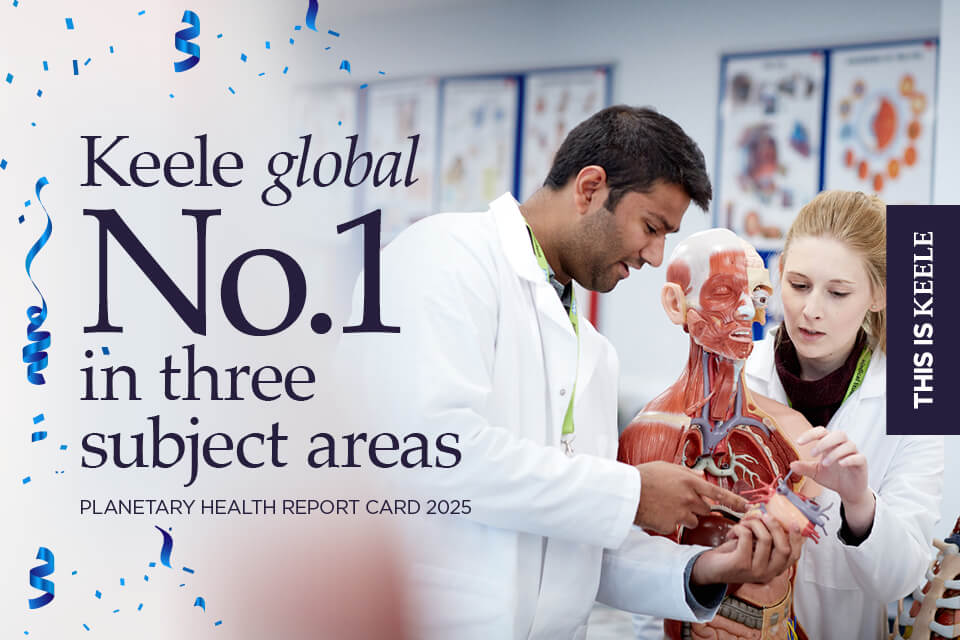
In 2025, Keele ranked 1st globally in the Planetary Health Report Card for Medicine, Pharmacy and Physiotherapy, demonstrating our world-leading commitment to sustainability, health and social responsibility. Through education, research, campus operations and community engagement, we are helping to create healthier, more resilient and more equitable futures for current and future generations.
Responsible Management Education
The United Nations Principles for Responsible Management Education (PRME) initiative encourages business schools to develop future leaders who can create sustainable value for society and contribute to the achievement of the Sustainable Development Goals (SDGs). Through teaching, research and engagement, PRME promotes responsible leadership, ethical decision-making and a commitment to addressing social and environmental challenges.
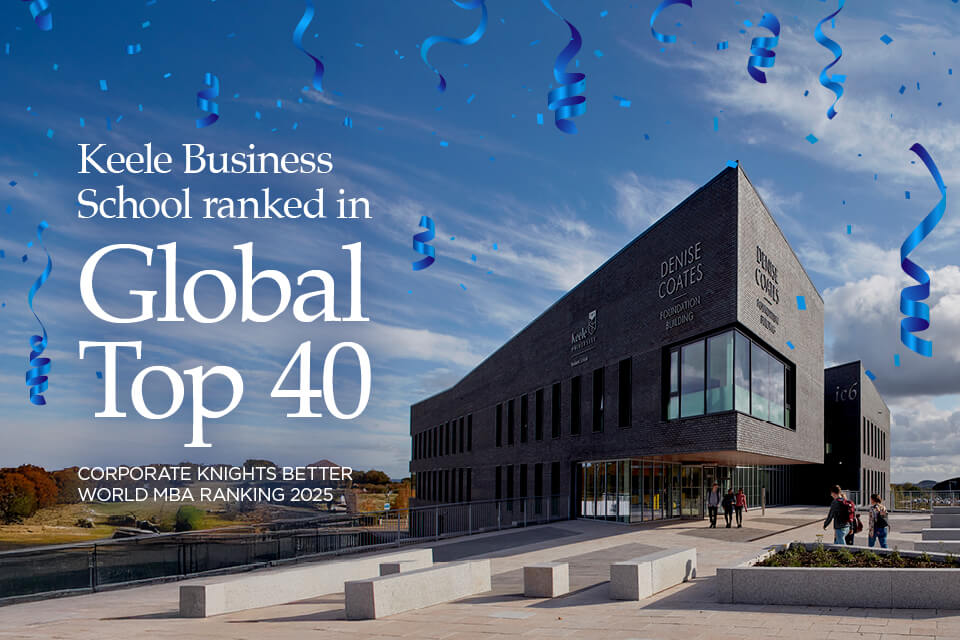
At Keele, these principles are embedded within the work of Keele Business School, helping students develop the knowledge, skills and values needed to lead in an increasingly complex and interconnected world. This commitment to responsible management education has been recognised internationally, with the Keele MBA ranked among the Top 40 globally in the Corporate Knights Better World MBA Ranking in 2024 and 2025, reflecting the School's focus on sustainability, positive societal impact and responsible leadership.
Through its support for PRME and the SDGs, Keele Business School is helping to prepare graduates who can contribute to a more sustainable, inclusive and equitable future.
People-Planet-Place
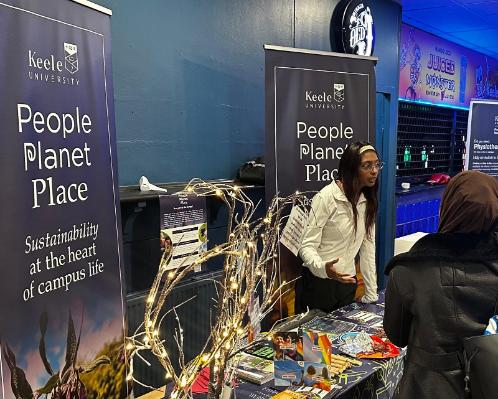
Sustainability at Keele University is grounded in the understanding that lasting impact comes from recognising the vital links between people, planet and the places we share. Healthy environments, resilient communities and individual wellbeing are fundamentally interconnected and must be advanced together to create a more sustainable future. This principle is reflected in People-Planet-Place (PPP), Keele's engagement framework for creating a flourishing university community that promotes connection, environmental awareness, social responsibility and a sense of place.
Developed with students as a relatable and accessible expression of the United Nations Sustainable Development Goals, PPP connects global sustainability challenges with everyday experience, enabling students and staff to engage with themes including wellbeing, inclusion, community, social responsibility and environmental sustainability as interconnected aspects of university life.
Global Challenge Pathways
Students can choose pathways in Climate Change and Sustainability, Global Health, Social Justice, Digital Society, and Enterprise, Entrepreneurship and Employment, developing leadership, problem-solving, teamwork and communication skills while exploring global challenges from multiple perspectives. Completion is recognised on degree certificates.