


A pioneering spirit
Hydrogen is a versatile clean energy carrier with a major role to play in the transition to net zero. At Keele, green hydrogen is not just a future ambition. It is being produced, stored and used on campus as part of a real-world renewable energy system.
“It has become even clearer that hydrogen must be a core part of the UK’s future energy security as well as plans to meet our legally binding commitment to achieving net zero by 2050.” gov.uk
UK Government, low carbon hydrogen strategy update
Introducing
From renewable power to clean fuel, in one place.
Watch how sunlight and wind become hydrogen on a Staffordshire hillside and why that matters beyond Keele.
Solar + wind
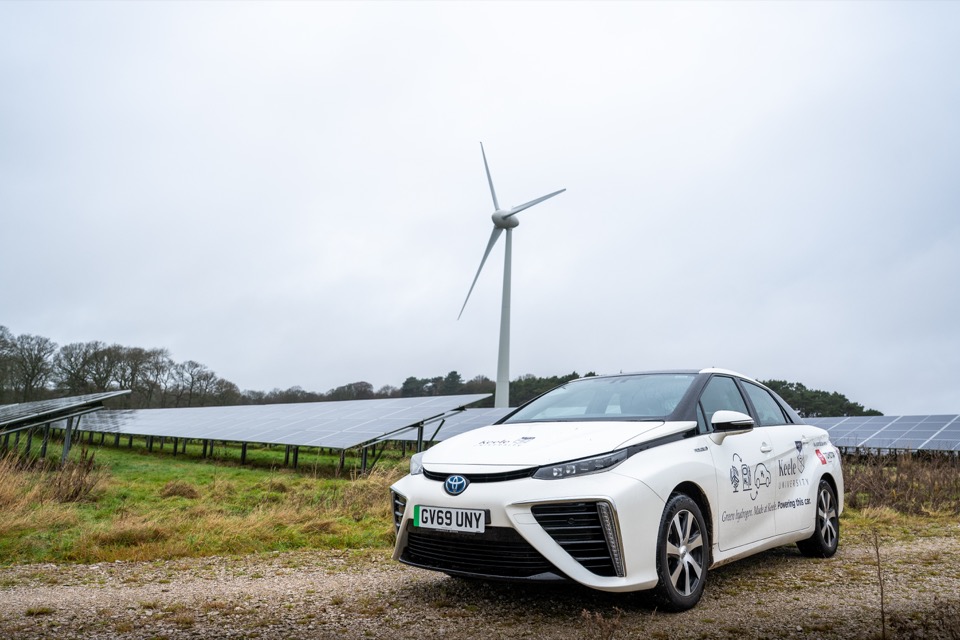
12,200 on-campus panels and two wind turbines feed the system.
Electrolyser
Splits water into hydrogen and oxygen using only renewable electricity.
Real-world use
Fuels our zero-emission fleet and our research into industrial decarbonisation.
How Keele produces and uses Green Hydrogen
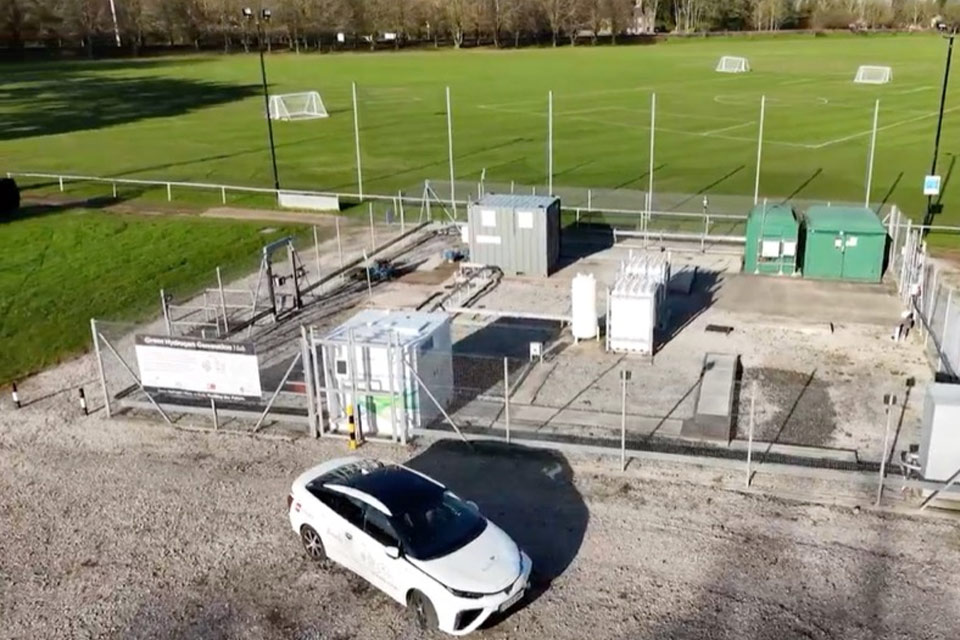
The hydrogen at Keele is generated from an electrolyser on the university campus, which splits water into hydrogen and oxygen molecules, with the oxygen released into the atmosphere while the hydrogen is stored for future use.
Crucially the hydrogen being generated at Keele is “green” hydrogen; meaning it creates little or no environmental impact in the generation process, with the electrolyser powered by excess renewable electricity generated on Keele’s campus by two wind turbines and 12,200 solar panels at Keele’s on-site renewable energy generation park via Keele’s Smart Energy Network Demonstrator (SEND).
This means the hydrogen is being generated and distributed using on-site infrastructure, with others having to import or transport their hydrogen from other sources to conduct similar research.

A practical innovation, decarbonising our everyday lives
The hydrogen is already being used to fuel two hydrogen-powered cars; two Toyota Mirais, which have been added to the university's fleet of vehicles, and the hydrogen-generating electrolyser will also allow new research into hydrogen technologies which could play a crucial role in future efforts to reduce carbon emissions.
This project is a proof of concept case for how we can generate and consume hydrogen in a realistic and local level system. Looking to the future, we have opportunities for hydrogen to be used in other sectors - Keele researchers also want to use the GH2 project to explore practical applications in industry, like decarbonising energy-intensive sectors such as the ceramics industry. Also, how it can be scaled to generate hydrogen for green ammonia production and food generation and also for shipping as a fuel.
A pioneering spirit, in numbers
12,200
on-campus solar panels generating renewable electricity
2
utility-scale wind turbines powering the system
0
CO₂ emissions from hydrogen vehicles (tailpipe)
100%
renewable electricity used to produce hydrogen
Industry & public sector
Collaborate on decarbonisation
Pilot hydrogen solutions in your operations with a team that's already running one. We work with manufacturers, energy networks, transport operators and policymakers.
Talk to our partnerships teamResearchers & students
Research with us
Postgraduate research, studentships and placements on the materials, storage and systems engineering the hydrogen economy will depend on.
Explore research opportunities



United Nations Sustainable Development Goals
The UN SDGs drive our work on sustainability. They are embedded into our teaching, research, and campus operations.
Find out more