

Cognition and Cognitive Neuroscience - MSc
Connecting the sciences of the brain (neurosciences) with the sciences of the mind (cognition), this MSc draws on our world-leading expertise in Psychology and Life Sciences. We consider how the brain and broader nervous system function at a biological and psychological level, from a human development and behavioural perspective.
Month of entry
- September
Mode of study
- Full time, Part time
Fees for 2026/27 academic year
- UK - Full time £11,700 per year. Part time £6,400 per year.
International - £18,200 per year.For modular fees, please click here
Duration of study
- One year full time, two years part time, up to five years modular
This course is no longer accepting applications from international students for the 2026/27 academic year.
Why study Cognition and Cognitive Neuroscience at Keele University?

Course summary
Designed specifically to enable you to specialise in cognition and cognitive neuroscience, our MSc explores exciting challenges facing the scientific and clinical communities – how the brain and nervous system relate to human consciousness, decision making, attention, perception, memory, motor skills and more.
On this programme, you will learn to design experiments, collect data using state-of-the-art cognitive neuroscience methods and analyse it using appropriate statistical methods. Explore the exciting challenges facing scientists in the fields of cognition and cognitive neuroscience. You will also become prepared for doctoral studies (for example, Clinical Psychology training or a PhD), and will be a competitive candidate for professional roles such as a data analyst or technical consultant.
Bridging the disciplines of psychology and neuroscience, you will learn from world-leading researchers across two of Keele’s academic Schools, whose broad and diverse expertise spans cognitive psychology, developmental psychology, neuroscience, neural engineering, neurobiology, molecular biology, biomedical science and even zoology. They will share news about their cutting-edge research through research-led teaching and our research seminar series.
The research apprenticeship and dissertation provide two opportunities to broaden or deepen your contemporary research experience, depending on personal preferences or professional interests. Working closely with relevant specialists, you can choose a different focus for each project or master one specific area. Dissertation topics chosen by past students have, for example, examined how to decode different types of mental images from patterns of brain activity, eye-movement behaviour in real-world scene processing, recognition memory in brain-damaged patients and the effect of alcohol hangover on response inhibition.
What you will learn
The world’s understanding of cognition and cognitive neuroscience has progressed rapidly in recent years with more computational modelling of behaviour and more precise mapping of brain circuits, improved imaging techniques and new sensor technologies to better monitor behaviour and response.
On this course, you will consider the different, complex ways in which the mind and body process, react and interact to various physical and emotional stimuli, consciously and unconsciously, voluntarily and involuntarily. This includes studying structural and functional brain differences between individuals and in clinical populations, for example, in atypical development, as well as predicting cognitive performance in complex real-world situations and understanding theories of perception, attention, memory and other cognitive processes.
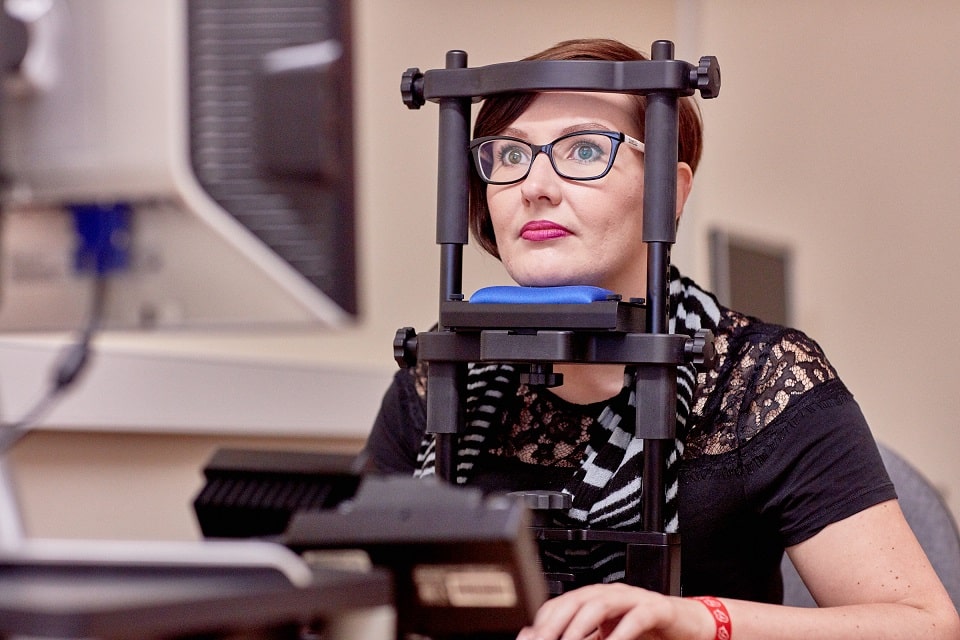
You will learn how to measure objective responses (for instance, response times and eye movements, measured with high-precision devices) and subjective responses (for instance, ratings and post-recognition judgments). You'll also learn how to map brain responses from neuroimaging methods like EEG to specific sensory, cognitive, or motor events such as, how to connect neural activity with the human mind processes.
You will be taught by multidisciplinary staff involved in an exciting and diverse portfolio of research projects. These range from using EEG and eye tracking to investigate how our visual system makes sense of real-world visual scenes and visual illusions, to the differences in brain and cognitive development in deaf infants. Other research expertise includes the perception of time in extreme environments, physical and emotional states, visual and auditory perception, memory, trust, swearing, ageing, and neurological disorders.

Course structure
The MSc Cognition and Cognitive Neuroscience can be studied as either a one-year full-time or two-year part-time course, with a September start date. It also possible to study more flexibly part-time on a modular basis, accumulating degree credits by taking individual modules over a period of maximum of five years.
As a full-time student, you will complete five compulsory modules (including the dissertation). Please note, as a part-time student, the structure of the programme will vary.
Modules
The module details given below are indicative, they are intended to provide you with an idea of the range of subjects that are taught to our current students. The modules that will be available for you to study in future years are prone to change as we regularly review our teaching to ensure that it is up-to-date and informed by the latest research and teaching methods, as well as student voice. The information presented is therefore not intended to be construed and/or relied upon as a definitive list of the modules available in any given year.
Compulsory modules
PSY-40163 Applied Psychological Research Methods (30 credits)
You will develop a critical understanding of different quantitative and qualitative philosophical approaches to understanding the world (e.g., social constructivist, semantic, frequentist, Bayesian). The module takes you through the full research process, from the implementing of an appropriate research method to address a psychological question to handling, extracting and analysing the data and finally through to interpreting and disseminating the findings.
PSY-40187 Advanced Cognition and Cognitive Neuroscience Theory and Techniques (30 credits)
This module will develop your theoretical knowledge and practical skills with contemporary methods and in cognitive psychology and cognitive neuroscience. This will includes approaches such as neuroimaging, eye-tracking, brain stimulation, and more. It prepares you to design, conduct, and critically appraise research using these methods. The module covers the theoretical background of the methods and, for several methods, you will gain hands-on experience with data collection, data analysis, and use of specialist software and equipment. The module will emphasise a framework which will allow you to understand existing theories and methods and follow emerging trends going forward.
PSY-40169 Applied Research Dissertation (60 credits)
This module is the culmination of your Masters programme of study and enables you to apply the skills gained across the programme to an empirical study in an area of psychology within your programme's discipline. You will have the opportunity to work closely under the supervision of an academic member of staff on designing, conducting, analysing and reporting their research in a dissertation.
PSY-40179 Professional Practice in Psychology (30 credits)
This module offers you the experience to develop your employability skills in both an applied and a research setting. You will take part in an interview with a member of the module team and work to secure a placement relevant to your interests and specialism prior to the start of the placement. We will encourage you to consider how you can apply your psychological knowledge and expertise to your placement and to reflect on the skills you have developed through your placement. You will be expected to visit your placement on approximately a weekly basis for 30-50 hours during the second semester. While we would strongly encourage you to engage with a work-based placement for the valuable opportunity and insights it can provide, you will have the option to conduct an academic-based placement at Keele University. In addition, this module provides valuable experience on a live research project working alongside an experienced research mentor or mentors. After completing a skills audit in the first semester you will be assigned to a research project offered across the range of expertise available, with care taken to ensure that the research project develops or extends your research skills in an area that you have identified. Projects will vary from year to year depending on current staff research, and you might take a number of different roles in the research from designing and preparing research materials through to analysing existing datasets. The module will help you to develop a key range of research skills including learning to follow guidance and respond to feedback and effective communication of research in writing.
PSY-40189 Frontiers in Cognition and Cognitive Neuroscience (30 credits)
This module will engage you with contemporary topics and research in cognitive psychology and cognitive neuroscience. Not only will you acquire advanced theoretical understanding of core topics in Cognition and Cognitive Neuroscience, but you will also learn about the most cutting-edge research topics being explored by our own researchers, such as memory, perception, stem cells, (dis)honesty, psychiatric disorders, and more. These exciting topics will be explored via lively journal-club type discussion sessions.
MSc in Cognition and Cognitive Neuroscience
Reasons to study MSc in Cognition and Cognitive Neuroscience at Keele

Entry requirements
The following section details our typical entry requirements for this course for a range of UK and international qualifications. If you don't see your qualifications listed, please contact us to find out if we can accept your qualifications.
Typical offer
Please ensure that you read the full entry requirements by selecting your qualifications from the dropdown menu below. This will include any subject specific, GCSE/Level 2 Maths, and English language requirements you may need.
Please select your country from the drop-down list below for the full entry requirement information
UK
2:2 degree in psychology, neuroscience, or a related subject
or
demonstrated professional or relevant qualifications or experience
You will also need: an English language qualification (see below)
Algeria
12/20 or Assez Bien degree in psychology, neuroscience, or a related subject
or
demonstrated professional or relevant qualifications or experience
You will also need: an English language qualification (see below)
Bahrain
Bachelor's degree with a minimum CGPA of 2.7/4.0 in psychology, neuroscience, or a related subject
or
demonstrated professional or relevant qualifications or experience
You will also need: an English language qualification (see below)
Bangladesh
60% in a 4-year degree or 3-year degree with a 2-year Master's in psychology, neuroscience, or a related subject from a public university
or
CGPA 2.8 in a 4-year degree or 3-year degree with a 2-year Master's in psychology, neuroscience, or a related subject from a private university
or
demonstrated professional or relevant qualifications or experience
We don’t accept degrees from certain universities, please see our Bangladesh Country Page for more information
You will also need: an English language qualification (see below)
Canada
70% or C or a GPA of 2.5 in a degree (Ordinary or Honours) in psychology, neuroscience or a related subject
or
demonstrated relevant professional qualifications or experience
You will also need: an English language qualification (see below)
China
70% in a degree in psychology, neuroscience, or a related subject
or
65% in a degree in psychology, neuroscience, or a related subject from a '211' university
or
demonstrated professional or relevant qualifications or experience
You will also need: an English language qualification (see below)
Egypt
Bachelor degree from a Public or Private University with 65%/CGPA = 2.7/Good degree in psychology, neuroscience, or a related subject
or
demonstrated professional or relevant qualifications or experience
You will also need: an English language qualification (see below)
Ghana
Second class degree in psychology, neuroscience, or a related subject
or
demonstrated professional or relevant qualifications or experience
You will also need: an English language qualification (see below)
Hong Kong
Bachelor's Honours degree with 2:2 or CGPA of 2.5 OR Bachelor Ordinary degree with a CGPA of 3.4 in psychology, neuroscience, or a related subject
or
demonstrated professional or relevant qualifications or experience
You will also need: an English language qualification (see below)
India
55% or CGPA 6/10 in a degree of at least 3 years in psychology, neuroscience or a related subject
or
demonstrated professional or relevant qualifications or experience
You will also need: an English language qualification (see below)
Kenya
Second class degree in psychology, neuroscience, or a related subject
or
demonstrated professional or relevant qualifications or experience
You will also need: an English language qualification (see below)
Kuwait
Bachelor's degree with a minimum CGPA of 2.75/4.0 or 3.5/5.0 in psychology, neuroscience, or a related subject
or
demonstrated professional or relevant qualifications or experience
You will also need: an English language qualification (see below)
Nepal
60% / 2.4 in a 4-year Bachelor's degree in psychology, neuroscience, or a related subject
or
65% / CGPA 2.8 in a 3-year Bachelor's degree in psychology, neuroscience, or a related subject
or
demonstrated professional or relevant qualifications or experience
You will also need: an English language qualification (see below)
Nigeria
Second class degree in psychology, neuroscience, or a related subject
or
demonstrated professional or relevant qualifications or experience
You will also need: an English language qualification (see below)
Oman
Bachelor's degree with a minimum CGPA of 2.5/4.0 in psychology, neuroscience, or a related subject
or
demonstrated professional or relevant qualifications or experience
You will also need: an English language qualification (see below)
Pakistan
We accept a range of qualifications from Pakistan. Please visit our Pakistan Country Page for more information
or we will consider demonstrated relevant professional qualifications or experience
You will also need an English language qualification (see below)
Qatar
Bachelor's degree with a minimum CGPA of 2.75/4.0 in psychology, neuroscience, or a related subject
or
demonstrated professional or relevant qualifications or experience
You will also need: an English language qualification (see below)
South Africa
Second class division 2 / 60% in a Bachelor's degree with Honours in psychology, neuroscience, or a related subject
or
Second class division 1 / 70% in an Ordinary Bachelor's degree in psychology, neuroscience, or a related subject
or
demonstrated professional or relevant qualifications or experience
You will also need: an English language qualification (see below)
Sri Lanka
55% in a Special Bachelor's degree in psychology, neuroscience, or a related subject
or
demonstrated professional or relevant qualifications or experience
You will also need: an English language qualification (see below)
Turkey
A CGPA of 2.5/4.0 in a Bachelor degree (Lisans Diplomasi) in psychology, neuroscience, or a related subject
or
demonstrated professional or relevant qualifications or experience
You will also need: an English language qualification (see below)
UAE
Bachelor's degree with a CGPA of 2.5/77%/B- in psychology, neuroscience, or a related subject
or
demonstrated professional or relevant qualifications or experience
You will also need: an English language qualification (see below)
Uganda
Second class degree in psychology, neuroscience, or a related subject
or
demonstrated professional or relevant qualifications or experience
You will also need: an English language qualification (see below)
USA
Bachelor's degree with a minimum CGPA of 2.6 in psychology, neuroscience, or a related subject
or
demonstrated professional or relevant qualifications or experience
You will also need: an English language qualification (see below)
Zimbabwe
Second class degree in psychology, neuroscience, or a related subject
or
demonstrated professional or relevant qualifications or experience
You will also need: an English language qualification (see below)
English language requirements
All of our courses require an English language qualification or test. For most students, this requirement can be met with a 4 or C in GCSE English. Please see our English Language guidance pages for further details, including English language test information for international students. For those students who require an English language test, this course requires a test from Group C.
References
Normally, you will need to provide at least one academic reference to support your application unless you have been out of study longer than two years. If it has been more than two years since you last studied on a degree-level programme, you will normally need to provide an employment reference instead. For more information about Academic References, please see our Postgraduate how to apply web pages.
Personal Statement/Statement of Purpose
Please see our Postgraduate how to apply web pages for guidance on what to include in your personal statement.
Recognition of Prior Learning
The Recognition of Prior Learning (RPL) is a process which enables applicants to receive recognition and formal credit for learning acquired in the past through formal study or work and life experiences.
RPL can also be requested for admission onto the start of a programme in lieu of the admission requirements. For more information, see our Recognition of Prior Learning web pages.
Professional qualifications and work experience
The majority of our courses will consider relevant work experience and/or professional qualifications at the appropriate level, as an alternative to an undergraduate degree for entry. The work experience should be for a sustained period and at a suitable level, based within a relevant sector to your chosen course.
Admissions staff will review your work experience and/or professional qualifications during the assessment of your application to ensure suitability in terms of relevancy, level and appropriate learning outcomes.
General information
The entry grades outlined in this section indicate the typical offer which would be made to candidates, along with any subject specific requirements. This is for general information only. Keele University reserves the right to vary offer conditions depending upon a candidate's application. For international students, find out how we work with approved agents as part of our admissions process.
Social life, societies and sports
Find out moreAccommodation
Find out moreLocal area and travel
Find out moreBoost your employability
Find out more
Postgraduate funding and scholarships
Funding
Whether you're continuing from undergraduate study or returning to education, our dedicated financial support team is here to help.
This course is recognised by the Economic and Social Research
Please note, if your course offers a January start date, the January 2026 start date falls in the 2025/26 academic year. Please see the tuition fees archive for the 2025/26 fees.
Planning your funding
It's important to plan carefully for your funding before you start your course. Please be aware that not all postgraduate courses and not all students are eligible for the UK government postgraduate loans and, in some cases, you would be expected to source alternative funding yourself. If you need support researching your funding options, please contact our financial support team.
Scholarships
We are committed to rewarding excellence and potential. Please visit our scholarships and bursaries webpage for more information.
For continuing students, fees will increase annually by RPIX, with a maximum cap of 5% per year.
Additional costs
You can expect some additional mandatory costs which support learning activities, specialist equipment, fieldwork, or other course-related requirements. Details are outlined below. For general information, see the university's additional costs information.
For students completing a placement in Schools:
- Enhanced DBS check with digital ID check: £60.70. This price is not set by the University and is liable to increase.

Teaching, learning and assessment
How you will be taught
Our teaching and learning strategy is wide-ranging and innovative, seeking to give you a rich learning environment that draws actively upon leading edge research, as well as current professional practice. It includes traditional lectures, workshops and small group tutorials, as well as lab-based demonstrations and practicals. We aim to teach you the theory behind cognitive neuroscience methods, but more importantly you will graduate with experience of delivering them too.
Our MSc programme is designed to prepare you for careers in practice, research or academia, including PhD study or further clinical training.
We will introduce you to the latest tools, techniques and technologies used in clinical, healthcare, academic and pharmaceutical settings. You will gain hands-on experience of various techniques, including EEG, brain stimulation (e.g., TMS and tDCS), eye tracking and clinical assessments, as well as advanced computational and statistical approaches.
How you will be assessed
Assessment is varied and includes the use of group and individual reports, essays, presentations and practical projects. Most modules combine multiple forms of assessment.
Where possible, assessment is designed to reflect the workplace, including specialist and transferable general skills, such as team working, idea generation, critical thinking, problem solving, meeting deadlines and so on. We may ask you to demonstrate specific skills, for example, in simultaneous eye tracking, via a skills assessment, or you could be asked to prepare a research briefing, literature review or respond to a brief patient referral.