


Year of entry
- 2027
UCAS code
- C902
Duration of study
- 1 year
Medical Sciences | Top-up - BSc (Hons)
Course summary
Our BSc Medical Sciences Top-up programme provides a one-year route to a full BSc degree for home and international students with an HND, FdSc, or equivalent qualification in bioscience. Covering key biomedical subjects from haematology to cancer biology, this degree enhances your learning through workshops, authentic assessments, and a short integrated placement. Whether you're aiming for further study or professional growth, you will graduate with the expertise and qualifications valued by employers in healthcare and biomedical sectors.
Why study Medical Sciences | Top-up at Keele University?
 Enhance your qualifications by converting your HND, FdSc, or equivalent into a full BSc (Hons) in Medical Sciences in just one year
Innovative and relevant assessments are designed to provide you with a diverse range of key employability skills and attributes
A wide range of research project choices will enable you to develop key skills in hypothesis-driven study design, data collection and analysis
Our comprehensive programme of academic and professional development workshops will support you in acquiring and reflecting on key employability skills aligned with your career goals
Develop skills and academic foundations relevant to postgraduate study and careers in life sciences and healthcare settings
Enhance your qualifications by converting your HND, FdSc, or equivalent into a full BSc (Hons) in Medical Sciences in just one year
Innovative and relevant assessments are designed to provide you with a diverse range of key employability skills and attributes
A wide range of research project choices will enable you to develop key skills in hypothesis-driven study design, data collection and analysis
Our comprehensive programme of academic and professional development workshops will support you in acquiring and reflecting on key employability skills aligned with your career goals
Develop skills and academic foundations relevant to postgraduate study and careers in life sciences and healthcare settings

About the degree
Our Medical Science Top-up programme explores the key pathology disciplines of haematology, clinical biochemistry and medical immunology, as well as more specialist areas of clinical pathology including reproductive science and toxicology.
Optional modules allow you to broaden your understanding of biosciences, covering areas like host-microbe interactions, infectious disease control, molecular oncology, and emerging therapeutic strategies. You also have the option to complete either a flexible work placement module, or a placement module in a school or college for those considering a career in teaching. These placements provide valuable hands-on experience, help you build essential employability skills, and offer insight into real-world professional settings.
You’ll enhance your subject knowledge and develop advanced research skills by undertaking an authentic, hypothesis-driven research project. This includes designing and executing investigations, analysing results, and critically evaluating current scientific literature.
To support your transition to BSc level study, you’ll also complete a zero-credit 'Academic and Professional Development in Bioscience' module. This includes targeted workshops and tutorials focused on literature research, scientific communication, and academic integrity.
Throughout the year, you'll benefit from guest lectures, alumni career talks, and weekly research seminars delivered by world-leading researchers and educators working at the forefront of bioscience.

Course structure
What you will study
Our courses are designed to develop the skills, experience and expertise you'll need to succeed in your chosen career, informed by the latest research, teaching methods, student feedback, and employer insights. Module details are representative of what we intend to deliver on the course, but may change to reflect best practice and academic development. This information should therefore not be considered a definitive list of available modules.
You will study 90 credits of compulsory modules and 30 credits of optional modules.
Compulsory modules
Research Project (30 credits)
Your research project is an excellent opportunity to carry out a substantial piece of meaningful research, drawing together skills in experimental study design, critical interpretation of data, and professional competencies. You can choose from a range of projects depending on your interests/career ambitions, including lab- or field-based research, systematic reviews, bioinformatics, teaching and learning, or outreach. This culminates in an exciting and authentic student conference that gives you an opportunity to celebrate and share your achievements with your peers.
Advanced Clinical Pathology (30 credits)
In this module, you will explore some of the more specialist disciplines across Clinical Pathology, including reproductive science, point-of-care testing and toxicology. Case-based learning will allow you to work in small groups to explore some of the key challenges affecting public health across the UK, and will give you real insight into the relationship between research, clinical practice and national guidance. These sessions will also support you in developing teamwork, leadership and communication skills.
Biomedical Blood Science (30 credits)
The key discipline areas of a typical Blood Science pathology department will be discussed in this module where you will explore Clinical Biochemistry, Immunology, Haematology and Transfusion Science. You will investigate the pathophysiology of disorders of blood and bone marrow, as well as autoimmune and allergy-related conditions and how major organ function is assessed, identifying common biochemical abnormalities. Small group case-based learning sessions will develop teamwork and communication skills, contextualising taught content through application and problem-solving.
Academic and Professional Development in Bioscience (0 credits)
This module will provide additional academic and professional development workshops supporting your transition BSc level study and beyond. You will reflect on outcomes from previous study and attend a range of workshops to develop and enhance your skills in good academic practice, literature searching/evaluation, and science communication. This, together with career planning and employability workshops, will support you as you move to the next steps post-graduation, whether employment in the biosciences or wider fields, or progression to further postgraduate study.
Optional modules
Human Parasitology (15 credits)
Here we will explore the theoretical and practical aspects of parasitic diseases of humans, considering such topics as the life cycle of select parasites between vector and host, the pathogenesis of parasitic infection and their diagnosis and treatment. You will also investigate challenges to effective treatment and transmission control, including socio-economic and cultural factors. Through evaluation of current research in the subject, you will develop higher-level skills in the critical analysis and interpretation of data.
Case Studies in Microbiology & Immunology (15 credits)
In this module, you will study current research into diseases of major public health concern in the fields of microbiology and immunology. This will be supported with real-world case studies where you explore clinical interventions and how current research is informing development of novel therapies. You will also investigate the application of microorganisms in areas such as the biocontrol of environmental pests or manipulation of our microbiome. You will further develop skills in critically evaluating current literature and communicating to different audiences.
Cancer Biology (15 credits)
You will be introduced to the field of cancer biology, exploring the molecular and cellular hallmarks of cancer, and how the understanding of these is beginning to inform novel therapeutic development. We will explore the latest developments in cancer research in understanding changes in cellular activity associated with cancer development and progression, and the diagnostic and therapeutic potential of this. Key skills developed include the location, evaluation and comparative analysis of published scientific literature.
Epidemiology (15 credits)
Epidemiology is concerned with the study of disease development and prevention within populations. Here, you will develop knowledge and understanding of epidemiological study design and data interpretation, exploring the scientific procedures of public health research, policies, program implementation and evaluation. You will develop skills in the design and conduct of epidemiological research, developing data collection tools, and interpreting epidemiological findings used in public health, including the relevance to outbreak investigations.
Flexible Work Placement (Level 6) (15 credits)
In a competitive job market, practical skills and understanding workplace dynamics are crucial. This module allows you to gain hands-on experience, enhance your employability skills, and provide valuable insights into the professional world. You will be supported via a range of activities to secure a role and can source your own placement or apply to university-sourced roles. This module has built-in flexibility on when and how you complete your placement, enabling you to balance your placement around existing demands.
Professional Experience in Education (15 credits)
This module gives students interested in pursuing teaching or training as a career the opportunity to gain experience in the world of teaching in schools and colleges. You will develop skills highly valued by employers such as communication, and interpersonal skills, whilst learning to address individual needs and developing engaging teaching materials. You will be supported via a range of activities to prepare for your placement and have the choice to source your own placement or apply to university sourced roles.
You can view the Programme Specification for this course by visiting the Programme Specifications webpage. (opens in new tab)
Double Gold in the Teaching Excellence Framework
Keele is one of only 15 broad-based universities in England - out of over 100 - to have been awarded Gold in both the 2017 and 2023 Teaching Excellence Framework (TEF) exercises, demonstrating our consistent teaching excellence.
Additional opportunities
There are a range of additional opportunities for this course.
Please note that undertaking one may impact the availability of another.
Work placement module
In an increasingly competitive job market, employers are seeking to recruit individuals who have high-level knowledge, skills and an understanding of the workplace. Our flexible work placement module, is a fantastic way to gain industry experience whilst balancing your time in industry around existing demands. It can provide a valuable insight into what working in a specific area of business is like, gives you the chance to familiarise yourself with the professional working environment and develop professional networks, and provides the opportunity to apply the theory you’ve learnt on your degree course.
We also offer a work placement based in a schools or colleges, specifically for students interested in entering the teaching profession.

Entry requirements
These are the typical entry requirements for this course for a range of UK and international qualifications. If your qualifications aren't listed, please contact us to check if we can accept them. If you don't think you'll meet the stated requirements, you may be able to access this course via a Foundation Year.
Typical offer
Students would need to have completed the equivalent of 240 credits of prior learning in a subject area relevant to the course to access Level 6 entry. These may include:
- A relevant HND with a grade of Merit or above.
- A relevant Foundation degree with a score of 50% or above.
- Level 5 of a relevant undergraduate degree with a score of 50% or above.
- An international equivalent to the above.
Applicants whose first language is not English must provide a language test certificate and achieve an IELTS score of 6.0 overall (or equivalent) with no less than 5.5 in any component.
English language requirements
All our courses require an English language qualification or test. Most students meet this through a 4 or C in GCSE English. Please visit our English Language pages for details, including test information for international students. For students who require a test, this course requires a result from Group A.
Alternative and contextual offers
We're committed to ensuring equality of opportunity for applicants with the potential and motivation to succeed, regardless of background. We offer alternative offer schemes with clear eligibility criteria, including contextual offers, offers for those studying in the Keele region, and recognition of a range of additional qualifications.
General information
The entry grades outlined indicate the typical offer, along with any subject specific requirements. This is for general information only. Keele University reserves the right to vary conditions based upon a candidate's application. For international students, find out how we work with approved agents as part of our admissions process.
Social life, societies and sports
Find out moreAccommodation
Find out moreLocal area and travel
Find out moreBoost your employability
Find out more
Fees and funding
Tuition fees for 2027/28 2026/27 academic year
- The tuition fee for UK Home students starting in 2027/282026/27 is set by the UK Government and will be £10,050£9,790.
- International: Band 1, £18,200 for the 2026/27 academic year
International fees for 2027/28 entry have not yet been confirmed. We review all tuition fees annually and will update this page once they are finalised.
In subsequent years of your course, UK Home fees may change in line with government policy or legislative requirements. For continuing international students, fees will increase each year in line with RPI, capped at a maximum of 5% per year.
For details of our international fee bands visit our Undergraduate tuition fees page.
Financial support
Going to university can be daunting as well as exciting. It's important to understand the costs and financial support available.
Our Student Financial Support team offers confidential advice and guidance to help you manage your money, resolve issues with Student Finance, create a budget, explore your options if you're facing financial hardship, and access any funding you are eligible for, such as bursaries and scholarships.
For more information visit our undergraduate fees and funding pages.
Additional costs
The additional costs listed below apply to the 2026/27 academic year. Costs for 2027/28 entry will be confirmed closer to the time, so the information below should be used as a guide only.
Optional costs
There may be optional costs that students can choose to incur to enhance their learning experience. These are not required to complete the course. Details of these optional costs are outlined below to help you plan accordingly.
Students may also incur general expenses related to university study, such as for printing, textbooks and other materials. Students who undertake a placement may be responsible for additional costs, such as travel, accommodation, and subsistence costs. For further information, please refer to the additional costs information.
- A lab coat will be provided to all students free of charge upon enrolment. Replacement lab coats will be at the student's expense (£10)


Your future career
On successful completion of the programme, you will develop a range of key skills valuable in areas where numeracy and a scientific approach to problem-solving are essential. You will also cultivate your critical thinking, autonomous learning, independent research, and communication skills.
Whether you're aiming for further study or professional growth, you’ll graduate with the expertise and qualifications valued by employers in healthcare and biomedical sectors.
Typical post-graduate destinations include entry to professions such as medicine, practitioner biomedical scientist, academia, research, the private sector, or roles that include outreach, teaching, and science communication.
Enhance your employability
Keele’s Careers and Employability team (Shortlisted for Best University Careers Employment Service - National Undergraduate Employability Awards, 2021) offers a variety of personal and career development opportunities to enhance your employability. From mock interviews, careers guidance and CV advice, to careers fairs, alumni mentoring and networking events, along with helping you find part-time and graduate employment, the team will support you throughout your studies and beyond.
Find out more about our careers and employability services, including career planning, alumni mentoring, jobs, internships, starting your own business and much more.

Teaching, learning and assessment
Teaching
Diversity, flexibility, and inclusivity is at the heart of our education strategy which is developed through close The delivery of our programme will include the following types of activities:
- Campus-based tutorials and workshops help promote social learning, develop a sense of community and give you an opportunity to deepen your understanding of core issues.
- Case-based learning (CBL) helps you contextualise content taught across other modules, You will also develop key employability skills such as leadership, communication and evidence-based problem solving.
- Live, online tutorials, workshops and drop-in sessions cover topics common to all students in the Life Sciences, such as developing skills in effective note taking, literature analysis, science communication. They also support development of employability skills through guest sessions delivered by alumni and invited speakers from industry and wider careers.
- Digital learning resources are designed to support in person teaching, ensuring that all core content is recorded.
Assessments
Assessment methods may include:
- Case report, portfolios and literature reviews will enable you to provide evidence-based solutions to current scientific problems.
- Laboratory reports and experimental projects will test your ability to pose scientific hypotheses, design experiments, understand methodologies, present findings, analyse data and situate your work in the current literature.
- Scientific posters, patient information leaflets, wikis, blog and oral presentations will allow you to communicate effectively with a range of audiences.
- Group presentations or working together in the laboratory provides you with the opportunity to work effectively in a team.
- Time limited tests and end-of-semester examinations will enable you to solve problems in a time-limited fashion.

Academic expertise
The teaching team at the School of Life Sciences are active researchers in core areas such as biosciences, geosciences, environmental sciences, geography and bioengineering. Their academic expertise informs your learning, incorporating current practices, theories and contemporary themes that encourage discussion within your subject area.
The teaching team consists of professors, readers, senior lecturers, lecturers, demonstrators, and teaching fellows.
Professional support staff are also available to assist with any queries you may have during your undergraduate studies at Keele.
The teaching team at the School of Engineering and Physical Sciences perform research across the school with particular strengths in materials science, synthetic, forensic and analytical chemistry. Their academic expertise informs your learning, incorporating current practices, theories and contemporary themes that encourage discussion within your subject area.
Professional support staff are also available to assist with any queries you may have during your undergraduate studies at Keele.
The teaching team consists of professors, senior lecturers, and lecturers within the School of Engineering and Physical Sciences. They are fellows or senior fellows of the Higher Education Academy, the professional body for teachers in higher education. Fellowship provides individuals with recognition of their practice, impact and leadership of teaching and learning. A number of our academic staff have also achieved national recognition for their excellence and innovation in teaching and hold awards from a variety of institutions, including the Royal Society of Chemistry and AdvanceHE.
The teaching team in the School of Humanities and Social Sciences are active researchers in core areas of Criminology and Sociology such as fields of crime, globalisation and urban spaces and cultures. Their academic expertise informs your learning, incorporating current practices, theories and contemporary themes that encourage discussion within your subject area.
Professional support staff are also available to assist with any queries you may have during your undergraduate studies at Keele.
The teaching team consists of professors, senior lecturers, lecturers and graduate teaching assistants.
The teaching team in the School of Humanities and Social Sciences are active researchers in core areas of Education such as critical social policy and feminism. Their academic expertise informs your learning, incorporating current practices, theories and contemporary themes that encourage discussion within your subject area.
Professional support staff are also available to assist with any queries you may have during your undergraduate studies at Keele.
The teaching team consists of senior lecturers and lecturers.
The teaching team in the School of Engineering and Physical Sciences are active researchers in core areas such as materials, sustainability, and energy. Their academic expertise informs your learning by incorporating current practices, theories, and contemporary themes that encourage discussion within your subject area.
Professional support staff are also available to assist with any queries you may have during your undergraduate studies at Keele University.
The teaching team consists of professors, senior lecturers and lecturers.
The teaching team in the School of Humanities and Social Sciences are active researchers in core areas of English and Creative Writing. Their academic expertise informs your learning, incorporating current practices, theories and contemporary themes that encourage discussion within your subject area.
Professional support staff are also available to assist with any queries you may have during your undergraduate studies at Keele.
The teaching team consists of professors, readers, senior lecturers, lecturers, and graduate teaching assistants.
The teaching team in the School of Humanities and Social Sciences are active researchers in core areas such as twentieth century and contemporary music, cultural politics, social movements and representation. Their academic expertise informs your learning, incorporating current practices, theories and contemporary themes that encourage discussion within your subject area.
Professional support staff are also available to assist with any queries you may have during your undergraduate studies at Keele.
The teaching team consists of professors, readers, senior lecturers, and lecturers.
The teaching team at the School of Engineering and Physical Sciences provide research-led quality teaching, particularly in the fields of forensic chemistry, forensic biology, crime investigations, forensic search and forensic anthropology, taphonomy and archaeology.
Professional support staff are also available to assist with any queries you may have during your undergraduate studies at Keele.
Our teaching team consists of professors, senior lecturers, lecturers, demonstrators and PhD students.
The teaching team at the School of Life Sciences are active researchers in core areas such as biosciences, geosciences, environmental sciences, geography and bioengineering. Their academic expertise informs your learning, incorporating current practices, theories and contemporary themes that encourage discussion within your subject area.
The teaching team consists of professors, readers, senior lecturers, lecturers, demonstrators, and teaching fellows.
Professional support staff are also available to assist with any queries you may have during your undergraduate studies at Keele.
The teaching team in the School of Humanities and Social Sciences are active researchers in core areas of medieval, early modern, and modern history including expertise in historical inequality, democratisation and civil society. Their academic expertise informs your learning, incorporating current practices, theories and contemporary themes that encourage discussion within your subject area.
Professional support staff are also available to assist with any queries you may have during your undergraduate studies at Keele.
The teaching team consists of professors, readers, senior lecturers, lecturers and graduate teaching assistants.
The teaching team at the School of Medicine are either active researchers in core areas such as musculoskeletal health, mental health and well-being, biomedical science, prognosis and big data, or actively engaged with a diverse range of scholarly activities to enhance their roles as educators.
The teaching team consists of professors, readers, senior lecturers, lecturers, senior teaching fellows, teaching fellows, senior research fellows, research fellows, research associates, research assistants, anatomy technicians and PhD students. The School of Medicine teaching team also includes a wide range of health professionals who are actively engaged in clinical research and quality improvement including those based in hospitals and community-based services.
The academic team at the School of Nursing and Midwifery are active researchers in core areas such as loss, bereavement and end of life care; primary, community and district nursing; and women's health. Their academic expertise informs your learning, incorporating current practices, theories and contemporary themes that encourage discussion within your subject area.
Professional support staff are also available to assist with any queries you may have during your undergraduate studies at Keele.
The teaching team consists of readers, senior lecturers, lecturers, research associates and teaching fellows.
The teaching team at the School of Engineering and Physical Sciences perform research across the school with particular strengths in astrophysics, materials science, renewable energy and sustainability. Their academic expertise informs your learning, incorporating current practices, theories and contemporary themes that encourage discussion within your subject area.
Professional support staff are also available to assist with any queries you may have during your undergraduate studies at Keele.
Our teaching team consists of professors, senior lecturers, lecturers, readers, and PhD students.
The teaching team in the School of Humanities and Social Sciences are active researchers in areas including democracy, governance, public policy and idealism. Their academic expertise informs your learning, incorporating current practices, theories and contemporary themes that encourage discussion within your subject area.
Professional support staff are also available to assist with any queries you may have during your undergraduate studies at Keele.
The teaching team consists of professors, senior lecturers, lecturers and graduate teaching assistants in the School of Humanities and Social Sciences.
The teaching team within the Institute of Sport brings together expertise across sport, exercise, health and rehabilitation, reflecting the continuum of human performance and wellbeing across the lifespan. Our staff are actively engaged in research and applied practice spanning physical activity, performance, health and recovery, ensuring that teaching is informed by both scientific evidence and real-world application. As a CASES-accredited partner institution, and with staff holding individual CASES accreditation, the programme is underpinned by recognised professional standards in sport and exercise science.
Staff operate within an interdisciplinary environment, working alongside colleagues from across the Allied Health Professions within the School. This collaboration informs teaching and supports a broader, integrated understanding of health, physical activity and rehabilitation across diverse populations and contexts.
Collectively, this breadth of expertise shapes your learning experience, incorporating current practices, theories and contemporary themes that encourage discussion within your subject area.
Professional support staff are also available to assist with any queries you may have during your undergraduate studies at Keele. The School's teaching team consists of professors, senior lecturers and lecturers.
The teaching team at Keele Business School are active researchers in core areas such as accounting, finance, economics, human resource management, marketing, and management. Their academic expertise informs your learning, incorporating current practices, theories and contemporary themes that encourage discussion within your subject area.
Professional support staff are also available to assist with any queries you may have during your undergraduate studies at Keele.
Our teaching team consists of professors, senior lecturers, and lecturers within Keele Business School. The team is multicultural and multinational, bringing an international dimension to the school's teaching, research, and business engagement.
The teaching team within the School of Allied Health Professions and Pharmacy brings together a diverse community of academics and clinicians working across four interrelated themes: Pharmacy and Pharmaceutical Science, Medical Technologies, Allied Health Therapies, and Active Living and Sport.
Our staff include experts in the biological and clinical sciences, statistics, engineering, and professional practice, who contribute to both research and scholarly activity aligned to their disciplines. This breadth of expertise ensures that teaching is informed by current evidence, practice, and innovation, enabling you to engage with contemporary issues relevant to your chosen field.
The teaching team consists of professors, senior lecturers, lecturers, readers, visiting clinicians, and research fellows.
Our programmes are supported by experienced professional staff who help to ensure a high-quality student experience throughout your studies.
The teaching team at Keele Business School are active researchers in core areas such as accounting, finance, economics, human resource management, marketing, and management. Their academic expertise informs your learning, incorporating current practices, theories and contemporary themes that encourage discussion within your subject area.
Professional support staff are also available to assist with any queries you may have during your undergraduate studies at Keele.
Our teaching team consists of professors, senior lecturers, and lecturers within Keele Business School. The team is multicultural and multinational, bringing an international dimension to the school's teaching, research, and business engagement.
The School of Computer Science and Mathematics is home to active researchers working across a rich range of topics, from artificial intelligence, cyber security and human-centred computing to fluid and solid dynamics, biomechanics and pure mathematics. Whether developing responsible AI, designing smart health technologies, or advancing mathematical methods for waves, materials and structures, our research is wide-ranging and internationally recognised.
This will directly shape your learning. You'll encounter current ideas in AI and its ethical implications, cloud computing, evolutionary systems, usable security, mathematical modelling of materials and discrete mathematics, taught by the people actively advancing these fields.
The teaching team consists of professors, senior lecturers, lecturers, readers and visiting research fellows.
Alongside your teaching team, dedicated professional staff will be on hand to support you throughout your time at Keele.
Our teaching team includes readers, senior lecturers, lecturers, research associates and teaching fellows who are active researchers and educators with expertise across a wide range of health and social care disciplines.
Their research and scholarship span areas including musculoskeletal health, mental health and wellbeing, community nursing, women's health, biomedical science, prognosis and big data, contemporary issues in child and family social work, end-of-life care, and international social work practice. Staff also undertake pedagogic research to advance teaching and learning within health and social care education.
This academic expertise informs your learning by incorporating current practices, theories and contemporary themes that encourage discussion and critical thinking within your subject area.
Professional support staff are also available throughout your undergraduate studies at Keele to provide guidance and answer any queries you may have.
The teaching team in the School of Law consists of professors, senior lecturers, lecturers and solicitors. They are all either active researchers (in fields including social justice and human rights; public and European law; ethics, health and social care; and legal education) or experienced legal practitioners. Their academic and professional expertise informs your learning, incorporating current practices, theories, and contemporary themes that encourage discussion within your subject area.
Professional support staff are also available to assist with any queries you may have during your undergraduate studies at Keele.
The teaching team at the School of Psychology have expertise spanning cognition and neuroscience, health and wellbeing, social identity and change, and justice and security.
Staff research and scholarship expertise inform your learning, incorporating current practices, theories and contemporary themes that encourage active learning and discussion within your subject area.
Professional support staff are also available to assist with any queries you may have during your undergraduate studies at Keele.
The teaching team consists of professors, senior lecturers, lecturers and teaching fellows within the School of Psychology.
The teaching team at the Harper and Keele Veterinary School includes active researchers in areas such as animal health and wellbeing, animal welfare and farming technologies. Many are currently practising veterinary surgeons and allied professionals, and the course draws on a wide range of expertise across many disciplines through contributions by external lecturers. Their academic expertise informs your learning, incorporating current practices, theories and contemporary themes that encourage discussion within your subject area.
Professional support staff are also available to assist with any queries you may have during your undergraduate studies at Keele.
Our teaching team consists of readers, professors, senior lecturers, lecturers and teaching fellows.
The academic expertise in the School of Humanities and Social Sciences informs your learning, incorporating current practices, theories and contemporary themes that encourage discussion within your subject area.
Professional support staff are also available to assist with any queries you may have during your undergraduate studies at Keele.
Our teaching team consists of professors, readers, senior lecturers, and lecturers.
Facilities
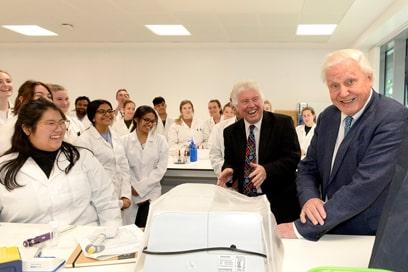
State-of-the-art science laboratories
Our state-of-the-art David Attenborough Laboratories provide cutting-edge science facilities, support Keele’s world-leading research and teaching, and tackle the key challenges of the 21st Century.
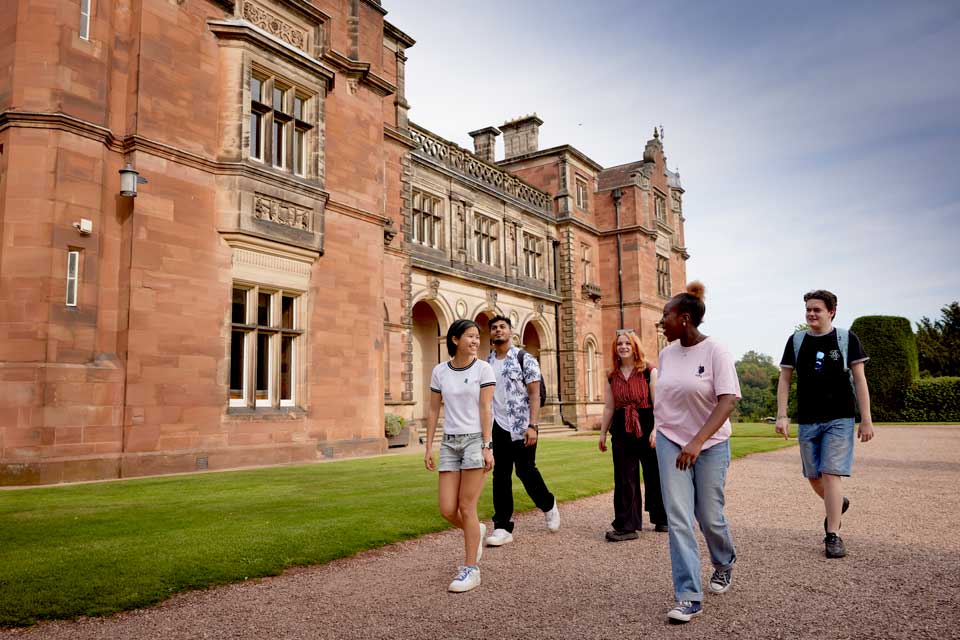
Student life at Keele is vibrant, diverse, and packed with opportunities to make the most of your time at university.

We help students manage their money and ensure that they receive any funding for which they may be eligible.

Make yourself more employable after graduation by taking advantage of the whole host of additional opportunities.