

Medical Engineering (Biomedical Engineering) - MSc
Accredited by the Institute for Physics and Engineering in Medicine, our MSc develops expertise to use engineering to create platforms including novel equipment and computer systems to facilitate improved patient care through enhanced diagnoses, monitoring, treatment and manufacturing. With a strong clinical focus you’ll see medical technology in action at University Hospital and access state-of-the-art equipment, including newly-developed diagnostics, advanced imaging and manufacturing facilities, in the research centre. You’ll also have access to leading bio and medical engineering experts, such as the author of Medical Device Design used by research and development departments worldwide.
Month of entry
- September, January
Mode of study
- Full time, Part time
Location
Subject area
- Bioengineering
Fees for 2026/27 academic year
- UK - Full time £11,700 per year. Part time £6,400 per year.
International - £18,200 per year.
Fees
Duration of study
- 1 year full time, 2 years part time
This course is no longer accepting applications from international students for the 2026/27 academic year.
Why study Medical Engineering (Biomedical Engineering) at Keele University?

About the course
Biomedical engineering is an exciting, diverse discipline that uses technology and engineering to solve medical and biological problems, inventing new equipment, materials, methods and processes to safely and accurately diagnose patients, improve medical treatment and its outcomes.
Responsible for innovations ranging from tissue and stem cell research and biomedical signal processing, latest advances include brain-controlled prosthesis, 3D printing of human organs, remote surgery and disease-fighting nanoparticles.
Bringing together medicine, biological science and engineering, our MSc is both clinically and industry-focused, building on our internationally-leading reputation for regenerative medicine, medical engineering and longstanding expertise in medical devices. It covers a broad range of topics – nanotechnology in medicine, smart materials, biomaterials, prosthetics and rehabilitation, through to management of medical equipment in hospitals.
Based across main campus and in the Guy Hilton Research Centre, you’ll have access to cutting-edge multi-disciplinary research into specialist and novel areas of biomedical engineering with the opportunity to conduct an in-depth research project alongside our world-class researchers.
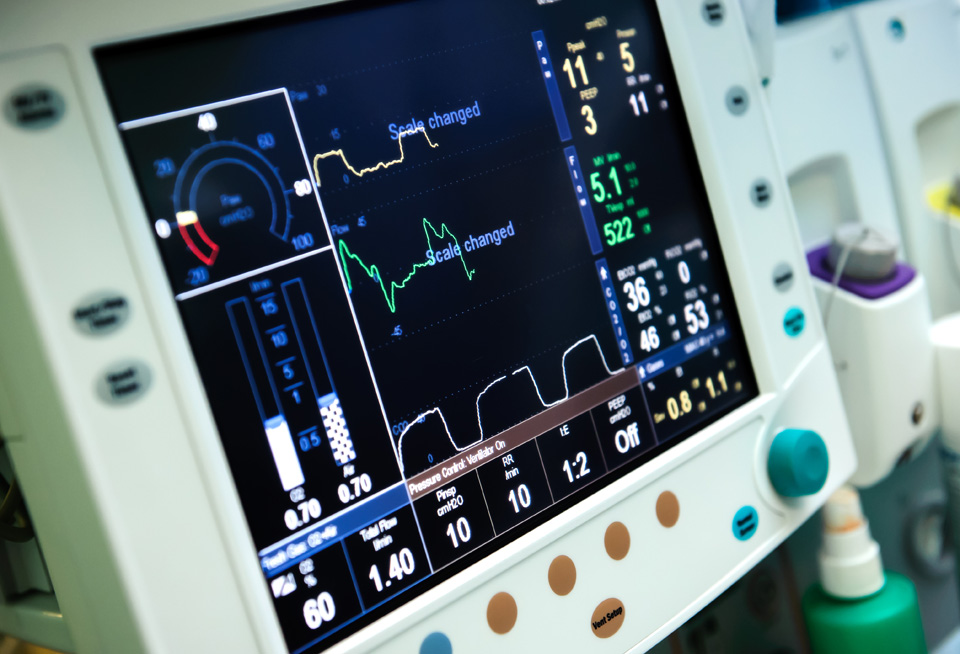
Our proximity to the University Hospital means you’ll be able to see physiological monitors and diagnostic instrumentation being used and serviced. This could include anything from electroencephalograms (EEG), electrocardiograms (ECG) or electromyography (EMG) to anaesthetic machines or kidney dialysis.
You will be taught by staff with real world experience of developing and commercialising medical products, in particular, technological innovations that have improved the treatment of fractures and spinal injuries for thousands of patients.
During your studies, you’ll conduct an in-depth research project exploring specialist and emerging areas of biomedical and clinical engineering. You’ll work alongside leading researchers investigating how tissue engineering and associated technologies can support the treatment of cardiovascular diseases, as well as how nanotechnology could be used to control cell behaviour in neurodegenerative diseases such as Parkinson’s.
You'll also have the opportunity to undertake a 6-12 month work placement, after the taught element of your studies. This practical experience enhances employability, strengthens transferable skills, and demonstrates professional capability in the competitive jobs market.
As part of the Versus Arthritis Tissue Engineering and Regenerative Therapies Centre, researchers here at Keele are also pioneering cell therapy treatments to regenerate damaged bones, joints and muscles in patients with osteoarthritis and rheumatoid arthritis.

"Biomedical Engineering gives me a bit of both worlds. Keele University was my best option as it gives students without an engineering background, like myself, a chance to pursue the engineering course due to the availability of introductory modules."

Course structure
This multidisciplinary MSc builds your knowledge of core principles and practices in medicine, science, engineering and product design, preparing you to contribute to the development of novel technologies, instrumentation and treatment.
Accredited by the Institute of Physics and Engineering in Medicine (IPEM), it takes you through the entire innovation life cycle – from conceptualisation and design, to production and implementation, both here in the UK and abroad. This in turn opens up career possibilities at any point in the process, for instance in research and development, hardware or software engineering, manufacturing or the sale of equipment, as well as maintenance and management in-situ.
In accordance with the IPEM’s mission to promote a diverse and inclusive professional community, our course is suitable for those with a wide range of backgrounds, including bioscience, life science, medicine and subjects allied to medicine, as well as the conventional disciplines of engineering and physical sciences.
Interacting with active researchers, clinicians and practitioners also gives you a greater appreciation of the context in which healthcare engineering operates, including vital safety, environmental and economic concerns, for instance, in relation to medical devices and technology services. This, coupled with clinical visits, specialist seminars and a choice of dissertation projects that span fundamental research to clinical translation of technologies, ensures a truly ‘bench to bedside’ approach.
The MSc Medical Engineering (Biomedical Engineering) can be studied as either a one year full time or two year part time course, with intakes in both September and January. You will complete 180 credits to achieve a Master's qualification, comprising 120 credits of taught modules and a 60 credit Research Project. Depending on the number of credits successfully completed, you may also be eligible for an interim award: a Postgraduate Certificate (60 credits) or a Postgraduate Diploma (120 credits).
You will also have the oppo
What you will study
The module details given below are indicative, they are intended to provide you with an idea of the range of subjects that are taught to our current students. The modules that will be available for you to study in future years are prone to change as we regularly review our teaching to ensure that it is up-to-date and informed by the latest research and teaching methods, as well as student voice. The information presented is therefore not intended to be construed and/or relied upon as a definitive list of the modules available in any given year.
Core taught modules
Semester 1
MTE-40077: Advanced Design, Materials and Manufacturing
This module aims to develop your engineering design concepts, these are required for you to work as a designer within the context of medical devices and the healthcare industry. These will include investigation of design models, design control, communicating designs between industries, controlling manufacturing internally and via subcontractor, determining design inputs related to a variety of sources including (for example) end-users, manufacturing and materials. Team working is an essential aspect of design and this will be explored and developed.
MTE-40081: Instrumentation and Signal Analysis
This module will introduce you to the technologies used to measure physiological signals, including the sensors, transducers, and imaging approaches found across clinical and research settings. You will explore both invasive and non-invasive measurement techniques for a range of physiological parameters and vital signs, developing an understanding of how devices capture meaningful data. Through scenario-based learning and guided laboratory activities, you will apply your knowledge to realistic challenges, strengthening your ability to analyse problems, justify solutions, and work confidently with physiological data. The module supports progression toward careers and advanced study in medical engineering, clinical technology, and related areas by providing practical experience and a strong grounding in measurement science.
Semester 2
MTE-40083: Research and Enterprise (Medical Engineering)
This module develops both the strategic and research-focused skills needed to innovate in medical engineering. You will explore intellectual property, leadership and project management through case studies and interactive discussions, while also gaining strong foundations in research methodology. Workshops and blended learning activities provide hands-on experience in experimental design, data analysis, literature searching and scientific communication. Expert research seminars offer insight into current frontiers in medical engineering and regenerative medicine. Working collaboratively, you will apply these skills to real-world scenarios, building analytical, commercial and teamwork capabilities essential for research, industry and healthcare careers.
LSC-40161: Frontiers in Biomedical Engineering
Increased interdisciplinarity across science, medicine, and engineering, requires today’s biomedical engineers to have a good grasp of the properties and applications of synthetic materials in different forms, ranging from nanoscale particles to medical implants. Complementing this, it is important for them to understand biological materials such as bone and soft tissue and how these interface with synthetic materials. This module will develop your understanding of these topics, as well as building skills in computational techniques such as modelling (simulation) and digital signal processing - essential for assessing the performance of new and emerging biomaterials and biomedical technologies. Some examples of these emerging technologies, such as nanotechnology and wearable devices, will also be explored in the module, and you will have opportunities for hands-on device fabrication, mechanical testing experience, and MATLAB computing, linked to real-world biomedical engineering challenges.
Semester 3
LSC-40131: Research Project
This module represents the culmination of your learning as a Master's student. This is an excellent opportunity for you to work alongside colleagues to undertake a significant research project. This could include lab-based research here within the School; clinical audits in partnership with local NHS providers; data analysis or a systematic review. Note: some limitations apply. The final written report will allow you to further evidence higher-level skills in the critical evaluation of a wide body of scientific literature and the appraisal of your research outcomes in context. The module will end with a mini student conference, providing you with an opportunity to meet all your colleagues and present your main findings in a professional setting, thereby demonstrating key skills in disseminating research outcomes in different formats (research poster or oral presentation).

Entry requirements
The following section details our typical entry requirements for this course for a range of UK and international qualifications. If you don't see your qualifications listed, please contact us to find out if we can accept your qualifications.
Typical offer
Please ensure that you read the full entry requirements by selecting your qualifications from the dropdown menu below. This will include any subject specific, GCSE/Level 2 Maths, and English language requirements you may need.
Please select your country from the drop-down list below for the full entry requirement information
UK
2:2 degree in an engineering, science, medicine, or health subject
or
demonstrated professional or relevant qualifications or experience
You will also need: an English language qualification (see below)
Algeria
12/20 or Assez Bien degree in an engineering, science, medicine, or health subject
or
demonstrated professional or relevant qualifications or experience
You will also need: an English language qualification (see below)
Bahrain
Bachelor's degree with a minimum CGPA of 2.7/4.0 in an engineering, science, medicine, or health subject
or
demonstrated professional or relevant qualifications or experience
You will also need: an English language qualification (see below)
Bangladesh
60% in a 4-year degree or 3-year degree with a 2-year Master's in an engineering, science, medicine, or health subject from a public university
or
CGPA 2.8 in a 4-year degree or 3-year degree with a 2-year Master's in an engineering, science, medicine, or health subject from a private university
or
demonstrated professional or relevant qualifications or experience
We don’t accept degrees from certain universities, please see our Bangladesh Country Page for more information
You will also need: an English language qualification (see below)
Canada
70% or C or a GPA of 2.5 in a degree (Ordinary or Honours) in an engineering, science, medicine or health subject
or
demonstrated relevant professional qualifications or experience
You will also need: an English language qualification (see below)
China
70% in a degree in an engineering, science, medicine, or health subject
or
65% in a degree in an engineering, science, medicine, or health subject from a '211' university
or
demonstrated professional or relevant qualifications or experience
You will also need: an English language qualification (see below)
Egypt
Bachelor degree from a Public or Private University with 65%/CGPA = 2.7/Good degree in an engineering, science, medicine, or health subject
or
demonstrated professional or relevant qualifications or experience
You will also need: an English language qualification (see below)
Ghana
Second class degree in an engineering, science, medicine, or health subject
or
demonstrated professional or relevant qualifications or experience
You will also need: an English language qualification (see below)
Hong Kong
Bachelor's Honours degree with 2:2 or CGPA of 2.5 OR Bachelor Ordinary degree with a CGPA of 3.4 in an engineering, science, medicine, or health subject
or
demonstrated professional or relevant qualifications or experience
You will also need: an English language qualification (see below)
India
55% or CGPA 6/10 in a degree of at least 3 years in an engineering, science, medicine, or health subject
or
demonstrated professional or relevant qualifications or experience
You will also need: an English language qualification (see below)
Kenya
Second class degree in an engineering, science, medicine, or health subject
or
demonstrated professional or relevant qualifications or experience
You will also need: an English language qualification (see below)
Kuwait
Bachelor's degree with a minimum CGPA of 2.75/4.0 or 3.5/5.0 in an engineering, science, medicine, or health subject
or
demonstrated professional or relevant qualifications or experience
You will also need: an English language qualification (see below)
Nepal
60% / 2.4 in a 4-year Bachelor's degree in an engineering, science, medicine, or health subject
or
65% / CGPA 2.8 in a 3-year Bachelor's degree in an engineering, science, medicine, or health subject
or
demonstrated professional or relevant qualifications or experience
You will also need: an English language qualification (see below)
Nigeria
Second class degree in an engineering, science, medicine, or health subject
or
demonstrated professional or relevant qualifications or experience
You will also need: an English language qualification (see below)
Oman
Bachelor's degree with a minimum CGPA of 2.5/4.0 in an engineering, science, medicine, or health subject
or
demonstrated professional or relevant qualifications or experience
You will also need: an English language qualification (see below)
Pakistan
We accept a range of qualifications from Pakistan. Please visit our Pakistan Country Page for more information
or we will consider demonstrated relevant professional qualifications or experience
You will also need an English language qualification (see below)
Qatar
Bachelor's degree with a minimum CGPA of 2.75/4.0 in an engineering, science, medicine, or health subject
or
demonstrated professional or relevant qualifications or experience
You will also need: an English language qualification (see below)
South Africa
Second class division 2 / 60% in a Bachelor's degree with Honours in an engineering, science, medicine, or health subject
or
Second class division 1 / 70% in an Ordinary Bachelor's degree in an engineering, science, medicine, or health subject
or
demonstrated professional or relevant qualifications or experience
You will also need: an English language qualification (see below)
Sri Lanka
55% in a Special Bachelor's degree in an engineering, science, medicine, or health subject
or
demonstrated professional or relevant qualifications or experience
You will also need: an English language qualification (see below)
Turkey
A CGPA of 2.5/4.0 in a Bachelor degree (Lisans Diplomasi) in an engineering, science, medicine, or health subject
or
demonstrated professional or relevant qualifications or experience
You will also need: an English language qualification (see below)
UAE
Bachelor's degree with a CGPA of 2.5/77%/B- in an engineering, science, medicine, or health subject
or
demonstrated professional or relevant qualifications or experience
You will also need: an English language qualification (see below)
Uganda
Second class degree in an engineering, science, medicine, or health subject
or
demonstrated professional or relevant qualifications or experience
You will also need: an English language qualification (see below)
USA
Bachelor's degree with a minimum CGPA of 2.6 in an engineering, science, medicine, or health subject
or
demonstrated professional or relevant qualifications or experience
You will also need: an English language qualification (see below)
Zimbabwe
Second class degree in an engineering, science, medicine, or health subject
or
demonstrated professional or relevant qualifications or experience
You will also need: an English language qualification (see below)
English language requirements
All of our courses require an English language qualification or test. For most students, this requirement can be met with a 4 or C in GCSE English. Please see our English Language guidance pages for further details, including English language test information for international students. For those students who require an English language test, this course requires a test from Group C.
References
Normally, you will need to provide at least one academic reference to support your application unless you have been out of study longer than two years. If it has been more than two years since you last studied on a degree-level programme, you will normally need to provide an employment reference instead. For more information about Academic References, please see our Postgraduate how to apply web pages.
Personal Statement/Statement of Purpose
Please see our Postgraduate how to apply web pages for guidance on what to include in your personal statement.
Recognition of Prior Learning
The Recognition of Prior Learning (RPL) is a process which enables applicants to receive recognition and formal credit for learning acquired in the past through formal study or work and life experiences.
RPL can also be requested for admission onto the start of a programme in lieu of the admission requirements. For more information, see our Recognition of Prior Learning web pages.
Professional qualifications and work experience
The majority of our courses will consider relevant work experience and/or professional qualifications at the appropriate level, as an alternative to an undergraduate degree for entry. The work experience should be for a sustained period and at a suitable level, based within a relevant sector to your chosen course.
Admissions staff will review your work experience and/or professional qualifications during the assessment of your application to ensure suitability in terms of relevancy, level and appropriate learning outcomes.
General information
The entry grades outlined in this section indicate the typical offer which would be made to candidates, along with any subject specific requirements. This is for general information only. Keele University reserves the right to vary offer conditions depending upon a candidate's application. For international students, find out how we work with approved agents as part of our admissions process.
Social life, societies and sports
Find out moreAccommodation
Find out moreLocal area and travel
Find out moreBoost your employability
Find out more
Postgraduate funding and scholarshipsFees, funding and scholarships
Fees
For continuing students, fees will increase annually by RPIX, with a maximum cap of 5% per year.
Placements: The placement year fee for students on a 'with Placement' programme will be £1,955 for 2026/27 entrants and £2,010 for 2027/28 entrants.
Funding
Whether you're continuing from undergraduate study or returning to education, our dedicated financial support team is here to help.
Please note, if your course offers a January start date, the January 2026 start date falls in the 2025/26 academic year. Please see the tuition fees archive for the 2025/26 fees.
Planning your funding
It's important to plan carefully for your funding before you start your course. Please be aware that not all postgraduate courses and not all students are eligible for the UK government postgraduate loans and, in some cases, you would be expected to source alternative funding yourself. If you need support researching your funding options, please contact our financial support team.
Scholarships
We are committed to rewarding excellence and potential. Please visit our scholarships and bursaries webpage for more information.
For continuing students, fees will increase annually by RPIX, with a maximum cap of 5% per year.
Scholarships
We know that understanding what support is available for postgraduate students is an important step in planning your future and we are committed to rewarding excellence and potential.
Visit our scholarships and bursaries webpage to find out more about our scholarships, including:
- Keele Global Scholarship – up to £5000 tuition fee discount for international students (2027/28)
- Keele Graduate Scholarship – up to £3000 tuition fee discount for home students (2027/28)
Terms and conditions apply.
Additional costs
There are no additional costs for this course. However, students may incur general expenses related to university study, such as for printing, textbooks and other materials. Students who undertake a placement may be responsible for additional costs, such as travel, accommodation, and subsistence costs. For further information, please refer to the additional costs information.


Teaching, learning and assessment
How you'll be taught
The course is primarily taught through subject-centred lectures, interactive-styled conferences, seminars and laboratory-based sessions.
This is supported by a range of workshops, tutorials, guest lectures and research seminars by nationally and internationally known scientists, engineers and clinicians, working at the forefront of regenerative medicine. Previous seminars have been led by academic researchers and industry partners on a range of current topics related to the course discipline.
All modules have some form of practical element, capitalising on our state-of-the-art laboratories and engineering facilities, and exposing you to the same specialist equipment and services found in this sector. Where possible, you'll be given opportunities to engage with industry experts, attend site visits to companies and research laboratories, and instigate a conversation with relevant stakeholders.
This course purposefully attracts a wide range of students, from different academic backgrounds and nationalities. This, together with the fact we share modules with the MSc Medical Engineering (Design and Innovation) and MSc Medical Engineering (Cell and Tissue Engineering for Regenerative Medicine) courses, ensures you’ll learn in an interesting and engaging environment, building the professional networks that will support your career.
At Keele, we are proud to showcase how research from bench to clinic works. Using an exemplar of doing exactly that, our sister site the RJAH hospital in Oswestry, is only one of a very few sites in the country that was approved by NICE to administer ACI (Autologous Chondrocyte Implantation) to treat articular cartilage defects of the knee. As a result, on this course, you will have opportunities to appreciate elements of this application and to interact with academics involved as part of our taught modules.
How you’ll be assessed
Modules are assessed by a mixture of assessment methods, including lab reports, essays, presentations and online examinations to demonstrate your understanding of subject-specific content, as well as your analytical abilities and your evaluation of particular concepts and methodologies. Formative assessment occurs in a continuous process driven by lecturer-led discussion sessions, one-on-one mentoring, and practice presentations and posters.
As part of the course provision, you will have opportunity to follow styles of journal articles in your assignments. Such assessment ensures your competency in essential academic skills, such as referencing, quoting, selecting relevant material, answering the question set, and written English, vital if you intend to pursue a research career. However, it also helps you develop a range of essential transferrable skills, such as problem-solving and critical thinking, time management and planning, written and verbal communication and numeracy.