

Student discipline procedure
As a member of the University, you are expected to engage in respectful and responsible behaviour. You are expected to:
- Treat others with respect and dignity , regardless of background, identity, or beliefs.
- Act with honesty and integrity, upholding the values of the University in all activities.
- Follow University policies and procedures, as well as any rules set by partner organisations or placements involved in their course, including how your behaviour affects others and reflects on the wider university community.
- Respect the rights, property and wellbeing of others, avoiding behaviour that may cause harm distress or disruption.
Behaviour that does not meet these expectations may result in disciplinary action.
By choosing to study here, you accept these expectations as part of your commitment to the University and to your peers. You also agree to abide by all relevant policies and regulations of the University (including Regulation B1: Student Discipline). Details regarding what will be classed as disciplinary misconduct and the process that will be followed are provided in the Student Non-Academic Discipline Code of Practice.
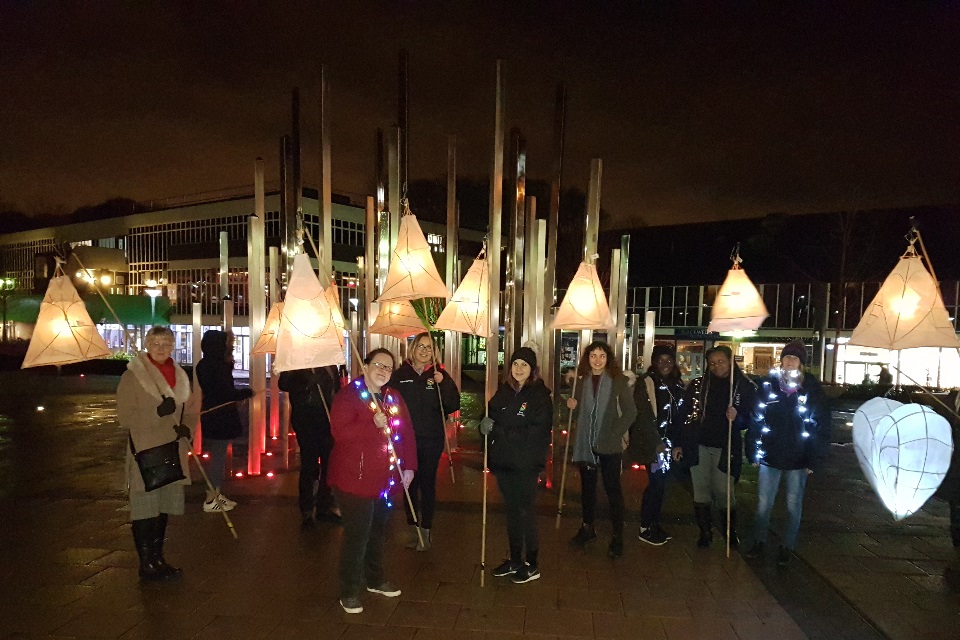
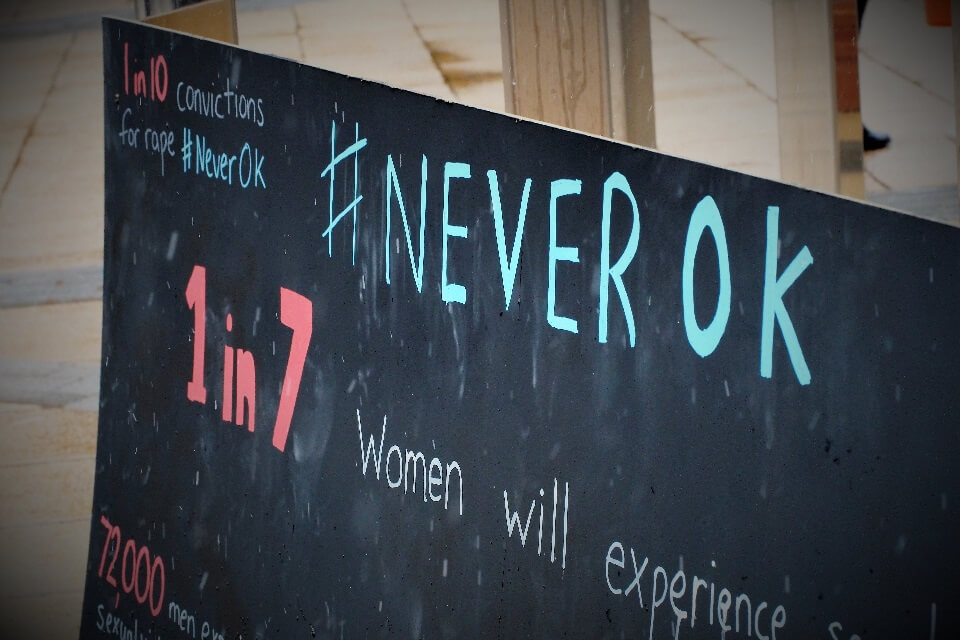

Concerns can be reported here https://reportandsupport.keele.ac.uk/ . This provides you with the option to be identified or report the issue anonymously. By reporting anonymously the University may not be able to investigate further or take action, but it does allow us to know about behaviours in the university which do not reflect our values. This information will be used to monitor the prevalence of incidents that are taking place and introduce initiatives that can help to improve the culture of Keele.
On receipt of a concern raised, a member of staff will assess the information you have provided and will contact you, if necessary.
If you are a member of staff, or a student and you wish to discuss your concerns with Student Services first, you can contact email: student.services@keele.ac.uk. Alternatively, you can book an appointment with your Student Experience and Support Officer here.
If you are a member of the local community, information on how to report concerns about a student's behaviour, can be found here.
The discipline regulation and code of practice applies to all registered students of the University as well as those who have accepted the offer of a place at Keele. It applies to behaviour wherever, and whenever, it may have taken place when it is considered by the University to be detrimental to another member of the University, University property or the interests and reputation of the University itself. It includes, but is not limited to, behaviour arising at any time when you may be regarded as representing the University as an individual or as part of a team or group. It also applies whether you are living or studying on campus or at some location away from the University either as part of your studies or following an arrangement made through the University or the Students’ Unions.
An offence is any behaviour which:
Negatively impacts staff, students, visitors and any member of the University cmmunity, and/or
- adversely affects the functioning or activities of the University or its reputation and/or
- Is detrimental to University property.
Examples of unacceptable behaviour are listed here: Student Non-Academic Discipline Code of Practice - 2025.pdf (Annex B)
Many of the breaches of the discipline regulation are also regarded as breaches of the University Residential Terms and Conditions; therefore it is very important that you familiarise yourself with the accommodation contract terms and conditions, which can be found here.
The University acknowledges many different groups within its community which exist for a variety of reasons; to participate in specific activities (e.g. sporting), to share passion for a particular subject or lifestyle, culture, or religion. Groups often hold social events at various times throughout the year, which are good team-building and morale-boosting exercises. In order to ensure that these events take place in a safe and respectable manner, the University has a Code of Conduct for Group Social Events. This policy sets out how the University expects group social events to be conducted.
It is a disciplinary offence to breach the University's IT Conditions of Use. You should also ensure that you are familiar with this and the accompanying guidance. In particular, you should be careful about your conduct online and via social media. For more information, please read the University's guidance via the following link: https://www.keele.ac.uk/students/lifeoutsideofstudy/usingsocialmediawisely/
When an allegation of misconduct has been received, the Student Discipline team will conduct a preliminary assessment to establish if a possible disciplinary offence may have occurred. The Investigating Officer will undertake initial enquiries by whatever means considered appropriate based on the circumstances of the case before deciding on the next step in the process. Examples include, but are not limited to:
• requesting statements, for example from other students, members of staff or those visiting the University.
• collection of CCTVs.
• Reviewing of mobile body cameras where the Campus Safety Team have been involved.
• Dashcam footage.
• Social media, online messages or other forms of communication.
The Investigating Officer will then bring this to the attention of the Head of Student Discipline Investigations or nominee to confirm the most appropriate next steps based on the information known. This includes referral to informal resolution, proceeding to a formal disciplinary investigation, or dismissal of the case as the allegation does not suggest a disciplinary offence. The relevant school will also be notified of the allegation as part of the preliminary assessment where a student is registered on a programme with professional practise requirements
Where an allegation of serious misconduct has been made against you, a risk assessment may be carried out which can result in immediate measures (exclusions or restrictions) being imposed on you. The purpose of any such measures is to safeguard you, or others, whilst a full investigation is undertaken by the University or the police, or both. More details about this process are given below.
A list of University officers who are authorised to investigate potential offences under Regulation B1 can be requested by emailing: studentconduct@keele.ac.uk
Please note that the librarian, or nominee, is also authorised to take urgent measures under the discipline regulation if your behaviour in the library disrupts other students’ ability to study uninterrupted or the running of the library service The librarian or nominee can temporarily exclude you for up to 48 hours or may limit your access to the library to certain times for up to 72 hours.
The University aims to take a supportive approach to a first allegation of a less serious offences (except where there is damage to University property), dealing with the matter via an educational conversation in the first instance.
The conversation will, normally, be carried out by an authorised officer or a trained member of staff. During the conversation, the member of staff will explain why your alleged behaviour may constitute a discipline offence and you will receive advice regarding your future conduct. In addition, the penalties that may be imposed on you should you be involved in a further incident of a similar nature will be highlighted to you.
Please note, if you are registered on a programme that is subject to Regulation B5 (Fitness to Practice), the allegation will be disclosed to your school (see Regulation B1 7.4 for further details).
You will receive an email from the Investigating Officer informing you of the allegation raised and how this may be considered a disciplinary offence. You will be provided with the opportunity to respond to the allegation and meet with the Investigating officer where they will explain the disciplinary process, this is called a pre-process meeting. In your response you should include any mitigation, evidence or information you wish the Investigating Officer to consider. The Investigating Officer may also contact witnesses or others who may have relevant information. They will also collect any available evidence, such as photographs, CCTV footage, Body Camera footage, mobile phone messaging, social media posts and so on. The Investigating Officer may need to interview you, and separately, any person who raised a complaint, any witnesses or anyone with information. When all the information and evidence has been gathered the Investigating Officer will complete a report along with evidence. The Head of Student Discipline Investigations or nominee, together with the Investigating Officer uses the report to decide if an Investigating Officer Issued penalty or informal resolution is appropriate.
Where your conduct suggests it is not appropriate to pursue an Investigating Officer Issued penalty or informal resolution, the report will be considered by both the Head of Student Discipline Investigations or nominee and Head of Student Conduct or nominee to decide whether to dismiss the case, refer it to a formal meeting of the Discipline Committee, or refer it for consideration by chair’s action on behalf of the Discipline Committee.
More detail about this process can be found here: Student Non-Academic Discipline Code of Practice - 2025.pdf (Page 11)
If you are asked to attend a meeting of the Discipline Committee, you will be asked by the Student Conduct Team if you wish to have an in-person meeting on Keele campus or whether you wish to have the meeting take place on MS Teams. You will be provided, normally at least 14 calendar days in advance of the meeting, with a letter (via email) which sets out the nature of the allegation(s), a copy of the documentation that will be presented to the Committee, and a list of any witnesses which the investigating officer will be calling to the meeting. You have a right to make a submission, call witnesses, and to be accompanied by a representative from ASK, a member of staff, a current student, or an elected officer of the Keele Students' Union or the Keele Postgraduate Association. Witnesses, who may or may not be members of the University, will only be allowed to attend the meeting by agreement of the Chair of the Discipline Committee and their attendance is restricted to the part of the meeting set aside to hear witness evidence. Normally, witnesses must have given a written statement during the investigation.
You will be invited to submit a statement in response to the allegation(s), a copy of any documentation you wish to be considered, and the names of any witnesses you wish to call to the meeting at least 48 hours before the meeting is to take place. The Committee may disregard any mitigation that is not accompanied by supporting evidence and/or any information or evidence which is not provided to it within the prescribed time period (normally at least 48 hours before the meeting).
More information on the Discipline Committee, meetings of the Discipline Committee and what penalties they can impose can be found here: Student Non-Academic Discipline Code of Practice - 2025.pdf (Page 13)
At any point in the disciplinary process, and/or during a police investigation the University may impose temporary restrictions upon you. Temporary restrictions are not disciplinary actions but are meant to protect you and the University community, maintain the University's operations and ensure a fair process while an investigation is underway. Such measures are precautionary and are intended to manage risk. They are not a penalty, and they do not indicate that the University believes that you have committed a breach of the regulation.
More information on the Risk Management process, and examples of restrictions that the Head of Student Discipline or the Risk Assessment Panel can impose can be found here: Student Non-Academic Discipline Code of Practice - 2025.pdf (Page 24).
Following the imposition of temporary exclusions or restrictions by the Risk Assessment Panel, you have the right to appeal, in accordance with Regulation B1. You must fully outline the basis of your appeal on the following form and return it within 14 days from the date of the letter from the Risk Assessment Panel to appeals@keele.ac.uk
To download the form click here: Appeal Form Temporary Restrictions Sept 2025
Privacy Notice and how we will process your information
Please note, if you submit an appeal against temporary restrictions or exclusions, the information you give and any supporting evidence will be shared with the following:
- The investigating officer assigned to the case
- Members of Student Conduct
- Members of the Risk Assessment Panel
- The Director of Student Services and Success
- If there is a subsequent case for a grievance, it may be shared with the Legal, Governance and Compliance Team
- If there is a subsequent complaint made to the Office of the Independent Adjudicator (OIA), it may be shared with OIA staff handling the complaint
- If your programme is subject to Regulation B5, it may be shared with staff members dealing with fitness to practise procedures
Other than any necessary verification checks, your information will not be shared with any other third parties without your further consent.
Please note, the above may still apply if you are no longer a registered student.
Further privacy information
The University’s Student Privacy Notice can be found at this link:
Regulation B1 and the Student Non-Academic Discipline Code of Practice sets out the University’s expectations regarding appropriate student behaviour and provides an indicative list of behaviours and actions which would be considered to be offences under the regulation. The regulation enables Investigating Officers and the University’s Discipline Committee to impose penalties. The choice of penalty will be at the discretion of the Investigating Officers and the Discipline Committee). Where appropriate, more than one penalty can be imposed for the offence(s). Student Conduct will advise on appropriate penalties.
Investigating Officer and Discipline Committee Issued Penalties can be found here: Student Non-Academic Discipline Code of Practice - 2025.pdf
In very exceptional circumstances, you may be entitled to lodge an appeal against disciplinary action taken against you. To do so, one or more of the follow criteria must be fulfilled:
- i) Procedural irregularity in the conduct of the case;
- ii) There is new evidence that can be substantiated, including exceptional circumstances, which was not known at the time, and may have affected the outcome had it been known to the Authorised Officer/Discipline Committee and that there is a valid reason for not making it known at the time.
Details of the appeal process can be found here.
If you require advice and support, please contact Advice and Support at Keele (ASK) in the Students' Union:
If you have any questions about the disciplinary process, please contact Student Appeals, Complaints and Conduct Team.