

Natural textile fibres, such as cotton, present in lake sediments for over a century
Natural fibres promoted as sustainable alternatives to plastic, including cotton and wool, have been found preserved in a UK lake for more than a century - challenging assumptions that they quickly biodegrade in the environment.
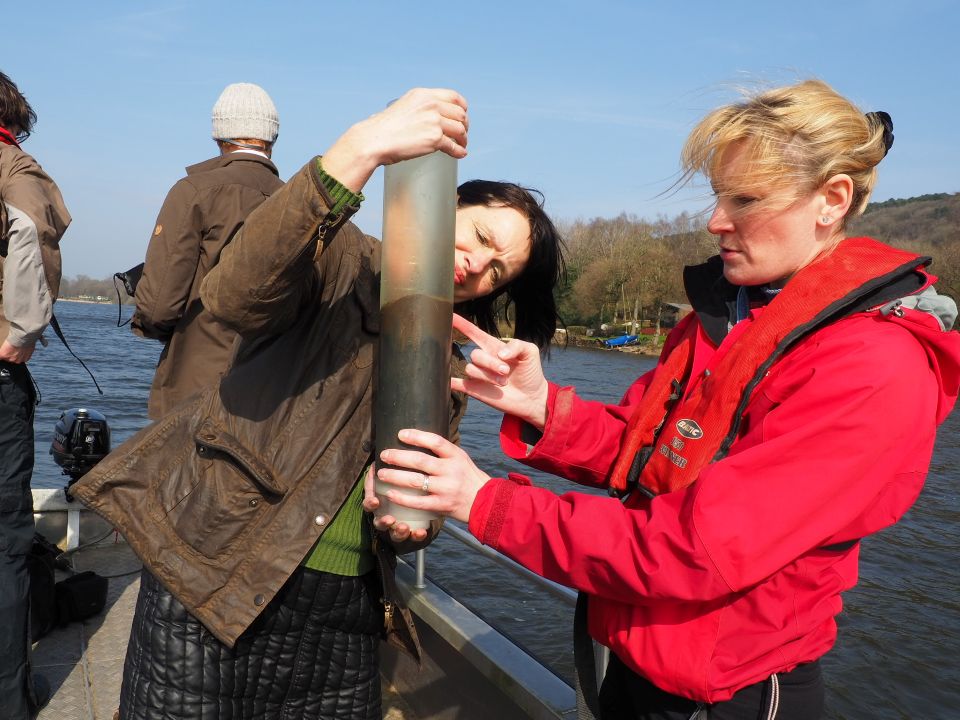
The study saw researchers from Keele University and Loughborough University recover textile fibres from a 150-year sediment record from Rudyard Lake in Staffordshire. Lying less than three miles from the historic mill town of Leek, once a centre of the country's textile industry, Rudyard Lake sits downstream of a significant site of industrial-era manufacturing activity.
The sediment record spanned the period 1876 to 2022 - from the UK's second industrial revolution through to the modern era. All fibres recovered between 1876 and 1979 except two were identified as either cotton or wool.
Natural fibres, including cotton and wool, are regularly promoted as sustainable alternatives to plastic, but this research challenges assumptions that natural fibres quickly biodegrade in the environment.
Published in iScience, this new research seeks to understand the extent of pollution caused by natural textile fibres - fibres that are no longer in their raw, unprocessed state - and their impact on the environment.
"These results directly challenge the idea that natural textile fibres simply biodegrade and disappear once they enter the environment," said Deirdre McKay, Professor of Sustainable Development from Keele University.
"Instead, we show that cotton and other natural fibres can be preserved in sediments for decades - even centuries."
In recent years, environmental research on textile pollution has focused heavily on synthetic fibres made from petroleum - microplastics. However, growing evidence suggests that natural fibres dominate many environmental samples. These non-plastic fibres receive far less attention.
"What’s been missing is an understanding of how long these non-plastic fibres actually persist," said Professor McKay. "Our study provides rare historical context, showing that natural fibres have been accumulating in the environment since the early days of industrial textile production."
The researchers recovered textile fibres from almost every layer of the lake sediment core, creating what they describe as a 'textile fibre chronology' stretching across approximately 150 years of human activity. The sediment record effectively acts as a technofossil archive, preserving evidence of changing manufacturing practices, clothing consumption and waste.
The findings have important implications for sustainability strategies that assume natural fibres are a straightforward solution to plastic pollution.
This is believed to be the first study to explore the preservation of natural textile fibres in aquatic sediments in the contexts of environmental pollution, technofossil research, or sustainable fashion. But, the academics explain, this preservation does not guarantee natural fibres cause harm.
"There is an urgent need to rethink assumptions about what 'green' and 'sustainable' materials really mean," said lead author Dr Tom Stanton of Loughborough University.
"Reducing plastic fibre production and consumption is important but replacing them with natural fibres without fully understanding the environmental behaviour and harm of all fibre types risks creating new problems rather than solving existing ones."
The researchers call for an urgent response from environmental pollution researchers to incorporate natural textile fibres into research that attempts to assess the environmental harms associated with textile fibres - of which natural textile fibres constitute the bulk.
They hope this will then be used to inform future material use, marketing and governance within the fashion and textiles industry, particularly as governments, brands and consumers push for more sustainable fashion choices.
Other partners involved in the project include Fashion Revolution, League of Artisans, University of Nottingham, Northumbria University and University of Southampton.