

Community involvement essential for local decarbonisation schemes to work, researchers say
Place-based decarbonisation schemes designed to help communities become more sustainable must involve local people earlier and consider the range of different community responses in their development if they are to be successful and gain fuller community support, researchers have said.
Countries across the world are exploring a range of ways to transition to low carbon energy systems to reduce carbon emissions and increase energy security, including a range of different d place-based approaches, which take the different social and technical characteristics of a place into consideration in their design.
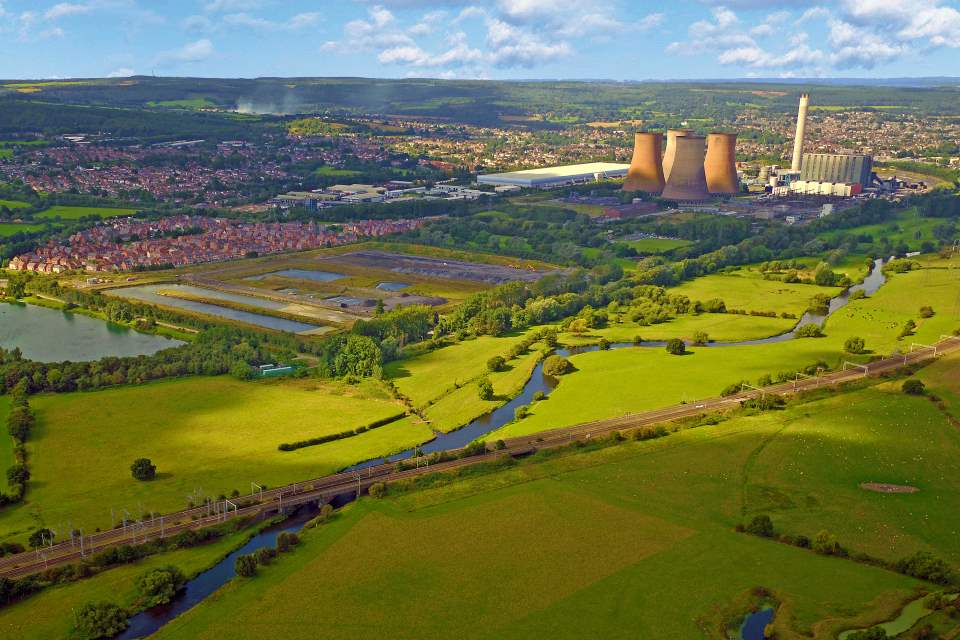
Keele researchers played a key role in one such place-based decarbonisation scheme pioneered in Rugeley in Staffordshire; Zero Carbon Rugeley was a project to produce an innovative design for a town-wide Smart Local Energy System for the former coal mining, industrial town.
In a new paper published in Energy Research and Social Science Professor Zoe Robinson from Keele, who led the community engagement design and delivery for the project, explores how different community ‘place imaginaries’ (ways that local people think and feel about their local area) interacted with the way that the project was formally branded, and how this affected the community members’ responses to the project.
In the paper, Professor Robinson and her colleague Dr Adam Peacock explore how a single framing of a project driven by an initially top-down approach, which brings in community input after project boundaries are already set and the project named and branded, can create disconnect between communities and project implementers and negatively affect some parts of the community's willingness to buy in to the decarbonisation vision.
The authors were uniquely positioned to study these phenomena through dual ‘insider-outsider’ roles as both researchers and practitioners designing and delivering the community engagement activity.
Analysis of their own experience as project implementers on Zero Carbon Rugeley, and other sources including interviews with the community, innovative cultural animation workshops designed in collaboration with New Vic Borderlines, and social media engagement, revealed how attempts to legitimise the project gave unequal weight to the community's different characteristics and ‘place imaginaries’.
This demonstrates how important nuances about communities are not accounted for when designing these systems, and as a result their responses to the project can vary widely.
Professor Zoe Robinson said: “Working with the community through the Zero Carbon Rugeley project allowed us to provide a bridge between the local community and the technical project implementors, helping bring the community’s voice to those shaping and delivering the project.
"Our work highlighted the importance of bringing in community voices into project design and conceptualisation from the outset, rather than treating engagement as an add-on once key decisions have already been made, a principle that is widely recognised but still too rarely realised in practice.”