


Year of entry
- 2027
UCAS code
- B750
Duration of study
- 2 years
Nursing Associate Foundation Degree - FdSc
Course summary
The Nursing Associate Foundation Degree (FdSc) at Keele University prepares you to take the next step in your healthcare career. Designed for those already working in a caring role or with some prior experience, the programme focuses on the practical skills, knowledge, and professional behaviours needed to become a Nursing Associate. You'll study alongside apprentices on Keele’s established Nursing Associate Apprenticeship (FdSc), gaining hands-on experience and real-world insights. This programme is approved by the Nursing and Midwifery Council.
Apply for this course via UCAS (code B750). You can also apply directly using the buttons below.
Why study Nursing Associate Foundation Degree at Keele University?
 2nd in England for Nursing (The Times and Sunday Times Good University Guide, 2025)
No.1 in the West Midlands and Top 10 in England for Nursing and Midwifery (Complete University Guide, 2026)
Top 10 in England for Adult (General) Nursing (Guardian University Guide, 2025)
This programme is approved by the Nursing and Midwifery Council
9th for Nursing and Midwifery (Daily Mail University Guide, 2026)
2nd in England for Nursing (The Times and Sunday Times Good University Guide, 2025)
No.1 in the West Midlands and Top 10 in England for Nursing and Midwifery (Complete University Guide, 2026)
Top 10 in England for Adult (General) Nursing (Guardian University Guide, 2025)
This programme is approved by the Nursing and Midwifery Council
9th for Nursing and Midwifery (Daily Mail University Guide, 2026)

About the degree
Our Nursing Associate Foundation Degree (FdSc) programme is fully aligned with the Nursing and Midwifery Council (NMC) Standards, providing a solid foundation that connects across all fields of nursing: Adult, Children’s, Learning Disability, and Mental Health.
The combination of theory and practical modules will develop your knowledge, skills, and professional behaviours. You'll build progressively in academic level, professional responsibility, and technical skills, with key themes embedded throughout the programme. These include being an accountable nursing professional, promoting health and preventing ill health, providing and monitoring care, working in teams, improving safety and quality of care, and contributing to integrated care.
Your progress will be reviewed throughout the year with your Academic Mentor. These regular check-ins help keep you on track and ensure you get the right support at every stage, whether from academic mentors, clinical supervisors, or specialist wellbeing services.
You’ll spend at least two days per week in clinical practice, across eight placement blocks over two years, adding up to a minimum of 1,150 hours. Practice areas will include hospitals, primary care, mental health, learning disabilities, and community-based settings.
Successful completion of this programme means you are eligible to apply for registration with the Nursing and Midwifery Council (NMC) within five years of completion.

Course structure
What you will study
Our courses are designed to develop the skills, experience and expertise you'll need to succeed in your chosen career, informed by the latest research, teaching methods, student feedback, and employer insights. Module details are representative of what we intend to deliver on the course, but may change to reflect best practice and academic development. This information should therefore not be considered a definitive list of available modules.
Compulsory modules
Fundamentals of Nursing Associate Practice
In this module you can expect to apply theory to practice in order to demonstrate safe and effective communication with people across the lifespan. A person-centred approach will be used in order to apply the principles of assessing, planning, implementing and evaluating care. You will continue to develop your competence and confidence in relation to the role of the nursing associate and how these connect with other roles within the healthcare team.
Nursing Associate Clinical Practice 1
In this module you can expect to gain knowledge, skills and behaviours to demonstrate safe, effective and compassionate nursing associate practice in line with the Nursing and Midwifery Councils (2018) code, and the Nursing and Midwifery Councils (2018) standards of proficiencies.
Skills for Academic Learning and Professional Practice
This module will ensure that you are able to demonstrate and apply accurate numeracy and literacy skills to safe nursing associate practice. This module will equip you with the skills to use digital technologies applying these both to your academic studies and clinical practice. An integral part of this module is to become a reflective practitioner which will be demonstrated through a written reflection considering your professional requirements and standards.
Medicines Management in Nursing Associate Practice
In this module you will demonstrate safe and effective administration of medication. This will include exploring the concept and application of patient consent, and the principles surrounding safe storage, transportation and disposal of medication. This will be underpinned by understanding the importance of key policies and guidance relating to medicines management. You will be introduced to the different medication routes and apply these to the nursing associate role.
Nursing Associate Clinical Practice 2
In this module you can expect to build upon knowledge, skills and behaviours to demonstrate safe, effective and compassionate nursing associate practice in line with the Nursing and Midwifery Councils (2018) code, and the Nursing and Midwifery Councils (2018) standards of proficiencies. Under the supervision of practice supervisors and a practice assessor, the remaining proficiencies will be assessed in order to demonstrate competence and development of knowledge, skills and behaviours within the scope of the Nursing Associate role.
Applied Biological Science
This module enables you to identify key structures and functions of the human body, exploring normal parameters of the human body anatomy and physiology. This will then enable you to recognise altered physiology applied to common health conditions across the lifespan. You will have the opportunity to build your knowledge and understanding in relation to the relationship between health conditions and microbiology and the principles of infection prevention and control associated with this.
Compulsory modules
Enhancing Nursing Associate Practice
This module explores the management of people with complex healthcare needs across the lifespan. It considers a range of settings including both learning disability and mental health. The importance of Partnership working is explained in this module to include the collaboration required with service users and carers, the concept of ‘expert patient’ is applied, the service user, carer voice and experience is recognised as to its importance in nursing associate practice. The module discusses the principles of care management in end-of-life care, sessions are supported by clinical partners from specialist areas addressing the needs pertinent to a range of settings.
Health and Wellbeing in Nursing Associate Practice
This module enables you to explore the health and wellbeing across the lifespan for individuals as well as families and communities, across a range of settings, recognising that public health is the cornerstone to all nursing associate practice. In doing so you will develop an understanding of public health, health protection and health promotion and their significance to your developing nursing associate practice. Through undertaking this module, you will raise your awareness and understanding of the wider determinants of health, health inequalities including social influences and health behaviours.
Nursing Associate Clinical Practice 3
In this module you can expect to build on first year knowledge, skills and behaviours to demonstrate safe, effective and compassionate nursing associate practice relating to a group of people’s needs in line with the Nursing and Midwifery Councils (2018) Code and the Nursing and Midwifery Councils (2018) Standards of Proficiencies. You will start to develop enhanced clinical skills such as venepuncture, electrocardiogram lead placement, basic airway management skills, A - E assessment approach, end of life care and care of complex wounds. Theoretical knowledge will be developed focusing on A-E assessment theory, end of life care, care of the patient living with dementia, mental health in young people, infection prevention and control, genomics and health literacy. There will be a variety of workshops, simulation and guided study associated with this module including journal club, solution focused group supervision, role play and ECG interpretation.
Leadership and Team Working in Nursing Associate Practice
This module explores leadership qualities and behaviours, encouraging reflection as to the application and development in nursing associate practice, in line with the nursing associate scope of practice. You will learn the principles and importance of effective multi-disciplinary teamwork via discussion and collaborative learning. You will develop knowledge and skills pertaining to leadership and team-working that can be applied to clinical practice.
Nursing Associate Clinical Practice 4
In this module you can expect to consolidate knowledge, skills and behaviours to demonstrate safe, effective and compassionate nursing associate practice relating to a group of people’s needs in line with the Nursing and Midwifery Councils (2018) Code and the Nursing and Midwifery Councils (2018) Standards of Proficiencies.
Safety and Quality in Nursing Associate Practice
This module explores the importance of research, audit and risk management in improving quality and safety in healthcare. It will introduce key principles of teaching, learning and supervision relevant to nursing associate practice. You will be equipped with the skills to devise and demonstrate a teaching resource that facilitates learning for other healthcare team members.
You can view the Programme Specification for this course by visiting the Programme Specifications webpage. (opens in new tab)
Double Gold in the Teaching Excellence Framework
Keele is one of only 15 broad-based universities in England - out of over 100 - to have been awarded Gold in both the 2017 and 2023 Teaching Excellence Framework (TEF) exercises, demonstrating our consistent teaching excellence.

Additional opportunities
There are a range of additional opportunities for this course.
Please note that undertaking one may impact the availability of another.

Entry requirements
These are the typical entry requirements for this course for a range of UK and international qualifications. If your qualifications aren't listed, please contact us to check if we can accept them. If you don't think you'll meet the stated requirements, you may be able to access this course via a Foundation Year.
Additional information
The Nursing Associate Foundation Degree (FdSc) typically requires:
- Some experience in a care setting.
- GCSE Maths and English at Grade C (4) or accepted equivalent such as Functional Skills.
- Your place on the course is subject to successful DBS Check and Occupational Health Clearance.
- PLUS a successful interview.
English language requirements
All our courses require an English language qualification or test. Most students meet this through a 4 or C in GCSE English. Please visit our English Language pages for details, including test information for international students. For students who require a test, this course requires a result from Group C.
Alternative and contextual offers
We're committed to ensuring equality of opportunity for applicants with the potential and motivation to succeed, regardless of background. We offer alternative offer schemes with clear eligibility criteria, including contextual offers, offers for those studying in the Keele region, and recognition of a range of additional qualifications.
General information
The entry grades outlined indicate the typical offer, along with any subject specific requirements. This is for general information only. Keele University reserves the right to vary conditions based upon a candidate's application. For international students, find out how we work with approved agents as part of our admissions process.
Social life, societies and sports
Find out moreAccommodation
Find out moreLocal area and travel
Find out moreBoost your employability
Find out more
Fees and funding
Tuition fees for 2027/28 2026/27 academic year
- The tuition fee for UK Home students starting in 2027/282026/27 is set by the UK Government and will be £10,050£9,790.
- International:
International fees for 2027/28 entry have not yet been confirmed. We review all tuition fees annually and will update this page once they are finalised.
In subsequent years of your course, UK Home fees may change in line with government policy or legislative requirements. For continuing international students, fees will increase each year in line with RPI, capped at a maximum of 5% per year.
For details of our international fee bands visit our Undergraduate tuition fees page.
Going to university can be daunting as well as exciting. It's important to understand the costs and financial support available. You may be eligible for funding support via the NHS Learning Support Fund. Further details and eligibility criteria can be found in the Student Finance section on the gov.uk website.
You may also be eligible to receive Parents' Learning Allowance or a Childcare Grant. Further details and eligibility criteria can be found in the Student Finance section on the gov.uk website.
Financial support
Going to university can be daunting as well as exciting. It's important to understand the costs and financial support available.
Our Student Financial Support team offers confidential advice and guidance to help you manage your money, resolve issues with Student Finance, create a budget, explore your options if you're facing financial hardship, and access any funding you are eligible for, such as bursaries and scholarships.
For more information visit our undergraduate fees and funding pages.
Additional costs
The additional costs listed below apply to the 2026/27 academic year. Costs for 2027/28 entry will be confirmed closer to the time, so the information below should be used as a guide only.


Your future career
Nursing associates work with people of all ages, in a variety of settings in health and social care. The role contributes to the core work of nursing, freeing up registered nurses to focus on more complex clinical care.
Nursing associates are a separate profession to nursing with different knowledge and skills, set out in a distinct standard of proficiency. This means, for example, that while a nurse and nursing associate will play different roles in an aspect of care, they will both uphold the standards in the Code within the contribution they make to overall care.
Find out more about our careers and employability services, including career planning, alumni mentoring, jobs, internships, starting your own business and much more.

Teaching, learning and assessment
Teaching
We use various teaching and learning methods on this programme which recognise the varied nature of nursing. Education takes place both in the classroom and online, with some small-group teaching alongside clinically based simulation settings.
Teaching and learning methods may also include:
- Lead lectures
- Tutor and student led tutorials
- Problem solving scenarios
- Case study presentations
- Small group work
- Interprofessional learning
- Simulation
- Independent study
In your programme you will sometimes be expected to role play and engage in simulated clinical scenarios with other students, such as the practice and observation of practical skills in physical contact with other students. For some specific practices, this may necessitate modification of dress - e.g., to shorts and t-shirt. These activities will be conducted in a professional, safe, respectful and culturally sensitive way, under the supervision of academic staff, according to a defined protocol.
Assessment
We use a wide variety of assessment methods on this programme that reflect the range of knowledge and skills you will develop on the programme.
Assessment methods may include:
- Continuous assessment of practice
- Assessments of an 'episode of care' in practice settings
- Practical examinations
- Reflective accounts
- Examinations (essays, short answer and/or multiple)
- Essays
- Class tests
- Oral and poster presentations
- Peer assessment
Key programme expectations
Before applying, it is important to understand the core physical and psychological demands of training for a career in this field. To help you make an informed choice, our programme aligns with fitness to train standards detailed by the Higher Education Occupational Practitioners (HEOPS) group. We encourage all prospective students to review these core capabilities to ensure they feel confident meeting the day-to-day expectations of both the academic study and clinical placements.

Medical fitness to train and work
Nursing Associate students must meet essential medical fitness standards to ensure they can safely train and practise. This includes immunity screening, infectious disease precautions, and meeting functional health requirements.

Physically demanding role
Nursing Associate programmes are physically demanding, requiring the ability to safely move and handle patients, conduct physical examinations, provide personal care, stand for long periods and provide emergency responses including performing CPR, often under pressure.

Mentally demanding role
Nursing Associate students will regularly encounter distressing, unpredictable, stressful and traumatic clinical situations. Students should have the cognitive ability, memory and emotional resilience and wellbeing to study the programme. The ability to communicate clearly, effectively and professionally is essential.

Extensive clinical placements and shift work
Nursing Associate students spend significant time on placement within community settings, hospitals, and specialist units to gain hands‑on experience. Placements are mandatory (not optional). Nursing and Midwifery services frequently operate 24/7. Students must expect shift work including night duty and weekends.

Travel requirements
Nursing Associate students must be prepared to travel to and from placement areas, often across large geographical areas (within a 50-mile radius), as part of routine clinical placements. This is a course requirement.

Academic expertise
The teaching team at the School of Life Sciences are active researchers in core areas such as biosciences, geosciences, environmental sciences, geography and bioengineering. Their academic expertise informs your learning, incorporating current practices, theories and contemporary themes that encourage discussion within your subject area.
The teaching team consists of professors, readers, senior lecturers, lecturers, demonstrators, and teaching fellows.
Professional support staff are also available to assist with any queries you may have during your undergraduate studies at Keele.
The teaching team at the School of Engineering and Physical Sciences perform research across the school with particular strengths in materials science, synthetic, forensic and analytical chemistry. Their academic expertise informs your learning, incorporating current practices, theories and contemporary themes that encourage discussion within your subject area.
Professional support staff are also available to assist with any queries you may have during your undergraduate studies at Keele.
The teaching team consists of professors, senior lecturers, and lecturers within the School of Engineering and Physical Sciences. They are fellows or senior fellows of the Higher Education Academy, the professional body for teachers in higher education. Fellowship provides individuals with recognition of their practice, impact and leadership of teaching and learning. A number of our academic staff have also achieved national recognition for their excellence and innovation in teaching and hold awards from a variety of institutions, including the Royal Society of Chemistry and AdvanceHE.
The teaching team in the School of Humanities and Social Sciences are active researchers in core areas of Criminology and Sociology such as fields of crime, globalisation and urban spaces and cultures. Their academic expertise informs your learning, incorporating current practices, theories and contemporary themes that encourage discussion within your subject area.
Professional support staff are also available to assist with any queries you may have during your undergraduate studies at Keele.
The teaching team consists of professors, senior lecturers, lecturers and graduate teaching assistants.
The teaching team in the School of Humanities and Social Sciences are active researchers in core areas of Education such as critical social policy and feminism. Their academic expertise informs your learning, incorporating current practices, theories and contemporary themes that encourage discussion within your subject area.
Professional support staff are also available to assist with any queries you may have during your undergraduate studies at Keele.
The teaching team consists of senior lecturers and lecturers.
The teaching team in the School of Engineering and Physical Sciences are active researchers in core areas such as materials, sustainability, and energy. Their academic expertise informs your learning by incorporating current practices, theories, and contemporary themes that encourage discussion within your subject area.
Professional support staff are also available to assist with any queries you may have during your undergraduate studies at Keele University.
The teaching team consists of professors, senior lecturers and lecturers.
The teaching team in the School of Humanities and Social Sciences are active researchers in core areas of English and Creative Writing. Their academic expertise informs your learning, incorporating current practices, theories and contemporary themes that encourage discussion within your subject area.
Professional support staff are also available to assist with any queries you may have during your undergraduate studies at Keele.
The teaching team consists of professors, readers, senior lecturers, lecturers, and graduate teaching assistants.
The teaching team in the School of Humanities and Social Sciences are active researchers in core areas such as twentieth century and contemporary music, cultural politics, social movements and representation. Their academic expertise informs your learning, incorporating current practices, theories and contemporary themes that encourage discussion within your subject area.
Professional support staff are also available to assist with any queries you may have during your undergraduate studies at Keele.
The teaching team consists of professors, readers, senior lecturers, and lecturers.
The teaching team at the School of Engineering and Physical Sciences provide research-led quality teaching, particularly in the fields of forensic chemistry, forensic biology, crime investigations, forensic search and forensic anthropology, taphonomy and archaeology.
Professional support staff are also available to assist with any queries you may have during your undergraduate studies at Keele.
Our teaching team consists of professors, senior lecturers, lecturers, demonstrators and PhD students.
The teaching team at the School of Life Sciences are active researchers in core areas such as biosciences, geosciences, environmental sciences, geography and bioengineering. Their academic expertise informs your learning, incorporating current practices, theories and contemporary themes that encourage discussion within your subject area.
The teaching team consists of professors, readers, senior lecturers, lecturers, demonstrators, and teaching fellows.
Professional support staff are also available to assist with any queries you may have during your undergraduate studies at Keele.
The teaching team in the School of Humanities and Social Sciences are active researchers in core areas of medieval, early modern, and modern history including expertise in historical inequality, democratisation and civil society. Their academic expertise informs your learning, incorporating current practices, theories and contemporary themes that encourage discussion within your subject area.
Professional support staff are also available to assist with any queries you may have during your undergraduate studies at Keele.
The teaching team consists of professors, readers, senior lecturers, lecturers and graduate teaching assistants.
The teaching team at the School of Medicine are either active researchers in core areas such as musculoskeletal health, mental health and well-being, biomedical science, prognosis and big data, or actively engaged with a diverse range of scholarly activities to enhance their roles as educators.
The teaching team consists of professors, readers, senior lecturers, lecturers, senior teaching fellows, teaching fellows, senior research fellows, research fellows, research associates, research assistants, anatomy technicians and PhD students. The School of Medicine teaching team also includes a wide range of health professionals who are actively engaged in clinical research and quality improvement including those based in hospitals and community-based services.
The academic team at the School of Nursing and Midwifery are active researchers in core areas such as loss, bereavement and end of life care; primary, community and district nursing; and women's health. Their academic expertise informs your learning, incorporating current practices, theories and contemporary themes that encourage discussion within your subject area.
Professional support staff are also available to assist with any queries you may have during your undergraduate studies at Keele.
The teaching team consists of readers, senior lecturers, lecturers, research associates and teaching fellows.
The teaching team at the School of Engineering and Physical Sciences perform research across the school with particular strengths in astrophysics, materials science, renewable energy and sustainability. Their academic expertise informs your learning, incorporating current practices, theories and contemporary themes that encourage discussion within your subject area.
Professional support staff are also available to assist with any queries you may have during your undergraduate studies at Keele.
Our teaching team consists of professors, senior lecturers, lecturers, readers, and PhD students.
The teaching team in the School of Humanities and Social Sciences are active researchers in areas including democracy, governance, public policy and idealism. Their academic expertise informs your learning, incorporating current practices, theories and contemporary themes that encourage discussion within your subject area.
Professional support staff are also available to assist with any queries you may have during your undergraduate studies at Keele.
The teaching team consists of professors, senior lecturers, lecturers and graduate teaching assistants in the School of Humanities and Social Sciences.
The teaching team within the Institute of Sport brings together expertise across sport, exercise, health and rehabilitation, reflecting the continuum of human performance and wellbeing across the lifespan. Our staff are actively engaged in research and applied practice spanning physical activity, performance, health and recovery, ensuring that teaching is informed by both scientific evidence and real-world application. As a CASES-accredited partner institution, and with staff holding individual CASES accreditation, the programme is underpinned by recognised professional standards in sport and exercise science.
Staff operate within an interdisciplinary environment, working alongside colleagues from across the Allied Health Professions within the School. This collaboration informs teaching and supports a broader, integrated understanding of health, physical activity and rehabilitation across diverse populations and contexts.
Collectively, this breadth of expertise shapes your learning experience, incorporating current practices, theories and contemporary themes that encourage discussion within your subject area.
Professional support staff are also available to assist with any queries you may have during your undergraduate studies at Keele. The School's teaching team consists of professors, senior lecturers and lecturers.
The teaching team at Keele Business School are active researchers in core areas such as accounting, finance, economics, human resource management, marketing, and management. Their academic expertise informs your learning, incorporating current practices, theories and contemporary themes that encourage discussion within your subject area.
Professional support staff are also available to assist with any queries you may have during your undergraduate studies at Keele.
Our teaching team consists of professors, senior lecturers, and lecturers within Keele Business School. The team is multicultural and multinational, bringing an international dimension to the school's teaching, research, and business engagement.
The teaching team within the School of Allied Health Professions and Pharmacy brings together a diverse community of academics and clinicians working across four interrelated themes: Pharmacy and Pharmaceutical Science, Medical Technologies, Allied Health Therapies, and Active Living and Sport.
Our staff include experts in the biological and clinical sciences, statistics, engineering, and professional practice, who contribute to both research and scholarly activity aligned to their disciplines. This breadth of expertise ensures that teaching is informed by current evidence, practice, and innovation, enabling you to engage with contemporary issues relevant to your chosen field.
The teaching team consists of professors, senior lecturers, lecturers, readers, visiting clinicians, and research fellows.
Our programmes are supported by experienced professional staff who help to ensure a high-quality student experience throughout your studies.
The teaching team at Keele Business School are active researchers in core areas such as accounting, finance, economics, human resource management, marketing, and management. Their academic expertise informs your learning, incorporating current practices, theories and contemporary themes that encourage discussion within your subject area.
Professional support staff are also available to assist with any queries you may have during your undergraduate studies at Keele.
Our teaching team consists of professors, senior lecturers, and lecturers within Keele Business School. The team is multicultural and multinational, bringing an international dimension to the school's teaching, research, and business engagement.
The School of Computer Science and Mathematics is home to active researchers working across a rich range of topics, from artificial intelligence, cyber security and human-centred computing to fluid and solid dynamics, biomechanics and pure mathematics. Whether developing responsible AI, designing smart health technologies, or advancing mathematical methods for waves, materials and structures, our research is wide-ranging and internationally recognised.
This will directly shape your learning. You'll encounter current ideas in AI and its ethical implications, cloud computing, evolutionary systems, usable security, mathematical modelling of materials and discrete mathematics, taught by the people actively advancing these fields.
The teaching team consists of professors, senior lecturers, lecturers, readers and visiting research fellows.
Alongside your teaching team, dedicated professional staff will be on hand to support you throughout your time at Keele.
Our teaching team includes readers, senior lecturers, lecturers, research associates and teaching fellows who are active researchers and educators with expertise across a wide range of health and social care disciplines.
Their research and scholarship span areas including musculoskeletal health, mental health and wellbeing, community nursing, women's health, biomedical science, prognosis and big data, contemporary issues in child and family social work, end-of-life care, and international social work practice. Staff also undertake pedagogic research to advance teaching and learning within health and social care education.
This academic expertise informs your learning by incorporating current practices, theories and contemporary themes that encourage discussion and critical thinking within your subject area.
Professional support staff are also available throughout your undergraduate studies at Keele to provide guidance and answer any queries you may have.
The teaching team in the School of Law consists of professors, senior lecturers, lecturers and solicitors. They are all either active researchers (in fields including social justice and human rights; public and European law; ethics, health and social care; and legal education) or experienced legal practitioners. Their academic and professional expertise informs your learning, incorporating current practices, theories, and contemporary themes that encourage discussion within your subject area.
Professional support staff are also available to assist with any queries you may have during your undergraduate studies at Keele.
The teaching team at the School of Psychology have expertise spanning cognition and neuroscience, health and wellbeing, social identity and change, and justice and security.
Staff research and scholarship expertise inform your learning, incorporating current practices, theories and contemporary themes that encourage active learning and discussion within your subject area.
Professional support staff are also available to assist with any queries you may have during your undergraduate studies at Keele.
The teaching team consists of professors, senior lecturers, lecturers and teaching fellows within the School of Psychology.
The teaching team at the Harper and Keele Veterinary School includes active researchers in areas such as animal health and wellbeing, animal welfare and farming technologies. Many are currently practising veterinary surgeons and allied professionals, and the course draws on a wide range of expertise across many disciplines through contributions by external lecturers. Their academic expertise informs your learning, incorporating current practices, theories and contemporary themes that encourage discussion within your subject area.
Professional support staff are also available to assist with any queries you may have during your undergraduate studies at Keele.
Our teaching team consists of readers, professors, senior lecturers, lecturers and teaching fellows.
The academic expertise in the School of Humanities and Social Sciences informs your learning, incorporating current practices, theories and contemporary themes that encourage discussion within your subject area.
Professional support staff are also available to assist with any queries you may have during your undergraduate studies at Keele.
Our teaching team consists of professors, readers, senior lecturers, and lecturers.
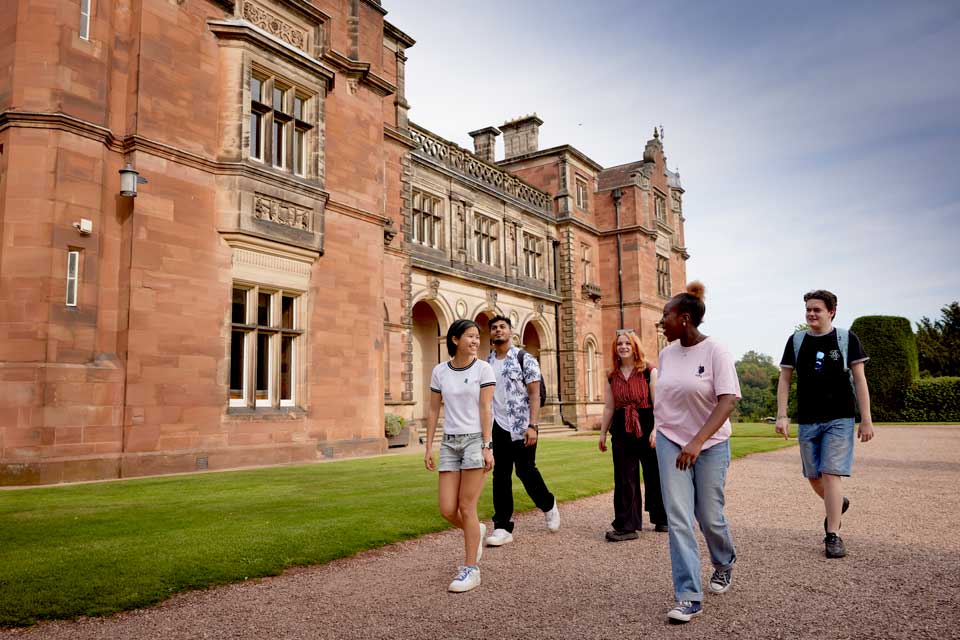
Student life at Keele is vibrant, diverse, and packed with opportunities to make the most of your time at university.

We help students manage their money and ensure that they receive any funding for which they may be eligible.

Make yourself more employable after graduation by taking advantage of the whole host of additional opportunities.