


Human Geography and Sustainability Research - MA
To develop sustainable lifestyles, communities, environments and resources, we must first understand how we, as humans, interact with, modify and depend on our surroundings; and how these interrelationships vary spatially and temporally across and between locations. Accredited by the Economic and Social Research Council (ESRC), and compliant with the research training requirements for ESRC PhD scholarships, our MA equips you with skills, knowledge and 'hands-on' experience of human geography and sustainability-related research to generate the new insight needed to make a positive difference to our world, now and for the future.
Month of entry
- September
Mode of study
- Full time, Part time
Fees for 2026/27 academic year
- UK - Full time £11,700 per year. Part time £6,400 per year.
International - £18,200 per year.
Fees
Duration of study
- 1 year full time, 2 years part time
This course is no longer accepting applications from international students for the 2026/27 academic year.
Why study Human Geography and Sustainability Research at Keele University?

Course summary
The complex challenges facing the world today - including social and spatial inequalities, new migration flows, climate change and pollution - have led society to question the interactions between humans and the environment, demanding answers and new ways of working that human geography can provide.
Studying the ways in which people interact in economic, political, social, and spatial contexts can help us identify issues and challenges, and understand what causes them. Only then, can we develop solutions to improve long-term human wellbeing and protect the planet as a whole, distributing and managing our natural resources more equitably and sustainably.
Adopting an interdisciplinary approach, the MA in Human Geography and Sustainability Research not only draws on social sciences more generally, but also brings together Keele’s internationally recognised expertise across the two distinct disciplines of human geography and sustainability.
Generic and subject-specific research training prepares you to consider why and how humans behave, interact with, shape and affect their surroundings; studying our many diverse environments, habitats and resources (both natural and man-made).
Hands-on practical research equips you with valuable experience and skills to identify innovative solutions to broader societal problems. Such measures could include the development of new approaches for securing migrant settlement and integration, tackling rural deprivation and / or generating new forms of sustainable energy.
As part of our exciting advanced traineeships, you'll work with a research mentor on one of our 'live' research projects. Typical activities may include support to collect and analyse data, conduct literature reviews, assist the preparation of future funding bids, or to prepare 'key findings' reports.
The Dissertation provides a further opportunity to undertake an extended independent research project with freedom to come up with your own idea for subject matter or choose from a list of selected research projects. These may include: animal geographies; rural or urban geographies (including rural and urban planning); post-colonial geographies; temporal geographies of 'busyness'; children’s geographies; plastics and recycling geographies; geographies of international migration; geographies of responsibility and care; and geographies of mobility (and e-mobility).
You'll graduate with cutting-edge insight into the latest academic, policy and practice-related discussions, debates and developments in the fields of human geography and sustainability, together with the advanced research skills required for a career in the public, private or third sector. This includes positions with national and local government, other public bodies, non-governmental organisations (NGOs), private sector consultancies, research and policy institutes, charitable and community organisations.
Accredited by the Economic and Social Research Council (ESRC), the course is also an ideal choice for those wishing to pursue a PhD in human geography or sustainability and environmental studies. The programme complies with the ESRC's research training requirements for PhD scholarships (commonly termed +3.5), and is also suitable as the master's year as part of an ESRC scholarship award that covers both the master's and PhD (commonly termed a 1+3.5 award).

Course structure
By preparing you for future scientific enquiry, the MA in Human Geography and Sustainability Research responds to the need - identified previously by UK research funding bodies - for improved training in research skills at postgraduate level.
The course can be studied full-time over one year or part-time over two years, with a start date in September.
You will study two 30-credit and three 15-credit compulsory core modules, and choose one 15-credit optional module, split between subject-specific research training modules in human geography and sustainability (60 credits) and broader social science modules (60 credits). The latter enables you to study alongside other social science postgraduates, developing advanced qualitative and quantitative research and data analysis skills, and explore different approaches to research design and the philosophy of the social sciences.
The remaining element of the course involves an extended independent research project of your choice (60 credits), which allows you to put into practice the knowledge and skills generated during the taught component of the programme and focus on a topic of interest. Prospective applicants are strongly encouraged to view our available projects on our website, then contact and discuss research options with the Keele University staff member listed for the research area/topic of interest before making an official application. In your application documents, state clearly your preferred subject area or specific project, including potential supervisor, and your motivation and background for carrying out a project in a particular area. Please contact us if you would like to discuss options. Acceptance on the course is subject to having an agreed research project and project supervisor.
Each module involves around 24-hours of scheduled contact time taught in five or 10-week blocks over Semester 1 (October-December) and Semester 2 (January-May). The third semester (June-September) is then dedicated to completing your independent research project in which you will work closely with your assigned supervisor.
To achieve the MSc, you must complete 180 credits.
Modules
The module details given below are indicative, they are intended to provide you with an idea of the range of subjects that are taught to our current students. The modules that will be available for you to study in future years are prone to change as we regularly review our teaching to ensure that it is up-to-date and informed by the latest research and teaching methods, as well as student voice. The information presented is therefore not intended to be construed and/or relied upon as a definitive list of the modules available in any given year.
Core taught modules
Indicative Modules
The schedule below is indicative of one year of full-time study. If you study over two years part-time, course content will be the same and your Dissertation is studied in the second year of the course. However, you can choose when to study the taught elements of the course, either studying all of the modules within first two semesters of your first year, or splitting these up over both years.
Semester one
Key themes in Human Geography and Sustainability (15 credits)
Through exposure to current research, you'll be introduced to the diverse range of subject matter across the field, and the questions, issues and real-world problems the discipline seeks to solve. In particular, you'll develop an appreciation of how these relate to the United Nations (UN) Sustainable Development Goals (SDGs), including the creation of sustainable cities and communities, good health and well being, reduced inequalities and clean energy. You will develop research and communication skills useful in academic and commercial environments, undertake a critical systematic literature review and learn how to critically appraise and synthesise research findings.
Foundations of Social Science Research: Design and Philosophy (30 credits)
Foundations of Social Research outlines approaches to research design and the philosophy of the social sciences, equipping you with the tools to critically engage with different methodological approaches. Sessions are focused upon the nature of social inquiry, the relationship between theory and empirical research, and the philosophical foundations underpinning qualitative and quantitative methods. You will develop an understanding of processes informing design and the complexities of studying social phenomena, preparing you for advanced research practice in the social sciences.
Modules running across Semester one and two
Advanced traineeships in Human Geography and Sustainability (15 credits)
Our advanced traineeships provide an exciting opportunity to contribute to one of our live research projects, working with a research mentor in an area of human geography, environmental studies, or sustainability. During your research traineeship, you'll gain key insights into different aspects of the research process, ranging from research design, to the delivery of impact-related activities, and what it's like to work with partners. You'll develop subject-specific and generic research knowledge and skills, for example, producing clear and effective written work in the form of full or partial research reports, systematic literature reviews, grant proposals or ethics applications. This not only improves your understanding of contemporary societal challenges, but also builds your CV, enhancing future employability.
Semester Two
Advanced methods in Human Geography and Sustainability (15 credits)
Engaging with quantitative and qualitative sources of data, you'll deepen your understanding of the principles of research design, different methodological strategies and approaches within human geography and sustainability-related research, and in relation to the UN SDGs. This includes geographical information systems (GIS), spatial analysis and modelling, participatory research, digital research methods, and ethnography, as well as ethics, health and safety in the context of your proposed research.
Qualitative and Quantitative Methodologies in Social Science (30 credits)
The module provides a comprehensive introduction to the principles and practices of qualitative and quantitative social science research. From a quantitative perspective, you’ll become familiar with the different ways in which statistical, mathematical, or numerical data is collected and evaluated, through polls, questionnaires, and surveys, or by manipulating pre-existing statistical data using computational techniques. From a qualitative perspective, you will learn to evaluate the strengths and weaknesses of different forms of investigation, such as in-depth interviews, focus groups, participant observation, or visual (artistic) research. You’ll be introduced to associated methods of data capture, including field notes, audio and/or video recordings, and transcripts, gaining practical experience of software used by qualitative researchers in the management and analysis of qualitative data.
Modules running across Semester two and three
Dissertation Module (60 credits)
Demonstrating your knowledge and interest in the discipline, you'll identify a research question, design your method of inquiry, collect suitable primary and/or in-depth secondary data, undertake appropriate analysis and present your findings in a 20,000-word written report. While we can provide a list of potential projects, one of the many advantages of our course is your option to choose your own dissertation subject and which may include research on place and space; mobility; sustainability; time; environment; diversity; inclusion; responsibility; nature; culture; policy and practice. To illustrate the potential scope, research projects being led by staff in the school have previously involved, exploring the health implications of vaping in 'super-diverse' communities, securing a 'just transition' to the use of electric vehicles in rural areas and new forms of sustainable energy more widely, examining the geographies of pet theft, identifying the impact of 'fast fashion' pollution on river environments, developing new methods of knowledge 'co-creation' with local communities and creating new strategies for migration integration and settlement.
Optional modules
Students on the MA programme have a choice of one optional module and will be directed towards a number of Level 7 modules in Human Geography or Environment / Sustainability.
Sector-leading in environmental education
At Keele we're leading the sector in sustainability, not just in our ambitions to become carbon neutral by 2030 but also through our teaching and our ground-breaking research into climate change and renewable technologies.
We are proud to be named Global Sustainability Institution of the Year (International Green Gown Awards, 2021), which demonstrates our commitment to embedding sustainability into all that we do.

Entry requirements
The following section details our typical entry requirements for this course for a range of UK and international qualifications. If you don't see your qualifications listed, please contact us to find out if we can accept your qualifications.
Typical offer
Please ensure that you read the full entry requirements by selecting your qualifications from the dropdown menu below. This will include any subject specific, GCSE/Level 2 Maths, and English language requirements you may need.
Please select your country from the drop-down list below for the full entry requirement information
UK
2:2 degree in a geography, geology, environmental or sustainability subject
or
demonstrated professional or relevant qualifications or experience
You will also need: an English language qualification (see below)
Algeria
12/20 or Assez Bien degree in a geography, geology, environmental, or sustainability subject or
or
demonstrated professional or relevant qualifications or experience
You will also need: an English language qualification (see below)
Bahrain
Bachelor's degree with a minimum CGPA of 2.7/4.0 in a geography, geology, environmental, or sustainability subject or
or
demonstrated professional or relevant qualifications or experience
You will also need: an English language qualification (see below)
Bangladesh
60% in a 4-year degree or 3-year degree with a 2-year Master's in a geography, geology, environmental, or sustainability subject from a public university
or
CGPA 2.8 in a 4-year degree or 3-year degree with a 2-year Master's in a geography, geology, environmental, or sustainability subject from a private university
or
demonstrated professional or relevant qualifications or experience
We don’t accept degrees from certain universities, please see our Bangladesh Country Page for more information
You will also need: an English language qualification (see below)
Canada
70% or C or a GPA of 2.5 in a degree (Ordinary or Honours) in a geography, geology, environmental, or sustainability subject
or
demonstrated relevant professional qualifications or experience
You will also need: an English language qualification (see below)
China
70% in a degree in a geography, geology, environmental, or sustainability subject or 65% in a degree in a geography, geology, environmental, or sustainability subject from a '211' university
or
demonstrated professional or relevant qualifications or experience
You will also need: an English language qualification (see below)
Egypt
Bachelor degree from a Public or Private University with 65%/CGPA = 2.7/Good degree in a geography, geology, environmental, or sustainability subject or
or
demonstrated professional or relevant qualifications or experience
You will also need: an English language qualification (see below)
Ghana
Second class degree in a geography, geology, environmental, or sustainability subject
or
demonstrated professional or relevant qualifications or experience
You will also need: an English language qualification (see below)
Hong Kong
Bachelor's Honours degree with 2:2 or CGPA of 2.5 OR Bachelor Ordinary degree with a CGPA of 3.4 in a geography, geology, environmental, or sustainability subject or
or
demonstrated professional or relevant qualifications or experience
You will also need: an English language qualification (see below)
India
55% or CGPA 6/10 in a degree of at least 3 years in a geography, geology, environmental, or sustainability subject
or
demonstrated professional or relevant qualifications or experience
You will also need: an English language qualification (see below)
Kenya
Second class degree in a geography, geology, environmental, or sustainability subject
or
demonstrated professional or relevant qualifications or experience
You will also need: an English language qualification (see below)
Kuwait
Bachelor's degree with a minimum CGPA of 2.75/4.0 in a geography, geology, environmental, or sustainability subject
or
demonstrated professional or relevant qualifications or experience
You will also need: an English language qualification (see below)
Nepal
60% / 2.4 in a 4-year Bachelor's degree in a geography, geology, environmental, or sustainability subject
or
65% / CGPA 2.8 in a 3-year Bachelor's degree in a geography, geology, environmental, or sustainability subject
or
demonstrated professional or relevant qualifications or experience
You will also need: an English language qualification (see below)
Nigeria
Second class degree in a geography, geology, environmental, or sustainability subject
or
demonstrated professional or relevant qualifications or experience
You will also need: an English language qualification (see below)
Oman
Bachelor's degree with a minimum CGPA of 2.5/4.0 in a geography, geology, environmental, or sustainability subject
or
demonstrated professional or relevant qualifications or experience
You will also need: an English language qualification (see below)
Pakistan
We accept a range of qualifications from Pakistan. Please visit our Pakistan Country Page for more information
or we will consider demonstrated relevant professional qualifications or experience
You will also need: an English language qualification (see below)
Qatar
Bachelor's degree with a minimum CGPA of 2.75/4.0 in a geography, geology, environmental, or sustainability subject
or
demonstrated professional or relevant qualifications or experience
You will also need: an English language qualification (see below)
South Africa
Second class division 2 / 60% in a Bachelor's degree with Honours in a geography, geology, environmental, or sustainability subject
or
Second class division 1 / 70% in an Ordinary Bachelor's degree in a geography, geology, environmental, or sustainability subject
or
demonstrated professional or relevant qualifications or experience
You will also need: an English language qualification (see below)
Sri Lanka
55% in a Special Bachelor's degree in a geography, geology, environmental, or sustainability subject
or
demonstrated professional or relevant qualifications or experience
You will also need: an English language qualification (see below)
Turkey
A CGPA of 2.5/4.0 in a Bachelor degree (Lisans Diplomasi) in a geography, geology, environmental, or sustainability subject or
or
demonstrated professional or relevant qualifications or experience
You will also need: an English language qualification (see below)
UAE
Bachelor's degree with a CGPA of 2.5/77%/B- in a geography, geology, environmental, or sustainability subject or
or
demonstrated professional or relevant qualifications or experience
You will also need: an English language qualification (see below)
Uganda
Second class degree in a geography, geology, environmental, or sustainability subject
or
demonstrated professional or relevant qualifications or experience
You will also need: an English language qualification (see below)
USA
Bachelor's degree with a minimum CGPA of 2.6 in a geography, geology, environmental, or sustainability subject
or
demonstrated professional or relevant qualifications or experience
You will also need: an English language qualification (see below)
Zimbabwe
Second class degree in a geography, geology, environmental, or sustainability subject
or
demonstrated professional or relevant qualifications or experience
You will also need: an English language qualification (see below)
English language requirements
All of our courses require an English language qualification or test. For most students, this requirement can be met with a 4 or C in GCSE English. Please see our English Language guidance pages for further details, including English language test information for international students. For those students who require an English language test, this course requires a test from Group B.
References
Normally, you will need to provide at least one academic reference to support your application unless you have been out of study longer than two years. If it has been more than two years since you last studied on a degree-level programme, you will normally need to provide an employment reference instead. For more information about Academic References, please see our Postgraduate how to apply web pages.
Personal Statement/Statement of Purpose
Please see our Postgraduate how to apply web pages for guidance on what to include in your personal statement.
Recognition of Prior Learning
The Recognition of Prior Learning (RPL) is a process which enables applicants to receive recognition and formal credit for learning acquired in the past through formal study or work and life experiences.
RPL can also be requested for admission onto the start of a programme in lieu of the admission requirements. For more information, see our Recognition of Prior Learning web pages.
Professional qualifications and work experience
The majority of our courses will consider relevant work experience and/or professional qualifications at the appropriate level, as an alternative to an undergraduate degree for entry. The work experience should be for a sustained period and at a suitable level, based within a relevant sector to your chosen course.
Admissions staff will review your work experience and/or professional qualifications during the assessment of your application to ensure suitability in terms of relevancy, level and appropriate learning outcomes.
General information
The entry grades outlined in this section indicate the typical offer which would be made to candidates, along with any subject specific requirements. This is for general information only. Keele University reserves the right to vary offer conditions depending upon a candidate's application. For international students, find out how we work with approved agents as part of our admissions process.
Social life, societies and sports
Find out moreAccommodation
Find out moreLocal area and travel
Find out moreBoost your employability
Find out more
Postgraduate funding and scholarshipsFees, funding and scholarships
Fees
For continuing students, fees will increase annually by RPIX, with a maximum cap of 5% per year.
Funding
Whether you're continuing from undergraduate study or returning to education, our dedicated financial support team is here to help.
Some costs may be incurred dependent on the project: any such costs will be discussed with the student before the project is confirmed. It will be possible for the student to select an internal project and that would not incur any additional travel costs. There may be additional costs for textbooks and inter-library loans.
Living costs
Keele University is located on a beautiful campus and has all the facilities of a small town. Student accommodation, shops, restaurants and cafes are all within walking distance of the teaching buildings. This is a very cost effective way to live and to reduce your living costs.
Please note, if your course offers a January start date, the January 2026 start date falls in the 2025/26 academic year. Please see the tuition fees archive for the 2025/26 fees.
Planning your funding
It's important to plan carefully for your funding before you start your course. Please be aware that not all postgraduate courses and not all students are eligible for the UK government postgraduate loans and, in some cases, you would be expected to source alternative funding yourself. If you need support researching your funding options, please contact our financial support team.
Scholarships
We are committed to rewarding excellence and potential. Please visit our scholarships and bursaries webpage for more information
For continuing students, fees will increase annually by RPIX, with a maximum cap of 5% per year.
Scholarships
We know that understanding what support is available for postgraduate students is an important step in planning your future and we are committed to rewarding excellence and potential.
Visit our scholarships and bursaries webpage to find out more about our scholarships, including:
- Keele Global Scholarship – up to £5000 tuition fee discount for international students (2027/28)
- Keele Graduate Scholarship – up to £3000 tuition fee discount for home students (2027/28)
Terms and conditions apply.
Additional costs
You may incur optional costs which can enhance your learning experience (e.g., fieldwork or specialist equipment). Details are outlined below. For general information, see the university's additional costs information.
- Travel for the ESC-40101 Collaborative Project module: the University's Projects and Partnerships team may cover some of the travel costs you would incur. Any such costs will be discussed with you before the project is confirmed. It will be possible for you to select an entirely remote working project that will not incur any additional travel costs.
- Dissertation Fieldwork: You will be responsible for organising your own transport and accommodation as well as paying costs incurred whilst carrying out any Dissertation fieldwork. Dissertation costs are variable because they depend on the design and location of your specific project. You are encouraged to factor these costs into your assessment of feasibility for your project design and to plan accordingly. Projects which are desktop-based or campus-based will be available. If your approved project requires you to undertake off-campus research activities, the School will make available a limited pot of funds to support travel and/or other research expenses for which you may apply with the support of your project advisor.
Keele Sustainability Hub
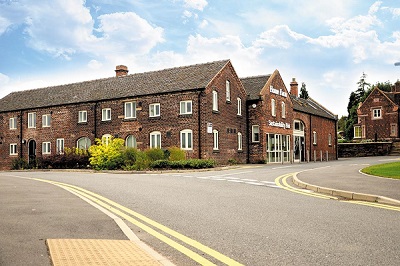
Containing space for academic work and technological companies, the Sustainability Hub acts as a focus for the research into, teaching of, and management of sustainability and green technology. Renewable energy sources are integrated into these buildings, incorporating: solar thermal; solar PV; climate control and underfloor heating; smart lighting systems; rainwater harvesting; ground source heat; bio-fuel woodchip burner; and wind turbine.

Teaching, learning and assessment
How you'll be taught
The programme is delivered through a variety of learning and teaching activities designed to develop research and professional skills. This includes lectures, tutorials, workshops, seminars, practical/laboratory classes, problem-based learning, directed reading and independent study and project work, individual presentations and linked discussion.
The main focus of the programme is the research you'll participate in via the advanced traineeship and your dissertation. You'll receive regular support and feedback from your research mentors and supervisors, which may take place online or face-to-face.
You will be taught by experienced, well-qualified staff who are research-active within the discipline, accomplished at working on research-funded projects nationally and internationally, and eager to share their teaching, research and professional experience to help you achieve success in your studies.
Though there are taught components to the course, we place a strong emphasis on student-led learning and research to help develop your independent research skills. Recognising the importance of engaging first-hand with practitioners, where possible, we also invite guest speakers from industry and business to give you a real-life perspective on the topics you’re studying.
How you'll be assessed
To enable us to appraise your ability to conduct analysis and evaluate particular debates, material, and evidence, you will complete formal assessment on all modules.
Assessments for core modules are coursework-based and include, for example, essays, project reports, presentations, and extended literature reviews. The assessment on optional modules varies depending on the module, but will feature similar types of assessment. Where possible, we also try to mirror workplace activities, so you may be tasked with preparing a research proposal, mock funding or ethics applications.
The dissertation forms your main assessment. You will be paired with an academic supervisor who is an expert in your field, from within the staff here at Keele, one of our international partner institutions or an external collaborator. Together, you will work to advance your research interests, develop your individual research, writing and communications skills, conduct and then write up your research in the form of a 20,000-word dissertation.