

Education - MA
Advance your career with our flexible, research-driven MA Education programme. Exploring a wide range of topics drawn from education theory and practice, you will dive into key themes like policy, inclusion, global perspectives, and research methods - while tailoring your learning through specialist pathways aligned with your ambitions. Whether you're aiming to influence education policy, drive innovation in practice, or pursue doctoral research, you will gain the critical thinking, communication, problem-solving and research skills to make an impact in academic settings, government or non-government organisations.
Month of entry
- September, January
Mode of study
- Full time, Part time
Fees for 2026/27 academic year
- UK - Full time £9,400 per year. Part time £5,200 per year.
International - £17,100 per year.
Duration of study
- 1 year full time, 2 years part time or modular study up to 5-years
This course is no longer accepting applications from international students for the 2025/26 academic year.
Why study Education at Keele University?

Course summary
Our MA Education programme offers the opportunity to engage in advanced study across a broad spectrum of educational theory and practice. You’ll explore key areas such as policy-making, professional practice, educational research, and your own professional development. A choice of specialist pathways - Leadership, Education Technology, and Early Years - allows you to tailor your learning to your interests and career goals.
With a focus on both formal and informal, local and global approaches to education, the programme is available full-time or part-time, with hybrid delivery combining online learning and in-person group sessions for added flexibility.
A key aim of the programme is to give you the opportunity to explore your own social and professional contexts and interests through the lens of educational theories and practical experiences. You’ll also be able to focus on these interests through your chosen specialist pathway and dissertation topic.
From semester two, you'll choose between completing a substantial piece of supervised original research or undertaking a work placement. Both options give you the opportunity to explore a topic in depth, apply your research skills, and draw on your subject knowledge to gain meaningful insights.

Course structure
Our MA Education programme comprises of three compulsory modules (90 credits), two optional modules (15 credits each) plus either a dissertation or a work placement (60 credits each).
The academic year runs from September to September and is divided into three semesters. The number of weeks of teaching will vary from course to course, but you can generally expect to attend scheduled teaching sessions between the end of September and mid-December, and from mid-January to the end of April.
Recognition of Prior Learning
- If you already hold a postgraduate qualification in Education, you may be considered for Recognition of Prior Learning, which could contribute to your overall degree credits.
- Each application will need to be discussed on an individual basis and then reviewed by the University.
- More information and details can be found on our Recognition of Prior Learning application process webpages.
Modules
The module details given below are indicative, they are intended to provide you with an idea of the range of subjects that are taught to our current students. The modules that will be available for you to study in future years are prone to change as we regularly review our teaching to ensure that it is up-to-date and informed by the latest research and teaching methods, as well as student voice. The information presented is therefore not intended to be construed and/or relied upon as a definitive list of the modules available in any given year.
Core taught modules
Reflecting on Practice (30 credits)
Learning is focussed on foregrounding the significance of reflective practice in enabling practitioners to develop informed insights and perspectives on key philosophical, social cultural and political debates about education/ workplace setting. Participants will engage actively with a variety of theories and practices associated with reflective practice, with more thoughtful reflection being posited as the key to reflective practice. Participants will reflect on an aspect of their practice and develop an action plan for future practice. They will be assessed through a reflective assessment that they will develop over time (including an official observation of practice), related to critically analysing an aspect of their practice.
Global and Inclusive Education Issues (30 credits)
You will explore the changing world of education in the context of social, political, economic and cultural globalisation, especially in regard to how globally inclusive education has been positioned and promoted as a positive reaction to segregated schooling, inequality and prejudice. It reflects on the `nature' of international identity, both for teachers and students, and critically explores what `international' means, educationally, in this context. This module offers insights into many different aspects of inclusive education within a global policy discourse.
Qualitative and Quantitative Methodologies in Social Science (30 credits)
Qualitative and Quantitative Methodologies offers a comprehensive introduction to the key research methods in the social sciences. You will learn about the key theoretical foundations, strengths and limitations of each approach and gain practical experience of data collection, analysis and interpretation techniques. Emphasis is placed identifying appropriate methodological approaches to analyse complex social phenomena. This module will enable you to develop the necessary research skills to conduct robust and rigorous research when studying diverse aspects of the social world.
Optional modules
You must select one of the specialist pathways from below (leadership, education technology or early years education) and undertake both modules from this pathway. You cannot select modules from a different pathway. You will also undertake either a dissertation or a placement.
Educational Leadership and Management pathway modules
Leading in a Complex World (15 credits)
Leading and managing in today’s global working environment is complex. This module addresses the needs of managers and leaders in today’s dynamic environment and focusses on strategic leadership in the context of complexity and change. It explores the origins and history of leadership thinking to provide a foundation for understanding contemporary leadership theory. The pivotal role of the senior leader in the process of understanding and shaping organizational culture is supported by key leadership tools and skills.
People, Work and Organisations (15 credits)
This module looks closely at the role of management in educational organisations. It explores how organisations are structured and how they function, with a focus on how people work together in the organisational context. You will explore a range of topics that impact on the role of the manager such as ethics; the identification, mitigation and management of organisational risk; organisational sustainability; and creating entities that attend to decisions. You will also develop an understanding of Corporate Social Responsibility (CSR).
Education and Technology pathway modules
Re-thinking Teaching and Learning with Digital Technologies (15 credits)
You are invited to re-think teaching and learning with digital technologies. On this module, you will evaluate the divide between ‘digital natives’ and ‘digital immigrants’, exploring how the lack of boundaries in online spaces changes the ways in which we communicate with and teach our students. The module also focusses on the impact of digital technologies (including AI) in education on our identities as teachers, students and on our educational institutions, as well as considering responsibilities educational institutions have in relation to online safety.
Educational Technologies in Practice (15 credits)
You will be introduced to selected educational technologies to help you design technology-supported teaching and learning activities and assessments. You will explore approaches to, and the applications of, selected education technologies (e.g. video presentation, collaborative tools such as wikis, Padlets, Miro, Mentimeter, quizzes, etc.) within an educational context. At the end of this module, you will be assessed on your design and development of your own activities using educational technologies of your choice.
Early Years Education pathway modules
Early Years Policy and Education (15 credits)
You are encouraged to think critically about the concept of childhood as a social and historical construction. You will explore a range of institutional and other discourses in which childhood is encoded – including media, literature, art, and the law. Through a critical review of a range of recent interventions, strategies, and agendas in the early years and primary curriculum, you will delve into the role of the state in current constructions of childhood, parenting, and associated rights and responsibilities.
Early Years in Practice (15 credits)
Child development and child learning theory and research are utilized in many fields and professions which seek to improve the lives of children, such as interventions which are designed to remediate or prevent developmental, social, or educational issues (such as SEND). This module is designed in two sections. The first introduces the foundational principles of intervention design and evaluation with children The second section provides overviews of how theory has been applied in a variety of contexts.
PLUS
Dissertation (60 credits)
The Dissertation module contributes substantially to your Research Methods training. To achieve this aim, you are required to demonstrate an understanding of the philosophy and principles of research and show competence in the design, execution and reporting of a research project. Your ability is developed to carry out subsequent research independently and to commission, manage and evaluate the research activities of others. The dissertation may be empirical or nonempirical in nature.
OR
Placement (60 credits)
This module offers an educational work-based professional experience through a three-month placement in either a primary or secondary school. During the placement, you will observe practitioners in the education workplace. You will work with an assigned school-based mentor to identify educational topics that your placement school would like you to research. You will subsequently develop and conduct a small research project on a topic chosen by your placement school.
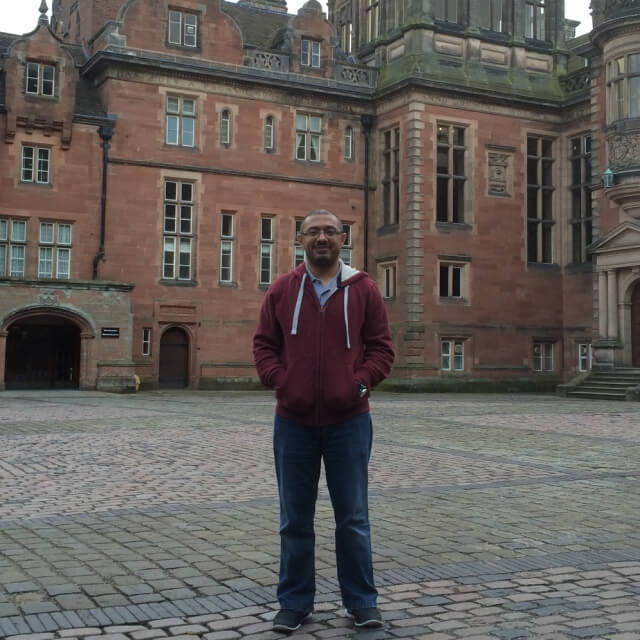
"The MA in Education programme has provided me with academic prowess by which I can conduct educational research to inform my practices as a teacher. Now, I realise how education can be a vehicle that enables us to redress some injustices in society. What makes this program unique is its capacity to stimulate your thinking educationally because it poses searching questions beyond what we do in our schools."

Entry requirements
The following section details our typical entry requirements for this course for a range of UK and international qualifications. If you don't see your qualifications listed, please contact us to find out if we can accept your qualifications.
Typical offer
Please ensure that you read the full entry requirements by selecting your qualifications from the dropdown menu below. This will include any subject specific, GCSE/Level 2 Maths, and English language requirements you may need.
Please select your country from the drop-down list below for the full entry requirement information
UK
2:2 degree in any subject
or
demonstrated relevant professional qualifications or experience
You will also need: an English language qualification (see below)
Algeria
12/20 or Assez Bien degree in any subject
or
demonstrated relevant professional qualifications or experience
You will also need: an English language qualification (see below)
Bahrain
Bachelor's degree with a minimum CGPA of 2.7/4.0 in any subject
or
demonstrated relevant professional qualifications or experience
You will also need: an English language qualification (see below)
Bangladesh
60% in a 4-year degree or 3-year degree with a 2-year Master's in any subject from a public university or CGPA 2.8 in a 4-year degree or 3-year degree with a 2-year Master's in any subject from a private university
or
demonstrated relevant professional qualifications or experience
We don’t accept degrees from certain universities, please see our Bangladesh Country Page for more information
You will also need: an English language qualification (see below)
Canada
70% or C or a GPA of 2.5 in a degree (Ordinary or Honours) in any subject
or
demonstrated relevant professional qualifications or experience
You will also need: an English language qualification (see below)
China
70% in a degree in any subject or 65% in a degree in any subject from a '211' university
or
demonstrated relevant professional qualifications or experience
You will also need: an English language qualification (see below)
Egypt
Bachelor degree from a Public or Private University with 65%/CGPA = 2.7/Good in any subject
or
demonstrated relevant professional qualifications or experience
You will also need: an English language qualification (see below)
Ghana
Second class degree in any subject
or
demonstrated relevant professional qualifications or experience
You will also need: an English language qualification (see below)
Hong Kong
Bachelor's Honours degree with 2:2 or CGPA of 2.5 OR Bachelor Ordinary degree with a CGPA of 3.4 in any subject
or
demonstrated relevant professional qualifications or experience
You will also need: an English language qualification (see below)
India
55% or CGPA 6/10 in any degree of three years or longer
or
demonstrated relevant professional qualifications or experience
You will also need: an English language qualification (see below)
Kenya
Second class degree in any subject
or
demonstrated relevant professional qualifications or experience
You will also need: an English language qualification (see below)
Kuwait
Bachelor's degree with a minimum CGPA of 2.75/4.0 or 3.5/5.0 in any subject
or
demonstrated relevant professional qualifications or experience
You will also need: an English language qualification (see below)
Nepal
60% / 2.4 in a 4-year Bachelor's degree in any subject
or
65% / CGPA 2.8 in a 3-year Bachelor's degree in any subject
or
demonstrated relevant professional qualifications or experience
You will also need: an English language qualification (see below)
Nigeria
Second class degree in any subject
or
demonstrated relevant professional qualifications or experience
You will also need: an English language qualification (see below)
Oman
Bachelor's degree with a minimum CGPA of 2.5/4.0 in any subject
or
demonstrated relevant professional qualifications or experience
You will also need: an English language qualification (see below)
Pakistan
We accept a range of qualifications from Pakistan. Please visit our Pakistan Country Page for more information
or we will consider demonstrated relevant professional qualifications or experience
You will also need an English language qualification (see below)
Qatar
Bachelor's degree with a minimum CGPA of 2.75/4.0 in any subject
or
demonstrated relevant professional qualifications or experience
You will also need: an English language qualification (see below)
South Africa
Second class division 2 / 60% in a Bachelor's degree with Honours in any subject
or
Second class division 1 / 70% in an Ordinary Bachelor's degree in any subject
or
demonstrated relevant professional qualifications or experience
You will also need: an English language qualification (see below)
Sri Lanka
55% in a Special Bachelor's degree in any subject
or
demonstrated relevant professional qualifications or experience
You will also need: an English language qualification (see below)
Turkey
A CGPA of 2.5/4.0 in a Bachelor degree (Lisans Diplomasi) in any subject
or
demonstrated relevant professional qualifications or experience
You will also need: an English language qualification (see below)
UAE
Bachelor's degree with a CGPA of 2.5/77%/B- in any subject
or
demonstrated relevant professional qualifications or experience
You will also need: an English language qualification (see below)
Uganda
Second class degree in any subject
or
demonstrated relevant professional qualifications or experience
You will also need: an English language qualification (see below)
USA
Bachelor's degree with a minimum CGPA of 2.6 in any subject
or
demonstrated relevant professional qualifications or experience
You will also need: an English language qualification (see below)
Zimbabwe
Second class degree in any subject
or
demonstrated relevant professional qualifications or experience
You will also need: an English language qualification (see below)
English language requirements
All of our courses require an English language qualification or test. For most students, this requirement can be met with a 4 or C in GCSE English. Please see our English Language guidance pages for further details, including English language test information for international students. For those students who require an English language test, this course requires a test from Group B.
References
Normally, you will need to provide at least one academic reference to support your application unless you have been out of study longer than two years. If it has been more than two years since you last studied on a degree-level programme, you will normally need to provide an employment reference instead. For more information about Academic References, please see our Postgraduate how to apply web pages.
Personal Statement/Statement of Purpose
Please see our Postgraduate how to apply web pages for guidance on what to include in your personal statement.
Recognition of Prior Learning
The Recognition of Prior Learning (RPL) is a process which enables applicants to receive recognition and formal credit for learning acquired in the past through formal study or work and life experiences.
RPL can also be requested for admission onto the start of a programme in lieu of the admission requirements. For more information, see our Recognition of Prior Learning web pages.
Professional qualifications and work experience
The majority of our courses will consider relevant work experience and/or professional qualifications at the appropriate level, as an alternative to an undergraduate degree for entry. The work experience should be for a sustained period and at a suitable level, based within a relevant sector to your chosen course.
Admissions staff will review your work experience and/or professional qualifications during the assessment of your application to ensure suitability in terms of relevancy, level and appropriate learning outcomes.
General information
The entry grades outlined in this section indicate the typical offer which would be made to candidates, along with any subject specific requirements. This is for general information only. Keele University reserves the right to vary offer conditions depending upon a candidate's application. For international students, find out how we work with approved agents as part of our admissions process.
Social life, societies and sports
Find out moreAccommodation
Find out moreLocal area and travel
Find out moreBoost your employability
Find out more
Postgraduate funding and scholarships
Funding
Whether you're continuing from undergraduate study or returning to education, our dedicated financial support team is here to help.
Living costs
Keele University is located on a beautiful campus and has all the facilities of a small town. Student accommodation, shops, restaurants and cafes are all within walking distance of the teaching buildings. This is a very cost effective way to live and to reduce your living costs.
Scholarships and funding
We are committed to rewarding excellence and potential. Please visit our scholarships and bursaries webpage for more information.
Please note, if your course offers a January start date, the January 2026 start date falls in the 2025/26 academic year. Please see the tuition fees archive for the 2025/26 fees.
Planning your funding
It's important to plan carefully for your funding before you start your course. Please be aware that not all postgraduate courses and not all students are eligible for the UK government postgraduate loans and, in some cases, you would be expected to source alternative funding yourself. If you need support researching your funding options, please contact our financial support team.
For continuing students, fees will increase annually by RPIX, with a maximum cap of 5% per year.
Additional costs
You can expect some additional mandatory costs which support learning activities, specialist equipment, fieldwork, or other course-related requirements. Details are outlined below. For general information, see the university's additional costs information.
- Enhanced DBS check with digital ID check: £60.70
- Registration to the DBS Update Service: £16 per year.
- This price is not set by the University and is liable to increase.

Teaching, learning and assessment
Teaching
Teaching is delivered via a mixture of large and small group activities, individual tasks, and workshop sessions. You’ll also receive research training, in preparation for your dissertation, supported by a personal dissertation supervisor.
Methods of teaching include:
- Lectures
- Workshops
- Tutorials/Seminars
- Small-group tasks
- Supported asynchronous online learning (MA Education specialist pathways)
- Individual contact time with module tutors
- Individual contact time with dissertation supervisors
- Personal and guided study time
Assessment
The wide variety of assessment methods used on this programme, reflects the broad range of knowledge and skills that are developed as you progress through the degree programme.
Methods of assessment include:
- Essays
- Presenting, designing and evaluating projects
- Designing and developing activities
- Reflective portfolio
- Research proposal
- Dissertation

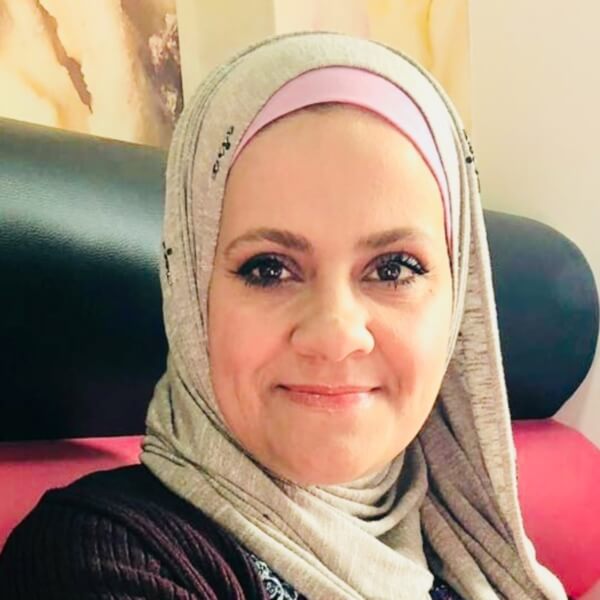
"I’m amazed by the level of supervision and support I receive from the highly qualified and supportive lecturers on the course. I have enjoyed mixing with the other students and have made many good friends."