

ID162
Using authentic, integrated programme-level assessment to better prepare our graduates for the workplace
We propose Keele shifts from a model of largely module-based assessment to one of authentic, integrated programme-level assessment.
The Idea
We propose Keele shifts from a model of largely module-based assessment to one of authentic, integrated programme-level assessment. In this model, Level 3/4 would become pass/fail. During these initial years of study, students would learn how to engage with this type of assessment and receive training in the diverse range of authentic assessment that they will encounter at Levels 5 and 6. Assessment would be explicitly scaffolded, supported by formative assessment, to reduce the risk associated with fewer, larger assessments. This model would aid transition to university study whilst enabling students to develop the skills required for integrated programme assessment in subsequent years of study. At Levels 5 and 6, students would be assessed by a reduced number of integrated, programme-level assessments. This would encourage students to draw on their knowledge, skills and expertise from different modules, help develop AI literacy where appropriate, and ultimately better prepare our students to succeed in the workplace. This approach is also considered more inclusive as integrated programme-level assessment focuses on authentic assessment tasks, increases the relevancy of assessment, promotes student choice and autonomy, and reduces over assessment loads to the benefit of student (and staff) wellbeing (Tree et al., 2025).
Why This Idea Should Be Considered
Today’s graduates face tough competition for employment. They need to draw on both skills and knowledge and apply them in novel contexts (Aoun 2024). Many module based assessments do not allow for this. In addition, AI has undermined simplistic module-based assessments. Adopting a model of integrated programme assessment, which is authentic and often employability-focussed would lead to improved graduate outcomes and aid students' development of AI literacy. Making Level 3/4 a pass/fail year, where the focus is on introducing students to integrated programme assessment and to the different assessment types used in higher education in a safe (pass/fail) environment, would also aid student transition to university and improve our retention and continuation metrics. In terms of our education offer, a model of integrated programme assessment will distinguish Keele from our competitors. Only a small number of other institutions have experimented with integrated programme assessment in some subject areas (e.g., King’s College London, Leeds, Brunel, Nottingham, Surrey, Sheffield). Finally, with far fewer assessments needed, the cognitive loading associated with multiple smaller assessments is reduced for for both staff and students. This will improve well-being, facilitate improved marking and feedback times, increase student satisfaction, reduce student motivation for using AI inappropriately, and create space/time for staff to focus on other activities (i.e., scholarship, research etc).
Turnbull (2019) provides an example of how integrated programme-level assessment has been implemented in the Civil Engineering curriculum at the University of Nottingham through use of industry-focussed group projects and individual skills portfolios. They report increased confidence and creativity in students, a greater level of interaction with industry, and improved student wellbeing (Turnbull, 2029). Similar benefits have been reported in Nursing at the University of Surrey, and Journalism at Sheffield University, whilst in Biomedical Sciences at Brunel University improved student outcomes (good degrees and progression to employment) have been observed following successful implementation of integrated programme-level assessment (Tree at al., 2025). Of those institutions which have experimented with integrated programme-level assessment, this has often been in subject areas with strict Professional, Statutory and Regulatory Body (PSRB) requirements (e.g., Civil Engineering, Nursing, Biomedical Sciences). This suggests that such an approach to assessment does not pose issues from a PSRB perspective and in fact is fully supported by our professional bodies.
References:
- Aoun J. Robot-Proof: Higher Education in the Age of Artificial Intelligence (2024) MIT Press
- Tree, D., Harvey, A., and Rand-Weaver, M. 2025. Integrated programme assessment: 10 years on. Open Scholarship of Learning and Teaching, Vol.4(1) 166-180. DOI: https://doi.org/10.56230/osotl.128.
- Turnbull B (2020), "An industry-inspired civil engineering curriculum". Proceedings of the Institution of Civil Engineers - Civil Engineering, Vol. 173 No. 2 pp. 91–95, doi: https://doi.org/10.1680/jcien.19.00012
How We Would Implement This Idea
In line with approaches used at other institutions, we would seek to identify three or four subject areas, from across the three Faculties, in which to pilot this idea at Level-3/4. Subjects entering the pilot would undertake a series of curriculum design sprints with colleagues in Keele’s Institute for Innovation and Teaching Excellence (KIITE) and be supported to move to a model of integrated programme-level assessment, working closely with relevant PSRBs, where applicable. Most other institutions have adopted of model of using formative teaching/study blocks alongside summative assessment blocks (Figure 1). The assessment tasks require students to draw on the skills and knowledge from multiple teaching/study blocks to complete the assessment task successfully. These tasks would need to be carefully designed and scaffolded to ensure that: (a) the assessment activities were authentic, (b) students were required to draw on their learning from multiple modules to succeed in the assessment and, (c) employer or industry-focus was embedded into the assessment, as appropriate.
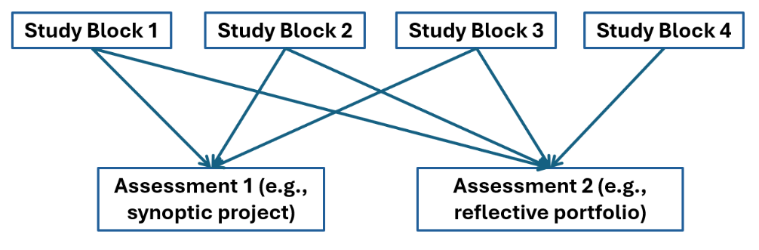
Figure 1: Diagrammatic representation of a model of integrated programme-level assessment.
The pilots would need to be fully evaluated to include both staff and student views, and to consider impacts on, for example, student attainment. Longer term evaluation would also include the impact on graduate outcomes.
What Success Would Look Like
- Improved retention, graduate outcomes and employability, by training students to draw on skills, knowledge and expertise from different areas to solve complex problems, as evidence by Turnball at al. (2025)
- Differentiation from our competitors. Very few institutions use a model of programme-level assessment so this approach could help differentiate Keele from key competitors.
- Breaking the link between assessment and surface learning, students often see assessment as a process rather than the end point of a deep learning journey and increasingly they are drawn to using AI to aid in this process - but without applying a critical lens.
- An improved transition experience for students, that concentrates on training students in integrated, authentic and often employability-focussed assessment.
- Reduced summative assessment burden for students and staff, allowing space for other learning activities, scholarship and research, and improved staff and student wellbeing.
- Improved employer engagement because the focus of much of the integrated programme assessment would be on engaging students with industry and external partners in ‘real world’ contexts.
- Educational and cultural benefits because integrated programme assessment encourages collaborative design, reduces siloed module ownership by staff and promotes programme-level thinking.
- The Brunel model has reported improved NSS scores in assessment and feedback, improved degree outcomes, and halving the awarding gap for SEND students.
Comments
Share your thoughts on this article. Comments are moderated.