

Comment | 'Barriers to university education still exist for working-class people'
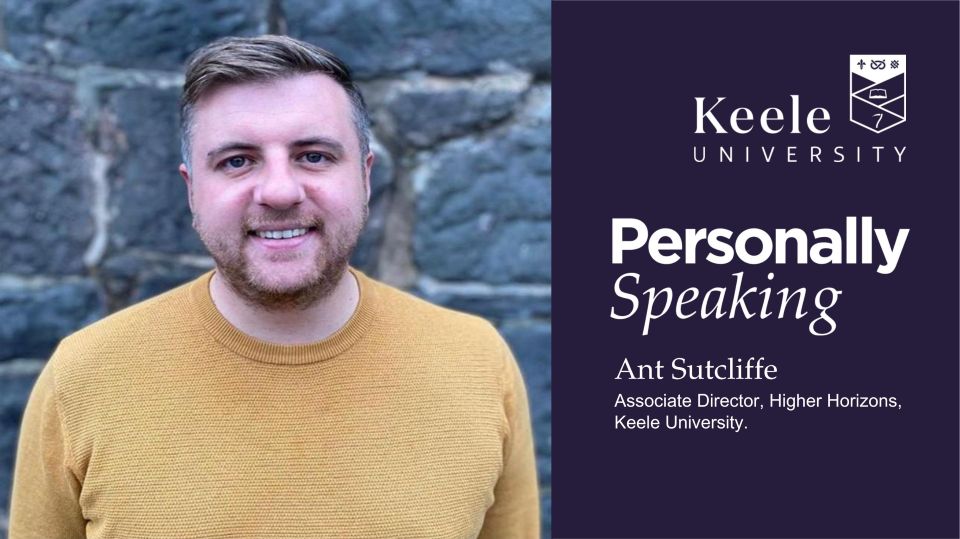
By Ant Sutcliffe, Associate Director, Higher Horizons. This article first appeared as a Personally Speaking column in the Stoke Sentinel in July 2025.
Recently at a Higher Horizons event at Keele University, a medical student who was helping on the day told us that she had been part of the Higher Horizons and Keele Steps2Medicine access scheme.
In her wonderful Potteries accent she said she wouldn't have made it if it wasn't for the contextual offer completing the programme gave her. She is one of many great examples. But there is more to do.
The UPP Foundation have released the last in a trilogy of reports asking why young people from working-class communities - like ours - are still under-represented in higher education. The report landed around the time the new Labour government marked its first year in power. There's been no shortage of warm words about 'access to university' being the top priority in higher education policy. But clarity and strategy haven't quite followed yet. We're still waiting to see what that ambition looks like in practice - and crucially - how it's going to be funded.
The report doesn't hold back. It calls for big moves - closing the higher education participation gap of the most well off and least well off to 10%, reinstating the 50% target for 18 to 19-year-olds partaking in higher education, and aiming for 70% of the UK population to hold a Level 4 qualification by 2030. All admirable goals. Because education and skills are not only liberating for the individual but build communities and areas like ours. But hitting them will take serious long-term investment, cross-sector collaboration, and more than just tweaks to policy.
One proposal that stands out is a £300 million annual international student levy to fund bursaries for home students from working class areas. That could mean £4,000 a head for those who need it most. It seems a smart, redistributive move - but it won't on its own fix the reality that many students from cold spot areas are working 20+ hours a week just to get by. That's before you factor in commuting, caring responsibilities, and other pressures. It also presumes that the higher education sector is awash with cash from international students' fees. It is not.
We're fortunate here in North Staffordshire. We've got Keele University and the University of Staffordshire - two institutions that understand their place, and the people in it. They're working with schools and communities through initiatives like ours to reach young people who might never have thought university was for them. This year Higher Horizons has engaged with more than 15,000 young people on 619 activities that create pathways to higher education for working class people. That takes effort, and, I am afraid, a bit of funding from government.
Still, though, barriers persist. Cost of living pressures, patchy careers advice, and a growing perception that university might not be worth it if the job market doesn't match up. The pressures are also leading to more students not gaining full benefits from university, like social interaction and exploring clubs and societies. As one older participant in the focus group for the report put it: “If you were born into a mining family, you went down the pit. If you were born into a mine owner's family, you went to university. That's the way it was, and that's the way it is becoming again.” We need not to go back to those days. We have made too much progress, and I say that as someone who is proud to come from a mining family.
We know what works. Strong local provision, clear routes into education and employment, proper maintenance support, and a joined-up approach across education, business, and government. The reports recognise this - and there's hope that this government is listening. But warm words must begin to heat up these cold spots. So yes, let's welcome the ambition, because I for one would find real comfort in hearing a Potteries accent as the next generation of doctors try, again, to fix my Sentinel Cup knee.