

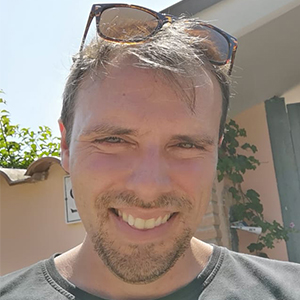
Dr Simon Trent
- Title
- Lecturer in Neuroscience
- Location
- Huxley Building : 028
- Contact me
- E-mail me or try my office
- Phone
- +44 (0)1782 733497
- s.trent@keele.ac.uk
Biography
I obtained a Maters in Biochemistry at the University of Bath in 2006 (placements at Cambridge University & Duke University, USA), followed by a PhD at the University of Bath in neuropsychopharmacology in 2011.
Throughout my post-doctoral training (Schools of Medicine & Psychology, Cardiff University 2010-216), Research Fellowship (NMHRI, Cardiff University, 2016-2019) and Lecturer in Neuroscience (Keele University, 2019-present), I developed an extensive repertoire of research interests in behavioural and molecular neuroscience.
I have predominantly utilised preclinical, genetic models of psychiatric illness to provide translatable, clinical insight into debilitating human psychiatric illnesses including
- ADHD (Trent et al., 2012a,b; 2013, Davies et al., 2014)
- Autism (Trent et al., 2014; Silva et al., 2019; Trent et al., 2019)
- Schizophrenia (Hall, Trent et al., 2015; Clifton et al., 2020).
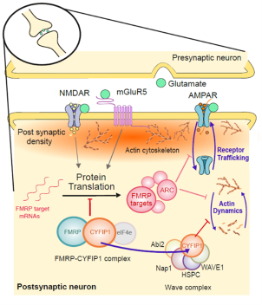 I have leveraged behavioural neuroscience techniques, particularly learning and memory in rodents (Trent et al., 2015, 2017; Trent et al., 2025), and complementary molecular, pharmacological and genetic techniques (including RNA sequencing), allowing me to interrogate critical, plasticity- and disorder-relevant neurobiological pathways, especially at the synapse (Clifton et al., 2020).
I have additionally focused on areas of cognition and hippocampal memory, psychiatric genomics and neuropharmacology. I have numerous ongoing projects and collaborate extensively throughout the UK and with international partners, including those based at USM, Malaysia.
Research and scholarship
Main ongoing research projects in the Trent lab include:
Rodent models of psychiatric disorder risk and synaptic biology
Psychiatric disorders such as schizophrenia and autism spectrum disorder (ASD) are common mental health disorders (affecting 1:100 people) with severe psychiatric symptoms and poorly understood cognitive impairments. Critically, mechanisms at the synapse, particularly NMDA and AMPA receptor-containing glutamatergic synapses, are strongly implicated with a range of psychiatric disorders. In parallel, glutamatergic synapses strongly represent the biological site of learning and broader cognitive function across vertebrate (and invertebrate) animals.
A subset of human psychiatric risk genes encode synaptic proteins including Arc and Cyfip1. Not only do these candidate genes support vital learning and memory processes but are robustly, and consistently, associated with the pathophysiology of psychiatric disorders. Considerable evidence has been acquired from powerful psychiatric genomic studies performed in patient populations, alongside mechanistic models such as rodent transgenic lines. Some of my research focuses on characterising neurobiological mechanisms from the Cyfip1 deletion mouse and rat models and how they influence glutamatergic pathways.
C. elegans worm for exploring learning & memory and genetic risk of psychiatric disorders
Elsewhere, my research utilises the C. elegans nematode worm, a simple yet powerful in vivo model contains a well-characterised nervous system, including a substantial glutamatergic system (including 80 glutamatergic neurons from a total of 302 neurons) and possessing orthologues of mammalian NMDA and AMPA receptors.
Conserved molecular pathways in the nervous system of C. elegans support complex behaviour in the form of non-associative and associative forms of learning, as well as short- and long-term memory.
We are currently leveraging the nematode worm model to further understand the role of glutamatergic signalling in learning processes, with a focus on modelling NMDA receptor dysfunction and schizophrenia risk variants, alongside phenotypic rescue through receptor modulation
Teaching
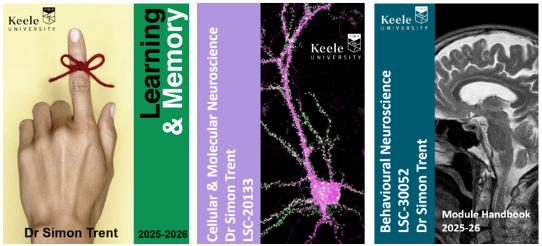
As a Lecturer in Neuroscience, I run three UG modules:
- ‘Learning & Memory’ (Yr2)
- ‘Cellular & Molecular Neuroscience’ (Yr2)
- ‘Behavioural Neuroscience’ (Yr3)
Elsewhere, I currently hold positions of:
- Director of Internationalisation for the School of Life Sciences
- Year Tutor (L4, Neuroscience)
- Neuroscience Admissions Tutor
Publications
Projects and opportunities
I regularly host summer internships for Year 1 and 2 Keele UG students. Please contact me directly if this is of interest.
PhD students
Krishma Parwana
I am open to developing self-funded PhD applications with suitable candidates.
Head of School
Professor Pip Beard
Email: p.m.beard@keele.ac.uk
School address
School of Life Sciences
Huxley Building
Keele University
Staffordshire
ST5 5BG
Tel: +44 (0) 1782 734414
Email: lifesciences.office@keele.ac.uk
Enquiries
Tel: +44 (0) 1782 734414
Email: lifesciences.office@keele.ac.uk
You can find information about Programme Directors on our Contact us page.
A full list of School staff is available with details of individual rooms and telephone numbers, email addresses, details of research interests and other information.