

North Staffordshire Miners' Wives Action Group Archive
Special Collections and Archives work placement
I'm Rebecca Wells. As part of my final year (2024/25) studying English Literature at Keele University, I was given the opportunity to pursue a work placement and was fortunate to secure a position in the University Library's Special Collections and Archives. Following my engagement with historical literary materials during my degree programme, I was excited to gain further insight into archival processes. I would like to thank Helen Burton and Ashleigh Coffey for their support throughout my placement.
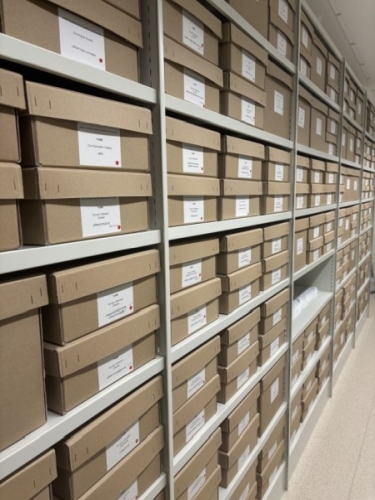
North Staffs Miners' Wives Action Group
A collection of materials new to the Archives relates to the formidable North Staffordshire Miners' Wives Action Group, kindly donated to Keele by surviving member, Rose Hunter. The Group formed in response to the 1984 miners' strike and members have been actively campaigning for over 40 years. The archive spans the Group's activism from inception to the present day and comprises correspondence, reports, minutes, diaries, performance scripts, song sheets, interviews, photographs, recordings, campaign literature and press cuttings. It will be some time before the archive is fully accessible. In the meantime, enquiries should be directed to special.collections@keele.ac.uk.
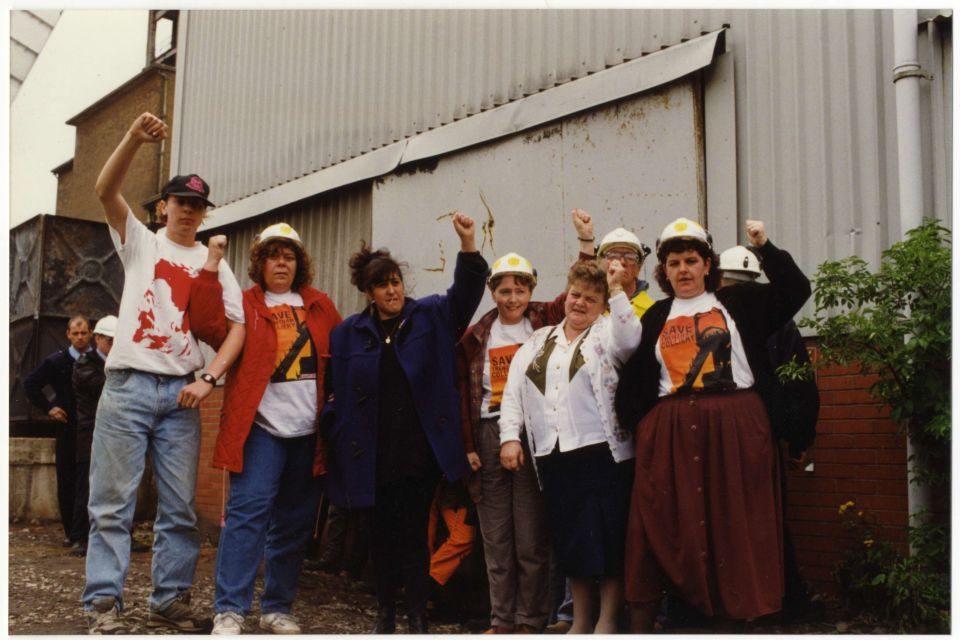
Photograph of the return of the Trentham 3: Brenda Procter, Bridget Bell and Gina Earl, along with their fellow comrades. Photo: Kevin Hayes
Trentham Pit Camp
The focus of my research is the collection of handwritten diaries which detail the daily activities at the NSMWAG's protest camp at Trentham Pit. In January 1993 the women towed a caravan to the Hem Heath colliery entrance and set up camp to protest the closure of the Trentham super pit.
The diaries are rich in humour and light-hearted banter despite the ongoing struggles of maintaining occupation and campaigning against national pit closures.
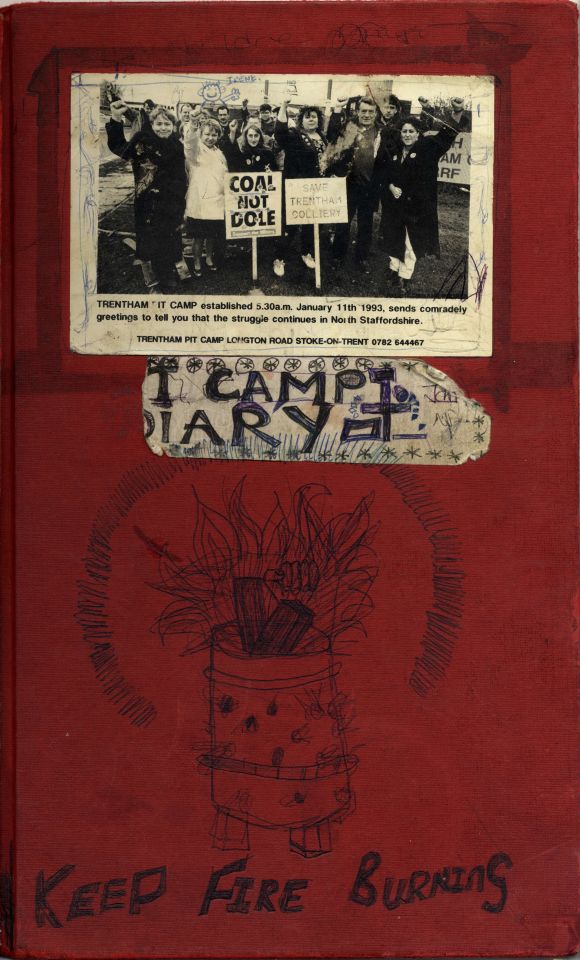
Trentham Pit camp diary front cover, with sketches from members and a clipping from a newspaper article that shows the founding members rallying for support (1993)
Operation Mushroom
The diaries include an insightful log of the three-day-long sit-in, where members Bridget Bell, Brenda Procter and Gina Earl descended No. 2 pit shaft and chained themselves to machinery for 80 hours. A fourth member, Rose Hunter, remained outside to manage communications.
Operation Mushroom (named after the shape of the concrete winding tower) was a well-thought-out procedure with a great deal of planning. The three women deployed themselves into the pit in the early hours of 12 May 1993.
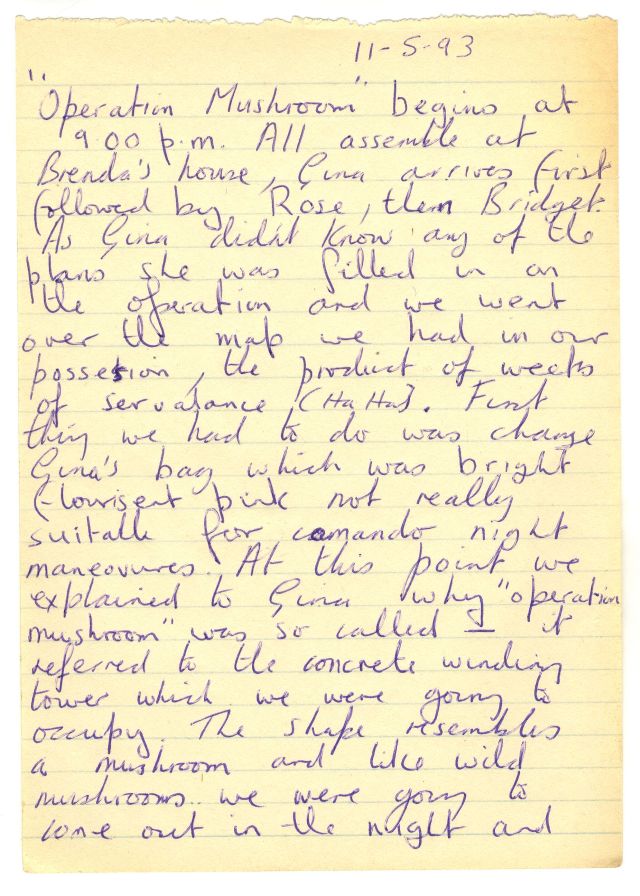
Trentham Pit diary entry - detailing the organisation of 'Operation Mushroom' (11 May 1993)
The above diary entry displays a sense of light-hearted camaraderie amid the seriousness of their protest. Gina is advised to ditch the fluorescent pink backpack she has brought with her to store supplies, in an attempt to remain incognito.
The tone of voice throughout these diary entries echoes the women's undefeated spirit, as they encounter dangerous and unforeseen circumstances which complicate their sit-in.
Sardines
Upon entering the pit, the diary recounts the three women becoming cornered by security and having no choice but to chain themselves up on a three-foot ledge next to a mining shaft with a fifty-foot drop, or else be escorted out and lose the opportunity to execute their protest.
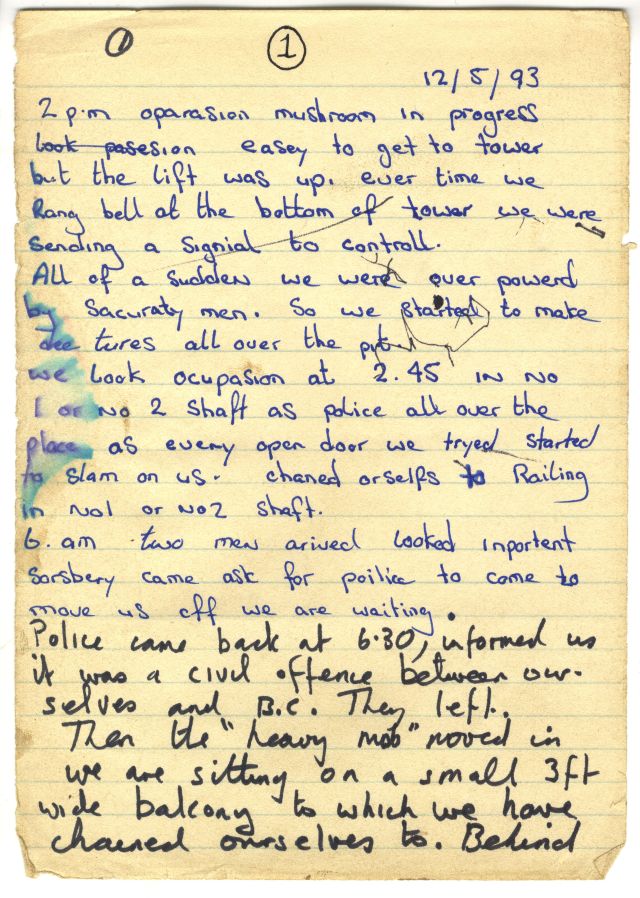
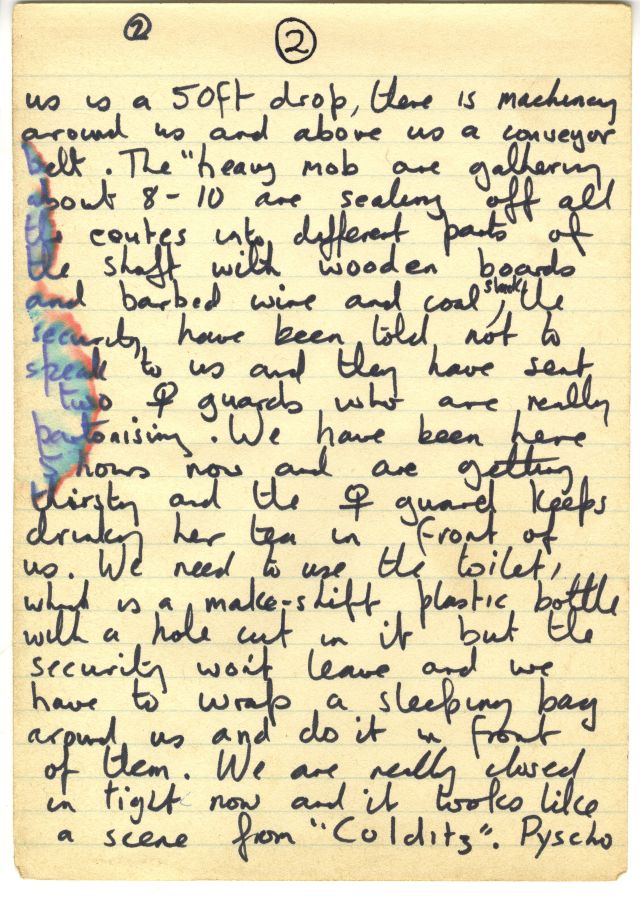
Entries from the pit diaries detailing the occupation of shaft no. 2 (12 May 1993)
In addition to the dangers facing the women, the conditions they are having to endure make the whole ordeal more distressing. Poor sanitation and dwindling resources mean that the women must fight harder to keep morale high.
The diary offers an illuminating insight into their shared mindset, sustaining resilience with sarcasm and humour, as they struggle against the appointed security guards for basic rights.
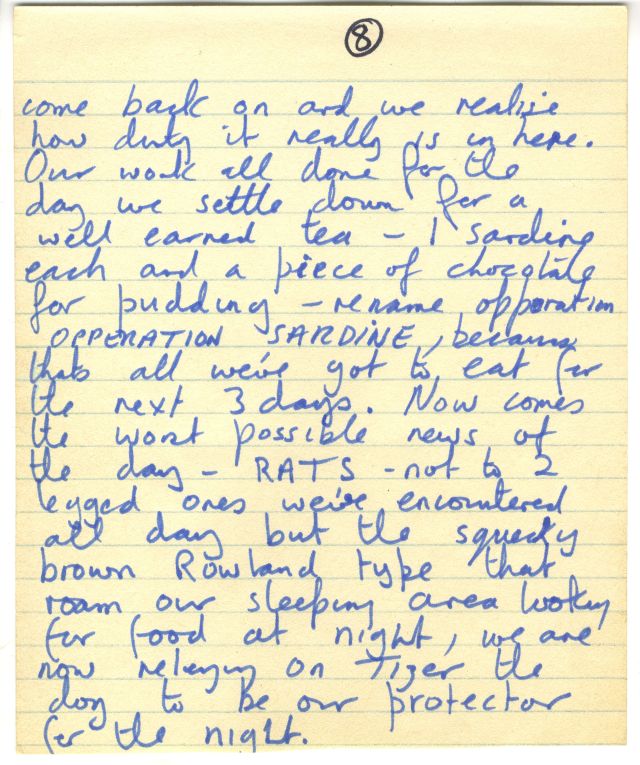
Diary entry describing the poor conditions the activists were subjected to during their occupation of Trentham Pit, May 1993
Comradeship
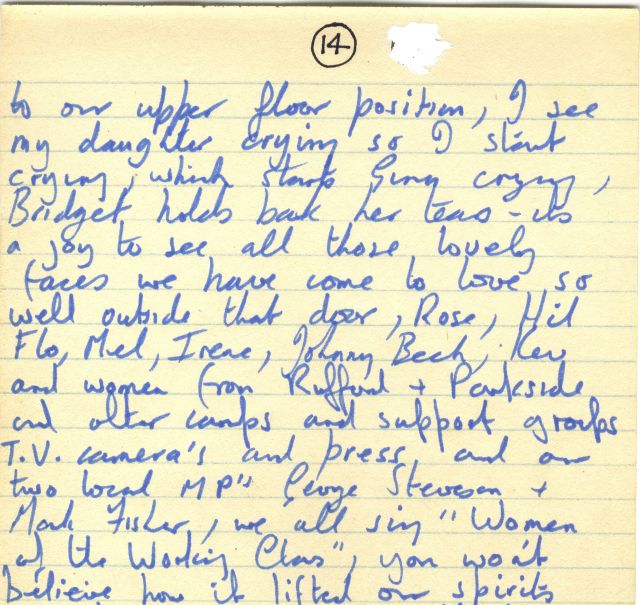
Community bonds: an emotional diary entry showing the support of friends and family (1993)
The Group benefits greatly from the support of their friends and family. This diary entry shows just how emotional a time it is for the women, who have by now spent three days chained down in the pit.
Following negotiations and supporters' threats to march into the pit with 100 demonstrators, the occupation of shaft no. 2 comes to an end on the morning of 15 May 1993. When the protesters emerge, they are greeted by the smiles and tears of family and friends. The diary entries document the overwhelming display of community, particularly from fellow female comrades. The reception from the local media and all their supporters leads them to burst into song, generating an atmosphere of unwavering positivity and resilience.
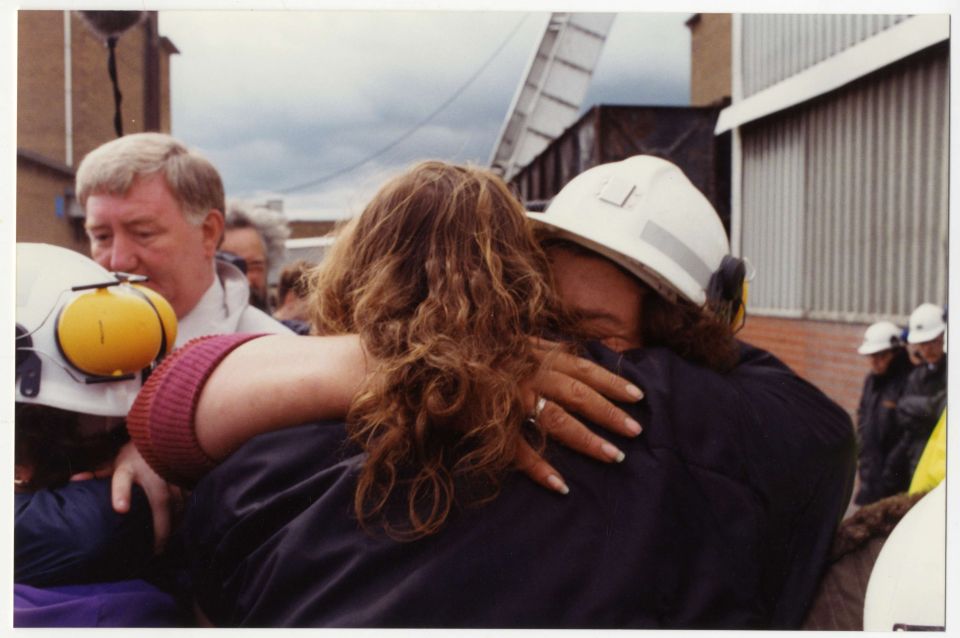
Friends and family reunited. Photo: Kevin Hayes
Creative Voices "Fighting on!"
As a literature student, I'm drawn to the Group's creative output, and I've enjoyed exploring the broad range of posters, poetry, plays and songs produced as a part of their campaigning. Founding member Bridget Bell gained some stage experience from a young age through her political activism 1 and encouraged her fellow members to use performance as a means of spreading their message.
Surviving member Rose Hunter looks back in awe at Bridget's creative flare, giving most of the credit to her for their success on the stage. But all members were of equal importance within this community, extending to family and friends. and supporters alike, all of them united with the same cause in mind.
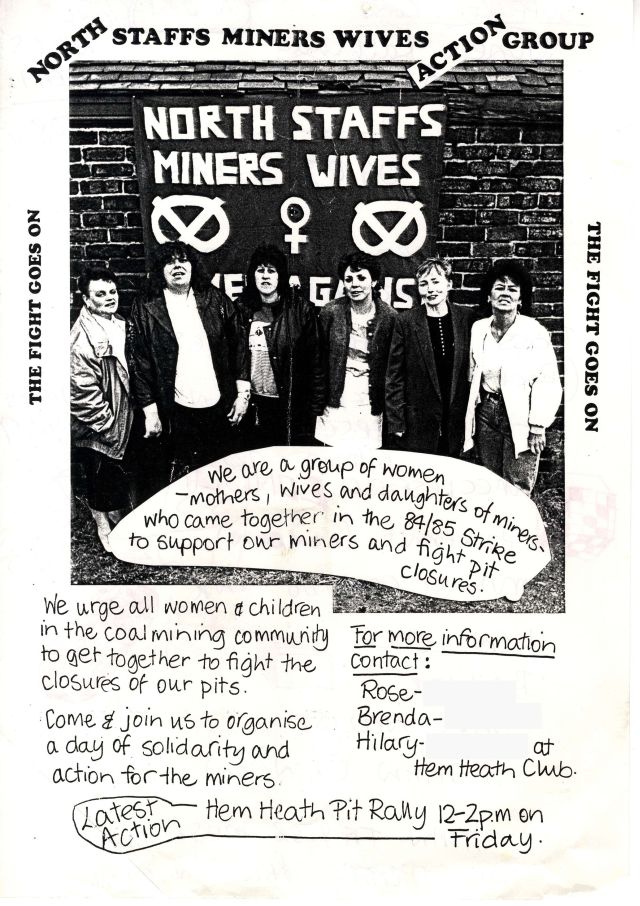
Hem Heath Pit rally poster, created by Bridget Bell
No Going Back
The power of song becomes a large part of the Group’s public image, as they collectively sing at various political rallies and organised events, often as part of the Women Against Pit Closures movement.
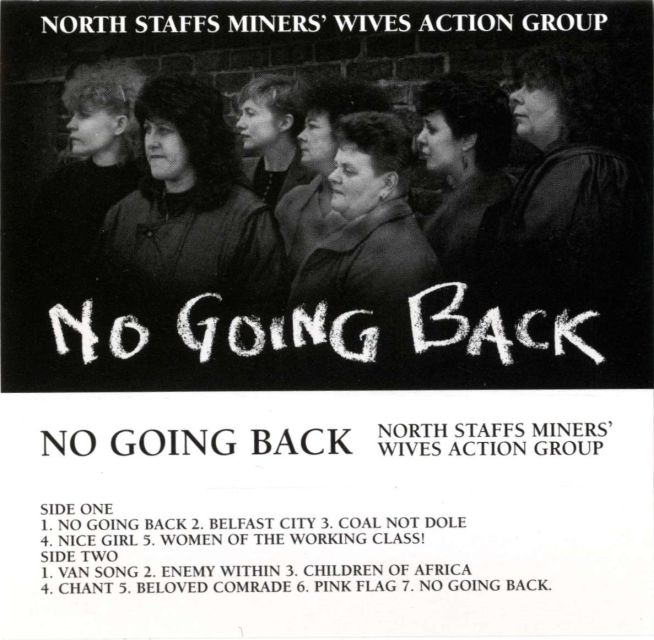
In 1988, they take their songs on tour, in collaboration with Banner Theatre, and the following year release a tape recording of ‘No Going Back’, a compilation of songs performed before and after the 1985 miners’ strike.
The Group adopts a creative approach to their performances, as can be seen in these notes detailing various directions for vocals and delivery, with the inclusion of rapping and trying out different harmonies.
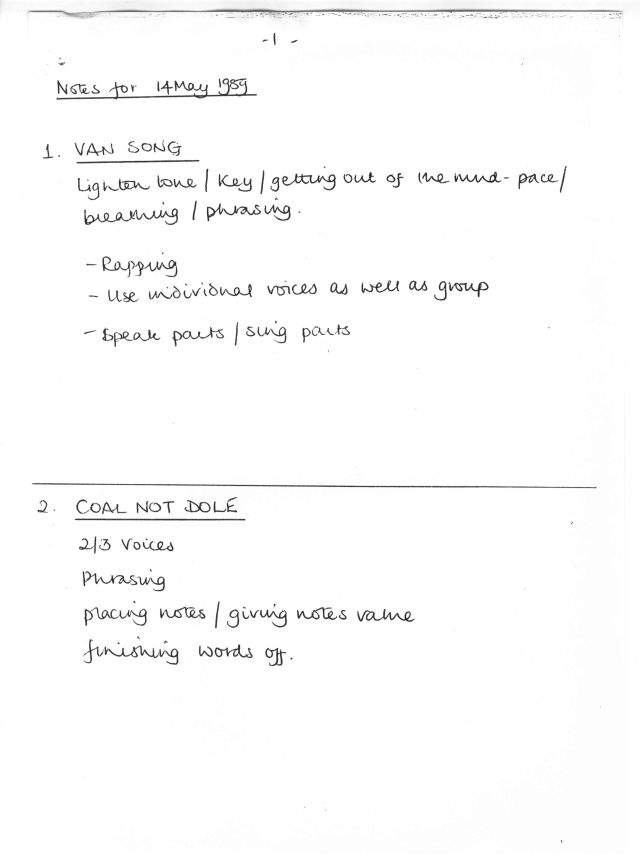
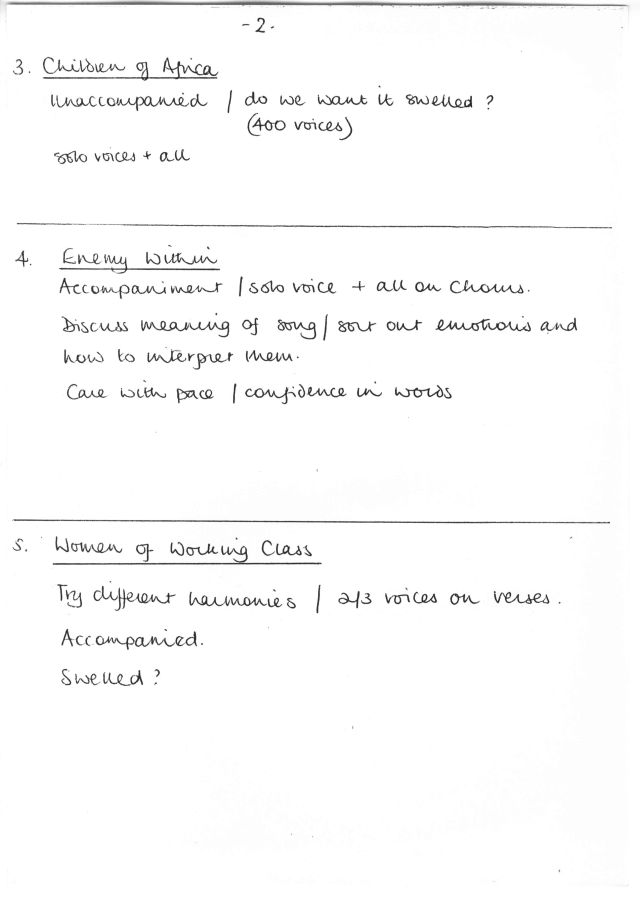
Notes for a performance at a campaign event on 14 May 1989, providing directions for songs included in their tape recording of 'No Going Back' (1989)
There is a resounding theme of solidarity in the songs. In particular, the lyrics to ‘The Women’s Song’ illustrate the sense of unity and comradeship among this community of women.
‘We are women, we are strong
We are fighting for our lives
Side by side with our men
Who work the Nation’s mines.
United by the struggles, united by the past
And it’s here we go, here we go
For the women of the working class.’
(Written by Mal Finch, as printed in original programme for Nice Girls musical documentary, 1993).
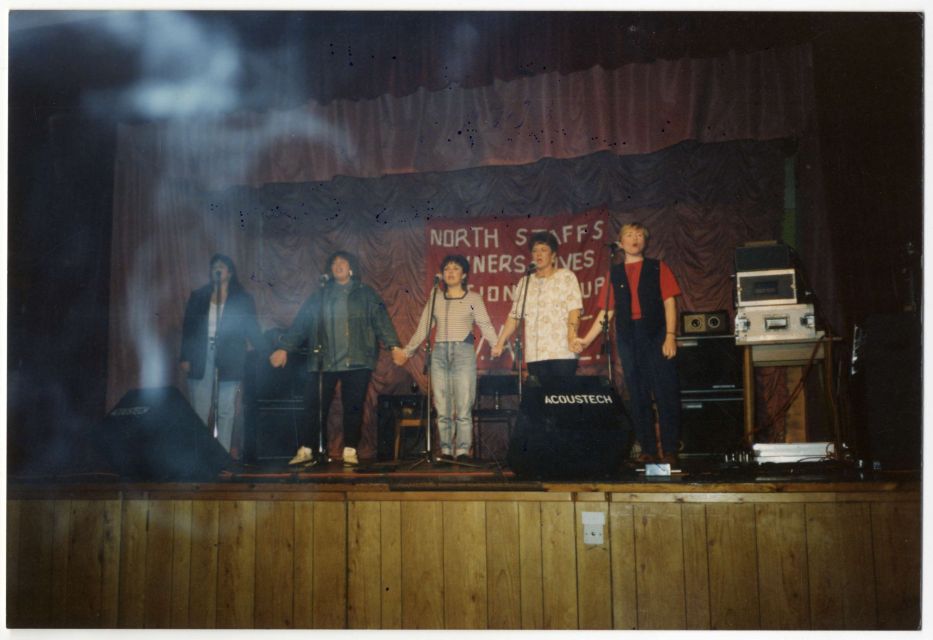
Photograph of NSMWAG on stage
Whether chanting as they march in protest, or taking to the stage to rally their comrades, these words represent an ongoing effort to remain strong and work together to create positive change.
Nice Girls
‘Nice Girls’ marks the first extended documentary of the women’s story, with the inclusion of some of the Group’s best-known campaign songs and the dramatization of their activism amid the miners’ strike and pit closures. Local theatre director Peter Cheeseman’s vision for the documentary, along with the utilization of archival materials, helps produce a performance through which the women’s activism could be seen and celebrated.
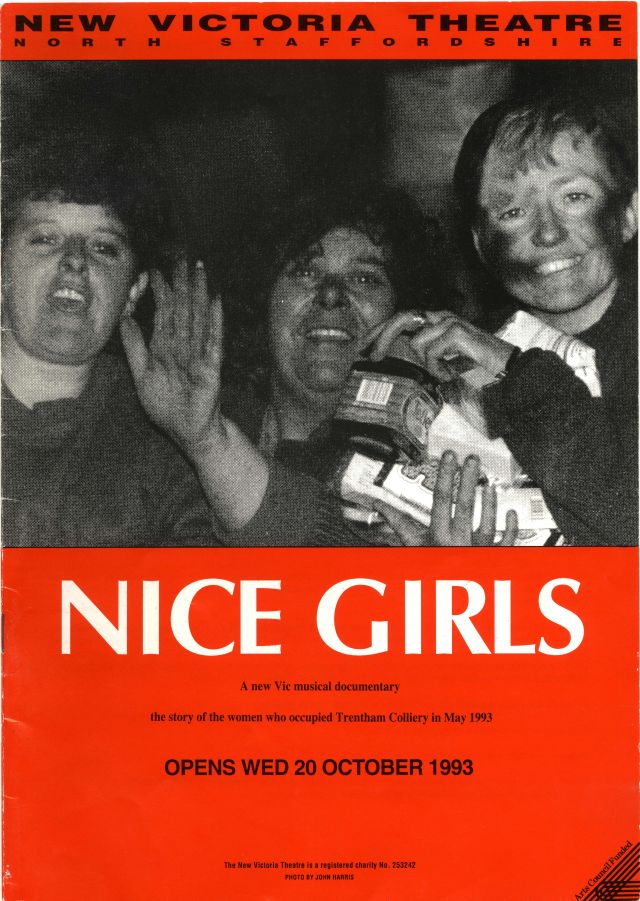
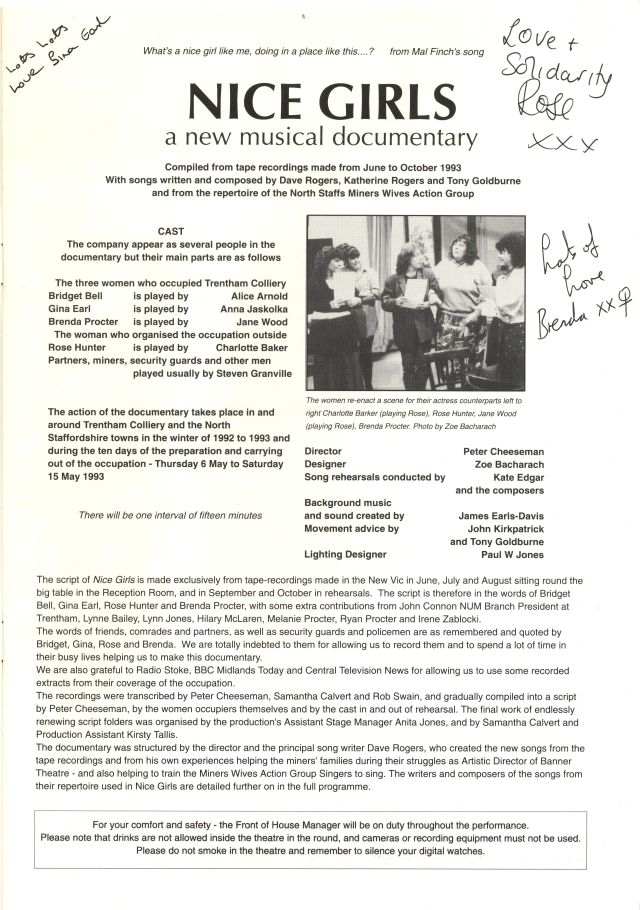
Programme from the 'Nice Girls' musical documentary at the New Vic Theatre (1993), created by Peter Cheeseman; with signatures from Rose Hunter, Brenda Procter and Gina Earl
The Miner Birds
Alongside my research, I had the pleasure of attending a March 2025 performance of ‘The Miner Birds’ at the New Vic Theatre in Newcastle-under-Lyme. The play is by award-winning writer and academic Lisa Blower and tells the story of three women’s experience occupying Trentham Colliery. Lisa has been instrumental in bringing the NSMWAG archive to Keele through her collaboration with NSMWAG to mark their 40th anniversary.
The performance encouraged audience participation, and many attendees were friends and family of the cause, which created an inclusive environment built on a shared passion for justice. The cast and crew handed out leaflets and LED candles, replicating the women’s campaigning and the candlelight vigil held during the pit occupation. As the performers began to sing their anthems ‘No Going Back’ and ‘Women of the Working Class’, audience members sang along, creating a deeply affecting atmosphere reminiscent of past protests and rallies.
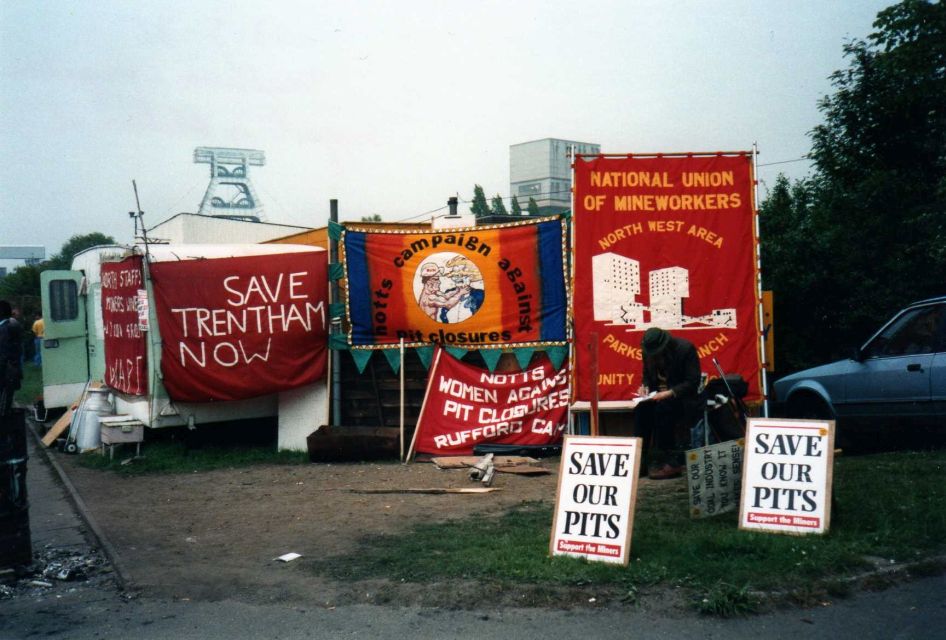
Trentham Pit camp
NSMWAG Roundtable
To promote the archive and play, a roundtable discussion was held at the newly established Keele in Town venue in April 2025. I joined Archives staff in showcasing some of the Miners’ Wives archive materials and we engaged in thought provoking conversation with Lisa Blower, NSMWAG Chair Rose Hunter, and place-writer and Keele academic Ceri Morgan.
Lisa spoke of the process of writing ‘The Miner Birds’ and her initial intention for the play to be delivered as a monologue. It was through discussions with Rose, who had expressed the importance of representing the “collective voice”, that the dialogue ultimately became three women on stage.
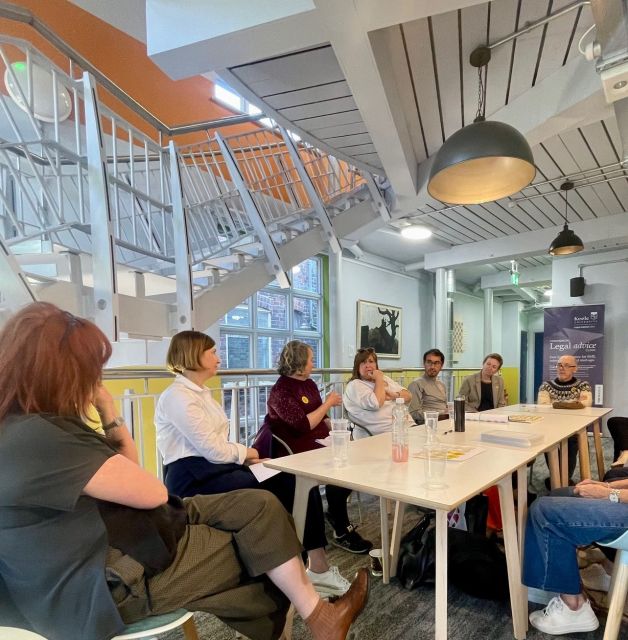
The roundtable allowed space for attendees, including original Group members and their children, to reflect on events that took place during the miners’ strike. The archive serves as a grounding place for members to reflect on the Group’s journey, while offering students, academics and the public the opportunity to explore this rich and significant history.
Rose Hunter
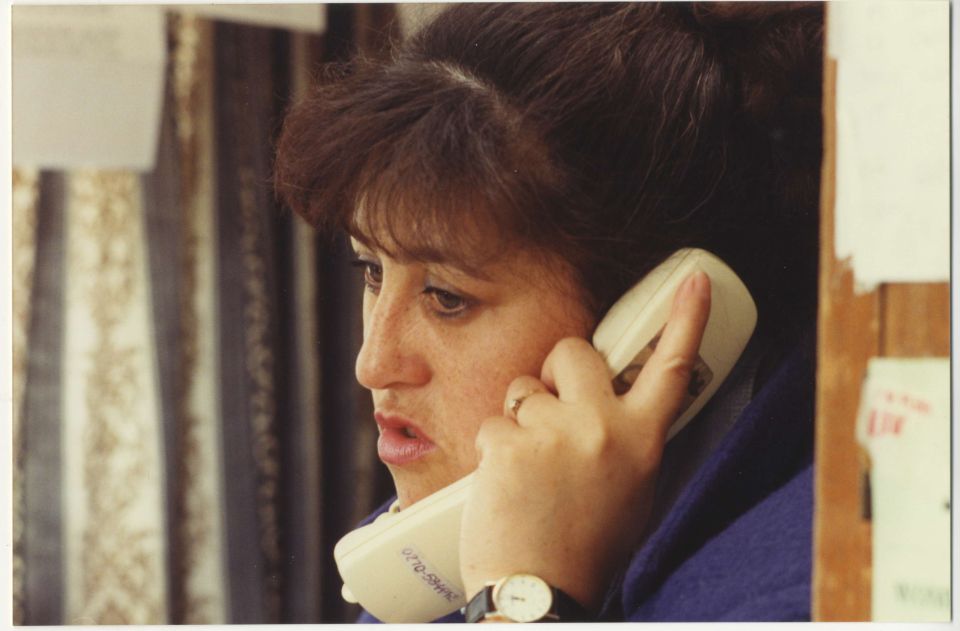
Photograph of Rose Hunter, maintaining communications with supporters and media from the campervan in May 1993. Photo: Kevin Hayes
In conversation with Rose Hunter, I had the opportunity to ask about her experience as spokesperson for the Group, and what this archive means to her and the rest of the community. She gives much of the credit to Bridget Bell for seeing the importance of collecting the Group’s history over the years, stating that they were mostly “living in the moment”. She’s grateful that the archive has found a home at Keele where it can be preserved and made available.
Rose goes on to say, “everything we do is a collective. I might spearhead it…but then I go out and say, ‘right who can help me with this?’ I have been very lucky”.
The Group remains active, and the archive continues to accumulate. In Rose’s words, “We’re not done yet.”
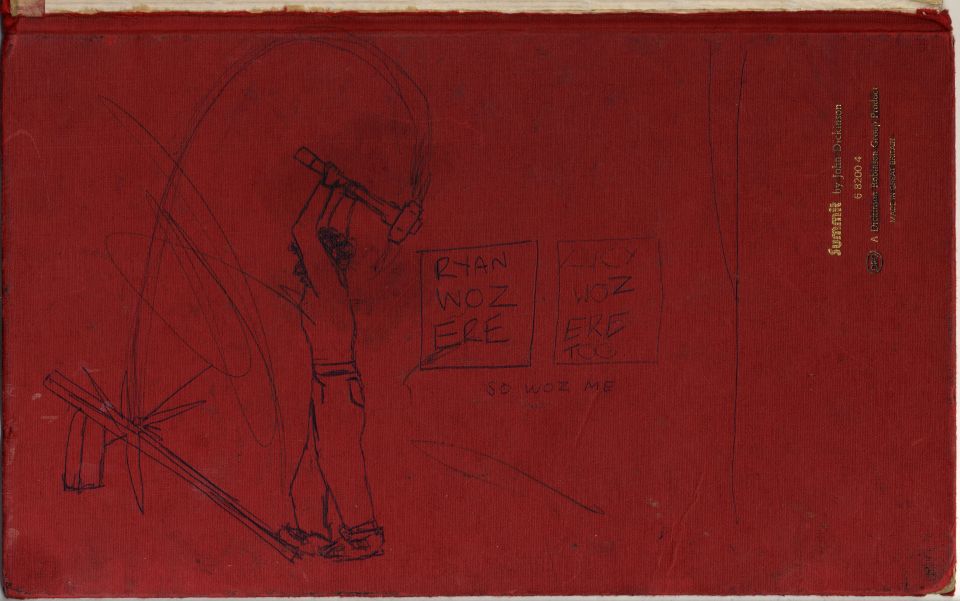
Back cover of Trentham Pit camp diary, with humorous sketches from the members
Copyright
Photography by Kevin Hayes may be reused for non-commercial personal research/private study. Please credit the photographer and the NSMWAG Archive, Keele University Library. For any other use, such as exhibition and print or digital publication, contact info.koh@talktalk.net.
Requests to reuse other images from the NSMWAG Archive should be directed to special.collections@keele.ac.uk.
Footnotes
1 Bridget Bell: Life and Times, Personal and Political: How it all Began; Bridget Bell's (1954-2019) biography by Julian Putkowski.
References
Blower, L. (2025). 'A new home for archive as birds take flight again'. URL: https://www.keele.ac.uk/society/column/lisa-blower/miner-birds-play.php [accessed on 16 May 2025].
Procter, R. (2017). ‘Brenda Procter Obituary’, The Guardian: URL: https://www.theguardian.com/politics/2017/apr/02/brenda-procter-obituary [accessed on 9 May 2025].
Putkowski, J. (2019). ‘Personal and Political – How it All Began’, Bridget Bell: Life and Times, NSMWAG Archive, Keele University Library
Thornber, R. (2010). ‘Peter Cheeseman Obituary’, The Guardian: URL: https://www.theguardian.com/stage/2010/apr/29/peter-cheeseman-obituary [accessed on 16 May 2025].
Further Reading
Copper, L. (2024). 'Striking Miners' Wives recall their Struggle', BBC News: Staffordshire. URL: https://www.bbc.co.uk/news/articles/cndjwd4py1po [accessed on 9 May 2025].