

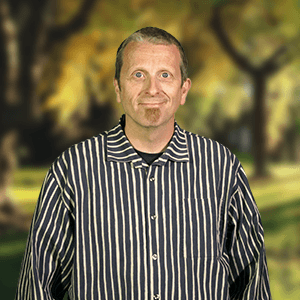
Dr Jóhannes Reynisson
- Title
- Lecturer in Drug Discovery
- Location
- Hornbeam 0.56
- Contact me
- Via email
- Phone
- +44 (0) 1782 733985
- j.reynisson@keele.ac.uk
Biography
Dr. Jóhannes Reynisson is a scientist with a diverse international background in academia and research. He began his studies in chemistry at the University of Iceland, where he completed both his BSc and MSc degrees. He earned his PhD from the University of Copenhagen in 2000, conducting the research at the Risø National Laboratory (Denmark) and the Georgia Institute of Technology (USA).
Following his doctorate, Dr. Reynisson held postdoctoral positions in Germany at the Max-Planck-Institut für Strahlenchemie in Mülheim and the University of Leipzig. He then joined the Institute of Cancer Research in London as a molecular modeller, where he spent five years developing anticancer drug candidates.
He has held academic positions at Nottingham Trent University and later at the University of Auckland, New Zealand, where he served for a decade as Senior Lecturer in Computational Chemistry and Molecular Modelling. Since 2019, Dr. Reynisson has been a Lecturer in Drug Discovery at Keele University, contributing to both teaching, administration and research.
Research and scholarship
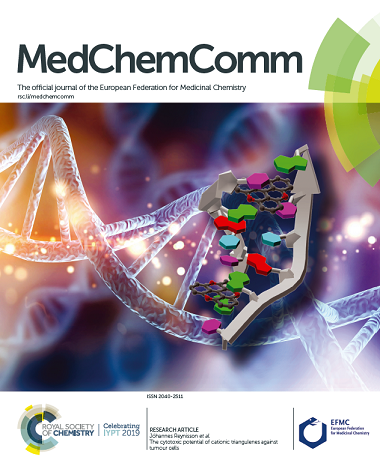
Dr Reynisson’s research interests lie within the field of drug discovery, in particular computer aided drug design (CADD) with emphasis on molecular modelling, virtual high throughput screening and density functional theory (DFT). He is currently working on a number of projects:
Discovering autophagy activators for longevity
This project is a collaboration with Professor Viktor Korolchuk and Dr. Peter Banks at Newcastle University, and is funded by the VitaDAO organisation. Autophagy—a vital cellular recycling process—is known to decline in naturally aged cells. By identifying compounds that can restore or enhance autophagy, the aim is to counteract several of the harmful effects associated with ageing.
Design and synthesis of novel autophagy inhibitors as anticancer agents
This ongoing collaborative project with Dr. Alan Richardson and Dr. Tony Curtis at Keele University focuses on developing small-molecule inhibitors targeting the Atg5–Atg16 complexation step—an essential process in autophagosome formation. These inhibitors are of particular interest in oncology, as many hard-to-treat cancers, such as pancreatic cancer, rely on autophagy to survive under chemotherapeutic stress. By disrupting this survival mechanism, the aim is to enhance the efficacy of existing cancer treatments.
Development of Dual TDO2/IDO1 Inhibitors as Anticancer Agents
This project focuses on the development of dual inhibitors targeting Tryptophan 2,3-Dioxygenase (TDO2) and Indoleamine 2,3-Dioxygenase 1 (IDO1)—two key enzymes involved in immune evasion by cancer cells. Inhibiting these pathways can help unmask tumours to the immune system, making them promising targets for cancer immunotherapy.
The project is a truly international collaboration, bringing together the expertise of Professor Antonio Cheung (Taiwan), Dr. Euphemia Leung (New Zealand), and Dr. Suat Sari (Turkey), each contributing unique insights to this multidisciplinary effort.
Exploring the Nature of Chemical Space
In this project, we employ quantum mechanical methods alongside artificial intelligence to gain deeper insights into the unique characteristics of drug-like molecules. By analysing their physicochemical and structural properties, we aim to distinguish pharmaceuticals from conventional organic compounds. This approach helps us better understand what makes a molecule "drug-like" and supports the rational design of novel therapeutics.
Teaching
Dr. Reynisson contributes to the undergraduate curriculum at Keele University across both the MPharm and BSc Pharmaceutical Science, Technology and Business programmes, delivered through the School of Allied Health Professions and Pharmacy.
He teaches physical chemistry and mathematics in the first-year modules PHA-10014 and PHA-10032, and medicinal chemistry in the second-year modules PHA-20009 and PHA-20018. In addition, he leads the second-year synoptic programme for the MPharm and serves as module lead for PHA-30069, which focuses on advanced topics in medicinal chemistry.
Dr. Reynisson also supervises final-year research projects, with a particular emphasis on the concept of known chemical space.
Publications
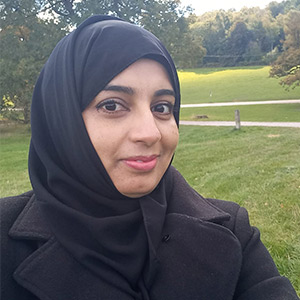
PhD students
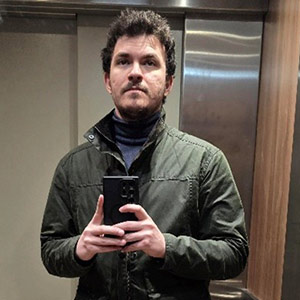
Reynisson’s laboratory

Head of School:
Professor Heidi Fuller
Email: h.r.fuller@keele.ac.uk
School address:
School of Allied Health Professions and Pharmacy
MacKay Building
Hornbeam Building
Keele University
Staffordshire
ST5 5BG
Enquiries:
Placements team: sahp.practiceplacements@keele.ac.uk
Postgraduate course admin team: sahp.postgraduate-admin@keele.ac.uk
Undergraduate course admin team: sahp.admin@keele.ac.uk
Undergraduate enquiries:
Email: enquiries@keele.ac.uk
Tel: +44 (0)1782 734010
Postgraduate enquiries:
Email: sahp.postgraduate-admin@keele.ac.uk
Keele Centre for Medicines Optimisation (KCMO)
Tel: +44 (0)1782 733831 / 734131
The Virtual Patient project enquiries:
Contact our Digital Development team:
Email: pharmacy.digital@keele.ac.uk
Pharmacy postgraduate enquiries:
Please contact the CPD4ALL team: cpd4all@keele.ac.uk
Pharmacy email: phab.postgraduate@keele.ac.uk