

You said, we did
At Keele, we’re committed to delivering an outstanding student experience based on real student feedback. Read about recent improvements that we have made thanks to your feedback.
Transforming WiFi and Internet at Keele
Following student feedback, over the past five years we’ve been working behind the scenes on one of the biggest upgrades in Keele’s history - a complete redesign of our entire network infrastructure through a Network Transformation Project. The result? Keele’s WiFi and Internet has been ranked in the Top 3 in the UK - based on real and verified student reviews (StudentCrowd University Awards, 2025).

New launderette supplier
Following student feedback about our previous launderette supplier for our Halls of Residence, we have moved to a new supplier, WASHCO, with effect from September 2024. Benefits of using WASHCO include that the wash cycle already includes detergent and fabric conditioner, helping you save money and ticking two things off your shopping list! You can also see if machines are free before you head down to the launderette, and the machines use the latest cashless technology, meaning you can pay with credit or debit cards, as well as from your phone.
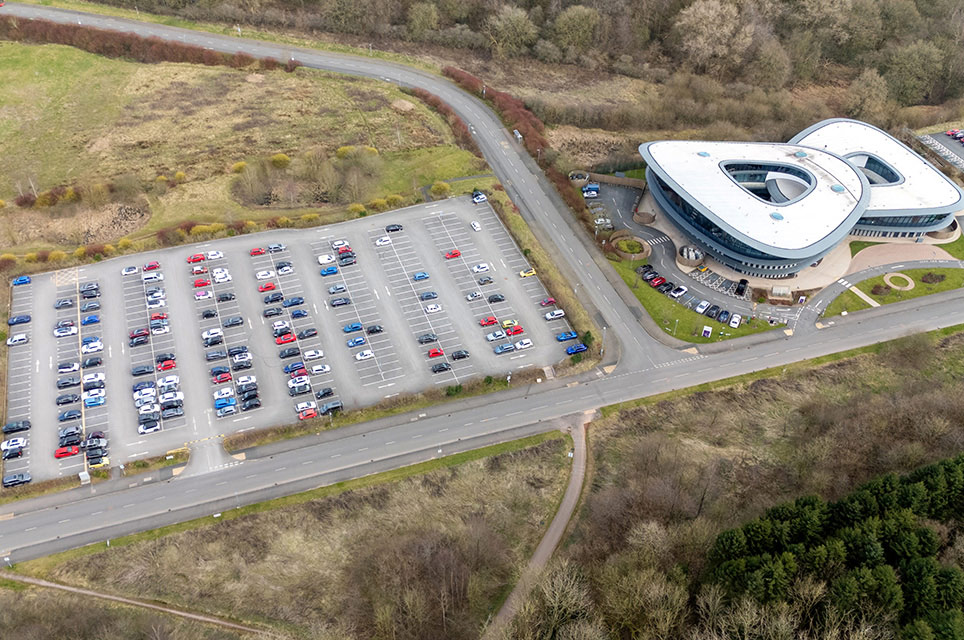
Car parking improvements
We've introduced the ability to park and stay all day across 387 spaces on overflow car park A3, and installed signage to help you get from there to the centre of campus via either a woodland walk or roadside footpaths. Car park A3 is charged at £3 for up to eight hours, or is free for those with a valid Keele parking permit.
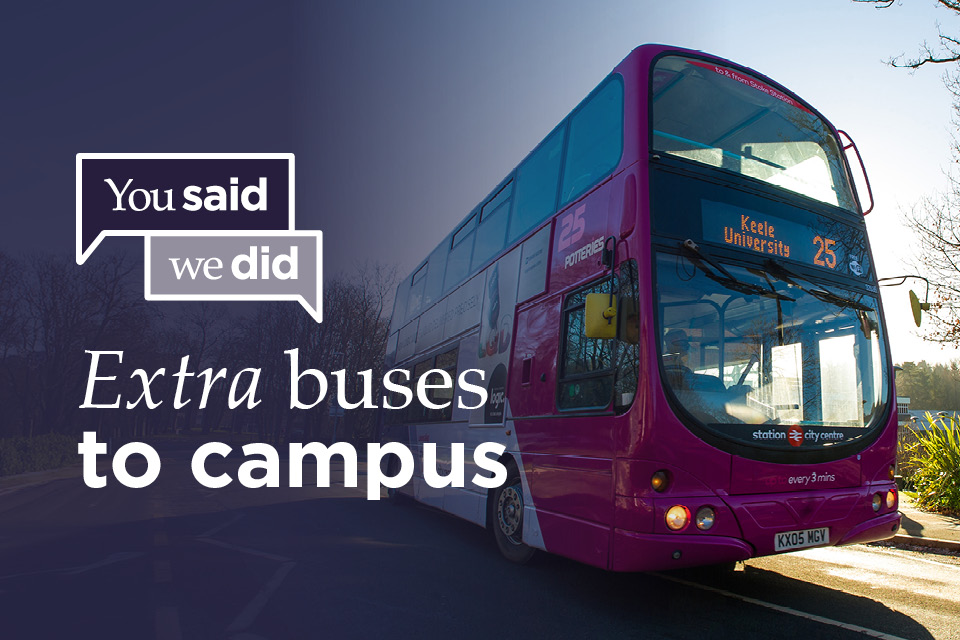
New bus services and digital bus timetables
Students told us that getting to campus by bus in a morning was difficult, with not enough services and standing room only. As a result, we have provided additional funding of £15,000 - and in collaboration with the Students’ Union - two extra buses will now run to Keele every morning to help commuter students get to campus more easily.
Sustainable travel options between Keele University and Newcastle-under-Lyme have also received a boost thanks to the launch of Service K, operated by D&G Bus, which links our campus with Silverdale, Knutton, and Waterhayes.
Our bus totem signs on campus provide clear and concise information about schedules and destinations, helping you to plan your journeys with confidence.
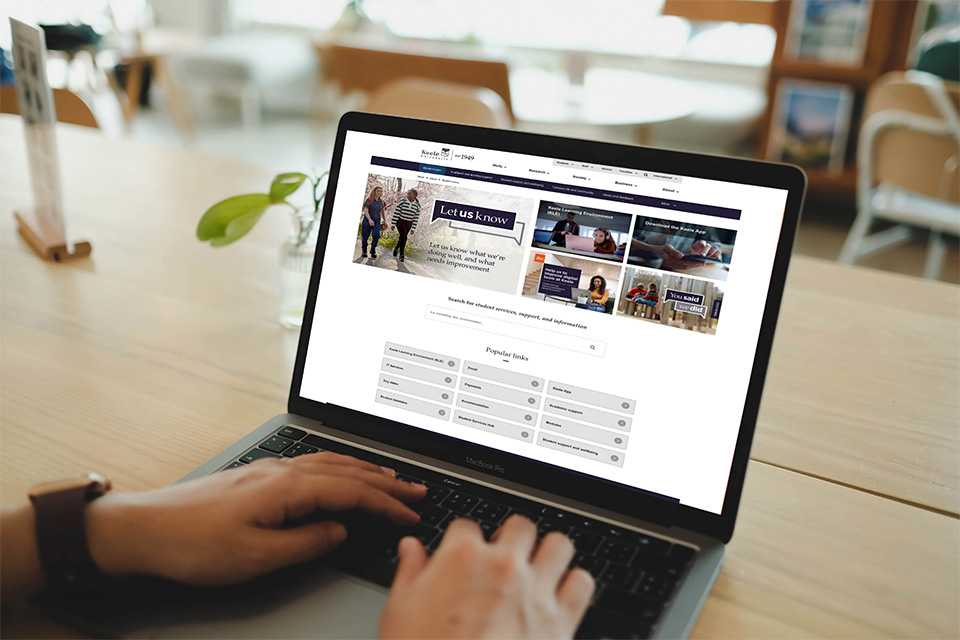
Your new home on the Keele website
To improve the accessibility of our website, we have created an updated version of our student web pages. Easier to navigate with a new search box and an improved look, we have worked with students to ensure our new layouts and features meet your needs. Our five categories – Academic and Learning Support, Student Support and Wellbeing, Campus Life and Community, News and Feedback, and New and Returning Students – now form a central online hub which contains everything you need to know during your time at Keele.


We have introduced principles of inclusive education across all our teaching provision. Comprehensive resources have been provided to teaching staff to ensure inclusivity is at the heart of our approach.

To enhance accessibility and deliver a better student experience, we’ve transitioned our Keele Learning Environment (KLE) to Blackboard Ultra. This upgrade ensures compatibility across all devices and includes minimum standards for staff designing and using the platform.
.jpg)
We’ve introduced clear guidelines on the use of AI in assessments, and have developed resources and workshops to help students ethically incorporate AI into their learning practices.
.jpg)
Teaching quality
- Our staff are now engaged in peer observations and reviews of teaching materials. This initiative fosters the sharing of good practices and ensures high-quality teaching across the university.
-
Students are actively involved in reviewing the learning and teaching experience on their modules, ensuring their voices shape the curriculum and delivery methods.
Student voice
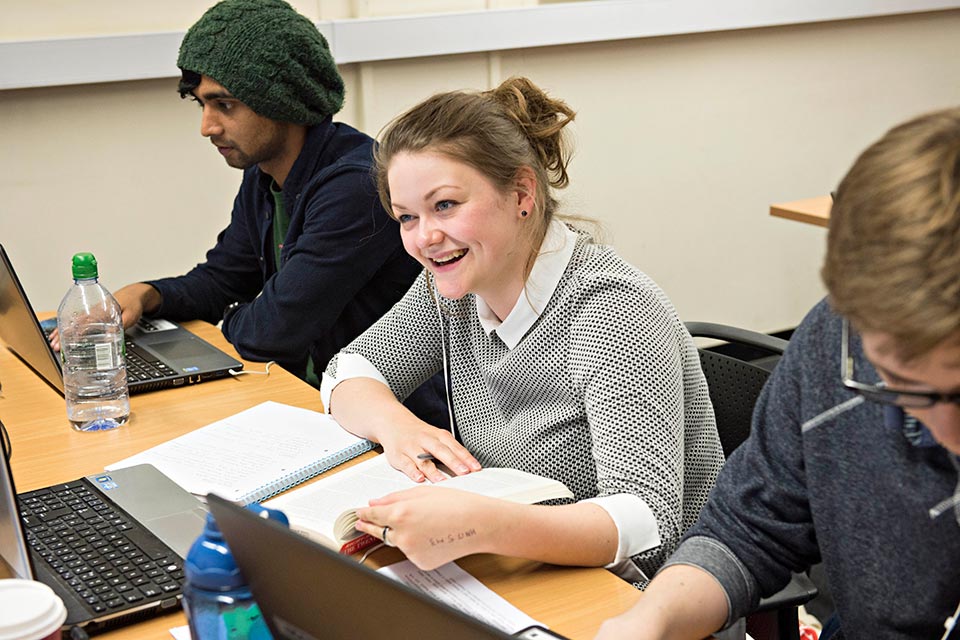
- To gather feedback more effectively, we’ve implemented consistent mid-module evaluations. This allows us to act on student insights earlier and enhances communication through various group meetings.
- Our student voice system has been redesigned to include a broader range of student perspectives, ensuring we continue to improve the student experience collaboratively.

Academic support
- Every school now has a dedicated Student Engagement and Retention Lead to proactively support students and ensure no one is left behind.
- We’ve created a suite of new academic and digital skills resources to support students in their studies.
Careers and placements
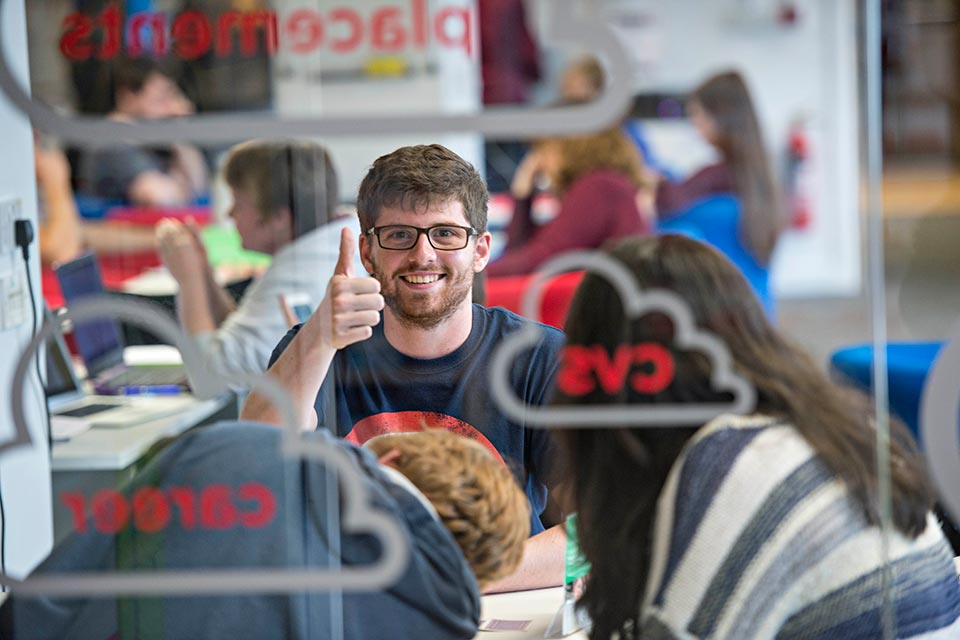
We’ve made significant investments in staff to facilitate placements and work-related projects across all undergraduate programmes, preparing students for the professional world of work.
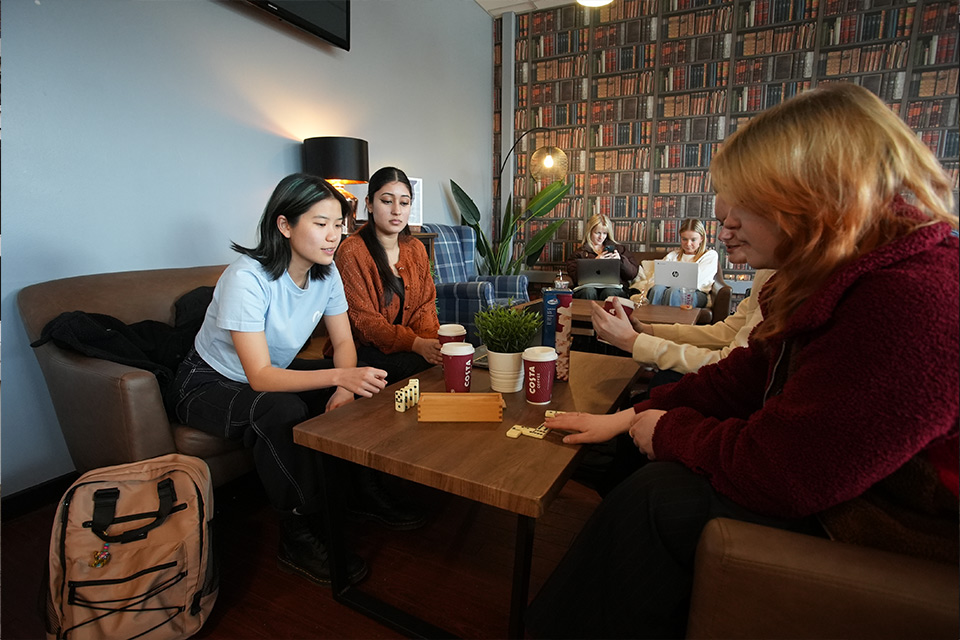
Students told us they wanted more alcohol-free societies and events. We have therefore collaborated with the Students’ Union to increase awareness of alcohol-free events. This academic year, 70% of their events have been alcohol-free, including sports and society taster sessions, film nights, walks, and workshops. Additionally, our Residence Life programme is entirely alcohol-free, featuring book swaps, board game & Xbox nights, gospel choir tasters, and pumpkin decorating.

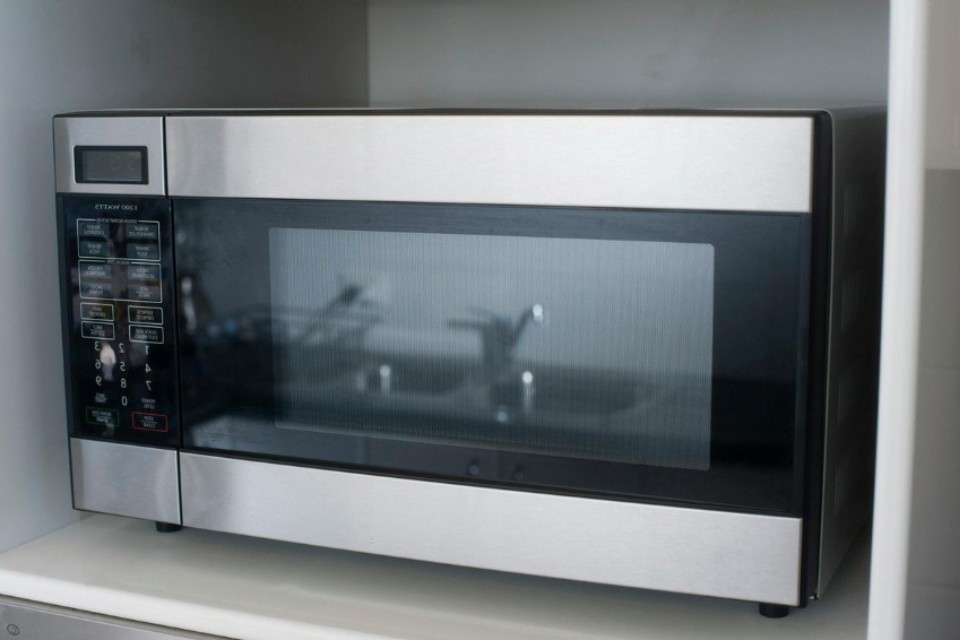
Students requested more amenities in the library to enhance their study experience. We have therefore introduced a microwave to allow library users to heat up meals and snacks, making it easier to stay nourished and focused during long study sessions!
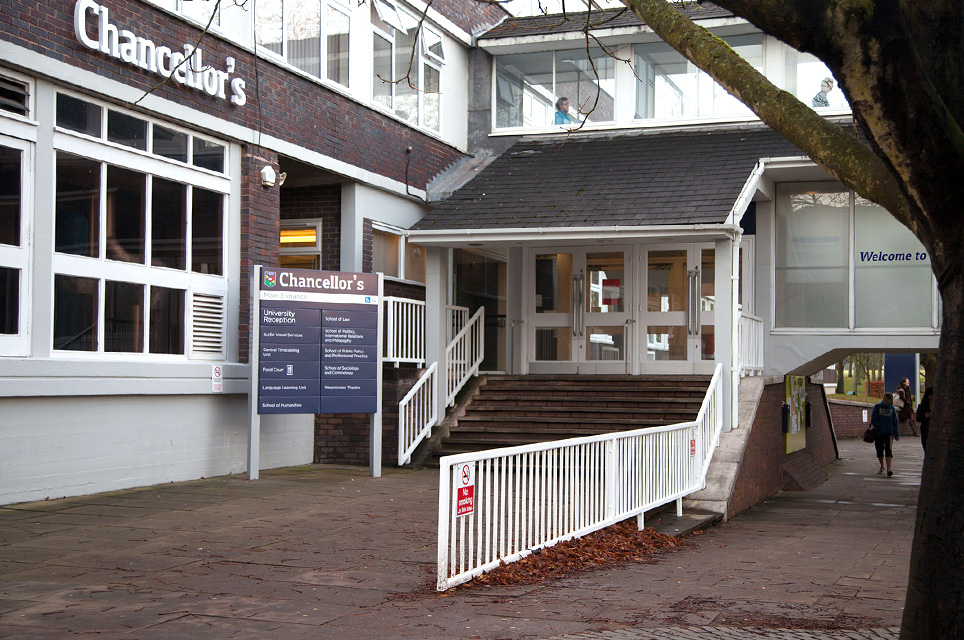
You asked for more spaces dedicated to spiritual and religious practices. We have responded by introducing new prayer rooms in Chancellors. Members of the community who wish to pray in the Islamic tradition can now use either the female-only Muslim prayer room in CBA0.017, or the male-only Muslim prayer room in CBA0.019. Students and colleagues wishing to take a moment of quiet prayer, meditation, or reflection are invited to use the quiet room in CB0.015. The opening of our new prayer spaces is testament to our commitment to inclusivity, the needs of our communities, and the celebration of faith and beliefs at Keele.
Opportunities for international students
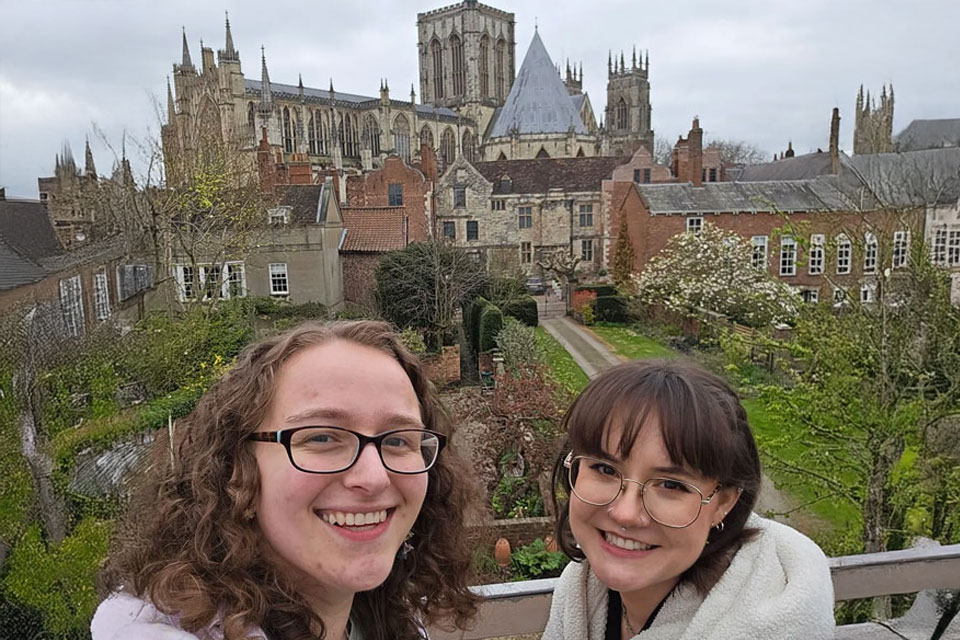
International students asked for more opportunities to explore the UK and build relationships with students from different countries and courses. In response, we organised a day trip to York which was attended by 68 students. They appreciated the chance to visit a new place and enjoyed the opportunity to meet new people. We plan to arrange more trips throughout the academic year.
Microwave stations
The Campus Library has introduced new microwave stations that students can use for free. Heat up meals to keep you warm over the cooler months and ensure you keep your brain fuelled in between lectures and study marathons.
Additional bus services
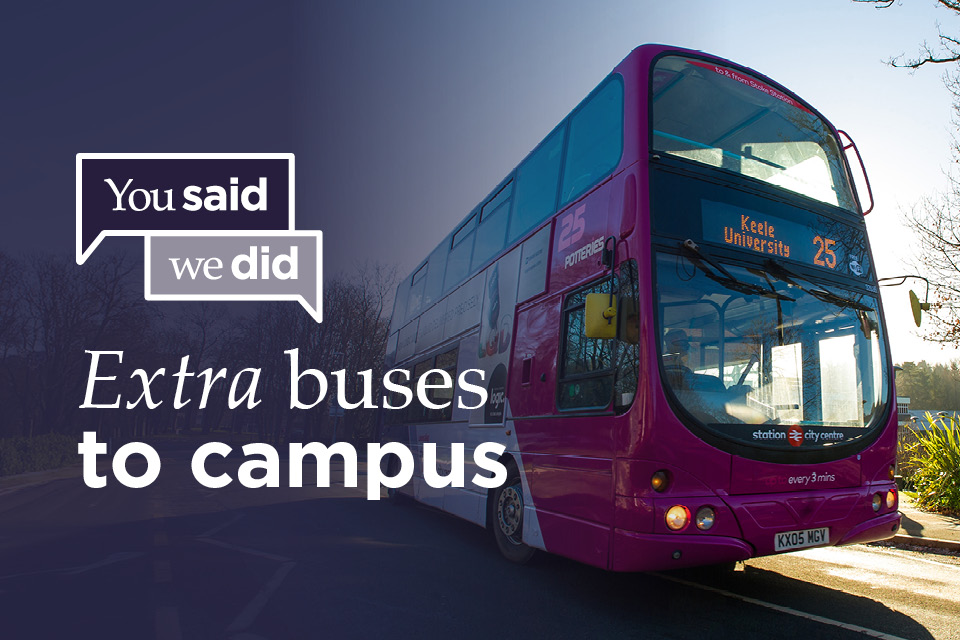
Students told us that getting to campus by bus in a morning was difficult, with not enough services and standing room only.
As a result, we have provided additional funding of £15,000 – and in collaboration with the Students’ Union - two extra buses will now run to Keele every morning to help commuter students get to campus more easily. Leaving Newcastle-under-Lyme bus station at 7.36am and 8.20am Monday-Friday, both buses will follow the usual 25 route from the bus station to the University.
Course feedback
We are also keen to act on feedback provided for particular courses, and have detailed how we have acted on some of this feedback in the accordions below.
You said: Rehabilitation and Exercise Science students said that completing a computer-based assessment without access to a case study would be challenging.
We did: We have revised the assessment to allow students to bring in relevant case study details.
You said: Pharmacy students said that it was not always clear how generic assessment criteria applied to different types of assessment.
We did: We have placed a stronger emphasis on clearly explaining how these criteria are interpreted and applied across a range of assessment formats.
You said: Radiography students told us they wanted easier access to answers for module questions.
We did: We have introduced module discussion boards to provide a clear space for students to ask questions and receive answers about their modules.
You said: Allied Health Professions students fed back that placement support could be improved.
We did: We listened to this feedback and have implemented the "book-end" support, which takes place on the first and last day of placement blocks.
You said: Rehabilitation and Exercise Science students told us that three-hour theoretical lectures were too long and mentally demanding.
We did: We have redesigned the module to break theoretical content into multiple shorter sessions, improving engagement, focus, and learning outcomes.
You said: Pharmacy students told us that assessment feedback timelines were not always clear.
We did: We now communicate more clearly the dates and times students can expect to receive feedback on their assessments.
You said: Rehabilitation and Exercise Science students said that timetable changes were often confusing.
We did: We now send direct email updates to students whenever timetables alterations are made, ensuring clearer and more timely communication.
You said: Radiography students said that the expected standards of professionalism were not always upheld by all students.
We did: We have introduced The Student Commitment – a co-produced document that clearly outlines the expected standards of professionalism.
You said: Allied Health Professions students fed back that an elective component was really useful and should be core content.
We did: We have now embedded this content across the main programme.
You said: Physiotherapy students told us that some modules had very high teaching hours, leaving less time for independent study.
We did: We have reduced the teaching hours for these modules, providing students with more time for self-directed learning.
You said: Rehabilitation and Exercise Science students asked for more opportunities to engage with professionals, build networks, and gain real-world experience.
We did: We have expanded our career-building provision, including the introduction of a new Level 6 work experience module to better prepare students for future employment.
You said: Pharmacy students said that assessment briefing sessions were scheduled too late.
We did: We now schedule assessment briefing sessions earlier, giving students more time to prepare before going on placement.
You said: Radiography students told us that they wanted more opportunities to develop their mentoring and feedback skills.
We did: We introduced a peer review process where students provide feedback on staff teaching, which also helps students to build skills in providing constructive feedback.
You said: Physiotherapy students told us that assessment feedback was not always consistent.
We did: We have implemented measures such as smaller marking teams and a stronger focus on feedback consistency to ensure more reliable and uniform feedback across different markers.
You said: Rehabilitation and Exercise Science students told us that the modular KLE spaces were confusing and that the shared cohort KLE space with other subjects was largely irrelevant to their course.
We did: We have improved the structure and layout of the KLE and created a dedicated Institute of Sport Information Hub, making course information clearer, more relevant, and easier to navigate.
You said: Radiography students told us that they wanted more opportunities to develop their mentoring and feedback skills.
We did: We introduced a peer review process where students provide feedback on staff teaching, which also helps students to build skills in providing constructive feedback.
You said: Allied Health Professions students said they would like guidance on using labs to be clearer.
We did: We formed a working group with students to revise guidance for laboratory sessions and make it easier to understand.
You said: Midwifery students told us they wanted to be more aware of the Students’ Union and its role on campus.
We did: Year One students are now introduced to the Students’ Union during induction week and Year Two and Three students receive reminders about the services available to enhance their awareness.
You said: Nursing & Midwifery students said they would like more support in stepping up to the next level of academic writing.
We did: Our Learning and Development Support Tutor has developed resources and implemented a 3-year package of academic skills development to support students with this.
You said: Mental Health and Children’s Nursing students told us they wanted more field-specific teaching.
We did: We have introduced field-specific sessions into every module and made significant changes to our Clinical Nursing Practice Modules in Part 3 to include more field-specific content.
You said: Nursing students told us they were concerned about inequity in dissertation support depending on their allocated supervisor.
We did: We have developed a new Supervisor Handbook providing clear guidance on the expected dissertation structure to ensure greater parity of expectations, and increased synchronous teaching by the module lead now supports the generic structure and format of dissertations.
You said: Midwifery students told us they were dissatisfied with room booking delays and the suitability of allocated rooms.
We did: We have implemented changes to the room booking system for this academic year.
You said: Nursing students told us they wanted more placement support from academics.
We did: Following the successful introduction of practice drop-ins, we plan to expand this to include additional face-to-face and online sessions, ensuring students in rural placements are also supported.
You said: Nursing & Midwifery students fed back that they would like to have dedicated time to work on dissertations.
We did: We have added a formative submission date for the first chapter of the nursing dissertation, and have added writing retreats into student timetables to provide protected, supported time for students to work on their dissertations.
You said: Midwifery students told us they wanted more clinical skills work.
We did: We have explained the scaffolded approach of our curriculum, where clinical skills sessions are scheduled alongside the relevant theory to enhance practical application.
You said: Nursing students told us they perceived a lack of support from IT and library services.
We did: We have timetabled sessions across modules where students can meet library staff, and added sessions in the dissertation module to introduce students to the IT and library support available.
You said: Nursing students told us they wanted more variety and breadth in their choice of placements.
We did: We have introduced placement summits, enabling academics and placement partners to strengthen placement circuits and enhance the range of experiences available to students.
You said: Nursing students told us they wanted more placement support from academics.
We did: Following the successful introduction of practice drop-ins, we plan to expand this to include additional face-to-face and online sessions, ensuring students in rural placements are also supported.
You said: Nursing & Midwifery students fed back that they would like to have dedicated time to work on dissertations.
We did: We have added a formative submission date for the first chapter of the nursing dissertation, and have added writing retreats into student timetables to provide protected, supported time for students to work on their dissertations.
You said: Nursing & Midwifery students said they would like to complete more field-specific learning.
We did: We have reviewed the content of our programmes and added more field-specific learning to timetables.
You said: Forensic Science students told us they wanted more in-depth feedback to support future assignments.
We did: We have introduced digital feedback forms for oral assessments, highlighting marking criteria for clear, confident communication and presentation skills to help students build these skills for future assignments.
You said: Chemistry and Medicinal Chemistry students said they would appreciate more insight into careers that are available to them.
We did: We have introduced sessions where speakers from across the chemical industry come to speak to students about their experiences and careers available to them.
You said: Chemistry students told us they did not get the chance to refocus after the January assessment period before starting semester two.
We did: We modified the timetable for week one of semester two to support students in building back into their studies.
You said: Forensic Science students told us they wanted more bespoke careers events.
We did: We hosted fortnightly sessions tailored to forensic science, including career insights, postgraduate opportunities, interactive Q&As, interview workshops, CV support, and talks from guest speakers across forensic and policing specialisms.
You said: Physics and Astrophysics students told us they wanted staff to use Class Notebooks more in lectures.
We did: Staff now live-annotate PowerPoints and Notebooks instead of using whiteboards, giving students immediate access to class materials.
You said: Physics and Astrophysics students told us they wanted to choose dissertation topics earlier to work over the summer.
We did: Students can now begin their dissertation over the summer with oversight from their module leader if they wish.
You said: Chemistry students told us they wanted to study a wider range of topics linked to real-world challenges.
We did: We have introduced a Chemistry with Materials route, added new modules across all Chemistry degrees (including biological chemistry and scientific coding), and integrated professional skills and real-world applications throughout the programme.
You said: Chemistry students told us they found it challenging to balance assessment deadlines.
We did: We have rationalised the assessment portfolio, reducing the total number of assessments by 13%, and redistributed deadlines to allow students to focus on applying skills to real-world datasets and scenarios.
You said: Students in the Faculty of Natural Sciences said they were unsure where to look for help with their assignments
We did: We have introduced standardised assessment briefs to ensure all assessments provide similar sets of guidance, and to help you know where to look for help.
You said: Students in the Faculty of Natural Sciences said they would like more opportunities to reflect on their learning, skills development and career readiness.
We did: Each School in the Faculty now delivers a one-day event for final year students in semester 2, with activities including career talks from speakers including industry professionals, academics and alumni.
You said: Forensic Science students said they wanted more CSI practicals and experience in real-world crime scene investigation as part of their programme.
We did: We have invested in developing our forensic simulation, which features a number of domestic and non-domestic scenes to use for practicals across the programme.
You said: Forensic Science students said they wanted more support, better organisation, and more clarity on marking in their project modules.
We did: We have reorganised both third and fourth-year projects to include more induction and planning sessions, created new assessment briefs to clarify how your assessments are marked, and introduced a wider range of projects for students to choose from.
You said: Forensic Science students requested the opportunity to study areas of the subject that interest them.
We did: In both the third and fourth year, we have added a range of new optional modules from across the breadth of forensic science to allow you to tailor your studies towards your desired career path.
You said: Physics and Astrophysics students asked us not to use a whiteboard when teaching as it was sometimes difficult to follow.
We did: We explored using OneNote as a digital teaching tool to improve quality of taught sessions, and are now expanding its use across the programme.
You said: Physics and Astrophysics students said there were too many formulae to learn for examinations.
We did: We explored using standardised equation sheets to aid students in assessments, and these are now used in all exams across the programme.
You said: Physics and Astrophysics students said there were too many small deadlines throughout the semester.
We did: After speaking to students, we have reduced the number of assessments and introduced more formative assessments to help you better complete the ones that count towards your marks.
You said: Life Sciences students told us they were often unaware of how comments shared with their Student Voice Representatives were responded to and acted upon.
We did: We will produce a newsletter towards the end of each semester by the School Student Voice Lead and Staff Lead for Student Voice, sharing how student feedback has been addressed and how it informs ongoing curriculum design.
You said: Geology students told us they wanted more support in articulating key skills developed across the programme.
We did: We have piloted a new system for students to audit and track their skills development to support career progression, with plans to expand this across the School through academic and professional skills modules.
You said: Geography, Geology and Environmental Science students told us they felt a lack of connection with peers and the wider School.
We did: We have introduced dedicated KLE spaces for each programme to strengthen communication and cohort identity, alongside School-wide initiatives such as a KLE noticeboard and a Careers and Engagement Hub.
You said: Life Sciences students told us they wanted more opportunities for work-based learning through placements.
We did: We have introduced new flexible placement modules at Levels 5 and 6, with over 200 Life Sciences students participating. These placements include a mix of external providers sourced by Keele and internal campus-based opportunities.
You said: Geography and Environmental Science students told us they wanted more programme-specific careers events.
We did: Students across the Earth Sciences programmes will attend the School of Life Sciences end-of-year research conference, which features invited employers for networking and career-focused discussions, alongside the new Life Sciences Fair.
You said: Bioscience students said they wanted more opportunities for active learning and assessment support at Level 6.
We did: We have revised the delivery and assessment strategy in several modules, adding research seminars and introducing new modules aligned with emerging research themes to enhance engagement and outcomes.
You said: Life Sciences students said they wanted more focus on life after graduation and career preparation.
We did: We have introduced new and refocused modules, including the Employability and Communication Skills module for Bioscience students, to enhance career readiness and align learning with employment opportunities.
You said: Bioscience students told us they enjoyed opportunities to develop core and discipline-specific practical skills.
We did: We have expanded the range of key skills and increased practical activity time across Levels 4 and 5, including additional opportunities to practice skills needed for assessments.
You said: Life Sciences students told us they wanted more opportunities to connect with employers, careers support, and postgraduate progression routes.
We did: We have introduced the Life Sciences Careers, Placements and Postgraduate Fair, featuring over 20 stalls covering careers, internships, and postgraduate opportunities across sectors such as pharmaceutical manufacturing, medical affairs, marketing, sustainability, geoscience, and postgraduate study.
You said: Life Sciences students told us that feedback took too long to be returned in some modules.
We did: We have introduced a new policy with a two dropbox submission format. One for those submitting by the original deadline and a second for those submitting later (e.g. with a seven-day extension). We are working to increase feedback return within three weeks of the date of submission for all students.
You said: Life Sciences students said they would benefit from more support around graduate destinations and career readiness.
We did: We have expanded the core careers strand across first and second year, introduced a new “Professional Development in Bioscience” module, and a new school-wide careers and engagement hub themed around key destinations including biomedical/clinical science and industry.
You said: Life Sciences students said assessment deadlines across final year modules significantly increased workload at key points in the semester.
We did: We have introduced a school-wide assessment map to give a better spread of deadlines across the semester. We have also responded proactively to concerns on a case-by-case basis, with a focus on supporting your student experience.
You said: Life Sciences students said they really valued the opportunity for more student involvement in staff peer review of teaching activities based on our initial pilot.
We did: We have extended this approach to incorporate wider Student Voice Rep involvement in peer review activities and have been focussing on module information and assessment guidance this year.
You said: Life Sciences students said they would like more opportunities to connect with other students and engage in peer support activities.
We did: We have introduced a new school-level student mentoring scheme, co-developed with Student Services and the student-led Life Sciences Society, to support students’ sense of belonging and further develop key skills through mentoring opportunities.
You said: Life Sciences students said they would like more opportunities to connect with staff across the school.
We did: We have continued to further support the work of the student-led Life Sciences Society by appointing a new society-staff liaison and supporting society-led student drop-ins through academic staff attendance and other social activities.
You said: Psychology Student Voice Representatives told us they wanted more contact with their Academic Mentors.
We did: We have introduced two additional check-ins: one before winter vacation and another when results are published in June/July.
You said: Psychology students told us they wanted more opportunities to contact staff.
We did: We have published drop-in availability for all academic staff, developed Student Coffee Hours with themed support weeks, and increased the availability of Teaching Fellows in the Academic Support Unit.
You said: Psychology students told us they wanted clearer guidance on assessments and feedback.
We did: We developed assessment-specific marking criteria, published clear assessment briefs early in the module, and dedicated time to outlining module learning outcomes, assessment requirements, and support.
You said: Psychology students told us they wanted more in-class time and less reliance on flipped learning.
We did: We have added more in-person teaching and are reviewing asynchronous activities to ensure they complement in-person teaching while building students’ independent learning skills.
You said: Psychology students told us they weren’t always sure how to improve from their assessment feedback.
We did: Feedback is now focussed on highlighting what students did well, and also how they can develop.
You said: Psychology students told us they welcome opportunities to chat with staff, to ask questions and provide feedback.
We did: We now hold weekly coffee hours to provide a setting for Psychology students to meet with other students and staff.
You said: Psychology students said they value support with building their academic skills.
We did: The School of Psychology now has its own dedicated Academic Support team and a new Skills Hub filled with resources to support you.
You said: Law students told us they wanted better consistency and clarity in assessments.
We did: The Programme Lead has reviewed all handbooks and assessment briefs to improve clarity and consistency. All modules with marking teams now also conduct a calibration exercise early in the marking process to ensure consistency of marking.
You said: Law students told us they wanted better communication from the School, both for contacting staff and receiving updates on changes.
We did: We have adopted new communication policies to ensure changes are communicated clearly and promptly, and the Programme Lead and Student Engagement & Retention Lead are monitored by Student Voice Representatives to improve staff response times.
You said: Harper & Keele Veterinary School students told us that the asynchronous individual learning varied in regard to the amount of content and the level of engagement it stimulated.
We did: We transferred a lot of material and case-based learning to interactive digital platforms such as Articulate, which has seen a significant increase in student engagement with asynchronous content through the 2025-26 academic year.
You said: HKVS students told us that they would like more exposure to clinical cases during the Production Animal Rotation.
We did: We added a one-week ambulatory practice placement to the existing structured Production Animal Rotation led by our core farm clinical partners.
You said: HKVS students fed back that the accommodation provided for clinical rotations often didn’t meet individual student needs.
We did: We have introduced a new system for the 2025/26 academic year where students are provided with a bursary to book accommodation of their choice.
You said: Computing and Mathematics students told us they wanted more practical, hands-on activities and tougher programming challenges.
We did: We plan to introduce more complex tasks in practical classes and assessments, with optional advanced problems for students who wish to challenge themselves further.
You said: Computing and Mathematics students told us they wanted independent reading suggestions provided at the end of lectures.
We did: We will add recommended reading lists and resources to help students explore topics in greater depth.
You said: Computing and Mathematics students said that lecture timings and sudden timetable changes were difficult to accommodate.
We did: We will request continuous two-hour lecture slots and plan timetables in advance to minimise last-minute changes.
You said: Computing and Mathematics students told us that some lab sheets and assignment instructions could be clearer.
We did: We are revising lab sheets and assignment briefs to improve clarity, and are providing more example code and practice questions.
You said: Computing and Mathematics students told us that more support is needed for those new to computer science.
We did: We have re-published the mock test, added extra practice questions, and encourage students to make use of demonstrators and the Help Desk.
You said: Computing and Mathematics students told us that group work felt rushed and disorganised.
We did: We will start group work later in the module and provide more structured discussion and support.
You said: Computing and Mathematics students told us that virtual labs (for example, TryHackMe) were not always preferred.
We did: We are balancing virtual labs with other tools such as STRIDE, CrypTool, and Wireshark, and will review lab formats for future course delivery.
You said: Computing and Mathematics students told us that long sessions can feel heavy and that they would like short breaks and summaries included.
We did: We will incorporate short breaks during two-hour sessions and provide end-of-lecture summaries to reinforce key takeaways.
You said: Computing and Maths students said they wanted better feedback on their work and a better understanding of how we mark it.
We did: We now have devoted time in every module to explain assessment, marking and feedback.
You said: Computing and Maths students said that, in some cases, especially in their first year, they saw some overlap between their A-levels and their modules, and in those cases they would like to be challenged more.
We did: We are creating more challenging and advanced, but optional, tasks for those cases and for those students who come with A-level subject knowledge.
You said: Computing and Maths students said they needed a break in long taught sessions.
We did: We are now allowing at least a 10 minute break for every hour of teaching.
You said: Computing and Maths students said they wanted to see more real-world applications of what they were learning in their modules.
We did: We are adding more real-world case studies and examples from our research involvement with industry partners into module content.
You said: Computing and Maths students said they wanted better integration of practical/tutorial sessions and lectures.
We did: We are now making additional effort to explain how practical/tutorial sessions relate to lecture content, and also explain how they are relevant to assessments.
You said: Computing and Maths students said that, on some occasions, they cannot see how module topics relate to each other.
We did: We have included a roadmap in modules to show how topics that are being covered each week fit with the overall module structure.
You said: Criminology students told us they wanted clearer and more consistent feedback on assessments.
We did: We have introduced team marking meetings and revised feedback templates to ensure all students receive structured, accessible feedback that explains what was done well, what could be improved, and how grades relate to the marking criteria.
You said: Music students told us that the Creative Synergies module was not collaborative or interdisciplinary enough.
We did: We now offer the Creative Synergies module across the School, encouraging participation from students in different subject areas.
You said: International Relations students told us they wanted more varied assessments.
We did: The new International Relations curriculum includes a range of assessment types, such as reports, reviews, reflective diaries, and podcast recordings. From September 2026, timed exams will also be removed from the curriculum.
You said: Media and Communications students told us they wanted to see how their course introduces subjects and skills in a way that builds on prior learning.
We did: We collaborated across module design and programmes (Media and Film) to ensure that skills and knowledge developed in one module are transferable across others in the same semester.
You said: Education students told us they wanted more opportunities for field trips and learning outside the classroom.
We did: We have introduced additional field trips as part of the programme redesign.
You said: Music students told us they wanted the content of ‘Advanced Studio and Engineering’ and ‘Live Sound’ to be taught in separate modules.
We did: The material and delivery in these areas are now provided through two distinct modules.
You said: Music students told us they wanted an easier way to access the new Courtyard Studio.
We did: Students can now use their Keele Card to open the doors, allowing access whenever it is needed.
You said: Criminology students told us they wanted to understand the rules and expectations around AI use in assessments.
We did: We have developed clear guidance on ethical and appropriate AI use and embedded discussions of academic integrity and AI ethics into Level 4 modules.
You said: Film Studies students told us they wanted more opportunities to cover topics in depth and to develop skills for new assessment types.
We did: We extended the coverage of individual topics in core modules, lengthened seminars, and added a designated workshop session focused on assessment preparation.
You said: Music students told us they wanted more practical sessions for Live Sound, particularly for hands-on experience with the PA system and sound checks.
We did: We have appointed a Senior Technician in the School to support the programme and ensure students receive sufficient studio inductions.
You said: Criminology students told us they wanted improved communication about programme developments and feedback responses.
We did: We are launching a Criminology newsletter to keep students updated on teaching, assessment, outcomes from their feedback, and wider stories relating to activities within the Criminology programme.
You said: Criminology students told us they wanted more opportunities to share feedback throughout the semester, not just at the end of modules.
We did: We have introduced mid-semester evaluations across all modules, allowing students to tell us what’s working well and what could be improved while there is still time to make changes.
You said: Level 4 Music students told us they had been unable to use Logic Pro as much as they would like.
We did: The software is now used and available across all modules.
You said: International Relations students told us they wanted more community-building opportunities outside the classroom.
We did: We have developed a range of activities to help students network with each other, including a Crisis Simulation, film screenings with Q&As featuring the filmmakers, guest speakers, and interactive workshops.
You said: History students told us they would like more field trips and learning opportunities outside the classroom.
We did: From the 2025-26 academic year, we have included a field trip in one Level 4 core module and opportunities to work with secondary school students in another Level 4 core module.
You said: Education students told us they wanted more emphasis on the practical elements of education.
We did: New modules now place a greater focus on classroom-based work and practical teaching experience.
You said: Criminology students told us they wanted more support for dissertations, particularly for empirical research projects.
We did: We have introduced tailored workshops within the dissertation module and linked these with the Level 5 Research Methods module to help students design and conduct independent research with greater confidence.
You said: Sociology students told us they wanted more guidance on the use of AI.
We did: We ran dedicated workshops during Welcome Week to provide guidance on the ethical and effective use of AI.
You said: Politics students said they wanted more opportunities to provide informal feedback to the programme.
We did: We now hold Town Hall meetings to give all students the opportunity to have their voices heard.
You said: Education students told us they wanted more guidance around assessments.
We did: We have developed specific assessment briefs and now dedicate more in-class time to assessment preparation.
You said: First-year Music students told us that last year there were delays in receiving MacBooks and issues with the centralised licensing system.
We did: This year all devices were delivered on time, and the licensing system is now fully stable, ensuring students can access the software they need without disruption.
You said: International Relations students told us they wanted more help with assignments and skills development.
We did: The International Relations curriculum now includes designated workshops at module level to support students in preparing for each of their assignments.
You said: Media students asked to see examples of previous student work for Media assessments.
We did: We have listened to this feedback and made this standard practice across all Media modules.
You said: English students asked for more non-traditional assessments in the first year.
We did: We are diversifying English assessments from 2025-26 as a result of this feedback.
You said: English students asked for more guidance about tone for non-traditional assessments.
We did: We will provide this information in English assessment briefs.
You said: Humanities students asked for the Humanities Ball to be reinstated.
We did: The Humanities Ball is now back on the calendar on an annual basis.
You said: Students in the School of Social Sciences asked us to organise more informal events where they can meet other students
We did: We have done this at programme level and have had reports of students enjoying the opportunity to meet peers from different levels of study.
You said: International Relations students requested more community-building opportunities outside of the classroom.
We did: The programme is developing a Crisis Simulation and social event for International Relations students and others who expressed interest in a model UN event last year.
You said: Philosophy students said they would appreciate more opportunities to learn about and discuss contemporary issues.
We did: We have introduced a new module, ‘Contemporary Ethical Issues’, where we discuss important recent issues including the ethics of AI, the use of cloning and technological enhancements of human beings, the morality of border controls, and what duties we owe to the environment.
You said: Accounting and Finance students told us they wanted greater opportunities to get familiar with Bloomberg.
We did: We have introduced additional hands-on Bloomberg workshops.
You said: Economics students told us they wanted clearer assessment expectations and marking criteria.
We did: We have provided clear assessment information in all module handbooks, along with module-specific marking criteria and past papers/mock exams.
You said: Accounting and Finance students told us they wanted to know more about Professional Accounting Bodies.
We did: We have included focused sessions during Welcome Week, will host the CIPFA Management Games in 2026 with student involvement, and are organising an ACCA talk for undergraduate and postgraduate taught students.
You said: Economics students told us they wanted more guidance on what to do and how to improve.
We did: We are committed to marking within 15 working days and providing developmental feedback that helps students understand how they can improve.
You said: Accounting and Finance students told us they wanted more extra-curricular talks and activities.
We did: We have introduced additional employability workshops for Level 6 students, promoted Early Careers events, and arranged two lectures with networking opportunities from RSM Accountants on taxation and audits. Guest speakers from local government will also contribute to relevant core modules in 2026.
You said: Economics students told us they wanted more intellectually stimulating content and clearer links between modules.
We did: We have enhanced economic applications across modules, increasing real-world context and clearer progression.
You said: Accounting and Finance students told us they wanted more question practice to prepare for assessments.
We did: Module leaders will introduce additional question practice into weekly teaching, provide guided self-study questions, and offer structured opportunities to practice.
You said: Accounting and Finance students told us they wanted access to past papers and answers or a mock paper.
We did: We will provide at least one past or mock exam paper with basic suggested answers, along with revision sessions to support assessment preparation.
You said: Keele Business School students asked for help managing stress when presenting in person.
We said: We now give students the option of asking to present without an audience.
You said: Keele Business School students asked for help with assessments over the winter vacation period.
We said: We set assignments earlier, meaning you can meet with tutors before the vacation.
You said: Keele Business School students asked for better gaps between assignments.
We did: We have asked staff to plan assignments together to avoid clashing deadlines.
You said: Medicine students told us they wanted additional support when transitioning into the clinical years of their course.
We did: We have enhanced the Year 3 transition by revising cohort information sessions and introducing peer-to-peer support in clinical environments, such as Year 5 students assisting with the induction of Year 3 students.
You said: Social Work students told us they felt distanced from their university work and staff members while on placement.
We did: We have introduced monthly optional drop-in cafes for Year 2 and Year 3 students, as well as optional research project drop-ins and 1:1 sessions in the evenings while students are on placement.
You said: Medicine students told us they wanted more visible support.
We did: The Student Experience Support Officer assigned to the School of Medicine now attends inductions and participates in more student meetings.
You said: Paramedic Science students told us they wanted more ambulance service placements.
We did: With support from West Midlands Ambulance Service, we have increased ambulance service placements to 30 weeks.
You said: Medicine students told us they wanted greater access to IT resources to use NHS systems more easily.
We did: We have increased the number of working laptops in the Health Library that provide access to NHS systems.
You said: Social Work students told us they enjoyed the range of skills and development opportunities available across the course.
We did: We have introduced even more variety and additional stretching opportunities to further enhance student learning and development.
You said: Medicine students said that they wanted longer opening hours for the Clinical Education Centre.
We did: We now direct students to alternative 24-hour access points at the Campus Library and SaTH Royal Shrewsbury.
You said: Paramedic Science students told us they felt more time could be given between assessments.
We did: We have adjusted the delivery dates for some modules, allowing assessment dates to be more evenly spread.
You said: Medicine students said they wanted better communication around cancelled or last-minute session changes.
We did: We have addressed this through School quality management visits, reducing the number of cancelled sessions, and improving our notification processes.
You said: Paramedic Science students told us they wanted fewer assessments to avoid feeling overwhelmed.
We did: We have reduced the number of assessments across all years of the programme.
You said: Medical students told us they wanted more time to prepare for assessments and manage their workload.
We did: We have added placement preparation time to Phase 2 timetables and introduced a pre-AKT preparation block two weeks before the Year 4 AKT to help students consolidate their knowledge and skills.
You said: Medicine students said they wanted to reduce the amount of travelling during placements.
We did: We have minimised same-day multi-site moves and, where travel is unavoidable, included buffer time in timetables to make journeys more manageable.
You said: Paramedic Science students said that they were unclear how the feedback they provided had been acted upon.
We did: We have improved student feedback processes by clearly communicating programme changes, wherever possible, through Student Staff Consultation Forums, Cohort Listening Forums, Programme Board meetings, and Town Hall sessions.
You said: Medicine students told us they wanted more information about bursaries and funding opportunities.
We did: Through Student Staff Voice Committees, Year 5 students will provide peer guidance on NHS bursary information to students in earlier years.
You said: Medicine students told us they wanted more opportunities to engage with their peers.
We did: Phase 1 Year Leads have introduced interactive experiences to help students get to know each other, and have asked the Students’ Union engagement teams to explore ways to better engage health programme students while on placements away from campus.
You said: Medicine students told us they wanted more transparency across programmes.
We did: We now include relevant items in Student Staff Voice Committee minutes and the action tracker, and actively engage Year Leads in the programme response to enhance transparency.
You said: Medicine students said that the turnaround of results following the assessment of student-selected components was too long.
We did: We have revised our processes, and the turnaround time is now much faster.
You said: Medicine students said that they needed more revision time in fourth year to allow them to prepare for the new national exam.
We did: We removed the student-selected component to provide more preparation time.
You said: Medicine students said they were concerned about the lack of out-of-hours Library opening times at the Clinical Education Centre.
We did: We have created a business case to extend the opening hours at the CEC Library.
You said: Paramedic Science students asked for one of the assessment dates to be changed to earlier in the year for year 3.
We did: We have implemented this feedback and moved one of the assessments in year 3.
You said: Paramedic Science students asked for a ‘live’ timetable link so we could provide them with more detailed information on sessions.
We did: We have acted upon this feedback and the live timetable link is now provided on the KLE.
You said: Paramedic Science students requested two assessments to be condensed into one to help with workload.
We did: We have acted on this feedback and redesigned the assessments into one piece of work.
You said: Paramedic Science students asked for ‘bespoke’ anatomy and physiology sessions.
We did: We now have medical science lecturers delivering bespoke sessions on these topics.
You said: Paramedic Science students requested a change to the format of group work.
We did: Following feedback, we worked with students to ensure sessions were more aligned to their needs.
You said: Paramedic Science students asked for problem-based learning session timings to be reviewed.
We did: We changed the timings for problem-based learning sessions to accommodate this request.
You said: Social Work students said they would prefer more notice for timetabled sessions being confirmed.
We did: We have provided annual calendars showing all requested timetabled sessions and assessment deadlines at the start of the academic year, even if formal timetable confirmations are delayed.
You said: Social Work students requested additional opportunities to reconnect during placement periods (in addition to monthly recall days and tutorials).
We did: We have introduced drop-ins for placement-related issues each month via Teams, and bespoke research project drop-ins on a fortnightly basis.