

Researchers developing new injectable gel to repair damaged cartilage
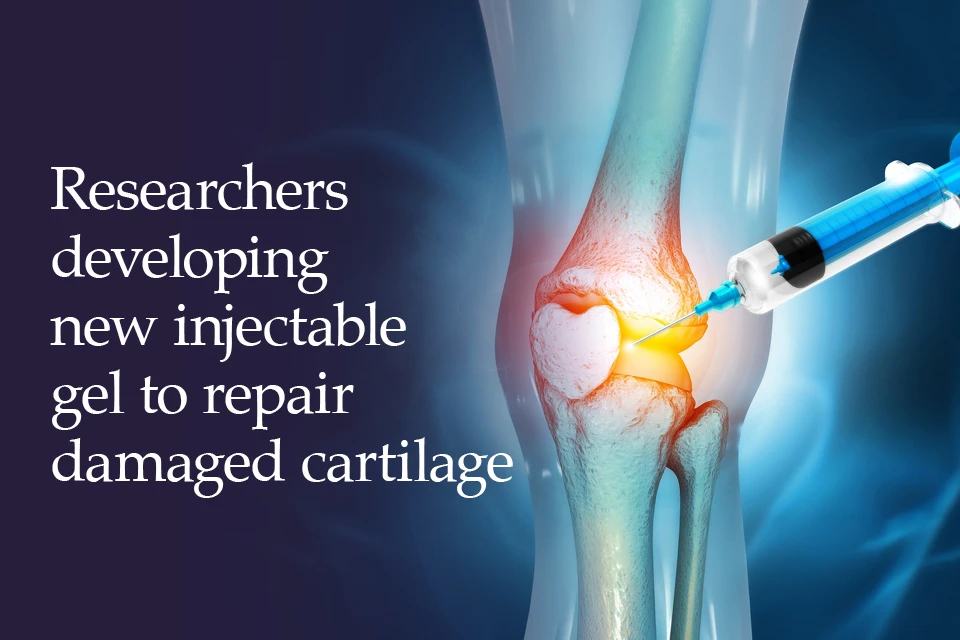
A new injectable gel being developed by Keele scientists could reduce the need for complex and invasive surgeries for many patients with damaged cartilage in their joints.
The team led by Dr Pooya Davoodi are developing a new type of hydrogel which can be injected into joints like knees using minimally invasive methods, to help patients whose cartilage has been damaged by injury, or has naturally degraded due to ageing.
Cartilage is a smooth but tough type of tissue that provides cushioning inside joints like knees and other body parts. As well as connecting bones together, cartilage helps joints to move smoothly, as well as protecting the joint against damage by acting as a shock absorber.
Because it doesn’t have its own blood supply, cartilage cannot heal itself when damaged, meaning injuries can cause damage which gets worse over time and can eventually lead to conditions like osteoarthritis.
Current treatment options for cartilage damage are limited, and doctors will mostly monitor a patient’s condition and treat the pain until a joint replacement surgery becomes unavoidable. Not only does this mean people have to undergo major surgery with a long recovery time, but many people will also be forced to live with long-term pain and reduced mobility before their surgery, which can also affect their mental health and overall quality of life.
 Dr Davoodi (pictured) and his team aims to change that by developing a new type of gel which can be injected into joints using keyhole surgery to repair damaged cartilage. This could make treatment for damaged cartilage easier for both doctors and patients, as well as reducing recovery time, cost, and potential side effects or risks from surgery such as infections.
Hydrogels are not a new concept, and broadly refer to a type of material that is flexible and can absorb large amounts of fluids. But existing hydrogels are not suitable for use in joints like the knee as they’re not strong enough to handle the pressure that these joints typically cope with.
In their new study, funded by a grant from the Royal Society, the researchers aim to make a new type of hydrogel that is strong, long-lasting, and slippery, and much more like natural cartilage.
Dr Davoodi said: “Our approach is different because it tackles a common problem in soft materials; making something both strong and tough at the same time. If successful, this could lead to better treatments that restore how joints work, reduce pain, and delay or even avoid the need for joint replacement surgery.
“Another advantage is that we plan to use materials that are already available and approved by regulatory agencies, which could make this solution more affordable and easier to produce in the future.”