
Keele scientist awarded prestigious Future Leaders Fellowship to advance research in disease transmission control
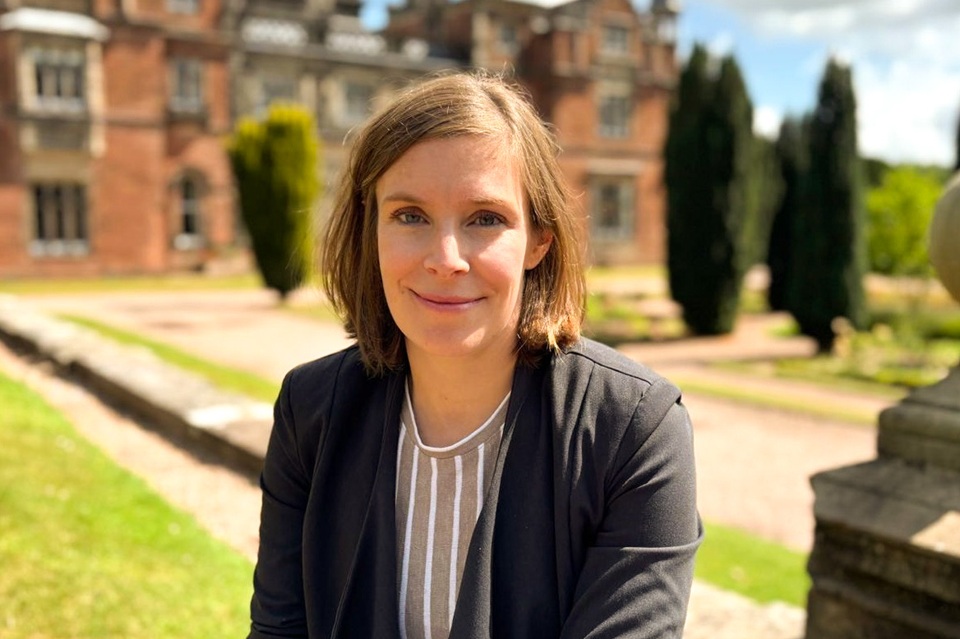
A Keele University scientist studying new ways of halting the spread of deadly mosquito-borne diseases has received a prestigious fellowship from UK Research and Innovation (UKRI) to advance her work.
Dr Christine Reitmayer, a Lecturer in Infectious Diseases in Keele’s School of Life Sciences, is among the newest cohort of academics in the UKRI Future Leaders Fellowship programme, receiving £1.78m to further her research. Dr Reitmayer’s work is centred around developing new strategies for controlling the spread of diseases such as dengue, Zika, chikungunya and yellow fever.
These diseases are caused by a group of viruses known as arthropod-borne viruses (or "arboviruses") and which pose a major health risk and socio-economic burden, particularly on people living in tropical and sub-tropical areas. Climate change, economic, and social factors also mean that these diseases are continuing to spread around the globe, expanding into areas previously unsuitable for disease transmission such as more northern territories.
Current control strategies for mosquitoes involve the use of chemical pesticides, but with insects evolving resistance to these pesticides, and increasing appreciation of their negative impact on the ecosystem, there is a recognised need for new and alternative methods of mosquito control.
Dr Reitmayer’s research program investigates a completely new approach to controlling these insects, which involves a two-component system that only takes effect when both components come together inside the target species, thereby killing the insect. This species-specific approach is highly eco-friendly as it avoids unwanted effects on non-target species, such as honeybees.
With her team, Dr Reitmayer is using genetic modification of both the viral and mosquito genome to find out more about how viruses interact with their vector species, and how we could alter that interaction in our favour. A further focus of the project are novel application strategies, allowing wide-spread application of the technology - similar to conventional insecticides - while retaining the species-specificity and thereby the low eco-footprint.
Dr Reitmayer aims to develop two different application strategies of this technology; one aims to achieve large-scale mosquito population suppression, the other one targets only those mosquitoes infected with certain pathogenic viruses. The two different strategies are aimed to provide solutions for different scenarios, such as acute disease outbreaks versus long-term disease management, as well as different application areas, such as urban versus rural locations.
The hope is to develop a novel mosquito control technology that is effective and eco-friendly while at the same time being cost-effective, easily deployable and quickly adaptable to newly emerging viruses.
Dr Reitmayer said: “I feel incredibly grateful to have been given the opportunity by UKRI and my host institution Keele University to work on this ambitious project. The work we do is rooted in a genuine desire to make a change for the better. That might be locally by training and educating the next generation of open-minded scientists here at Keele, as well as making a contribution to improving the lives of people affected by these debilitating diseases.”
Professor Anna Meredith, Executive Dean for the Faculty of Natural Sciences at Keele, added: "This is a tremendous success for Dr Reitmayer, which will allow her to develop this important research which has the potential to change many lives around the world. This research exemplifies Keele's ambition to make a positive difference in the world through teaching and research, and I congratulate her on achieving this fantastic fellowship."