

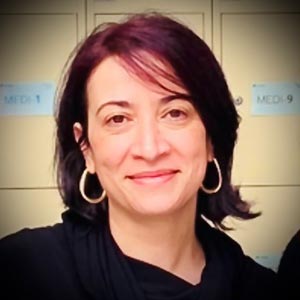
Dr Suhad Daher-Nashif
- Title
- Lecturer in Sociology and Anthropology of Health (Education & Research)
- Location
- David Weatherall Building
Biography
Following more than 20 years of extensive academic work in different countries and continents, Dr Daher-Nashif joined Keele University in 2022. She is internationally recognised and highly cited researcher and educator in the fields of medical and cultural anthropology and the sociology of health and politics. In February 2021, she was announced as the Sociologist of the Month by the prestigious Current Sociology journal (The International Sociological Association-ISA). Her article on The Politics of Public Health during COVID-19 was later recognised as the Top Cited Paper of 2023 by Sociology Compass journal, and received the Runner-Up Award by AMEE 2024 for her research project, Decolonising Anatomy Education in the UK.
Dr Daher-Nashif’s rare interdisciplinarity bridging health sciences, clinical practice, social sciences, and higher education. She began her academic journey with a BA and MSc in Occupational Therapy (1998; 2004) and served as rehabilitation professional between 1998 and 2015 among vulnerable and minoritised ethnicities in conflict zones. This experience led her to expand her intellectual path with a PhD in Sociology and Anthropology (2012), where her ethnographic and archival work examined forensic medicine and postmortem practices within conflict zones, taking the Palestinian context as a case study. She is currently finalising her second MSc in Clinical Education, reflecting her commitment to advancing excellence and innovation in medical and health professions education.
Alongside her formal degrees, Dr Daher-Nashif has invested deeply in continuous professional development (CPD). She is a Fellow of the Higher Education Academy (Advance HE, UK, 2023), a graduate of the Aurora Programme for women leaders in higher education (2025), and has undertaken advanced training in medical education, simulation-based learning, healthcare risk management, and ethics at Ivy league institutions such as Weill Cornell Medicine and the World Health Organisation.
Her extensive academic work, spanning West Asia and the UK, equip her to engage critically with diverse populations, health systems, and pedagogies. Having worked in academic institutions situated in contexts of conflict and crisis zones, she brings a distinctive perspective on delivering healthcare and medical education in resource-limited, politically complex environments, and deprived communities. This unique trajectory informs her inclusive leadership and pedagogy, and scholarly contributions to social sciences, global healthcare and higher education.
Research and scholarship
Dr Daher-Nashif is passionate to voice the voiceless and dismantle the structural inequalities of the precariat’s life. She applies feminist approach to her research, meaning looking at the micro experiences as sensed and expressed by patients and families/caregivers.
She has published more than 35 peer-reviewed articles in Q1 and Q2 journals over the past five years—most of them as senior author—bringing her total to 69 publications since the start of her academic career in 2006. Her work is highly cited and appears in multiple languages, though predominantly in English. See all her published works @ Google scholar.
Dr Daher-Nashif’s research lies at the intersection of medical sociology, anthropology of health and culture, and global public health, with a particular focus on West Asia (The Arab region) and comparative cross-cultural contexts. She investigates how sociocultural, religious, gendered, and political determinants shape experiences of health, illness, caregiving, and medical education.
Four major strands define her scholarly contributions:
- Health, Illness, and Society: She has examined mental health stigma, suicide literacy, dementia caregiving, and young adults’ well-being, producing a nuanced understanding of health inequalities in multiethnic and multireligious contexts ( Examples: Islam and Mental Disorders; Dementia Caregiving-Arab Communities; Adolescents and Home Isolation during COVID-19; Suicide Literacy and Religiosity)
- Gender, Vulnerability, and Social Justice: Building on her anthropological foundations, she has explored the lived experiences of women- mainly West Asian women- facing diverse health challenges including breast cancer, COVID-19 and menopause. These studies reveal the intersectional vulnerabilities created by gender, ethnicity, religion, and sociopolitical structures (Examples: Women’s Health and SDGs in the Gulf States; Happily Tired-Women Academics; Breast Cancer-MENA)
- Medical Education: Dr Daher-Nashif work integrates humanities, reflective writing, and sociological perspectives into medical curricula and health professions education (Examples: Students’ Experiences in Pursuing Research; Students Led-Clinic; Reflective Writing)
- Politics of health and death: She explored how political and sociocultural determinants intersect and shape experiences of death and the probabilities of access to life (Examples: Femicide; Politics of Death and Health during COVID-19; Colonial Management of Death)
Methodologically, her research is pluralistic and interdisciplinary. She draws on ethnography, phenomenology, grounded theory, mixed methods and significant multinational surveys. This allows her to capture both individual lived experiences and structural health dynamics across cultures, regions and religions.
Dr Daher-Nashif’s current projects expand these lines of inquiry into global comparative frameworks. Her current funded studies investigate decision-making in ICUs in multiethnic contexts, Arab women’s experiences with menopause, perinatal mental health outreach, dementia care across religions, and the decolonisation of anatomy education. Together, these projects aim to reframe health research and education to be more culturally responsive, socially just, and globally informed.
Dr Daher-Nashif also voice the voiceless through her creative writing published mainly in Arabic (Example: Motherhood) , and designs the art works that covers some of her published works.
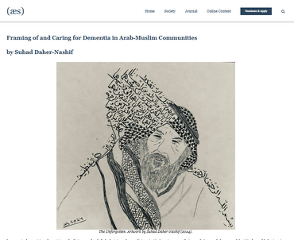
Above is an artwork for her article published by the American Ethnological Society.
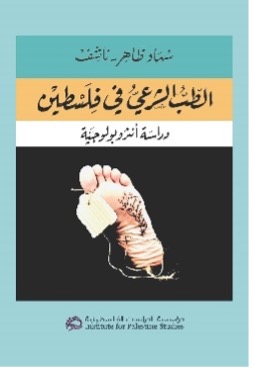
Above is the cover of her book in Arabic on Forensic medicine in Palestine: An anthropological study (2019).
Dr Suhad Daher-Nashif contributes extensively to the global academic community through editorial leadership, committee memberships, and peer-review work. She sits on committees in different regions such as the Behavioural and Social Sciences in Teaching Medical Education (BeSST) Network and the Arab Council for the Social Sciences. Dr. Suhad Daher-Nashif is an active contributor to international academic forums, presenting her research at leading conferences across Europe, West Asia, Africa, and North America.
Through these roles, Dr. Daher-Nashif actively shapes the global conversations on medical education, public health, and social sciences, ensuring that diverse perspectives and critical voices are brought to the forefront of academic and healthcare debates.
Teaching
Dr Daher-Nashif is an innovative educator and academic leader with extensive experience in curriculum design, postgraduate education, and student mentorship. At Keele University, she leads postgraduate teaching, module development, and supervision across undergraduate and postgraduate levels in the Faculty of Medicine and Health Sciences. Her approach to teaching is grounded in cultural competence and safety, reflective practice, engaged and experiential learning that incorporate EduTech for better learning experiences. Her teaching integrates sociology, anthropology, global health and research methods, creating interdisciplinary learning environments that prepare future healthcare professionals and leaders to tackle complex global challenges.
Dr Daher-Nashif continuously co/designs, leads and delivers modules across the FMHS, using different modalities. Her recent modules are:
- MBChB programme: Lecturer in Sociology and anthropology of health, Experiential Learning Lead and Facilitator, Unit-8 (Lifestyle) Co-Lead, qualitative research methods lead & lecturer, and Y2 PBL tutor.
- Healthcare Economics and Sustainability (CLM-40182)-Designer, lead & lecturer
- Healthcare and Human Resource Management (CLM-40184)-Designer, lead & lecturer
- Global Governance, Humanitarian Response & Refugee Health (CLM-40162)-Co-designer, lead & lecturer
- Independent Project-Dissertation Module (CLM-40174)-Co-designer, lead & supervisor.
- Behavioural Health for Paramedics (PAR-30001)-Lead & lecturer
- Introduction to Evidence-Based Practice & Research (PAR-20001)-Lecturer of several sessions
- Life Course Development in Practice (NUR-10066)-Lecturer of several sessions
In addition, between September 2023 and September 2025 Dr Daher-Nashif was tasked to cover for leading the MSc Programme for Global Healthcare Leadership, which was funded by NHSE.
As a dedicated supervisor, Dr. Daher-Nashif has successfully supervised as the lead supervisor two PhD students, 6 MSc students and more than 30 undergraduate students, leading to more than 5 co-authored articles with her students. Her medical student supervisee achieved recognition as the 2023 Highly Commended Presentation Award from the North Staffordshire Medical Institute.
Publications
*Senior author (latest 30)
- Akram, H., Abdul Rahim, H. F., Daher-Nashif, S., Alsayed Hassan, D., Elshaikh, U., & Khaled, S. M. (2025). Gender-based differences in the prevalence and types of adverse childhood experiences and their associations with psychological distress and perceived lack of safety among adolescents in Qatar. International Journal of Adolescence and Youth, 30(1).https://doi.org/10.1080/02673843.2025.2461232
- Moris, L. […] Daher-Nashif, S. […] (2024). Institutional and Socio-Cultural Factors that Influence the Wellbeing of Women Working in Academia in Arab Countries: A Scoping Review. SAGE Open. https://doi.org/10.1177/21582440241259693
- Daher-Nashif* et al., (2024) Student Perspectives on Student-Led Family Medicine Clinics in Qatar: A Descriptive Qualitative Study. BMC Medical Education. 24:1165. DOI: 10.1186/s12909-024-06145-z
- Daher-Nashif, S.*, (2024). “Happily tired”: a descriptive qualitative study of the impact of the COVID-19 pandemic on women academics in Qatar. Women's Studies International Forum. https://doi.org/10.1016/j.wsif.2024.102971
- Daher-Nashif, S*. (2024) Framing and Caring for Dementia in the Arab Muslim communities. American Ethnological Society online Collections. https://americanethnologist.org/online-content/collections/aging-globally/framing-of-and-caring-for-dementia-in-arab-muslim-communitiesby-suhad-daher-nashif/
- Al-Mutawa, N., […] Daher-Nashif, S., Al-Wahedi, Z. (2024). Reflective writing among healthcare practitioners in primary care: a qualitative study from Qatar. Cogent Education, 11(1): https://doi.org/10.1080/2331186X.2024.2373555
- Al-Subai, R. R., Kaleem, M. Z., Hassanien, D., Eldestawy, M., Hamwi, M. N., Elsayed, E., [...] & Daher-Nashif, S.* (2024). Perceptions and Experiences of Pursuing Research Among Medical Students in Problem-Based Learning Curriculum: A Cross-Sectional Study from Qatar. Journal of Medical Education and Curricular Development, 11, DOI: 1177/23821205241227327
- Zainal, A., Daher-Nashif, S.* et-al. (2023). Children & Adolescents Coping with Home Isolation & Social Distancing During Covid-19 in Qatar: A Cross Sectional Study with Qualitative Items. BMC Psychology, 11(1), 1-12. DOI: 1186/s40359-023-01183-6
- Fekih-Romdhane, F., Daher-Nashif, S., Stambouli, M., Alhuwailah, A., Helmy, M., Shuwiekh, H. A. M., ... & Hallit, S. (2023). Suicide literacy mediates the path from religiosity to suicide stigma among Muslim community adults: Cross-sectional data from four Arab countries. International Journal of Social Psychiatry, 69(7), 1658-1669. DOI: 1177/00207640231174359
- Feten-Romdhane, F. ., […] Daher-Nashif, S. […] et al. (2023). Cross‑cultural comparison of mental illness stigma and help‑seeking attitudes: a multinational population‑based study from 16 Arab countries and 10,036 individuals. Social Psychiatry and Psychiatric Epidemiology, 58:641–656 DOI: 1007/s00127-022-02403-x
- Yahya, A. […] Daher-Nashif, S.* (2022). Psychotic-like experiences among university female students in Qatar: A qualitative-phenomenological study. Psychiatry, 13, 988913. DOI: 10.3389/fpsyt.2022.988913
- Mahjoub, Y., Daher-Nashif, S*.[…] Al-Muhannadi, Z. (2022). Prevalence and Determinants of Mental Health Problems and Mental Health Stigma Among Medical Students of Different Nationalities in Qatar. Advances in Medical Education and Practice. Volume 13:969-979. DOI: 2147/AMEP.S371053
- Daher-Nashif S.*, et al. (2022). COVID-19 exit strategy during vaccine implementation: a balance between social distancing and herd immunity. Arch Virol. Jun 20:1–11. doi: 10.1007/s00705-022-05495-7. Epub ahead of print. PMID: 35723757; PMCID: PMC9208258. DOI: 1007/s00705-022-05495-7
- Othman MM, Al-Wattary NA, Khudadad H […] Daher-Nashif S.* (2022). Perspectives of Persons With Type 2 Diabetes Toward Diabetes Self-Management: A Qualitative Study. Health Education & Behavior. DOI: 1177/10901981221098373
- Al-Hamad, A., MacNevin, S., Daher-Nashif, S. (2022). Undergraduate Nursing and Medical Students’ Perceptions of Food Security and Access to Healthy Food in Qatar: A Photovoice Study. Journal of Nutritional Science. 11:e32. http://doi.org/10.1017/jns.2022.28
- Hamed, E., […] Daher-Nashif, S. […] Kane, T. (2022). Breast Cancer Knowledge, Attitudes and Practices amongst Women in Qatar. International Journal of Environmental Research and Public Health. 19(7), 3995; https://doi.org/10.3390/ijerph19073995
- Hammad, S., Daher-Nashif, S., Kane, T., Al-Wattary, N. (2022). Sociocultural insights on dementia caregiving in Qatar: The perspectives of family caregivers. Ageing & Society. 1-28. DOI: https://doi.org/10.1017/S0144686X22000277
- Daher-Nashif. S* & Kane, T. (2022) A culturally competent approach to teach humanities in international medical school: potential frameworks and lessons learned. Acceptance date: January 25. DOI: 10.12688/mep.18938.2
- Fekih-Romdhane, F., Daher-Nashif, S. […] Jahrami, H. (2021). The prevalence of feeding and eating disorders symptomology amongst medical students. Eating and Weight Disorders - Studies on Anorexia, Bulimia and Obesity. Jan 24:1–20. DOI: 1007/s40519-021-01351-w
- Daher-Nashif, S.* (2021). Vulnerability and precarity of Palestinian Women in the Naqab. Third World Quarterly. https://doi.org/10.1080/01436597.2021.2015313
- Daher-Nashif. S.* (2021). In sickness and in health: Politics of public health and their implications during the COVI-19 Pandemic. Sociology Compass. e12949. (Invited article) TOP CITED ARTICLE 2022-2023 IN SOCIOLOGY COMPASS-WILEY. https://onlinelibrary.wiley.com/doi/full/10.1111/soc4.12949
- Zaidi, A., Elmasaad, A. [….] Daher-Nashif. S.* (2021). Attitudes and Intentions toward COVID-19 Vaccination among Health Profession Students and Faculty in Qatar. Vaccines, 9(11), 1275, DOI: 3390/vaccines9111275
- Daher-Nashif, S.* (2021) Intersectionality and femicide: Palestinian women’s experiences with the murder of their beloved female relatives. Violence Against Women. DOI: 1177/10778012211014561
- Daher-Nashif, S.,* (2021). Literature as a Pedagogical Tool in Medical Education: The Silent Patient Case. Humanities, 10(3), p.95. https://www.mdpi.com/2076-0787/10/3/95
- Daher-Nashif, S.* (2021). Doctors’ Challenges During Infectious Disease Outbreaks: Medical Education Insights from Realistic Fiction Movies. Advances in Medical Education and Practice, 12, 265-272. oi: 2147/AMEP.S297427
- Kane, T., Hammad, S.H., Islam, N., Al-Wattary, N., Clark, J. and Daher-Nashif, S.*, (2021). Dementia caregiving in the middle east and north Africa: A scoping review. Transcultural Psychiatry, 2021;58(6):844-858. DOI: 1177/13634615211036404
- Bawadi, H., Al-Shahwani, A., Arafeh, D., Al-Asmar, D., Moawad, J., Shi, Z., Daher-Nashif, S.* (2021). Depressive Symptoms among Patients with Diabetes in Qatar: Frequency and Potential Determinants. Healthcare, 9(3): 302. DOI: 3390/healthcare9030302
- Kane, T., Chives, T., Moslih, A., Al-Mutawa, N., Daher-Nashif, S., Hashemi, N., Carr, A. (2021). A program evaluation reporting student perception of early clinical exposure to primary care at a new medical college in Qatar. BMC Medical Education, 21(1). DOI: 10.1186/s12909-021-02597-9
- Khaled, S.M., Petcu, C., Al-Thani, M.A. Al-Hamadi, A., Daher-Nashif, S., Zolezzi, M., & Woodruff, P. (2021). Prevalence and associated factors of DSM-5 insomnia disorder in the general population of Qatar. BMC Psychiatry 21, 84. doi: 1186/s12888-020-03035-8
- Daher-Nashif, S.*, Hammad, S., Kane, T., & Al-Wattary, N. (2021). Islam and mental disorders of the older adults: Religious text, belief system and caregiving practices. Journal of Religion and Health. DOI: 1007/s10943-020-01094-5
School of Medicine
David Weatherall building
University Road
Keele University
Staffordshire
ST5 5BG
Tel: +44 (0) 1782 733937
Email: fmhs.facilities@keele.ac.uk
Admissions enquiries: enquiries@keele.ac.uk
The Clinical Education Centre
Keele University
Clinical Education Centre
University Hospitals of North Midlands NHS Trust
Newcastle Road
Stoke-on-Trent
Staffordshire
ST4 6QG
Email us: services.cecreception@keele.ac.uk
CEC general enquires: 01782 731876