
TRANSLATE
Translating evidence for early intervention in psychosis (TRANSLATE) in Low and Lower-Middle Income Countries (LMIC): Implementation and Evaluation.
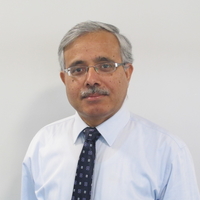
This project is led by Prof Saeed Farooq.
 TRANSLATE is awarded as part of Prof Saeed Farooq’s prestigious NIHR Global Research Professorship. This research will focus on the implementation and evaluation of ‘Translating evidence for Early Intervention in Psychosis (TRANSLATE) in Low and Lower Middle Countries (LMIC)”
 Translating evidence for early intervention in psychosis (TRANSLATE) is an implementation research programme to scale up evidence-based management of First Episode of Psychosis (FEP) in LMICs. The research plan will aim to (i) establish an Early Intervention in Psychosis (EIP) service for young people with FEP in LMIC settings (Pakistan and Sri Lanka), (ii) evaluate the effectiveness of the service in terms of implementation outcomes, in a cohort of individuals presenting with FEP, and (iii) develop a clinical tool to predict the risk of Treatment Resistant Schizophrenia (TRS) using one-year follow-up data from the FEP cohort.
.jpg)
"TRANSLATE is an exciting research project because it aims to translate the evidence from research into real world practice. We aim to involve all stakeholders, family and community members and bridge the gap between research, clinical practice, and policy. This will have transformative effects of the care for early onset psychosis which unfortunately affects young people in their most productive years of their life."
This project will be in collaboration with Keele University (UK), Khyber Medical University (Pakistan), and the Institute for Research and Development in Health and Social Care (Sri Lanka).
The TRANSLATE programme consists of three work packages:
- WP-1: We will develop a model for EIP using, focus groups, in-depth interviews, theory-of-change workshops, and consensus-building workshops.
- WP-2: A small pilot study will test the resulting model to refine procedures, measurements, and outcomes. We will then establish EIP in six sites in Pakistan and Sri Lanka. We will recruit 670 people in the service and evaluate the clinical utility of EIP in terms of rates of engagement and remission at one-year follow-up, acceptability, feasibility, and costs to patients, and from the payer and provider perspective. All patients recruited for the EIP and started on antipsychotic treatment will form the cohort for developing and validating clinical a tool for predicting the risk of TRS. The potential predictors for TRS and occurrence of TRS will be measured at baseline, 1,3,6, and 12 months. A nested cohort study within the EIS will be used for the development and internal validation of a model to predict TRS in FEP.
- WP-3: We will develop a consortium of researchers who will work with PhDs and postdocs to seek external funding to scale up EIP in other countries, build capacity, and enhance the impact. The WP will run through the course of the study.
Capacity Building and Community Engagement are major components of the TRANSLATE programme.
Community Engagement focuses on actively engaging with the local communities to spread awareness regarding the TRANSLATE project and mental health, and to promote trust building relationships between the research team, clinicians, and members of the public. We will be planning open days when members of the public are invited to find out about research and awareness is raised of the vital importance of mental health research.
Translating evidence for early intervention in psychosis (TRANSLATE) is an implementation research programme to scale up evidence-based management of FEP in LMICs. The research plan will aim to (i) establish an EIP service for young people with FEP in LMIC settings (Pakistan and Sri Lanka), (ii) evaluate the effectiveness of the service in terms of implementation outcomes, in a cohort of individuals presenting with FEP, and (iii) develop a clinical tool to predict the risk of TRS using one-year follow-up data from the FEP cohort.
Specifically, we aim to address the following questions:
- What is the clinical utility of establishing an EIP service in terms of rates of engagement with service, remission rates in FEP and costs for patients and services?
- What are sociodemographic and clinical characteristics associated with resistance to standard (non-clozapine) antipsychotic drugs in patients with FEP, and how can these be used to develop a clinical tool to predict the risk of TRS?
The objectives of the TRANSLATE study are as follows:
- Implement a culturally sensitive EIP service in Pakistan and Sri Lanka based on recent guidelines for managing FEP adopted for LMIC settings.
- Recruit a cohort of individuals with FEP within the EIP service.
- Evaluate the effectiveness of implementation of EIP in maintaining engagement with services, achieving remission in FEP, and other relevant implementation outcomes.
- Identify barriers and facilitators for the scale-up of the EIP at regional and international levels.
- Develop a prognostic model for estimating an individual's risk of treatment resistance at one year and undertake the validation of the model's predictive performance.
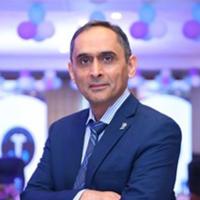 Professor Imtiaz Ahmad Dogar, Chairman Department of Psychiatry and Behavioural Sciences Faisalabad Medical University, Faisalabad, Pakistan - ‘This project will raise awareness with different stakeholders about the importance of early diagnosis and management of First Episode Psychosis’
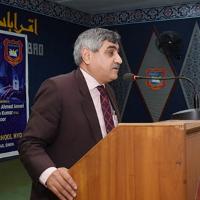 Professor Moin Ahmed Ansari, Dean Faculty of Medicine and Allied Specialties Liaquat University of Medical and Health Sciences, Jamshoro, Pakistan - ‘We hope that the collaboration between TSH and medical professionals will improve relationships between patients, families and mental health practitioners.’
 Professor Athula Sumathipala, Emeritus Professor of Psychiatry, School of Medicine, Faculty of Medicine & Health Sciences, Keele University & Hon. Director, Institute for Research and Development, Sri Lanka - ‘TRANSLATE will benefit young people at risk of developing psychosis. Those who have First Episode Psychosis will receive the treatment promptly.’
 Professor Aftab Alam Khan, Head of the Department of Psychiatry and Behavioural Sciences, Ayub Medical
Professor Hazrat Ali Khan, Associate Professor & Executive Director Balochistan Institute of Psychiatry and Behavioural Science, Quetta - ‘We hope that these projects findings will reach a variety of people including lay, clinical, and academic audiences and will result in major changes in policy and practice.’
Professor Mian Mukhtar ul Haq Azeemi, Psychiatry Department Lady Reading Hospital, Peshawar, Pakistan, Peshawar - ‘I am pleased to see that the project includes and actively includes traditional and spiritual healers to help involve young people. This is much needed as almost all people with suspected psychosis will consult traditional healers.’
Study updates
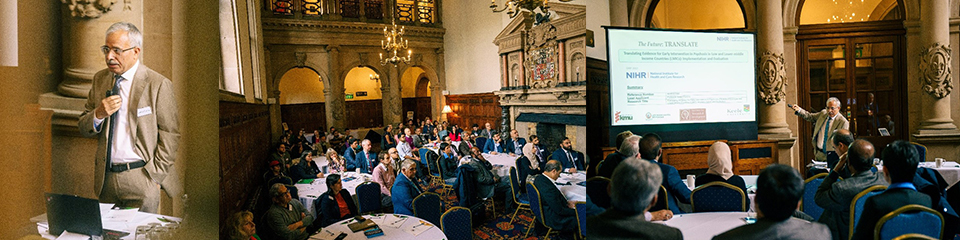
UK TRANSLATE launch, Keele University, Global Mental Health Symposium, 28 & 29 February 2024
The Global Mental Health Symposium took place at Keele Hall, Keele University on 28 and 29 February 2024. This two-day event was arranged by Professor Saeed Farooq (TRANSLATE Lead) and members of his global mental health research team within the School of Medicine at Keele University.
Professor Saeed Farooq won the prestigious NIHR Global Health Professorship award in 2024 and secured funding for the research project on Translating evidence for Early Intervention in Psychosis (TRANSLATE) in low- and middle-income countries. During the launch event, Professor Farooq spoke about the TRANSLATE programme of research.
The main aim of the research programme is to develop and establish Early Intervention Psychosis (EIP) services in Pakistan and Sri Lanka and to assess whether the services can help improve the health outcomes among people with First Episode in Psychosis (FEP). This is operationalised through adapting the EIP guidelines to local settings of Pakistan and Sri Lanka.
Pakistan TRANSLATE launch, Khyber Medical University, Global Mental Health Symposium, 4 & 5 December 2024
The Pakistan TRANSLATE launch occurred on the 4 of December 2024 and was chaired by Dr Thomas Kingstone, with Professor Saeed Farooq delivering a presentation on the new project.
This event was attended by various academics and stakeholders of mental health services. Professor Farooq spoke of the importance of the research and it’s adaptation of EIP guidelines to local settings that will help to improve health outcomes for individuals experiencing First Episode Psychosis (FEP).
Professor Farooq highlighted that while clinical guidelines for managing FEP are common in high-income countries, no specific guidelines exist for LMICs. He noted that the duration of untreated psychosis is nearly twice as long in LMICs, leading to poorer outcomes, such as premature mortality and limited education and employment prospects. His team's recent research showed that EIP services can be successfully implemented in LMICs with cultural and resource adaptations.
The project will involve collaboration with Kyber Medical University (Pakistan) and the Institute of Research and Development (Sri Lanka). They will adapt existing guidelines for FEP treatment through the ADAPTE process, which includes reviewing literature, assessing current guidelines, and adapting them for local health systems.
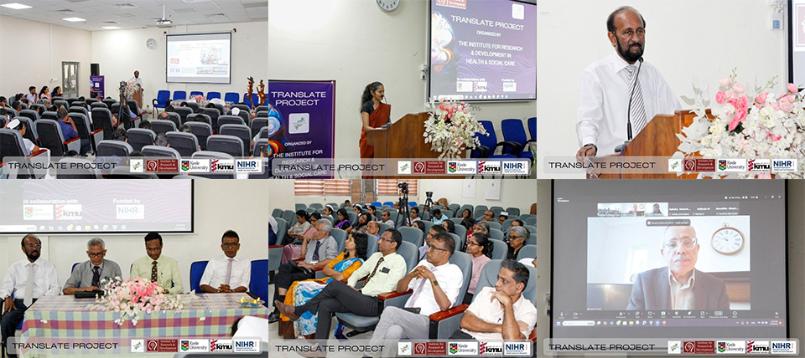
Sri Lanka TRANSLATE launch, National Hospital Galle, 7 February 2025
The Sri Lankan TRANSLATE launch and inaugural showcase of the project occurred on the 7 of February 2025 and was chaired by Professor Saeed Farooq, Professor Athula Sumathipala and Dr Rumi Ruben at the National Hospital Galle.
This event was attended by the stakeholders of mental health services of Southern Province of Sri Lanka and mental health staff attached to the National Hospital of Galle, Sri Lanka. Professor Sumathipala welcomed the gathering, and he explained the importance and current uplifting the mental health services in Sri Lanka. He further explained other mental health research projects that Institute of Research and Development (IRD) of Sri Lanka collaborating.