

Current projects
SURF Leverhulme Doctoral Scholars
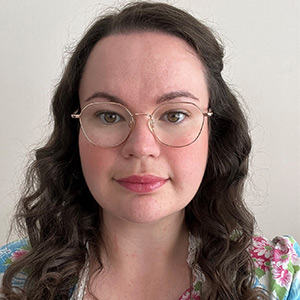
An interdisciplinary research topic utilising knowledge and research methods within geology, heritage conservation and social sciences. Community led research will look at questions surrounding interactions with former quarries, such as remediation methods and development, whilst also considering access retention for small scale quarrying activities for local conservation.
Part of the research will involve developing new concepts around the emerging subject of geo-heritage based on a more-than-human approach, including what idealised conservation might look like, the regulatory and resource barriers that exist and community-buy-in methods.
Supervisors: Dr Steven Rogers, Dr Ian Stimpson, Dr Ben Anderson

Poverty has traditionally been examined in a material context a one dimensional approach, with development and well- being evaluated in the context of this material wealth. This project aims to evaluate rural poverty in a multi -dimensional approach, focussing on the ‘more than human’ aspects that can influence poverty and ones perception of poverty. The project will be further broken down into three main areas:
- Importance of social isolation in shaping rural poverty
- The implications for different groups of people
- The importance of human and more-than-human approaches to community in helping to alleviate poverty- including a focus on material and psychological aspects.
Supervisors: Professor Simon Pemberton, Dr Dan Allen and Dr Sara Vestergren
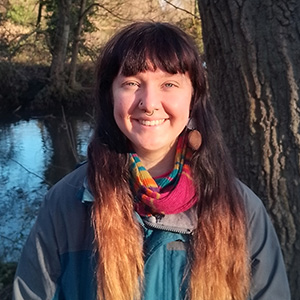
Artificial light at night (ALAN) is a complex and multi-faceted issue known to impact a huge range of organisms, including humans, in diverse ways – not least by preventing access to dark skies. My project aims to explore this issue within the framework of the more-than-human – deconstructing organismal hierarchies and seeking to understand the needs of each species within a case study location. In utilising methodologies from both the natural and social sciences, I plan to develop a toolkit for understanding the impacts of ALAN in a given area. Methods used will include qualitative interview, scoping reviews and biodiversity surveys.
Supervisors: Professor Clare Holdsworth, Dr Ellie Harrison
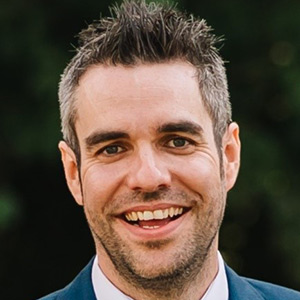
In recent years farmers protests have spread throughout much of Europe. Concerns over the cost of net-zero transitions and changes to subsidies have led to widespread protest. My research will look at how in 2024, these protests spread to the UK, challenging the often-repeated notion of the apolitical rural. The rural is a key locus for net-zero transition; ensuring it is a just transition is at the forefront of any notion of sustainability. My research will engage closely with the protesting farmers to understand how rural activism can help to bridge the gap between competing interpretations of sustainable futures.
Supervisors: Professor Clare Holdsworth, Dr Marit Hammond, Professor Deirdre McKay

This research will address two main aims: to explore barriers and facilitators to individual level environmentally sustainable behaviours in rural minority groups and to determine the influence of moral norms, moral values, and moral emotions on pro-environmental behaviours in rural minority groups. The proposed project will involve adopting an action research approach to conduct four studies, utilising both qualitative and quantitative methods. Specifically, the research will involve theory building, theory testing, generalisability testing and an experimental study to test a possible intervention to improve engagement with sustainable behaviours in rural groups.
Supervisors: Dr Kathryn Francis, Dr Sara Vestergren and Professor Zoe Robinson

My study is using advanced eco-acoustic devices and remote sensing data to understand the different effects solar farms have on Bats, Birds and Insects. This will be analysed in relation with species conservation implications and community perspectives towards solar farms and biodiversity. The study also aims to create a standardized system for monitoring biodiversity on a solar site thereby allowing to track and compare the species activity in solar sites across the country. GIS, machine learning and other ecological monitoring devices will also be trialled & studied throughout the study for easier monitoring of species in a larger scale.
Supervisors: Dr Christian Devenish, Dr Ellie Harrison.

This project aims to explore the socio-economic and environmental impacts of offshore wind farms on rural coastal communities proximal to offshore wind farms in the UK. By integrating nature-based solutions and conducting case studies across different communities, the research strives to enhance local livelihoods, biodiversity, and ecosystem services. By engaging with local stakeholders, industry experts and academics, this project aims to co-create sustainable development strategies which benefit both human and natural systems. The findings should guide policy and practice to ensure that offshore wind farms contribute positively to rural coastal resilience and environmental stewardship.
Content: Artificial light at night (ALAN) is a complex and multi-faceted issue known to impact a huge range of organisms, including humans, in diverse ways – not least by preventing access to dark skies. My project aims to explore this issue within the framework of the more-than-human – deconstructing organismal hierarchies and seeking to understand the needs of each species within a case study location. In utilising methodologies from both the natural and social sciences, I plan to develop a toolkit for understanding the impacts of ALAN in a given area. Methods used will include qualitative interview, scoping reviews and biodiversity surveys.
Supervisors: Professor Clare Holdsworth, Dr Ellie Harrison, Dr Phil Catney
The aims of my PhD project are (1) to explore the barriers and facilitators for women in rural areas engaging with sustainable transport, energy and food behaviours, and (2) to determine the influence of moral norms, moral values, moral emotions and moral identity on engagement with sustainable transport, energy and food behaviours for women in rural areas. To address these aims I will be conducting three studies: a systematic review, a qualitative case study utilising photovoice, and a mixed-methods national survey. Through this research I would like to use a collaborative approach to co-produce a research project with women in rural areas of Staffordshire and its surrounding areas to help empower them and influence policy and practice to address some of the barriers and challenges discovered as part of this research.
Supervisors: Professor Zoe Robinson, Professor Jim Grange, Dr Kathryn Francis
Rural representations have traditionally portrayed the countryside as idyllic and ‘problem- free’. However, it is also recognised that such representations contribute to marginalization and ‘hidden poverty’ in rural areas of the UK. Therefore, research has focused on the material dimensions of rural poverty. Certain research has gone beyond the material dimension, exploring experiences of loneliness and social isolation, creating a multi-dimensional approach.
Loneliness and social isolation are distinct but inter- related concepts, defined in subjective and objective terms and shaped territorially and relationally. The occupation of farming has been associated with being lonely and isolated, but the focus of research has been on men due to the patriarchal nature of the industry.
Consequently, the main aim of this research project is to examine women in farming and their perspective of loneliness and isolation, what coping strategies they have and how they have built up a resilience to them.
Supervisors: Professor Simon Pemberton, Dr Dan Allen, Dr Tom Kingstone
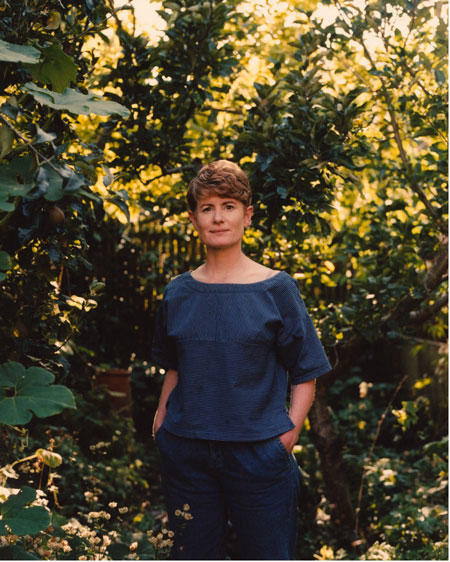
Peatlands are the largest natural terrestrial store of carbon on Earth and have been prominently recognised as a key component of pathways to net-zero both globally and in the UK, including key commitments in the UK's Sixth Carbon Budget (CCC 2020). Peatlands are also vital for biodiversity conservation, supporting specialised species and providing refuge to others impacted by habitat degradation and climate change. Yet, public understandings of peat, and the mechanisms and need for peatland enhancement and sustainable management remain unclear and incomplete. The proposed project seeks to address this gap through an examination of public understandings of peatland conservation with a particular focus on lowland peatland in Cheshire, Shropshire, and Staffordshire. It will combine analysis of public perceptions with a community engagement model co-developed with conservation practitioners and local communities, building on an existing partnership (since 2022) between the Keele supervisory team and Natural England on raised bogs in Shropshire (Fenn’s Whixall and Bettisfield Mosses NNR) and Cheshire (Wybunbury Moss NNR).
Supervisors: Dr Pawas Bisht, Prof Ceri Morgan, Dr Angie Turner
This project investigates the complex relationship between pollinators and rural communities, focusing on common pollinator species and their interactions with human-managed landscapes, including gardens, university campuses, and nearby rural areas. By examining the impacts of everyday practices such as gardening and mowing, the research addresses the question how community practices shape pollinator movements and survival – and vice versa. This will be studied using advanced tracking methods, citizen science and various community engagement approaches.
Beavers have recently been reintroduced into the UK after overexploitation led to their extinction in the 1600s. As ecosystem engineers, beavers transform landscapes by building dams and creating wetland habitats, resulting in human-animal conflict regarding land use and flooding. My research will explore the biodiversity benefits of beavers and more-than-human approaches to humans coexisting with beavers. This will be achieved by determining biodiversity impacts of beaver reintroductions and understanding human-beaver relations in terms of conservation and ecotourism using case studies. This interdisciplinary research will involve ecological field sampling and conducting interviews and surveys with stakeholders and local communities.
Supervisors: Dr Ellie Harrison, Dr Dan Allen and Dr Angie Turner.
This research project explores challenges of inclusion and well-being for a specific minority group – Muslim men – in rural areas of the United Kingdom (UK). It focuses on the lived experiences of Muslim men in two distinct rural UK contexts: Shropshire in England and the Highlands of Scotland. By comparing these geographically and demographically diverse areas, the study investigates how race, identity, and cultural practices influence their inclusion and well-being within majority-white rural communities. A central aim of this research is to engage with communities not just as participants but as active contributors. This means creating opportunities for rightholders and stakeholders to influence the direction of the research. Beyond ensuring that voices are heard and collaborations are fostered, I will establish mechanisms for community members to provide feedback, suggest additional research paths, and contribute to knowledge production.
Supervisors: Prof Mariangela Palladino, Prof Simon Pemberton
SURF
William Smith Building
Keele University
Keele
Staffordshire
ST5 5BG
Email: surf@keele.ac.uk