

Knee braces offer low-risk and effective option for managing painful knee arthritis, research shows
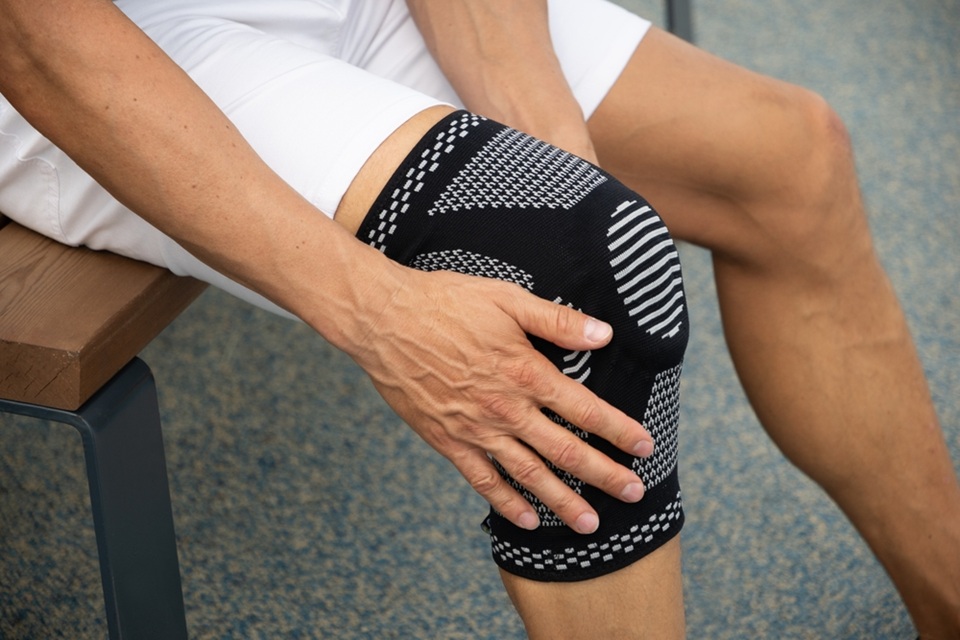
Using a knee brace can help people with painful knee osteoarthritis manage their symptoms, according to new research led by Professor Melanie Holden at Keele University and Professor George Peat at Sheffield Hallam University.
The study, known as PROP OA, was carried out within the NHS in collaboration with researchers from several universities across the UK, as well as in USA and Australia, and was funded by the National Institute for Health and Care Research (NIHR).
The study, published in the British Medical Journal (BMJ), showed that people with osteoarthritis who received a tailored knee brace intervention from their physiotherapist together with self-management advice and an exercise plan reported a greater improvement in their symptoms, compared to people that received the advice and exercise plan alone.
Around 1 in 5 adults over 45 are affected by painful knee osteoarthritis often causing significant long-term pain, lost time and productivity at work, and problems with daily activities. The researchers in this study wanted to investigate whether a knee brace might provide lasting benefit.
In this clinical trial, 466 people with knee osteoarthritis were assessed by a physiotherapist and then randomly assigned to one of two groups; one group received advice, written information, and an exercise plan; the other group received the same support but with the addition of a knee brace.
The type of brace was chosen to match an individual’s pattern of knee osteoarthritis. Participants were shown how to fit the brace, had a follow-up appointment, and received text messages over the next six months to encourage ongoing knee brace use.
Everybody in the study was asked to complete questionnaires three, six, and 12 months later to see how their symptoms had changed.
The findings showed that those randomised to the knee brace group had less pain, better physical function, and higher quality of life outcomes compared to the group who received the advice and exercise plan alone. There were no serious harms, but skin rubbing or irritation from knee braces was common.
Although the benefits were small, and reduced over 12 months, the participants who used their brace as often as they were advised were the ones who saw the greatest improvement.
Overall, these findings show that while the extra benefits from a knee brace are typically small and reduce over time, people with osteoarthritis may still find them worthwhile for self-managing their condition.
Melanie Holden, Professor of Musculoskeletal Rehabilitation at Keele University, said: “There has been little high-quality evidence on whether knee braces help people with knee osteoarthritis. Our study is the world’s largest independent trial of knee bracing for knee osteoarthritis, and shows that a tailored knee brace, alongside advice and exercise, is a low-risk option that patients may find worthwhile. This NIHR-funded research was only made possible through close collaboration between universities, the NHS, physiotherapists and the patients who took part, and we are incredibly grateful to everyone involved.”
George Peat, Professor of Clinical Epidemiology at Sheffield Hallam University, added: "We know that millions of people spend years living with painful knee osteoarthritis. Many really want to find effective treatment options that do not rely on long-term medication or surgery. Self-management, maintaining a healthy weight, and exercise are the cornerstone of management. This trial provides the clearest and most rigorous evidence yet that knee braces, tailored to the type of knee osteoarthritis and provided by trained professionals, provide some additional benefits for pain control and daily activities, particularly if they are used consistently over time."