

Justice, security, & institutional change
Using psychology to understand group behaviour, interactions between justice/government and the public, and to help inform institutional change within security and justice settings.
We carry out theoretical and applied research to understand and affect change in individuals and groups as well as institutions for a sustainable, just, and secure society. We have worked with and have informed policy and practice at national and international organisations including the European Union, UEFA, The UK Home Office, The Association of Chief Police Officers, Staffordshire Police, the National High Secure Healthcare Service for Women, cybersecurity organisations, NSPCC, and more. Our work has been funded by various national and international organisations, and our members sit on boards of international academic societies and journals. We believe that a rigorous theoretical basis and evidence-based approaches are key to creating impactful and long-lasting change for a sustainable society.
For further information, please contact the research group lead Dr. Chris N. H. Street.
Researchers
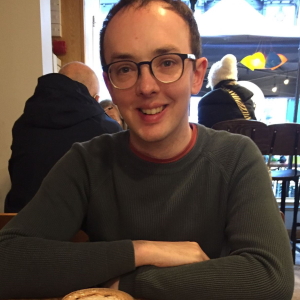
Dr Chris N. H. Street
Research group lead. Researcher of lie-truth judgments and how people decide what to believe. Author of a core theoretical perspective in the area, the Adaptive Lie Detector account, which has formed the basis of experimental and computational modelling research and ultimately to inform our understanding of SMS and email scam susceptibility. He has worked with the EU to implement effective interviewing principles for law enforcement investigations and is the author of the contemporary student textbook in the discipline. View Chris’s profile.

Dr Alexandra Kent
Research interests include how people ask for help in 999 and 101 calls, and how handlers father information before making a decision about whether to provide help. This work explores how language and psychology can be understood through conversation analysis. View Alexandra's profile.
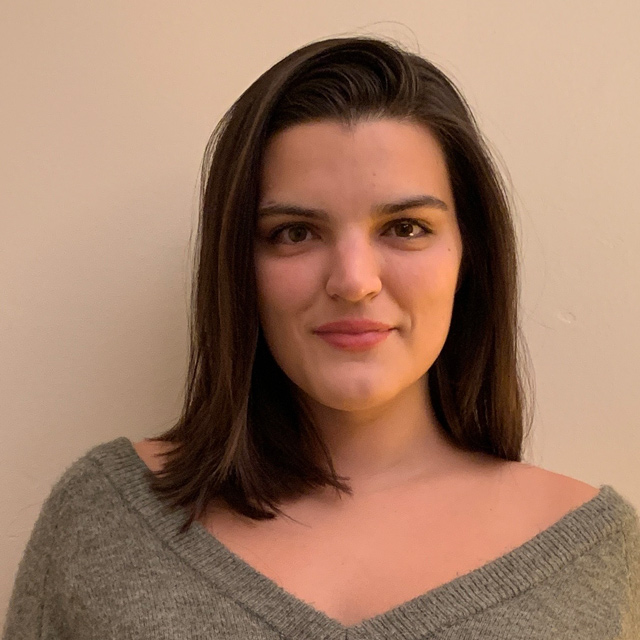
Dr Harriet Dymond
A HCPC registered Forensic Psychologist with both applied and research experience in a wide range of forensic subdivisions. Harriet has worked in secure and community forensic environments, providing assessment, therapy, consultancy and training for service attendees and staff within both the public and private sectors. Research centres around those with a sexual interest in children and sexual offending of various types, with particular reference to creating and improving services with a total prevention focus. View Harriet’s profile.

Dr Katie Sambrooks
Research interests include the assessment and treatment of deliberate firesetting in adults. In particular, her work examines novel approaches to the assessment of firesetting treatment needs, including investigating the utility of Virtual Reality in this context, and the impact of treatment on recidivism. View Katie’s profile.
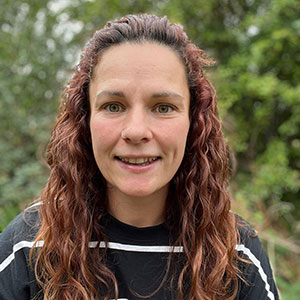
Dr Natalie Harrison
Research explores sibling violence and aggression, with a specific focus on how violent behaviours differ from play fighting and the measurement of the construct. Natalie has implemented evaluation projects that explore the effectiveness of interventions for domestic violence and abuse, and also researches the long-term impact of experiencing trauma in childhood with a focus on executive function and post traumatic growth. View Natalie’s profile.
Affiliated members
Dr Huseyin Cakal
Social and Political Psychologist with a strong focus on co-creative approach engaging a broad spectrum of stakeholders—refugees, local communities, security forces, government representatives, NGOs, local experts, and researchers towards policy-oriented outcomes. Research informed by prejudice reduction and social change paradigms and focuses on the intersection of intergroup relations, power, weak institutional capacity, corruption, and criminal governance especially in resource poor contexts. Regional expertise in South America, South Asia, and the Middle East. View Huseyin's profile.
Work with us: Consultancy and partnership
Our work focuses on establishing robust theoretical and empirical evidence to support application to authentic real-world issues at the individual, group, and institutional levels. To this end, our work has been funded by national and international agencies. We have worked on projects such as policing football crowds, evidence-based cybersecurity training, investigative interviewing principles, characterising patients who need treatment in conditions of high security, how police call-takers interact with callers, and more.
If you are interested in learning more about working with us, please contact the research group lead Dr. Chris N. H. Street.
PhD opportunities
Members of the research group are always open to exploring potential PhD projects with prospective students. If you are interested in exploring PhD opportunities in an area that aligns well with one of our research staff (see staff members’ profiles above), please reach out to the relevant member directly. You can find their email address on their profile page, also linked above.
Keele University is a member of the UKRI ESRC North West Social Science Doctoral Training Partnership. Prospective students contacting a research staff member should indicate whether they have an interest in applying for the funding scheme. Please note that applications are highly competitive and operate on an annual cycle. It is important to contact staff as early as possible in order to avoid missing the round of applications. Self-funded PhD enquiries are also welcome. Further information about doctoral funding can be found here.