

KEELE RESEARCH
Inspired by Attenborough
As Sir David Attenborough celebrates his 100th birthday, we reflect on a legacy that has shaped not only how we understand the natural world, but how we act to protect it. His visit to Keele in 2019 marked a proud moment in our history, further cemented by the naming of the Sir David Attenborough Laboratories in his honour.
This series of case studies explores how his life and work continue to inspire research in our School of Life Sciences. Each story highlights the real-world impact of Attenborough’s influence, showcasing how our researchers are tackling global environmental challenges, advancing scientific understanding, and contributing to a more sustainable future.
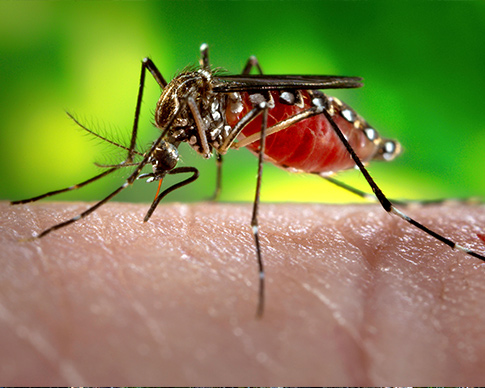 Inspired by the work of Sir David Attenborough, Dr Najmul Haider’s research explores how climate change is reshaping global patterns of infectious disease, with a particular focus on vector-borne illnesses such as dengue fever.
Dr Haider’s recent study examined how rising temperatures and changing rainfall patterns have influenced dengue transmission in Bangladesh between 2000 and 2022. The findings reveal a clear link between environmental change and increased disease risk.
Average annual temperatures were 0.49°C higher in 2011-2022 compared to 2000-2010. While this may seem modest, the cumulative effect is significant - equating to four thousand additional “degree-hours” of heat each year. This added heat shortens the time it takes for the dengue virus to develop inside mosquitoes, increasing the speed and likelihood of transmission. At the same time, shifts in rainfall seasonality have extended the period during which mosquitoes can breed and spread infection.
Together, these changes have been associated with an approximately eightfold increase in annual dengue cases in the most recent period compared to the early 2000s.
This research highlights the growing impact of climate change on human health and reinforces the need for climate-informed disease surveillance and public health planning. It also reflects a central theme of Attenborough’s work: the deep interconnectedness between environmental change, biodiversity, and human wellbeing.
Dr Najmul Haider said: “Sir David Attenborough has consistently highlighted how human-driven climate change is altering natural systems and affecting both ecosystems and human well-being. This research directly reflects that message by demonstrating how rising temperatures and changing rainfall patterns are influencing the transmission dynamics of dengue fever.
“By showing how environmental change can increase the risk of infectious diseases, this work reinforces the interconnectedness between climate, biodiversity, and public health. It supports Attenborough’s long-standing call for urgent action to address climate change, not only to protect the natural world but also to safeguard human health.”
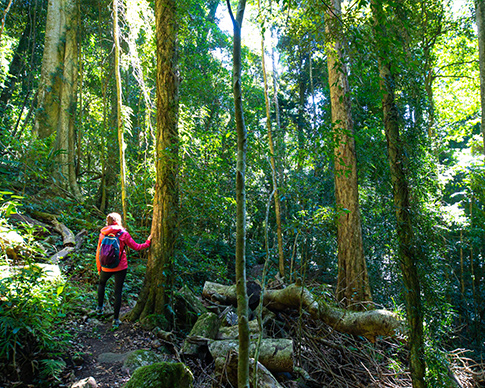 Sir David Attenborough’s belief in the intertwinement of the human and natural worlds was the principle that inspired Emma Randall’s research into ecotherapy, and how engaging with the natural environment can benefit wellbeing.
Her research explores the links between animal, health, and social geographies to learn more about how engaging with nature, particularly birds of prey, can enhance human wellbeing. It offers insights into the lived experiences of individuals interacting with natural environments, focusing on the therapeutic, relational, and embodied dimensions of bird of prey encounters.
These insights critically illustrate how interactions can influence well-being, acknowledging both the physical, emotional, and embodied dimensions of human–nature raptorial relationships.
Ecotherapy, with its focus on healing through engagement with the natural environment, reflects Sir David Attenborough’s work. Within his documentaries, we watch the natural world for inspiration and comfort.
Going beyond the beauty that can be found in nature, Sir David’s focus also includes protecting it as being essential to both human survival and mental wellbeing. His work suggests that reconnecting with nature offers relief from anxiety and the stresses of contemporary life, as well as a response to environmental damage.
Ms Randall said: “Through watching David Attenborough, I learned that caring for the natural world is not merely optional, but is part of what makes us human.”
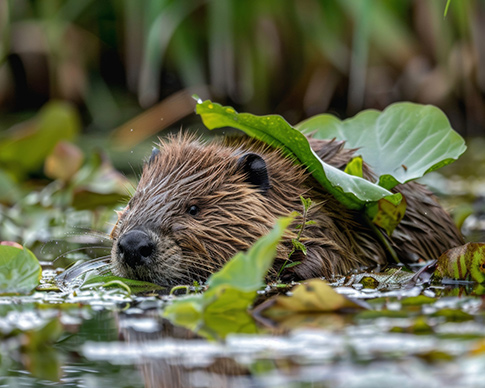 The importance of restoring ecosystems is a crucial part of Sir David Attenborough’s philosophy and was also the principle that inspired Charlotte Harper’s PhD research on the impact of reintroducing beavers in the UK.
Beavers have recently been reintroduced in Britain after overexploitation led to their extinction in the 1600s. As ecosystem engineers, beavers transform landscapes by building dams and creating wetland habitats, which can lead to human–animal conflict regarding land use and flooding.
Charlotte’s research explores the biodiversity benefits of beavers and more-than-human approaches to help humans coexist with them. This will be achieved by determining the biodiversity impacts of beaver reintroductions and understanding human–beaver relationships in terms of conservation and ecotourism through case studies.
This research aims to produce evidence to guide conservation and land management practices and to offer recommendations for human coexistence with beavers. It closely aligns with the work and message of Sir David Attenborough, who has long emphasised the importance of restoring ecosystems and recognising the interconnectedness of all living organisms.
By focusing on beavers as ecosystem engineers and exploring coexistence between humans and wildlife, the research reflects his advocacy for working with nature rather than against it. It also supports Sir David’s wider message that biodiversity conservation is essential to address the environmental crisis and secure a sustainable future.
Charlotte said: “Sir David Attenborough's lifelong passion and commitment to the natural world inspired me to pursue a career in ecology and conservation to help protect biodiversity. His work will continue to inspire future generations of conservationists to protect global ecosystems, especially where human actions have caused harm.”
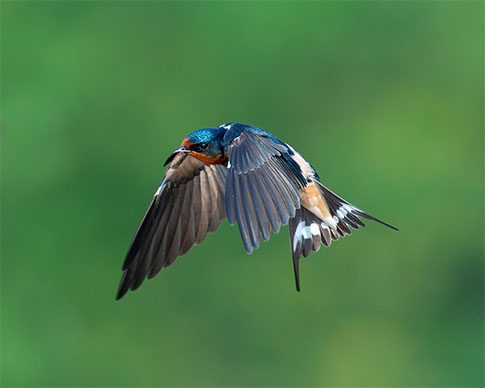 When Sir David Attenborough brought global attention to threats facing wildlife in the early 1990s, he inspired James Bell to dedicate his career to protecting nature.
Trained as an ecologist, James began working in woodland, grassland and sand dune habitats, focusing on conservation. He is now a quantitative ecologist studying insect decline, pest management and emerging technologies, with a leading role in forecasting insect populations.
Throughout his career, James has led numerous studies on insect decline. More recently, he co-authored a paper published in the journal Nature Communications, in which researchers used machine learning to analyse changes in more than 1,200 insect species across Great Britain over a 30-year period. James is leading a forthcoming study analysing a 30-year collection of over 600,000 small, often overlooked insects and spiders in the UK.
James played a key role in the four-year DRUID programme, which set out to assess UK insect abundance, diversity and the causes of decline. The project combined continuous radar monitoring of airborne insects with ground-based observations to build a clearer national picture.
Recent comments by Attenborough, highlighted in Secret Garden in the Lake District, have renewed focus on the issue, linking falling insect numbers to risks for species such as swallows.
Working with the British Trust for Ornithology, James and a team of researchers analysed 29 years of data and found a strong link between insect availability and swallow chick survival. High insect biomass was associated with much higher fledging success, showing that year-to-year changes in insect numbers directly affect breeding outcomes.
James said: “David Attenborough’s work in the early 1990s inspired me to work for nature, and I am convinced he has inspired a legion of thousands across the globe to take the same path.
“My favourite series by David is Life in the Undergrowth, because it included a whole range of invertebrates that never get the attention they deserve. One particular clip of the pseudoscorpion is outstanding.”
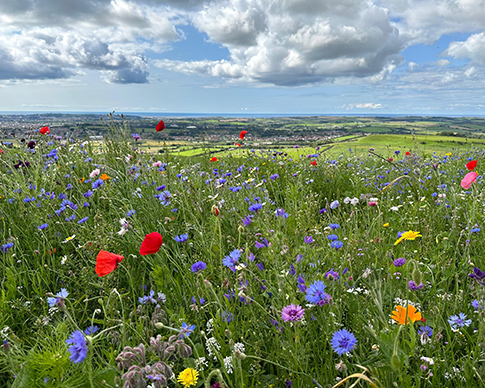 Launched in 2024, Nature In Your Neighbourhood is a five-year, community-led research project inspired by Sir David Attenborough’s call for habitat connectivity, local action, and science-led conservation.
Focusing on sites in the Staffordshire Moorlands, the project examines how place-based citizen science and community stewardship of neighbourhood greenspaces can enhance biodiversity, strengthen nature-based solutions, and deepen people’s relationships with local nature.
Working across more than 20 community-nominated sites, the research explores both ecological and social outcomes of community-led monitoring and management. Participants contribute through structured seasonal habitat surveys and species recording via iNaturalist, helping to address local data gaps while significantly expanding monitoring capacity. Alongside biodiversity, pollinators, and soil health, the project also investigates public perceptions of greenspaces and the evolving dynamics of community groups.
Alana Wheat, a Keele University postgraduate researcher on the project, said: “The project brings global environmental challenges into focus at a neighbourhood scale, demonstrating how empowered communities can drive meaningful environmental change. It generates robust citizen science evidence to inform local decision-making, while highlighting wider social benefits such as increased stewardship, inclusion, and a stronger sense of place.
“Nature In Your Neighbourhood reflects what Sir David Attenborough has long called for - community action, thriving biodiversity, and listening to the science. Beyond a shared commitment to local wildlife, many participants are united by a common source of inspiration - his work.”
Sir David Attenborough at Keele
It was a privilege to welcome Sir David Attenborough to campus to officially open our new laboratories and present a talk on the topic of sustainability.