

Chronic High Impact Pain Project
CHIPP
The CHIPP Team represents a collaboration between Keele University, and the Universities of Bath, Aberdeen, Manchester, Glasgow and Ghent University, working together with people with lived experience of high impact chronic pain.
Why is this research important?
 Nearly half of UK adults report pain that have lasted longer than three months (often classed as chronic pain). While most people manage well, about 25% of people have pain that has far-reaching, negative impacts on their lives, and may lead to disability, distress, social isolation, and high healthcare needs.
Not everyone is the same, and chronic pain presents in many different ways. It is not clear why some people experience such ‘high impact chronic pain’ whereas others don’t. We also don’t know yet why some people improve, whereas others experience ongoing or even increasing impact from their pain. Chronic pain is very complex, many different factors may influence impact pain can have on people’s lives.
What are our aims?
CHIPP aims to identify the possible causes (or ‘risk factors’) of high impact chronic pain such that may predict early on whether a patient is likely to suffer from more impactful chronic pain in the future. This will inform the design or choice between selfcare or treatment options that may more effectively address people’s individual needs.
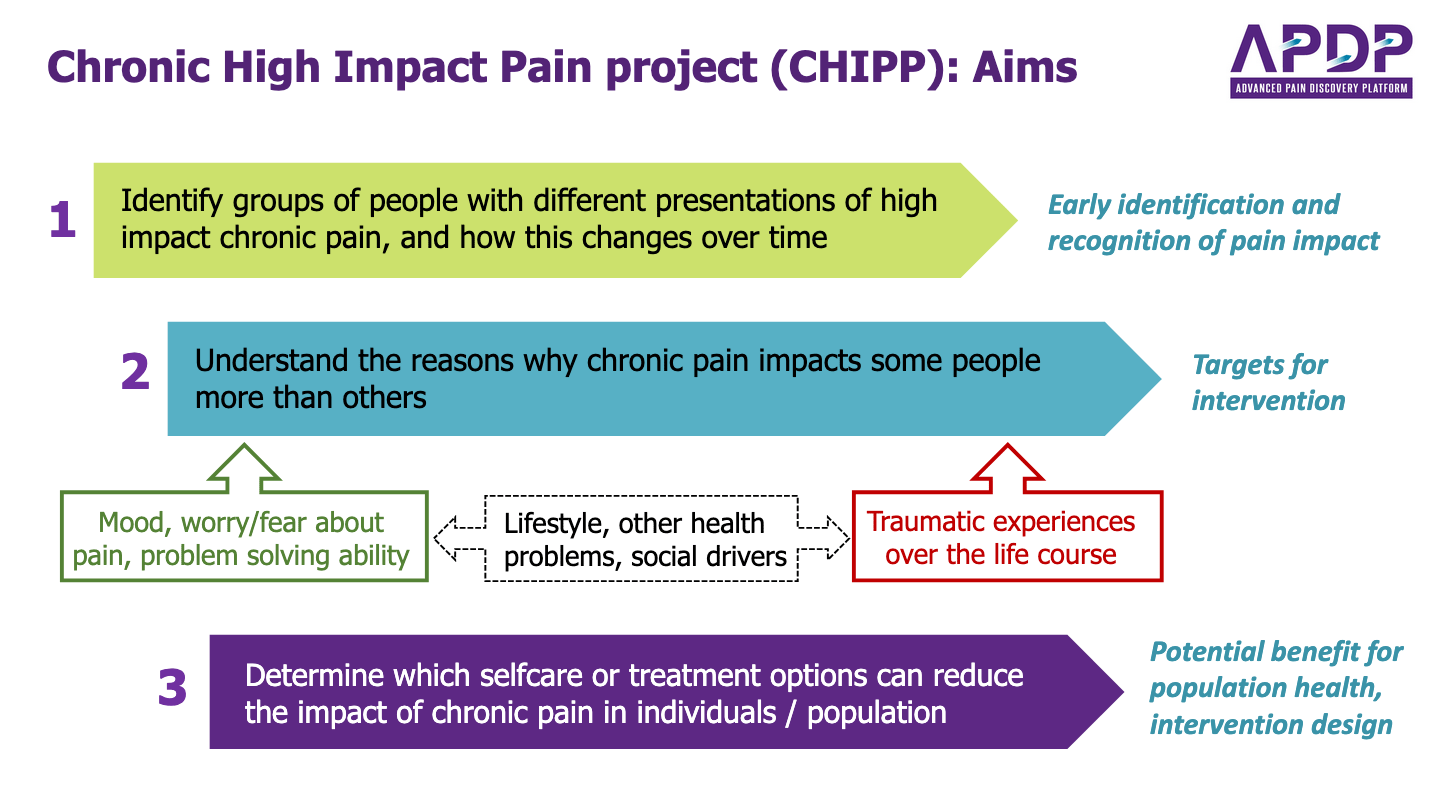
The CHIPP team uses existing data from a large, national study of older adults (UK Biobank) to
- Identify groups of people with distinct patterns of high impact chronic pain who may have different outcomes and different care needs.
- Understand the reasons why high impact chronic pain affects some more than others, and why this can change over time, looking at:
- psychological factors, including mood and ability to problem-solve
- traumatic events that may occur in people’s lives (e.g., bereavement, divorce, accidents, violence, abuse, or sudden illness)
- social isolation or loneliness
- menopause
- Estimate the effects self-management or treatment options may have to reduce the impact of high impact chronic pain.
What is our approach?
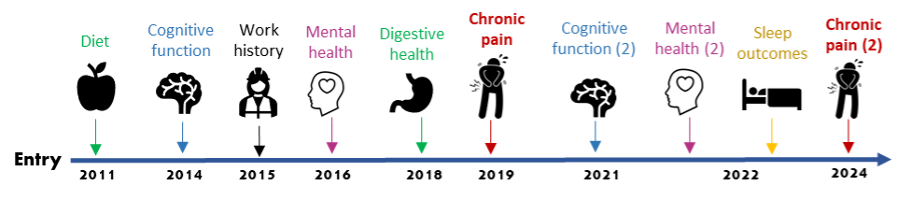
UK Biobank includes health information from 500,000 people in the UK, who were aged 40-69 years when data collection started in 2006-2010. A questonnaire on the nature and impact of chronic pain was completed by over 173,000 participants in 2019. A second pain questionnaire was launched in 2024.
The CHIPP research team is working together with a panel of people with lived experience of chronic pain on the following three workpackages:
- To generate a definition of high impact chronic pain, and describe its prevalence
- To use data from UK Biobank questionnaires, cognitive tests and linked electronic healthcare records collected over a period of more than 15 years, to better understand the role of factors that may explain changes over time in the impact of chronic pain, using so-called ‘causal inference’ methods
- To consider interventions that may help to prevent or manage the impact of chronic pain, and estimate how much benefit could be achieved in the population if such interventions would successfully be offered to people with chronic pain.
Patient and public involvement
The study team included member with lived experience of high impact chronic pain. Research questions have been developed together with our lived experience panel (15 people). They shared their life stories and suggested factors that may explain the development of chronic pain, and how the impact of chronic pain can change over time. They have been involved in defining and prioritising factors for analysis and reviewing intervention options. The panel will also be involved in interpreting results, formulating key messages, and how best to disseminate findings to a wider audience.
Funding acknowledgment
CHIPP is funded by UKRI and Versus Arthritis as part of the UKRI Strategic Priorities Fund (SPF) Advanced Pain Discovery Platform (APDP), a co-funded initiative by UKRI (MRC, BBSRC, ESRC), Versus Arthritis, the Medical Research Foundation and Eli Lilly and Company Ltd. (Grant Ref: MR/W026872/1).