


Year of entry
- 2027
UCAS code
- M100
Duration of study
- 3 years or 4 years with international or placement year
Law - LLB (Hons)
Course summary
Join an internationally renowned civic Law School here at Keele. Our Law LLB offers research-led legal education alongside a range of hands-on opportunities, including our Community Legal Outreach scheme and mooting. You will advance your knowledge, gain practical experience, and be able to tailor your degree towards your career aspirations, all within our supportive school based at the heart of Keele’s 600-acre campus.
Why study Law at Keele University?
 Study the Foundations of Legal Knowledge: Contract Law, Tort Law, Public Law, Criminal Law, European Law, Land Law, and Equity & Trusts
Gain practical legal skills through Keele’s hands-on experiential learning opportunities
Global Top 250 for Law (Times Higher Education World University Subject Rankings, 2023)
Global Top 100 for International Outlook, Law (Times Higher Education World University Subject Rankings, 2023)
Tailor your degree programme to your interests and career aspirations through an enriched curriculum and professional networks
Study the Foundations of Legal Knowledge: Contract Law, Tort Law, Public Law, Criminal Law, European Law, Land Law, and Equity & Trusts
Gain practical legal skills through Keele’s hands-on experiential learning opportunities
Global Top 250 for Law (Times Higher Education World University Subject Rankings, 2023)
Global Top 100 for International Outlook, Law (Times Higher Education World University Subject Rankings, 2023)
Tailor your degree programme to your interests and career aspirations through an enriched curriculum and professional networks

Course overview
Discover the dynamic world of law and its impact on everyday life with Keele University's Law LLB (Hons) programme. Whether you aspire to a traditional legal career, or want to explore opportunities in other industries, our course is designed to align with your career goals.
Take a more theoretical approach to the study of law or opt for a more hands-on approach, immersing yourself in practical experiences through our Legal Advice Clinics or award-winning Community Legal Outreach scheme, where you will support local people who may not be able to easily access legal help. Both paths will develop a diverse set of transferable skills, opening doors to careers in business, media, finance and beyond.
At Keele, you will build a solid foundation in the seven essential areas of legal knowledge: Contract Law, Tort Law, Public Law, Criminal Law, European Law, Land Law, and Equity & Trusts. As you progress through your degree, you can tailor your studies to match your interests, whether in theory or practical applications, tackling contemporary issues like climate change and technological advancements.
Our civic Law School offers various practical learning opportunities that put future employability at the heart of your degree programme. These opportunities enable you to work with real clients, practice your legal skills whilst supported by qualified solicitors, and to help individuals carefully navigate the justice system. Our CLOCK (Community Legal Outreach Collaboration Keele) scheme offers valuable training, building your confidence, critical thinking skills and ability to communicate with various audiences.
At Keele, you can enhance your industry experience through a work placement year, gaining valuable insights into the workplace environment and building professional networks. Alternatively, you may wish to take an international year to study at a partner university. You will also have the opportunity to learn a language and become a multilingual graduate which can open up your career prospects on a global scale.

The Law School at Keele is filled with a brilliant faculty who bring us dynamic and interesting module choices. I have gotten to confront societal and my own individual theories about the law, as well as see how it applies in practice and shapes our society and practice legal skills through tutorials. I feel fulfilled studying Law at Keele, and I am assured that I am gaining the opportunities and competency to become a successful solicitor.

Course structure
Modules for Law
Our courses are designed to develop the skills, experience and expertise you'll need to succeed in your chosen career, informed by the latest research, teaching methods, student feedback, and employer insights. Module details are representative of what we intend to deliver on the course, but may change to reflect best practice and academic development. This information should therefore not be considered a definitive list of available modules.
Compulsory modules
Legal Essentials
This module introduces you to the English legal system and to the legal, academic, and personal skills needed to participate effectively as a Law student, through delivery of four streams of learning and teaching: Thinking Law; Making Law; Doing Law; and Being Law. It develops your skills in finding and working with legal materials and making legal arguments, through individual and group work. You will also reflect on your skills development journey, identifying future development needs and sources of support.
Obligations
The Law of Obligations examines liability in both contract and tort law. You will have the opportunity to learn how contracts are formed and when contracts do not go to plan! You will also learn about the tort of negligence and available tortious remedies. This module is the foundation for numerous legal specialities, including medical law, employment law and family law. You will develop the skills to effectively analyse cases and statutes and apply your knowledge to real world scenarios.
Public Law
This module critically introduces key principles of UK public law. It explores foundational concepts of the UK’s constitution such as parliamentary sovereignty, the separation of powers, and the rule of law. It analyses the relationship between the state and the individual, human rights, and the role of administrative law in controlling governmental power. This module enables you to critically analyse the UK’s constitution and to use legal research and reasoning to solve constitutional and administrative law problems.
Critical Legal Studies
This module offers you an introduction to some of the major classic and modern legal theories, including critical legal studies, socio-legal approaches, feminist legal studies, and critical race theory. Through engaging critically with a range of different approaches to legal study, you will build on and further develop your academic legal skills, including group work and debating. You will gain a strong theoretical grounding in the major academic legal traditions, providing an essential foundation for your future legal studies.
Optional modules
Lawyers in Society
This module will introduce you to the different roles that lawyers play in society and reflect on the contemporary challenges facing the profession, from increasing diversity and globalisation to the growing influence of AI and legal technology. You will also meet guest speakers from the profession and ask them questions. This module will give you the opportunity to reflect on your own legal identity, career aspirations and skills development, and be able to critically analyse specific case studies.
Compulsory modules
Criminal Law
This module introduces you to the role of criminal law in modern society and encourages you to appreciate criminal law within its theoretical, social, and political contexts. You will learn to access, review and critically evaluate criminal law concepts through engaging with legal and academic materials. You will build on and further develop your skills in analysing problems and in critically evaluating the law, including theoretical issues and current controversies.
Law of Real Property
The module starts by considering the meaning of ‘property’ and the consequences of using property-based rules to regulate the use of land. It then critically considers the legal and equitable rules relating to the creation, protection, transfer, and shared enjoyment of rights in land. You explore the relationship between law and equity and between case law and statute. Particular attention is given to developing practical skills, including reading and interpreting statute law and problem solving.
Law of the European Union
This module introduces key institutions, methods, and principles of EU law, and looks at how power is defined, exercised, and distributed among EU institutions and Member States. It explores different forms of regional integration and considers the EU’s evolution. The significance of EU citizenship and the Internal Market are also introduced. The module will enable you to acquire detailed knowledge of substantive legal principles underpinning EU law and to undertake independent legal research to analyse key issues in EU law.
Optional modules
Civil Litigation Skills
Litigation is an adversarial type of law. If parties to a dispute cannot agree, the matter will ultimately be decided by the courts. In this module we explore the procedures in place to protect parties and ensure justice is not only done, but also seen to be done. We do so through workshops, where we consider case studies to develop skills in interviewing, drafting, negotiations and advocacy. Authentic assessment and experiential learning mean this is an interesting and exciting module.
Law, Society and Policy
This module invites you to engage critically with the hidden barriers we may encounter when dealing with legal and social systems, and how the law can either cause or remedy them. The module will introduce you to the relationship between law, society and policy; contextualise these issues through various theoretical approaches; link policy issues to academic research; identify policy concerns and consider possible solutions; and provide you with a sound theoretical footing on which to explore your own research project.
Law in the 21st Century
This module explores the challenges that the 21st century (eg driverless cars, artificial intelligence, robotics, and climate change) poses to law, particularly to fundamental rights. You will analyse the key legal frameworks and jurisprudential responses to these issues and will critically evaluate their successes. You will thereby be better equipped to engage with the emerging legal issues of the future and will be invaluable to employers in the legal field, as well as other social and commercial fields.
Legal Professional Development (University Placement Module)
In a competitive job market, practical skills and understanding workplace dynamics are crucial. This module allows you to gain hands-on experience, enhancing your employability, and the opportunity to gain valuable professional insights via a 75-hour placement. You will be supported by various activities to secure a role and can source your own placement or apply to university-sourced roles. This module offers flexibility on when and how you complete your placement, enabling you to balance your placement around existing demands.
International Law
International law structures the relationships between states and the wider community of global actors, from international organisations to individuals. In this module, you will build a strong foundation in its core principles by studying the institutions, sources and doctrines that underpin the international legal system. You will also engage with specialist areas such as human rights, humanitarian law, environmental law and economic law, using them to think critically about the major challenges facing the international community – from conflict and displacement to climate change and global inequality. Alongside this public international law focus, you will also take part in a dedicated series of sessions on private international law, exploring how cross‑border disputes are resolved in practice and how legal systems determine jurisdiction, applicable law and the management of international commercial relationships. This element of the module is delivered in collaboration with two successful alumni, Laura Oseland, partner at Nelsons Legal in the Cayman Islands, and Michael Todd KC, partner at Erskine Chambers London and board member of the Bar Council, offering you a unique opportunity to learn directly from leading practitioners in the field.
Compulsory modules
Law of Trusts
As one of the key foundations of legal knowledge, Equity & Trusts will ensure that you have the skills and confidence to engage in critical analysis, working with case law and problem-solving in this important area of law. Dealing with testamentary and life-time trusts, private and charitable trusts, breach of trust and associated remedies, its scope is broad and its utility clear. This module is essential should you wish to pursue a career in legal practice.
Project – 1 option MUST be picked from the 4 choices
This module offers the choice of independent academic study or practical legal experience. You can choose:
- Dissertation: This module enables you to design and complete an extended independent research project on a legal topic of your choice. Working with a supervisor, you will produce substantial legal writing demonstrating advanced research and analytical skills, as well as effective time management.
- Contemporary Law Reform Project: This module involves independent research into the need for reform in a chosen area of law. You will critically analyse existing law, engage with scholarship, and develop evidence‑based reform proposals, developing your advanced research, analytical and communication skills.
- CLOCK/Community Legal Outreach: Based on Keele’s nationally recognised CLOCK programme, you will train as a Community Legal Companion and support litigants in person in local courts. Through a combination of practical experience and critical reflection, this module helps you develop the skills needed to engage contextually with law in its social context.
- Legal Advice Clinic: This module provides practical experience with real clients in Keele’s Legal Advice Clinics, supervised by solicitors. You will develop skills in client interviewing, legal research and drafting, and enhance your employability by reflecting on your development.
Optional modules
Law of Criminal Evidence
This module allows you to further develop your knowledge of legal rules as they are applied in the context of criminal trials in England and Wales. It offers the opportunity to explore how trial courts manage statutory legal rules and exceptions, codes of practice, and case law. You will gain a fuller appreciation of the appropriate exercise of judicial case management skills, and judicial discretion, in the efficient management of trials within the context of human rights, particularly the ECHR.
Law, Ethics and Healthcare
This module explores the interrelationship of law, ethics, and policy in a contested and rapidly expanding area of law: healthcare practice, including mental health. The module builds on your knowledge from previous modules and develops it by introducing you to the major ethico-legal frameworks, including important questions of autonomy and capacity. You will critically analyse how the law seeks to govern doctor/patient relationships and debate the need for a balance between the demands of the individual and the state.
Corporate Law
This module explores the central features of company law with focus on the doctrine of separate corporate personality, the changing nature of shares, the company constitution, the statutory duties of directors and shareholder protection. Furthermore, the module addresses the company as a socio-economic actor through the study of corporate theory, and, finally, the module explores corporate law practice. This module will enable you to appreciate, evaluate and apply the law, theory and practice of corporate regulation.
Commercial Law
This module offers you an exciting opportunity to explore and understand commercial law issues. It is an ideal choice for anyone aiming for a career in the English legal profession or a field of commerce. We look at both practical legal doctrines and theoretical questions of English commercial law in the context of economic activity. This module will equip you to appreciate, evaluate and apply complex statutory and judicial rules governing commercial activity.
Law, Equality and Human Rights
This module reflects the significant and increasing importance of the Equality Act 2010 and the societal changes throughout the 20th and 21st centuries which require new ways of thinking about and applying the law. It will approach this analysis through a blend of theoretical and practical enquiry and will consider the relationship between the law, Human Rights and a whole range of legally protected characteristics including, for example, Disability, Gender, Health and Immigration status.
Legal Professional Development (University Placement Module)
In a competitive job market, practical skills and understanding workplace dynamics are crucial. This module allows you to gain hands-on experience, enhancing your employability, and the opportunity to gain valuable professional insights via a 75-hour placement. You will be supported by various activities to secure a role and can source your own placement or apply to university-sourced roles. This module offers flexibility on when and how you complete your placement, enabling you to balance your placement around existing demands.
Law and the Family
This module examines contemporary families in all their diversity, including the welfare and care of children. You will critically examine the law relating to families and family disputes in their social and political contexts. You will analyse the concept of the 'legal child' and the construction of childhood by examining a range of changing social circumstances. You will further develop your evaluative and written advocacy skills through assessing the existing law in these areas and making suggestions for reform.
You can view the Programme Specification for this course by visiting the Programme Specifications webpage. (opens in new tab)

"I learned and developed during my time on the law degree key skills such as legal research, problem solving and the ability to critically think and analyse which are all important for any future careers. Being an undergraduate student at Keele I was able to learn from academics who were at the cutting-edge of their research and tutors who were genuinely interested in helping us as students to develop and challenge ourselves."
Double Gold in the Teaching Excellence Framework
Keele is one of only 15 broad-based universities in England - out of over 100 - to have been awarded Gold in both the 2017 and 2023 Teaching Excellence Framework (TEF) exercises, demonstrating our consistent teaching excellence.
Additional opportunities
 Foundation year
 Learn a language
 Placement year
 International year
 GCP Elective Pathways
Explore more
(opens in a new tab)
GCP Elective Pathways
Explore more
(opens in a new tab)
There are a range of additional opportunities for this course.
Please note that undertaking one may impact the availability of another.
Community Legal Outreach Collaboration Keele (CLOCK)
Community Legal Outreach Collaboration Keele (CLOCK) is a multi-agency collaboration with the Stoke Family Court, law firms, mediators, Citizens Advice, Domestic and Sexual Abuse survivor support services. CLOCK provides support to litigants in person (parties to court proceedings who do not have a lawyer to represent them) through the innovative role of the Community Legal Companion. Community Legal Companions help identify if a person is eligible for legal aid and where this is not available, assist them with a range of tasks within the remit of the McKenzie Friend principles.
Whether you participate in CLOCK as an extracurricular activity or as part of the optional Community Legal Outreach project module in your final year, you will be trained by court staff and other specialists to undertake the role of a Community Legal Companion (always assisting, never advising). Working as a Community Legal Companion gives you an opportunity to build key interpersonal skills that are crucial to a career in law and beyond. You will learn to collaborate with others, communicate effectively with various audiences and apply your skills to real-life situations.
Mooting (A mock appeal hearing on a point of law)
Challenge your peers through optional mooting competitions and showcase your knowledge through practice. You will apply your research, writing and presentation skills in the staged legal environment we have here at Keele as a traditional court room setup. This experience will help you to build confidence when working independently as well as a team. You will learn how to work effectively under pressure and how to meet deadlines but you will also develop and refine your public speaking skills and ability to convey robust arguments which is critical within the legal profession.
You may have the opportunity to get involved with national and international mooting competitions which you can document and use to support future job applications. These events sometimes attract members of the bar and legal academics, providing a great networking opportunity.
Stand out from the crowd
Placement year
Taking a placement year between 2nd and 3rd year is a valuable opportunity to make connections and build a network of professionals within your chosen field. Your experience will help you with deciding on your career path and allow you to showcase your abilities in the workplace. We have a dedicated placements support team who will support you to find an appropriate placement and help you prepare for it.
International year
Enhance your career prospects with an International Year at one of our partner institutions. This opportunity between 2nd and 3rd year can help in your employment search to stand out from the crowd and broaden your horizons, potentially working across the globe.
You will evidence your experience with a project submission and on successful completion of all modules across the year, you will graduate with an enhanced degree title. Given the international demand and necessity for legal professionals, this opportunity can be highly beneficial in demonstrating your awareness of the international legal context but also your ability to immerse yourself into a different culture. You can find more information here.
Learn a language
Discover languages at Keele. Whether you are a complete beginner or already have a foundation of knowledge, we offer a flexible and guided route to developing your skills. We currently offer British Sign Language, Mandarin Chinese, French, Japanese, and Spanish. Upon successful completion of a series of elective language modules, you may have the opportunity to gain an enhanced degree title.
Being multilingual can assist with your career prospects and encourage you to stand out against competition, as well as increasing your employment prospects overseas. This is also a fantastic opportunity for your personal development where you can practice your reading, writing and oral skills and build key characteristics such as time management, adaptability, and motivation.

Entry requirements
These are the typical entry requirements for this course for a range of UK and international qualifications. If your qualifications aren't listed, please contact us to check if we can accept them. If you don't think you'll meet the stated requirements, you may be able to access this course via a Foundation Year.
Typical offer
Please ensure you read the full entry requirements by selecting your qualifications from the menu below. This will include any subject specific, GCSE/Level 2 Maths, and/or English language requirements.
Please select your qualification from the drop-down list below for the full entry requirement information
A Level
ABB in three A Levels.
Contextual offer: BBC.
You will also need: an English language qualification (see below).
Access to HE Diploma
128 UCAS points in any Access to HE Diploma including Distinction in at least 30 Level 3 credits and Merit in at least 15 Level 3 credits.
You will also need: an English language qualification (see below).
Algeria
Bangladesh
BTEC Extended Diploma / National Extended Diploma
DDM in any BTEC Extended Diploma / National Extended Diploma.
Contextual Offer: DMM in any BTEC Extended Diploma / National Extended Diploma.
You will also need: an English language qualification (see below).
BTEC National Diploma / Diploma
Distinction and Distinction in any BTEC National Diploma / Diploma and C in one A Level, or Distinction and Merit in BTEC Diploma and A in one A Level.
You will also need: an English language qualification (see below).
BTEC National Extended Certificate / Subsidiary Diploma
Distinction in any BTEC National Extended Certificate / Subsidiary Diploma and BB in two A Levels, or Merit in any BTEC National Extended Certificate / Subsidiary Diploma and AA in two A Levels.
You will also need: an English language qualification (see below).
Canada - Diploma
70% / BBBBC in five courses in the Grade 12 Diploma.
You will also need: an English language qualification (see below).
China - Gaokao
72% in the Gaokao.
You will also need: an English language qualification (see below).
Core Maths
If you have B or higher in Core Maths and are studying A Levels, BTEC, the International Baccalaureate, or an Access to HE Diploma, you will typically receive an alternative offer which will be lower than the standard offer. Please see 'Alternative and contextual offers' below.
Cyprus - Apolytirion
18.5 / 88% in the Apolytirion.
You will also need: an English language qualification (see below).
Egypt
European Baccalaureate
75% overall.
You will also need: an English language qualification (see below).
Extended Project Qualification (EPQ)
If you have B or higher in the EPQ and are studying A Levels, BTEC, the International Baccalaureate Diploma, or an Access to HE Diploma, you will typically receive an alternative offer which will be lower than the standard offer. Please see 'Alternative and contextual offers' below.
France - Baccalaureate
14 in the French Baccalaureate/International Option Baccalaureate or 13 in the Baccalauréat Français International.
You will also need: an English language qualification (see below).
Germany - Abitur
2.0 overall average in the Abitur.
You will also need: an English language qualification (see below).
Ghana
We do not accept the West African Senior School Certificate Examination for direct entry. However, you can apply to study an International Foundation Year at Keele University International College. On successful completion, you can progress to an undergraduate degree at Keele.
Hong Kong - Diploma
544 from two electives and one core subject in the HKDSE.
You will also need: an English language qualification (see below).
India - Standard XII
Average of 75% from four subjects in the ICSE, CBSE or Western Bengal Standard XII, or average of 80% from four subjects in any other Standard XII.
You will also need: an English language qualification (see below).
International Baccalaureate Career-Related Programme
We encourage applications with the IBCP but recognise that your combination of qualifications may differ depending on where you are studying.
If you are taking a BTEC National Diploma / Diploma with one or more Higher Levels, your offer will be similar to our BTEC + A Level offer (see 'BTEC National Diploma / Diploma') but with an HL requirement of 6 for A, 5 for B, or 4 for C.
For any other combination, please contact the University Admissions Team for advice.
International Baccalaureate Diploma
655 in three Higher Levels or 32 points.
Contextual Offer: 554 in three Higher Levels or 29 points.
You will also need: an English language qualification (see below).
Ireland - Leaving Certificate
H3, H3, H3, H4, H4, H4 in the Irish Leaving Certificate.
You will also need: an English language qualification (see below).
Italy - Diploma di Esame di Stato
85% in the Esame di Stato.
You will also need: an English language qualification (see below).
Kenya - KCSE / Diploma
We do not accept the Kenya Certificate of Secondary Education for direct entry. However, you can apply to study an International Foundation Year at Keele University International College. On successful completion, you can progress to an undergraduate degree at Keele.
We may accept a two year Diploma. Please contact the University Admissions Team for advice.
Malaysia - STPM
ABB in three Principal Level subjects in the STPM.
You will also need: an English language qualification (see below).
NCUK
Pass NCUK Foundation Year with ABB and grade B in EAP English Language module.
Nepal
80% in the Higher Secondary Certificate (HSSC) (from 2018 onwards).
Nigeria - Senior School Certificate / OND
We do not accept the Senior School Certificate (WAEC or NECO) for direct entry. However, you can apply to study an International Foundation Year at Keele University International College. On successful completion, you can progress to an undergraduate degree at Keele.
We may accept an Ordinary National Diploma with GPA of 2.5 or a Merit / Lower Credit. Please contact the University Admissions Team for advice.
Pakistan - Secondary School Certificate
We do not accept the Secondary School Certificate for direct entry. However, you can apply to study an International Foundation Year at Keele University International College. On successful completion, you can progress to an undergraduate degree at Keele.
Portugal
Overall average of 16 in a Secondary Certificate.
You will also need: an English language qualification (see below).
Scotland - Highers and Advanced Highers
BBBBC in five Highers, or BC in two Advanced Highers and CC in two Highers, or BCC in three Advanced Highers.
You will also need: an English language qualification (see below).
Singapore - A Levels (H2)
ABB in three H2 Levels.
You will also need: an English language qualification (see below).
South Africa - Matric (NSC and IEB)
76666 in five subjects.
You will also need: an English language qualification (see below).
Spain - Bachillerato
Overall average of 7.8 in the Título de Bachillerato.
You will also need: an English language qualification (see below).
Sri Lanka - Advanced Level
ABB in three Advanced Levels.
You will also need: an English language qualification (see below).
T Level
Distinction in any T Level.
You will also need: an English language qualification (see below).
Turkey
Uganda - Advanced Certificate of Education
USA - Advanced Placement
ABB = three AP test scores of 544 OR
2 AP test scores PLUS on of the following:
SAT I: 1290 (min 650 RW, 620 M)
ACT: 28
Honours course at B+
One year long equivalent Dual Enrolment/College course at A.
You will also need: an English language qualification (see below).
USA Non-AP Curriculum
ABB = Achieved overall GPA of 3.7 with three honours at B+,B+,B+
OR
2 honours course and overall GPA of 3.7 PLUS one additional qualification:
SAT I: 1390 (min 720 RW, 650 M)
ACT: 30
One year-long equivalent Dual Enrolment/College course at A.
You will also need: an English language qualification (see below).
Welsh Baccalaureate / Bagloriaeth Cymru
The Advanced Skills Baccalaureate Wales is equivalent to one full A Level at the same grade and can be included alongside 2 other A Levels in a standard A Level offer for this course (see A Level). All subject specific requirements will still need to be met.
Zimbabwe - ZIMSEC A level
ABB in three ZIMSEC A Level subjects.
You will also need: an English language qualification (see below).
English language requirements
All our courses require an English language qualification or test. Most students meet this through a 4 or C in GCSE English. Please visit our English Language pages for details, including test information for international students. For students who require a test, this course requires a result from Group B.
Alternative and contextual offers
We're committed to ensuring equality of opportunity for applicants with the potential and motivation to succeed, regardless of background. We offer alternative offer schemes with clear eligibility criteria, including contextual offers, offers for those studying in the Keele region, and recognition of a range of additional qualifications.
General information
The entry grades outlined indicate the typical offer, along with any subject specific requirements. This is for general information only. Keele University reserves the right to vary conditions based upon a candidate's application. For international students, find out how we work with approved agents as part of our admissions process.
Social life, societies and sports
Find out moreAccommodation
Find out moreLocal area and travel
Find out moreBoost your employability
Find out moreCommunity Legal Outreach Collaboration Keele (CLOCK)
Founded 10 years ago, CLOCK began as a research project, listening to 'Voices of Experience'; a group of women from a domestic violence refuge, who shared their fears and proposals for how to support women going to court alone following the significant withdrawal of legal aid under LASPO, the Legal Aid Sentencing and Punishment of Offenders Act, 2012. CLOCK has been Highly Commended by the Attorney-General National Access to Justice Award, 2016, and the Green Gown Awards for 'Benefitting Society', 2019.
The Community Legal Companion role has been endorsed by the President of the Family Court and has been cascaded to 12 University Law Schools to operate in 8 court centres; Stoke, Brighton, Canterbury, Wolverhampton, Leicester, Oxford, Liverpool and York.

At 24-years-old, Victoria became one of the youngest qualified solicitors her firm had ever seen - "I find myself doing something different every day at work, whether that be going to court, taking a witness statement or drafting correspondence to clients and medical experts. I work on a whole variety of cases and building up relationships with medical experts is an important part of my job. The skills I gained at Keele, including all the networking I did, have been useful as I grow in my career. Keele played such a big role in getting me to where I am today and I’m so proud to be Keele alumni."

Fees and funding
Tuition fees for 2027/28 2026/27 academic year
- The tuition fee for UK Home students starting in 2027/282026/27 is set by the UK Government and will be £10,050£9,790.
- International: Band 1, £18,200 for the 2026/27 academic year
International fees for 2027/28 entry have not yet been confirmed. We review all tuition fees annually and will update this page once they are finalised.
In subsequent years of your course, UK Home fees may change in line with government policy or legislative requirements. For continuing international students, fees will increase each year in line with RPI, capped at a maximum of 5% per year.
For details of our international fee bands visit our Undergraduate tuition fees page.
Financial support
Going to university can be daunting as well as exciting. It's important to understand the costs and financial support available.
Our Student Financial Support team offers confidential advice and guidance to help you manage your money, resolve issues with Student Finance, create a budget, explore your options if you're facing financial hardship, and access any funding you are eligible for, such as bursaries and scholarships.
For more information visit our undergraduate fees and funding pages.
Additional costs
The additional costs listed below apply to the 2026/27 academic year. Costs for 2027/28 entry will be confirmed closer to the time, so the information below should be used as a guide only.
There are no additional costs for this course. However, students may incur general expenses related to university study, such as for printing, textbooks and other materials. Students who undertake a placement may be responsible for additional costs, such as travel, accommodation, and subsistence costs. For further information, please refer to the additional costs information.

"Studying Law at Keele meant that not only did I learn the black letter law but also, due to the hard work of the Law School, meant that upon graduating I knew fully what to expect from the current legal market. I got involved with the Community Legal Outreach Collaboration programme which enabled me to give something back to the community whilst also strengthening my key employability skills. I have found that the skills I developed here have been really useful to discuss in job interviews or on applications for training contracts."


Your future career
As a Keele Law graduate, you will develop a range of theoretical and practical skills throughout the programme, enabling you to tailor your professional career. Law has relevance to almost every type of organisation and your graduate attributes will be valued by employers across various industries.
Preparation for your career
During your studies, you will learn how to research, read and analyse case and statute law. Answering the legal problem questions, used in many of our law modules, will help develop your problem solving skills and give you experience applying the law to real-world scenarios.
We offer a variety of additional opportunities for you to prepare for your career including Legal Advice Clinics, our CLOCK initiative and legal skills competitions. These are valuable, practical experiences that will allow you to develop your skills in preparation for employment.
We also have links with partner organisations including Citizens Advice, the Crown Prosecution Service and law firms in Birmingham, Manchester and London that enable you to gain industry insights and learn from professionals working in the legal field.
Employer engagements
Our Law community at Keele is supportive and inclusive, providing opportunities to network with academics, peers, alumni and employers. Building links with local and national employers can help to support your journey within the legal field and beyond.
Law Fair: Scope your legal career and graduate opportunities. Meet with employers and organisations to understand the graduate attributes required across the legal field, with guidance on applications and recruitment.
Legal Dining: A formal dining event where we aim to pair you with potential employers and inspirational alumni. A great opportunity to network with professionals and an example of the type of events you may attend as a legal professional.
We’re proud to equip you with key professional skills that enable you to embark on your professional career in legal and non-legal roles such as:
- Solicitor
- Barrister
- Lawyer/paralegal
- Mediator/Arbitrator
- Legal Researcher
- Human Resources
- Business
- Teaching and education
- Civil Service
- Charities
- Politics
- Journalist
Keele’s Careers and Employability team (Shortlisted for Best University Careers Employment Service - National Undergraduate Employability Awards, 2021), offers a variety of personal and career development opportunities to enhance your employability.
From mock interviews, careers guidance and CV advice, to careers fairs, alumni mentoring and networking events, along with helping you find part-time and graduate employment - the team will support you throughout your studies and beyond.
Find out more about our careers and employability services, including career planning, alumni mentoring, jobs, internships, starting your own business and much more.

Rachael's Graduation Story
Law graduate Rachael secured a role as a
Privacy Compliance Officer for WorkNest
within their WorkNest People division.

Teaching, learning and assessment
Teaching
At the School of Law, we have a diverse and innovative approach to teaching. You will be taught in traditional lectures, group tutorials, workshops, and seminars. In your classes you will have the opportunity to ask questions, discuss how the law applies to contemporary issues and investigate legal scenarios to develop your critical analysis and problem-solving skills.
You will be taught by leading academics and legal practitioners, exploring foundational legal topics and perspectives. This course will provide you with a suite of core skills that are transferable to a wide range of legal and non-legal careers.
Assessment
On this programme, you will be assessed through various methods which strengthen your ability to communicate effectively, advance your writing skills and work as a team. This includes, research essays and/or reports, group projects and web-based learning such as multiple choice questions.
Other assessments may include:
- Portfolios - E.g. Evidence/critical reflection of your individual learning such as a letter of advice to a client.
- Independent Study Project - E.g. Assesses your ability to conduct substantial research and respond to complex research questions.
- Open Book Assessment – E.g. A defined assessment window with access to notes, journal articles and textbooks.
- Assignment - E.g. Blog, vlog, poster, podcast, policy brief or infographic.
Academic expertise
The teaching team at the School of Life Sciences are active researchers in core areas such as biosciences, geosciences, environmental sciences, geography and bioengineering. Their academic expertise informs your learning, incorporating current practices, theories and contemporary themes that encourage discussion within your subject area.
The teaching team consists of professors, readers, senior lecturers, lecturers, demonstrators, and teaching fellows.
Professional support staff are also available to assist with any queries you may have during your undergraduate studies at Keele.
The teaching team at the School of Engineering and Physical Sciences perform research across the school with particular strengths in materials science, synthetic, forensic and analytical chemistry. Their academic expertise informs your learning, incorporating current practices, theories and contemporary themes that encourage discussion within your subject area.
Professional support staff are also available to assist with any queries you may have during your undergraduate studies at Keele.
The teaching team consists of professors, senior lecturers, and lecturers within the School of Engineering and Physical Sciences. They are fellows or senior fellows of the Higher Education Academy, the professional body for teachers in higher education. Fellowship provides individuals with recognition of their practice, impact and leadership of teaching and learning. A number of our academic staff have also achieved national recognition for their excellence and innovation in teaching and hold awards from a variety of institutions, including the Royal Society of Chemistry and AdvanceHE.
The teaching team in the School of Humanities and Social Sciences are active researchers in core areas of Criminology and Sociology such as fields of crime, globalisation and urban spaces and cultures. Their academic expertise informs your learning, incorporating current practices, theories and contemporary themes that encourage discussion within your subject area.
Professional support staff are also available to assist with any queries you may have during your undergraduate studies at Keele.
The teaching team consists of professors, senior lecturers, lecturers and graduate teaching assistants.
The teaching team in the School of Humanities and Social Sciences are active researchers in core areas of Education such as critical social policy and feminism. Their academic expertise informs your learning, incorporating current practices, theories and contemporary themes that encourage discussion within your subject area.
Professional support staff are also available to assist with any queries you may have during your undergraduate studies at Keele.
The teaching team consists of senior lecturers and lecturers.
The teaching team in the School of Engineering and Physical Sciences are active researchers in core areas such as materials, sustainability, and energy. Their academic expertise informs your learning by incorporating current practices, theories, and contemporary themes that encourage discussion within your subject area.
Professional support staff are also available to assist with any queries you may have during your undergraduate studies at Keele University.
The teaching team consists of professors, senior lecturers and lecturers.
The teaching team in the School of Humanities and Social Sciences are active researchers in core areas of English and Creative Writing. Their academic expertise informs your learning, incorporating current practices, theories and contemporary themes that encourage discussion within your subject area.
Professional support staff are also available to assist with any queries you may have during your undergraduate studies at Keele.
The teaching team consists of professors, readers, senior lecturers, lecturers, and graduate teaching assistants.
The teaching team in the School of Humanities and Social Sciences are active researchers in core areas such as twentieth century and contemporary music, cultural politics, social movements and representation. Their academic expertise informs your learning, incorporating current practices, theories and contemporary themes that encourage discussion within your subject area.
Professional support staff are also available to assist with any queries you may have during your undergraduate studies at Keele.
The teaching team consists of professors, readers, senior lecturers, and lecturers.
The teaching team at the School of Engineering and Physical Sciences provide research-led quality teaching, particularly in the fields of forensic chemistry, forensic biology, crime investigations, forensic search and forensic anthropology, taphonomy and archaeology.
Professional support staff are also available to assist with any queries you may have during your undergraduate studies at Keele.
Our teaching team consists of professors, senior lecturers, lecturers, demonstrators and PhD students.
The teaching team at the School of Life Sciences are active researchers in core areas such as biosciences, geosciences, environmental sciences, geography and bioengineering. Their academic expertise informs your learning, incorporating current practices, theories and contemporary themes that encourage discussion within your subject area.
The teaching team consists of professors, readers, senior lecturers, lecturers, demonstrators, and teaching fellows.
Professional support staff are also available to assist with any queries you may have during your undergraduate studies at Keele.
The teaching team in the School of Humanities and Social Sciences are active researchers in core areas of medieval, early modern, and modern history including expertise in historical inequality, democratisation and civil society. Their academic expertise informs your learning, incorporating current practices, theories and contemporary themes that encourage discussion within your subject area.
Professional support staff are also available to assist with any queries you may have during your undergraduate studies at Keele.
The teaching team consists of professors, readers, senior lecturers, lecturers and graduate teaching assistants.
The teaching team at the School of Medicine are either active researchers in core areas such as musculoskeletal health, mental health and well-being, biomedical science, prognosis and big data, or actively engaged with a diverse range of scholarly activities to enhance their roles as educators.
The teaching team consists of professors, readers, senior lecturers, lecturers, senior teaching fellows, teaching fellows, senior research fellows, research fellows, research associates, research assistants, anatomy technicians and PhD students. The School of Medicine teaching team also includes a wide range of health professionals who are actively engaged in clinical research and quality improvement including those based in hospitals and community-based services.
The academic team at the School of Nursing and Midwifery are active researchers in core areas such as loss, bereavement and end of life care; primary, community and district nursing; and women's health. Their academic expertise informs your learning, incorporating current practices, theories and contemporary themes that encourage discussion within your subject area.
Professional support staff are also available to assist with any queries you may have during your undergraduate studies at Keele.
The teaching team consists of readers, senior lecturers, lecturers, research associates and teaching fellows.
The teaching team at the School of Engineering and Physical Sciences perform research across the school with particular strengths in astrophysics, materials science, renewable energy and sustainability. Their academic expertise informs your learning, incorporating current practices, theories and contemporary themes that encourage discussion within your subject area.
Professional support staff are also available to assist with any queries you may have during your undergraduate studies at Keele.
Our teaching team consists of professors, senior lecturers, lecturers, readers, and PhD students.
The teaching team in the School of Humanities and Social Sciences are active researchers in areas including democracy, governance, public policy and idealism. Their academic expertise informs your learning, incorporating current practices, theories and contemporary themes that encourage discussion within your subject area.
Professional support staff are also available to assist with any queries you may have during your undergraduate studies at Keele.
The teaching team consists of professors, senior lecturers, lecturers and graduate teaching assistants in the School of Humanities and Social Sciences.
The teaching team within the Institute of Sport brings together expertise across sport, exercise, health and rehabilitation, reflecting the continuum of human performance and wellbeing across the lifespan. Our staff are actively engaged in research and applied practice spanning physical activity, performance, health and recovery, ensuring that teaching is informed by both scientific evidence and real-world application. As a CASES-accredited partner institution, and with staff holding individual CASES accreditation, the programme is underpinned by recognised professional standards in sport and exercise science.
Staff operate within an interdisciplinary environment, working alongside colleagues from across the Allied Health Professions within the School. This collaboration informs teaching and supports a broader, integrated understanding of health, physical activity and rehabilitation across diverse populations and contexts.
Collectively, this breadth of expertise shapes your learning experience, incorporating current practices, theories and contemporary themes that encourage discussion within your subject area.
Professional support staff are also available to assist with any queries you may have during your undergraduate studies at Keele. The School's teaching team consists of professors, senior lecturers and lecturers.
The teaching team at Keele Business School are active researchers in core areas such as accounting, finance, economics, human resource management, marketing, and management. Their academic expertise informs your learning, incorporating current practices, theories and contemporary themes that encourage discussion within your subject area.
Professional support staff are also available to assist with any queries you may have during your undergraduate studies at Keele.
Our teaching team consists of professors, senior lecturers, and lecturers within Keele Business School. The team is multicultural and multinational, bringing an international dimension to the school's teaching, research, and business engagement.
The teaching team within the School of Allied Health Professions and Pharmacy brings together a diverse community of academics and clinicians working across four interrelated themes: Pharmacy and Pharmaceutical Science, Medical Technologies, Allied Health Therapies, and Active Living and Sport.
Our staff include experts in the biological and clinical sciences, statistics, engineering, and professional practice, who contribute to both research and scholarly activity aligned to their disciplines. This breadth of expertise ensures that teaching is informed by current evidence, practice, and innovation, enabling you to engage with contemporary issues relevant to your chosen field.
The teaching team consists of professors, senior lecturers, lecturers, readers, visiting clinicians, and research fellows.
Our programmes are supported by experienced professional staff who help to ensure a high-quality student experience throughout your studies.
The teaching team at Keele Business School are active researchers in core areas such as accounting, finance, economics, human resource management, marketing, and management. Their academic expertise informs your learning, incorporating current practices, theories and contemporary themes that encourage discussion within your subject area.
Professional support staff are also available to assist with any queries you may have during your undergraduate studies at Keele.
Our teaching team consists of professors, senior lecturers, and lecturers within Keele Business School. The team is multicultural and multinational, bringing an international dimension to the school's teaching, research, and business engagement.
The School of Computer Science and Mathematics is home to active researchers working across a rich range of topics, from artificial intelligence, cyber security and human-centred computing to fluid and solid dynamics, biomechanics and pure mathematics. Whether developing responsible AI, designing smart health technologies, or advancing mathematical methods for waves, materials and structures, our research is wide-ranging and internationally recognised.
This will directly shape your learning. You'll encounter current ideas in AI and its ethical implications, cloud computing, evolutionary systems, usable security, mathematical modelling of materials and discrete mathematics, taught by the people actively advancing these fields.
The teaching team consists of professors, senior lecturers, lecturers, readers and visiting research fellows.
Alongside your teaching team, dedicated professional staff will be on hand to support you throughout your time at Keele.
Our teaching team includes readers, senior lecturers, lecturers, research associates and teaching fellows who are active researchers and educators with expertise across a wide range of health and social care disciplines.
Their research and scholarship span areas including musculoskeletal health, mental health and wellbeing, community nursing, women's health, biomedical science, prognosis and big data, contemporary issues in child and family social work, end-of-life care, and international social work practice. Staff also undertake pedagogic research to advance teaching and learning within health and social care education.
This academic expertise informs your learning by incorporating current practices, theories and contemporary themes that encourage discussion and critical thinking within your subject area.
Professional support staff are also available throughout your undergraduate studies at Keele to provide guidance and answer any queries you may have.
The teaching team in the School of Law consists of professors, senior lecturers, lecturers and solicitors. They are all either active researchers (in fields including social justice and human rights; public and European law; ethics, health and social care; and legal education) or experienced legal practitioners. Their academic and professional expertise informs your learning, incorporating current practices, theories, and contemporary themes that encourage discussion within your subject area.
Professional support staff are also available to assist with any queries you may have during your undergraduate studies at Keele.
The teaching team at the School of Psychology have expertise spanning cognition and neuroscience, health and wellbeing, social identity and change, and justice and security.
Staff research and scholarship expertise inform your learning, incorporating current practices, theories and contemporary themes that encourage active learning and discussion within your subject area.
Professional support staff are also available to assist with any queries you may have during your undergraduate studies at Keele.
The teaching team consists of professors, senior lecturers, lecturers and teaching fellows within the School of Psychology.
The teaching team at the Harper and Keele Veterinary School includes active researchers in areas such as animal health and wellbeing, animal welfare and farming technologies. Many are currently practising veterinary surgeons and allied professionals, and the course draws on a wide range of expertise across many disciplines through contributions by external lecturers. Their academic expertise informs your learning, incorporating current practices, theories and contemporary themes that encourage discussion within your subject area.
Professional support staff are also available to assist with any queries you may have during your undergraduate studies at Keele.
Our teaching team consists of readers, professors, senior lecturers, lecturers and teaching fellows.
The academic expertise in the School of Humanities and Social Sciences informs your learning, incorporating current practices, theories and contemporary themes that encourage discussion within your subject area.
Professional support staff are also available to assist with any queries you may have during your undergraduate studies at Keele.
Our teaching team consists of professors, readers, senior lecturers, and lecturers.

Foundation year
Our Foundation Year provides an excellent alternative route to Keele, offering preparation for your chosen degree with guaranteed entry onto your undergraduate course once you successfully complete.
This extra year of study can improve your academic skills, expand your subject knowledge, build your confidence, and provide a better understanding of higher education.
On our Foundation Year, you'll join our undergraduate community from the outset, with access to all the facilities and support you'd get as an undergraduate student at Keele.
The information in this Foundation Year section is for UK/Home applicants. Where an international Foundation Year is available, please see the 'Information for international students' tab.
The information within this section is for students wishing to start their studies in September. If you would like to start this course in January, please visit our January pages for further details.
Course content
Our Foundation Year allows you to develop your critical thinking, academic reading, writing, and communication study skills along with subject-specific knowledge and skills which will be invaluable in your academic studies and beyond. Upon meeting the progression criteria and successfully completing our Foundation Year, you will automatically progress into your Keele undergraduate degree with the confidence that you have the skills, and knowledge needed to successfully complete your course.
This Foundation Year is a two-semester programme which provides a tailored pre-degree programme of study to better prepare you for the LLB (Hons) Law degree. For example, the Foundations in Law module provides a foundational understanding of English (Common Law) legal methods and how to apply them to disputes and recent or contemporary issues in society. Course content has been developed in collaboration with degree teaching teams, so that by the time you begin Year 1, you will be ready to excel at your studies, as the majority of our Foundation Year students do.
Find out more about the Keele Foundation Year, including information about teaching and assessment methods by visiting the Foundation Year homepage.
Course structure
The module details given below are indicative, they are intended to provide you with an idea of the range of subjects that are taught to our current students. The modules that will be available for you to study in future years are prone to change as we regularly review our teaching to ensure that it is up-to-date and informed by the latest research and teaching methods. The information presented is therefore not intended to be construed and/or relied upon as a definitive list of the modules available in any given year.
Semester one modules
| FYO-00247 | Foundations: Breaking the code - Understanding Academic Writing | 15 credits |
| FYO-00263 | Foundations of Social Sciences - 1 | 15 credits |
| FYO-00265 | Foundations of Social Sciences - 2 | 15 credits |
|
FYO-00273
|
Foundations of Law (Option) | 15 credits |
Semester two modules
| FYO-00360 | Law Research Portfolio | 30 credits |
| FYO-00269 | Advancing Social Sciences | 30 credits |
Entry requirements
The entry grades outlined in this section indicate the likely offer or range of offers which would be made to candidates along with any subject specific requirements. This is for general information only. Keele University reserves the right to vary offer conditions depending upon a candidate’s application. Read more about our undergraduate entry requirements.
- Between 40-48 UCAS points from at least 1 A level/level 3 qualification or equivalent, or
- Relevant work experience
AND
- GCSE English Language at grade 4 (C), or Level 2 Functional Skills, or
- IELTS 5.5 (with 5.5 in all subtests)
How to apply
Students will need to apply for LLB (Hons) Law with Foundation Year (UCAS code M1L3) through UCAS at www.ucas.com.
Direct entry students
If you already have your qualifications, are not expecting any further results and only wish to apply to Keele, please contact the Admissions Office directly.
The information in this Foundation Year section is for UK/Home applicants. Where an international Foundation Year is available, please see the 'Information for international students' tab.
We also offer a January start for some of our Foundation Year courses. Adopting a blended learning approach, the January start is particularly useful for students wishing to return to education following time out of studying, or who are seeking a flexible approach to their Foundation Year studies. Our January start is available across most of our Science, Humanities, Social Science, Health and Business courses.
Whilst still being a full-time course, our blended delivery model combines live teaching sessions - both online and on-campus - with self-directed study, enabling you to predominantly study at a time that suits your lifestyle. You will benefit from weekly online taught sessions which encourage you to engage with your teachers and peers.
In addition to online study there will be a series of full study days that you will be required to attend throughout each semester. These sessions may include lab-based activities, group work, review of course and assessment materials studied online. They will emphasise opportunities for you to deepen your knowledge and understanding of your chosen route.
Please refer to the September start tab for more information about the entry requirements and what you will study. The modules that you will take on a January start Foundation Year will be similar to those for the September start, but on a compressed timescale and tailored to a blended learning approach (with the majority of learning taking place online).
For more information, including fees, the UCAS code for this course, how to apply, and how you will be taught, please visit our January Start Foundation Year webpage.
Our International Foundation Year is delivered on campus through Keele University International College (KUIC). Find out more about the International Foundation Year options on the KUIC website.
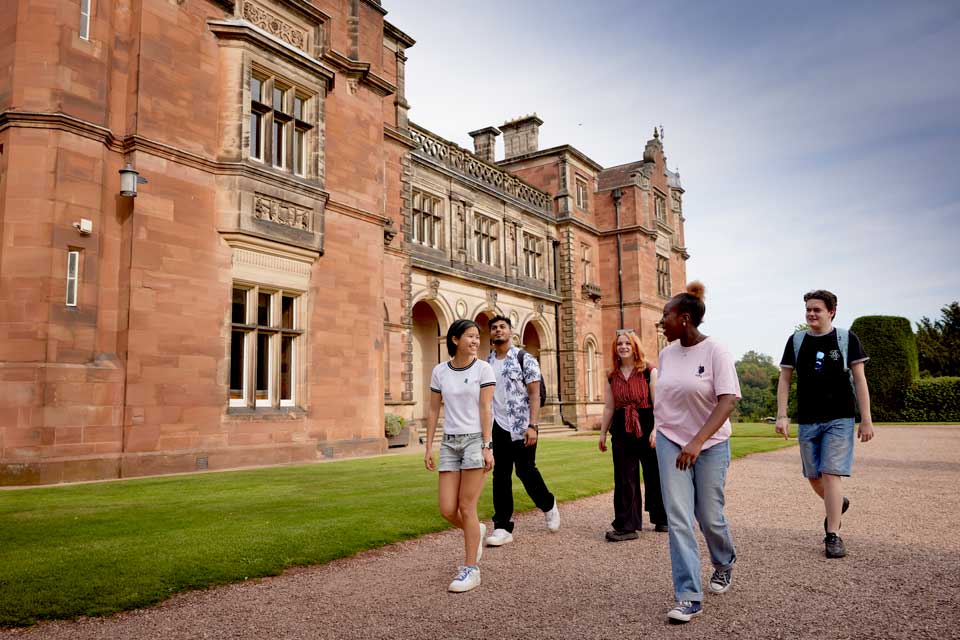
Student life at Keele is vibrant, diverse, and packed with opportunities to make the most of your time at university.

We help students manage their money and ensure that they receive any funding for which they may be eligible.

Make yourself more employable after graduation by taking advantage of the whole host of additional opportunities.