


Year of entry
- 2027
UCAS code
- C701
Duration of study
- 3 years or 4 years with international or placement year
Biochemistry - BSc (Hons)
Course summary
From unlocking the secrets of the human genome to the individually tailored molecular therapies of the future, our accredited Biochemistry BSc investigates some of the most exciting areas of 21st century life science and medical research. With access to our state-of-the-art David Attenborough laboratories, integrated employability modules and authentic assessments, you will graduate with the knowledge and skills to contribute to advances in medicine, veterinary medicine, agriculture, and biotechnology.
Why study Biochemistry at Keele University?
 This programme is accredited by the Royal Society of Biology
Develop hands-on practical skills in our state-of-the-art David Attenborough Laboratories
Access a wide range of final year research project choices
Our innovative and authentic assessments are designed to foster creativity and develop a diverse range of key skills and attributes
Benefit from a comprehensive programme of academic and professional development workshops to enhance your employability skills
This programme is accredited by the Royal Society of Biology
Develop hands-on practical skills in our state-of-the-art David Attenborough Laboratories
Access a wide range of final year research project choices
Our innovative and authentic assessments are designed to foster creativity and develop a diverse range of key skills and attributes
Benefit from a comprehensive programme of academic and professional development workshops to enhance your employability skills

Course overview
A core laboratory programme runs throughout our biochemistry degree. You will apply your knowledge in our state-of-the-art David Attenborough Laboratories and develop key skills in diverse biochemical and molecular biology techniques. Delving deep into the intricate world of human and mammalian biochemistry, you will explore how this is advancing our understanding and treatment of conditions like diabetes, cancer, and infectious diseases.
The first year of your Biochemistry degree is designed to equip you with a broad and varied grounding in modern biochemistry. You will explore the structure and function of biological molecules, core chemical concepts and their application to the biological sciences, human physiology and anatomy, and molecular cell biology.
Building on this foundation, you will continue to expand your skillset by examining the application of biochemistry to topics such as modern drug discovery and tackling wider environmental and societal issues. In your final year you can choose from a wide variety of optional modules in areas of
cutting-edge bioscience research. You will also have the opportunity to unleash your creativity by undertaking a substantial piece of meaningful research on a topic that excites and challenges you. Your research project is an excellent opportunity for you to draw together skills in experimental study design, critical interpretation of data, presentation and project management.
A key feature of this course is our structured programme of academic and professional development workshops. From core practical laboratory skills to interview techniques and aspirational career talks from invited speakers, we will provide you with the tools, skills and connections to develop a strong foundation of employability skills for your future career.
Accreditation and professional recognition

This course is accredited by the Royal Society of Biology for the purpose of meeting in part the academic and experience requirement for the Membership and Chartered Biologist (CBiol).
Accredited degree programmes contain a solid academic foundation in biological knowledge and key skills, and prepare graduates to address the needs of employers. The accreditation criteria require evidence that graduates from accredited programmes meet defined sets of learning outcomes, including subject knowledge, technical ability and transferable skills.

Course structure
Modules for Biochemistry
Our courses are designed to develop the skills, experience and expertise you'll need to succeed in your chosen career, informed by the latest research, teaching methods, student feedback, and employer insights. Module details are representative of what we intend to deliver on the course, but may change to reflect best practice and academic development. This information should therefore not be considered a definitive list of available modules.
Compulsory modules
Molecules of Life
This module will introduce you to fundamental concepts in our understanding of the structure and function of biological molecules, from the three-dimensional structure of proteins and the activity of enzymes to the progress and organisation of major metabolic pathways, which you will build on across the course. You will also develop key skills in data analysis, presentation and communication where you will report the outcomes of laboratory investigations, applying theoretical knowledge from the module.
Molecular Principles and Applications of Biochemistry
Building on your knowledge of biological pathways and processes from other modules, you will explore how concepts from the chemical and analytical sciences are applied in the study of biochemistry. Through student-led, case-based learning tutorials, you will also investigate real-life applications of biochemistry, including the diagnosis and treatment of disease, developing teamwork and leadership skills. You will further develop skills in data analysis and communication, drawing together key skills and theoretical concepts from across the course.
Human Physiology and Anatomy
The module will introduce you to the major physiological systems and anatomical structures of the human organism, including the digestive, cardiovascular and endocrine systems. You will also explore how different pathologies can develop as a result of dysfunction in these systems and their impact. Through group-based activities you will produce content on select module topics, developing key skills in teamwork and leadership, and in communicating to different audiences.
Molecular Cell Biology
This module introduces you to the fundamentals of molecular cell biology. You will explore how genetic information is stored, replicated and processed; the roles played by nucleic acids in the production of proteins; how proteins get to their final locations within cells and how cells interact with each other and communicate to co-ordinate their activities. You will also develop key skills in the presentation and communication of information in various formats.
Practical and Academic Skills in Bioscience
In this module you will develop a range of core practical laboratory skills, applying theoretical concepts from across your programme and deepening your understanding of the subject through hypothesis-driven practical investigation. Additional workshops support your development of wider academic skills, including effective study practice, data analysis and communication. Aspirational career talks from invited speakers, including former graduates, and further employability skills workshops will support you in reflecting on your key skills development and career-planning.
Compulsory modules
Applications of Molecular Biology
In this module, you will explore how we can study and manipulate genetic material, from sequencing technologies to gene cloning and genetic engineering. You will learn how these techniques can be used to study the structure and function of single genes and proteins, design and engineer DNA molecules and produce novel gene products such as therapeutics. Through tutorials and workshops, you will develop skills in introductory bioinformatic tools, whilst also considering some important ethical principles, developing key reasoning and analytical skills.
Molecular, Cellular and Structural Immunology
This module explores the human immune system. This includes addressing the generation and selection of the immune repertoire, the cellular basis of the immune system and an exploration of functional insights into immune protein structure and pathogen structure, including viruses and bacteria. You will further develop key skills in the application and analysis of data from antibody-based analytic techniques such as ELISAs and western blotting, and will explore how to access the PDB protein database.
Microbes, Viruses and Parasites
Here you will study the biology of bacteria, viruses and parasites, considering a range of pathogenic organisms and the diseases they cause. You will explore approaches to treatment and management of disease, ranging from development of novel antimicrobials to vaccination strategies, and the use of select viruses and microorganisms as research tools. Key skills in literature analysis and communicating to different audiences will be developed through the production of content on a select module topic.
Drug Design
The module will introduce the drug development pipeline from in-silico studies to clinical trials. You will apply knowledge of biological and chemical structures to explore principles of pharmacokinetics and pharmacodynamics in modern drug discovery. Specific examples of biological targets and drug molecules will be discussed, where you will develop higher-level skills in accessing and manipulating structural information for ligand-target interactions. You will also further develop teamwork and communication skills, including to non-specialist audiences.
Metabolism in Health and Disease
This module will build on your knowledge of major metabolic pathways with a focus on the integration and regulation of metabolism in healthy nutritional states and disease. You will explore key aspects of metabolic control and some of the changes in metabolic activity that are associated with inherited and acquired disorders. You will further develop key skills in literature analysis and hypothesis-driven study design and communicate outcomes to a scientific audience.
Cell Signalling
This module introduces you to the signalling pathways that regulate multiple cellular processes by acting through sensors to stimulate molecules responsible for controlling different important cellular processes. You will explore these signalling pathways and provides details on their molecular components and their mode of action. The module also places an emphasis on independent study and further develops skills in the acquisition, analysis and written communication of scientific information.
Research and Analytical Skills
This module brings together skills of experimental design and data analysis which are a vital step in the process of scientific research. In this module you will explore the different forms of scientific experimental design that you may encounter in your final year experimental projects. The data analysis skills you will hone will be essential in your final year and onwards into postgraduate study or employment in a data-driven world.
Practical and Professional Skills in Bioscience
This module will expand your practical skills through enquiry-based, hypothesis-driven laboratory investigations applying key skills and competencies to more advanced molecular and analytical techniques. Through additional workshops, you will develop higher-level skills in the acquisition and analysis of information from online sources, including journal databases and generative AI. Further sessions will also support you in evaluating your career readiness with employability skills-focused workshops in areas including CV writing and interview technique.
Optional modules
Human Genetics
In this module, you will look at some of the applications of key genetic concepts at the level of the individual and the population. Focusing mainly on medical genetics, you’ll learn how a person's genetic make-up can affect their health and how to estimate genetic risk and explore some of the applications of molecular genetics in the study of, diagnosis of and treatment of genetic diseases. You will develop group working and communication skills as your progress through the teaching and learning on the module.
Molecular Ecology and Plant Genetics
Advances in molecular biology, analysis and sharing of genomic data have important applications in the plant, ecological and conservation sciences. You will study how genetic and genomic tools, both in the lab and at the desktop, are being used to enhance our understanding of plant biology and ecological processes. The module will help you to think in a ‘genes to ecosystems’ framework and prepare you for careers in a big data post-genomic world.
Flexible Work Placement (Level 5)
In a competitive job market, practical skills and understanding workplace dynamics are crucial. This module allows you to gain hands-on experience, enhancing your employability, and the opportunity to gain valuable professional insights via a 75-hour placement. You will be supported by various activities to secure a role and can source your own placement or apply to university-sourced roles. This module offers flexibility on when and how you complete your placement, enabling you to balance your placement around existing demands.
Compulsory modules
Research Project
Your research project is an excellent opportunity for you to carry out a substantial piece of meaningful research drawing together skills in experimental study design, critical interpretation of data and presentation. You can choose from a range of projects, depending on your interests/career ambitions, including lab- or field-based research, systematic reviews, bioinformatics, teaching and learning, or outreach. In addition to a project report, you will also present outcomes as an oral presentation and research poster at our UG student conference.
Employability and Communication Skills in Bioscience
Whatever your interests or future career, communication is vital. This module helps to develop skillsets needed to communicate effectively to diverse audiences. We explore a range of communication methods to present and disseminate findings to inform and enthuse both a scientific and lay audience. We aim to develop a suite of valuable transferrable skills for the employment market and ensure those who truly understand scientific issues are heard.
Case Studies in Biotechnology
In this module, you will explore some of the applications of biotechnology to address global issues. Guided by seminars and case studies, you will tailor your research to your own interests, picking an overarching theme and selecting papers from the primary literature showcasing biotechnology. You will develop scientific writing skills to introduce your theme, summarise the chosen papers and justify why you think they are important with a focus on communication skills and demonstration of critical insight into contemporary biotechnology approaches.
Medical Glycobiology
In this module, you will investigate the structure, biosynthesis, and biochemistry of medically important carbohydrates and their clinical relevance, including novel carbohydrate-based therapeutics for select pathological conditions, which may include cancer, Alzheimer's, and malaria. You will also explore the emerging field of glycomics with relevance to future roles in diagnostics. You will further develop skills in the critical analysis and communication of research data, evidencing a broad set of communication and analytical skills.
Professional Development in Bioscience
This module will develop your professional skills, attributes and qualities required for your next steps following graduation. You will have the opportunity to practice interview techniques and presentation skills to support your covering letters, personal statements and CV. You will explore online opportunities and the employment marketplace, building your social media profile to evidence your skills and attributes. Throughout the module, you will also consider the impact of discrimination and unconscious bias, and develop strategies to support resilience and wellbeing.
Optional modules
Structural Immunology
Detailed three-dimensional structural information at the atomic level of proteins, enzymes and viruses, and their targets, underpins advances in biotechnology, biology, and biomedicine, and their impact on the quality of life, the economy, medicine, and health care. We will explore how this structural information of molecular mechanisms central to immune responses and disease can be used to provide insights into how we resist, fight, and recover from infection and disease, and to intervene in or enhance these processes.
Human Parasitology
In this module, you will explore the theoretical and practical aspects of parasitic diseases of humans, considering such topics as the life cycle of select parasites between vector and host, the pathogenesis of parasitic infection and their diagnosis and treatment. You will also investigate challenges to effective treatment and transmission control, including socio-economic and cultural factors. Through evaluation of current research in the subject, you will develop higher-level skills in the critical analysis and interpretation of data.
Omics Technologies
You be will introduced to a range of cutting-edge omics approaches used extensively across the life sciences. Through hands-on data handling exercises you will develop a theoretical appreciation of and practical competence in core genomics, proteomics and metabolomics approaches. You will undertake a whole transcriptome analysis for the purpose of differential gene expression detection from raw RNA sequencing data, developing and demonstrating competence in a highly sought after analytical skill.
Cancer Biology
This module will introduce you to the field of cancer biology, exploring the molecular and cellular hallmarks of cancer, and how the understanding of these is beginning to inform novel therapeutic development. You will investigate the latest developments in basic cancer research in understanding changes in cellular activity associated with cancer development and progression, and the diagnostic and therapeutic potential of this. Key skills developed include the location, evaluation and comparative analysis of published scientific literature.
Epidemiology
Epidemiology is concerned with the study of disease development and prevention within populations. Here, you will develop knowledge and understanding of epidemiological study design and data interpretation, exploring the scientific procedures of public health research, policies, program implementation and evaluation. You will develop skills in the design and conduct of epidemiological research, developing data collection tools, and interpreting epidemiological findings used in public health, including of relevance to outbreak investigations.
Tropical Biology Field Course
This module allows you to explore the vibrant world of tropical ecology first-hand and join an exciting opportunity to explore firsthand the challenges facing tropical ecosystems and how humanity impacts them. You will learn from leading experts about the critical role of biodiversity in these lush environments. Experience international travel and immerse yourself in diverse cultures. Hosted by the University of Sains Malaysia (USM), this field course, which comes at an additional cost to be confirmed each year, promises cutting-edge knowledge in tropical ecology and conservation.
Flexible Work Placement and Professional Training (Level 6)
In a competitive job market, practical skills and understanding workplace dynamics are crucial. This module allows you to gain hands-on experience, enhance your employability skills, and provide valuable insights into the professional world. You will be supported via a range of activities to secure a role and can source your own placement or apply to university-sourced roles. This module has built-in flexibility on when and how you complete your placement, enabling you to balance your placement around existing demands.
Work Placement and Professional Training in Education
This module gives students interested in pursuing teaching or training as a career the opportunity to gain experience in the world of teaching in schools and colleges. You will develop skills highly valued by employers such as communication, and interpersonal skills, whilst learning to address individual needs and developing engaging teaching materials. You will be supported via a range of activities to prepare for your placement and have the choice to source your own placement or apply to university sourced roles.
You can view the Programme Specification for this course by visiting the Programme Specifications webpage. (opens in new tab)
Double Gold in the Teaching Excellence Framework
Keele is one of only 15 broad-based universities in England - out of over 100 - to have been awarded Gold in both the 2017 and 2023 Teaching Excellence Framework (TEF) exercises, demonstrating our consistent teaching excellence.
Additional opportunities
 Foundation year
 Learn a language
 Placement year
 International year
 Study abroad
 GCP Elective Pathways
Explore more
(opens in a new tab)
GCP Elective Pathways
Explore more
(opens in a new tab)
There are a range of additional opportunities for this course.
Please note that undertaking one may impact the availability of another.
Work placements
In an increasingly competitive job market, employers are seeking to recruit individuals who have high-level knowledge, skills and an understanding of the workplace. Choosing a work placement year between your second and third year, is a fantastic way to gain industry experience. It can provide a valuable insight into what working in a specific area of business is like, gives you the chance to familiarise yourself with the professional working environment and develop professional networks, and provides the opportunity to apply the theory you’ve learnt on your degree course.
If you don't think you can commit to a full year on placement, our Work Placement and Professional Training module has built-in flexibility on when and how you complete your placement, enabling you to balance your time in industry around existing demands.
We also offer work placements based in schools and colleges, specifically for students interested in entering the teaching profession.
Secondments
Our secondments are shorter work-based placements that usually take place over the summer in between Level 5 and 6 and usually last between 2-8 weeks. They can be based locally in one of our research labs here at Keele, nationally or internationally.
For example, often some our students will travel to Malaysia for 3 months to work with our partner Universiti Sains Malaysia.
International Year and Study abroad
In between years two and three of your studies you can choose to spend time studying abroad. This exciting opportunity enables you to understand your field from different cultural perspectives and to establish international networks. We offer exchange opportunities with a wide variety of partner institutions.
Tropical Biology Field Course
Our tropical biology field course in Malaysia, is an optional module with additional costs, taking place in the summer between years two and three. This is an exceptional chance to hone your fieldwork skills in tropical habitats.
Operation Wallacea
Operation Wallacea is a private company that supports a wide range of student projects with a particular focus on biodiversity and climate research. As well as conservation volunteering overseas, you can use your time to gather data for your undergraduate dissertation. This expedition has an additional cost.

Entry requirements
These are the typical entry requirements for this course for a range of UK and international qualifications. If your qualifications aren't listed, please contact us to check if we can accept them. If you don't think you'll meet the stated requirements, you may be able to access this course via a Foundation Year.
Typical offer
Please ensure you read the full entry requirements by selecting your qualifications from the menu below. This will include any subject specific, GCSE/Level 2 Maths, and/or English language requirements.
Please select your qualification from the drop-down list below for the full entry requirement information
A Level
ABB in three A Levels including B in Chemistry and B in one other Science subject from the Keele Defined Sciences List.
Contextual Offer: BBC in three A Levels including B in Chemistry and B in one other Science subject from the Keele Defined Sciences List.
You will also need: 4 / C in GCSE Maths or Level 2 Functional Skills Maths, plus an English language qualification (see below).
Access to HE Diploma
128 UCAS points in an acceptable Science Access to HE including Distinction in at least 30 Level 3 credits and Merit in at least 15 Level 3 credits.
You will also need: 4 / C in GCSE Maths or Level 2 Functional Skills Maths, plus an English language qualification (see below).
Algeria
The Baccalauréat de l’Enseignement Secondaire with an overall grade of 17/20, and 16/20 in Chemistry and one other Science subject from the Keele Defined Sciences List
OR
Brevet de Technicien Supérieur with an overall grade of 13/20, and 13/20 in Chemistry and one other Science subject from the Keele Defined Sciences List.
You will also need: an English language qualification (see below).
Bangladesh
BTEC Extended Diploma / National Extended Diploma
DDM in any of the following BTEC Extended Diplomas / National Extended Diplomas: Applied Science, including completion of three out of four of the following units: Applications of Organic Chemistry, Applications of Inorganic Chemistry, Industrial Chemical Analysis, Practical Chemical Analysis.
Contextual Offer: DMM in any of the following BTEC Extended Diplomas / National Extended Diplomas: Applied Science, including completion of three out of four of the following units: Applications of Organic Chemistry, Applications of Inorganic Chemistry, Industrial Chemical Analysis, Practical Chemical Analysis.
You will also need: 4 / C in GCSE Maths or Level 2 Functional Skills Maths, plus an English language qualification (see below).
BTEC National Diploma / Diploma
Distinction and Merit in any BTEC National Diploma / Diploma and B in Chemistry A Level, or Distinction and Merit in Applied Science BTEC National Diploma / Diploma including completion of three out of four of the following units: Applications of Organic Chemistry, Applications of Inorganic Chemistry, Industrial Chemical Analysis, Practical Chemical Analysis, and A in any A Level.
You will also need: 4 / C in GCSE Maths or Level 2 Functional Skills Maths, plus an English language qualification (see below).
BTEC National Extended Certificate / Subsidiary Diploma
Distinction in any BTEC National Extended Certificate / Subsidiary Diploma and BB in two A Levels including B in Chemistry and B in one other Science subject from the Keele Defined Sciences List, or Distinction in Applied Science BTEC National Extended Certificate / Subsidiary Diploma and BB in two A Levels including B in Chemistry.
You will also need: 4 / C in GCSE Maths or Level 2 Functional Skills Maths, plus an English language qualification (see below).
Canada - Diploma
70% / BBBBC in five courses in the Grade 12 Diploma including 70% in Chemistry and 70% in Advanced Functions, Biology, Calculus and Vectors, Computer Science, Maths of Data Management or Physics.
You will also need: 50% in Grade 11 Maths, plus an English language qualification (see below).
China - Gaokao
72% in the Gaokao including 69% in Chemistry.
You will also need: 60% in Senior Secondary School or Gaokao Maths, plus an English language qualification (see below).
Core Maths
If you have B or higher in Core Maths and are studying A Levels, BTEC, the International Baccalaureate, or an Access to HE Diploma, you will typically receive an alternative offer which will be lower than the standard offer. Please see 'Alternative and contextual offers' below.
Cyprus - Apolytirion
18.5 / 88% in the Apolytirion including 18 in Chemistry and 18 in Biology, Computer Science, Design and Technology, Information Technology, Geography, Maths, Physical Education or Physics.
You will also need: 14 in Maths in the Apolytirion, plus an English language qualification (see below).
Egypt
European Baccalaureate
75% overall with 7 in Chemistry and 7 in Maths (3 or 5 period), Physical Education, Biology (2 or 4 period), Geography (2 or 4 period), or Physics.
You will also need: 6 in European Baccalaureate Maths, plus an English language qualification (see below).
Extended Project Qualification (EPQ)
If you have B or higher in the EPQ and are studying A Levels, BTEC, the International Baccalaureate Diploma, or an Access to HE Diploma, you will typically receive an alternative offer which will be lower than the standard offer. Please see 'Alternative and contextual offers' below.
France - Baccalaureate
14 in the French Baccalaureate/International Option Baccalaureate with 13 in Chemistry / Physics and 13 in Maths, Science, Sport, Engineering Sciences, Life and Earth Sciences or Information Technology, or 13 in the Baccalauréat Français International with 13 in Chemistry / Physics and 13 in Maths, Science, Sport, Engineering Sciences, Life and Earth Sciences or Information Technology.
You will also need: 10 in Maths in the Baccalaureate, plus an English language qualification (see below).
Germany - Abitur
2.0 overall average in the Abitur including 12 in Chemistry and 12 in Geography, Psychology, Maths, Physics, Biology, Computer Science, Technology, Nutritional Science or Sports.
You will also need: 10 in Maths in the Abitur, plus an English language qualification (see below).
Ghana
We do not accept the West African Senior School Certificate Examination for direct entry. However, you can apply to study an International Foundation Year at Keele University International College. On successful completion, you can progress to an undergraduate degree at Keele.
Hong Kong - Diploma
544 from two electives and one core subject in the HKDSE including 4 in Chemistry and 4 in Maths (Core), Physics, Biology, Geography, Design and Applied Technology, ICT or Physical Education.
You will also need: 2 in HKDSE Maths (Core), plus an English language qualification (see below).
India - Standard XII
Average of 75% from four subjects including 70% in Chemistry in the ICSE, CBSE or Western Bengal Standard XII, or average of 80% from four subjects including 75% in Chemistry in any other Standard XII.
You will also need: 6 or C2 in Secondary School Examination Maths, or Pass in Standard XII Maths, plus an English language qualification (see below).
International Baccalaureate Career-Related Programme
We encourage applications with the IBCP but recognise that your combination of qualifications may differ depending on where you are studying.
If you are taking a BTEC National Diploma / Diploma with one or more Higher Levels, your offer will be similar to our BTEC + A Level offer (see 'BTEC National Diploma / Diploma') but with an HL requirement of 6 for A, 5 for B, or 4 for C.
For any other combination, please contact the University Admissions Team for advice.
International Baccalaureate Diploma
655 in three Higher Levels including 5 in Chemistry and in one other Science subject from the Keele Defined Sciences List at Higher Level, or 32 points including 5 in Higher Level Chemistry and 5 in one other Higher Level Science subject from the Keele Defined Sciences List.
Contextual Offer: 554 in three Higher Levels including 5 in Chemistry and 5 in one other Science subject from the Keele Defined Sciences List at Higher Level, or 29 points including 5 in Higher Level Chemistry and 5 in one other Higher Level Science subject from the Keele Defined Sciences List.
You will also need: 4 / C in GCSE Maths or Level 2 Functional Skills Maths, or 3 in IB Middle Years Maths, or 2 in IB Diploma Standard Level Maths (any), plus an English language qualification (see below).
Ireland - Leaving Certificate
H3, H3, H3, H4, H4, H4 in the Irish Leaving Certificate including H4 in Chemistry or Physics and Chemistry (combined) and H4 in one other subject from the Science or Applied Science Groups.
You will also need: O4 / H6 in Maths, plus an English language qualification (see below).
Italy - Diploma di Esame di Stato
85% in the Esame di Stato including 8 in Chemistry and 8 in Maths, Physics, Natural Science, Geography, Physical Education, or ICT.
You will also need: 5 in Maths in the Diploma, plus an English language qualification (see below).
Kenya - KCSE / Diploma
We do not accept the Kenya Certificate of Secondary Education for direct entry. However, you can apply to study an International Foundation Year at Keele University International College. On successful completion, you can progress to an undergraduate degree at Keele.
We may accept a two year Diploma. Please contact the University Admissions Team for advice.
Malaysia - STPM
ABB in three Principal Level subjects in the STPM including B in Chemistry and B in Maths, ICT, Physics, Biology, Geography, or Sports Science.
You will also need: C in SPM Maths, plus an English language qualification (see below).
NCUK
Pass NCUK Foundation Year with ABB including B in Chemistry and B in one other Science subject from the Keele Defined Sciences List. Grade C in EAP English Language module.
You will also need: 4 / C in GCSE Maths or international equivalent.
Nepal
80% in the Higher Secondary Certificate (HSSC) (from 2018 onwards) to include 75% in Chemistry and one other Science subject from the Keele Defined Sciences List.
Nigeria - Senior School Certificate / OND
We do not accept the Senior School Certificate (WAEC or NECO) for direct entry. However, you can apply to study an International Foundation Year at Keele University International College. On successful completion, you can progress to an undergraduate degree at Keele.
We may accept an Ordinary National Diploma with GPA of 2.5 or a Merit / Lower Credit. Please contact the University Admissions Team for advice.
Pakistan - Secondary School Certificate
We do not accept the Secondary School Certificate for direct entry. However, you can apply to study an International Foundation Year at Keele University International College. On successful completion, you can progress to an undergraduate degree at Keele.
Portugal
Overall average of 16 in a Secondary Certificate including 16 in Chemistry and 16 in Maths, Biology, Physics, Geology, Geography, Computer Applications, Psychology, Physical Education.
You will also need: 10 in Secondary Certificate Maths, plus an English language qualification (see below).
Scotland - Highers and Advanced Highers
BBBBC in five Highers including Chemistry Higher, or BC in two Advanced Highers and CC in two Highers including Chemistry Higher or Advanced Higher, or BCC in three Advanced Highers including Chemistry Advanced Higher.
You will also need: C in National 5 Maths, or 4 / C in GCSE Maths or Level 2 Functional Skills Maths, plus an English language qualification (see below).
Singapore - A Levels (H2)
ABB in three H2 levels including B in Chemistry and B in Biology, Physics, Computing, Maths, Further Maths or Geography.
You will also need: C in O-level Maths, plus an English language qualification (see below).
South Africa - Matric (NSC and IEB)
76666 in five subjects including 6 in Physical Science and 6 in two of Maths, Maths Literacy, Technical Maths, Agricultural Sciences, Agricultural Technology Civil Technology, Computer Applications Technology, Geography, Information Technology, Life Sciences, or Mechanical Technology.
You will also need: 4 in NSC Maths, plus an English language qualification (see below).
Spain - Bachillerato
Sri Lanka - Advanced Level
ABB in three Advanced Levels including B in Chemistry and B in Combined Maths, Physics, ICT, Biology or Agricultural Science.
You will also need: C in O-level Maths, plus an English language qualification (see below).
T Level
Distinction in any of the following T levels: Science, with specialism in Laboratory Sciences.
You will also need: 4 / C in GCSE Maths or Level 2 Functional Skills Maths, plus an English language qualification (see below).
Turkey
Uganda - Advanced Certificate of Education
ABB in three Principal Level subjects in the Advanced Certificate of Education including B in Chemistry and B in Maths, Physics, Biology, or Geography.
You will also need: 6 in UACE or UCE Maths, plus an English language qualification (see below).
USA - Advanced Placement
ABB = three AP test scores of 544
OR
2 AP test scores PLUS on of the following:
SAT I: 1290 (min 650 RW, 620 M)
ACT: 28
Honours course at B+
One year long equivalent Dual Enrolment/College course at A.
We can accept:
An AP score of 4 in Chemistry/one other science
An ACT score of 27 in Chemistry/one other science
You will also need: an English language qualification (see below)
USA Non-AP Curriculum
ABB = Achieved overall GPA of 3.7 with three honours at B+,B+,B+
OR
2 honours course and overall GPA of 3.7 PLUS one additional qualification:
SAT I: 1390 (min 720 RW, 650 M)
ACT: 30
One year-long equivalent Dual Enrolment/College course at A.
We can accept:
An ACT score of 27 in Chemistry/one other science
Dual Enrolment/College course at A in Chemistry/one other science
You will also need: an English language qualification (see below)
Welsh Baccalaureate / Bagloriaeth Cymru
The Advanced Skills Baccalaureate Wales is equivalent to one full A Level at the same grade and can be included alongside 2 other A Levels in a standard A Level offer for this course (see A Level). All subject specific requirements will still need to be met.
Zimbabwe - ZIMSEC A level
ABB in three ZIMSEC A Level subjects including B in Chemistry and B in Additional Maths, Agriculture, Animal Science, Biology, Building Technology, Computer Science, Crop Science, Food Technology and Design, Geography, Horticulture, Mechanical Maths, Metal Technology and Design, Physics, Pure Mathematics, Sport Science and Technology, Statistics, or Technical Graphics and Design.
You will also need: 4 / C in GCSE Maths or Level 2 Functional Skills Maths, plus an English language qualification (see below).
English language requirements
All our courses require an English language qualification or test. Most students meet this through a 4 or C in GCSE English. Please visit our English Language pages for details, including test information for international students. For students who require a test, this course requires a result from Group A.
Alternative and contextual offers
We're committed to ensuring equality of opportunity for applicants with the potential and motivation to succeed, regardless of background. We offer alternative offer schemes with clear eligibility criteria, including contextual offers, offers for those studying in the Keele region, and recognition of a range of additional qualifications.
General information
The entry grades outlined indicate the typical offer, along with any subject specific requirements. This is for general information only. Keele University reserves the right to vary conditions based upon a candidate's application. For international students, find out how we work with approved agents as part of our admissions process.
Social life, societies and sports
Find out moreAccommodation
Find out moreLocal area and travel
Find out moreBoost your employability
Find out more



Fees and funding
Tuition fees for 2027/28 2026/27 academic year
- The tuition fee for UK Home students starting in 2027/282026/27 is set by the UK Government and will be £10,050£9,790.
- International: Band 1, £18,200 for the 2026/27 academic year
International fees for 2027/28 entry have not yet been confirmed. We review all tuition fees annually and will update this page once they are finalised.
In subsequent years of your course, UK Home fees may change in line with government policy or legislative requirements. For continuing international students, fees will increase each year in line with RPI, capped at a maximum of 5% per year.
For details of our international fee bands visit our Undergraduate tuition fees page.
Financial support
Going to university can be daunting as well as exciting. It's important to understand the costs and financial support available.
Our Student Financial Support team offers confidential advice and guidance to help you manage your money, resolve issues with Student Finance, create a budget, explore your options if you're facing financial hardship, and access any funding you are eligible for, such as bursaries and scholarships.
For more information visit our undergraduate fees and funding pages.
Additional costs
The additional costs listed below apply to the 2026/27 academic year. Costs for 2027/28 entry will be confirmed closer to the time, so the information below should be used as a guide only.
Optional costs
There may be optional costs that students can choose to incur to enhance their learning experience. These are not required to complete the course. Details of these optional costs are outlined below to help you plan accordingly.
Students may also incur general expenses related to university study, such as for printing, textbooks and other materials. Students who undertake a placement may be responsible for additional costs, such as travel, accommodation, and subsistence costs. For further information, please refer to the additional costs information.
- Optional Field Course at USM, Malaysia: £1200 travel and accommodation costs, plus £35 per day (14 days) subsistence costs
- Suitable clothing and other items to support field activities: £180
- Optional 3 month research experience at USM, Malaysia: covered by Turing funding
- A lab coat will be provided to all students free of charge upon enrolment. Replacement lab coats will be at the student's expense (£10)


Your future career
You will graduate with key transferable and employability skills related to the critical evaluation of scientific literature, data analysis and interpretation, including computational and bioinformatics tools. Our diverse laboratory programme will also develop your skills in a wide range of modern preparative and analytical biochemical techniques. You will acquire competency in core molecular and microbiology techniques, including PCR and gene cloning, as well as research and diagnostic methods utilising antibodies. These skills will prepare you for a career in a range of roles in the science, education and health sectors. You may also wish to further your knowledge by progressing to postgraduate study.
Careers and routes directly related to this degree include:
- Analytical chemist
- Forensic scientist
- Pharmacologist
- Physician associate
- Postgraduate study
- Research and development
- Science teacher
- Toxicologist
Enhance your employability
Keele’s Careers and Employability team (Shortlisted for Best University Careers Employment Service - National Undergraduate Employability Awards, 2021), offer a variety of personal and career development opportunities to enhance your employability. From mock interviews, careers guidance and CV advice, to careers fairs, alumni mentoring and networking events, along with helping you find part-time and graduate employment - the team will support you throughout your studies and beyond.
Find out more about our careers and employability services, including career planning, alumni mentoring, jobs, internships, starting your own business and much more.

Teaching, learning and assessment
Teaching
Diversity, flexibility and inclusivity is at the heart of our Education Strategy, with the programme structured around a range of teaching approaches. In-person lectures and tutorials are supported by digital resources, with many materials specifically designed for online consumption. This approach will provide you with greater flexibility in how, when and where you study.
Methods of teaching include:
- Campus based tutorials and workshops
- Case based learning is based on case studies that help you contextualise content taught across modules
- Digital resources such as short videos and directed reading
- Final Year Research Project
- Independent study
- Laboratory practicals
- Live, online tutorials, workshops and drop-in sessions
Assessment
From designing and marketing a commercial assay kit to creating patient information leaflets - the assessment methods utilised within our programme aim to give you experience of work-related activities you will likely undertake in graduate roles.
Methods of assessment include:
- Blogs
- Campus-based tutorials and workshops
- Case based learning
- Essays
- Final year independent research project
- Journal entries
- Laboratory reports
- Literature reviews
- Open book exams
- Oral presentations
- Patient information leaflets
- Portfolio or literature reviews
- Research projects
- Scientific posters
- Time-limited tests and exams to assess core knowledge
- User guides for commercial assay kits
Academic expertise
The teaching team at the School of Life Sciences are active researchers in core areas such as biosciences, geosciences, environmental sciences, geography and bioengineering. Their academic expertise informs your learning, incorporating current practices, theories and contemporary themes that encourage discussion within your subject area.
The teaching team consists of professors, readers, senior lecturers, lecturers, demonstrators, and teaching fellows.
Professional support staff are also available to assist with any queries you may have during your undergraduate studies at Keele.
The teaching team at the School of Engineering and Physical Sciences perform research across the school with particular strengths in materials science, synthetic, forensic and analytical chemistry. Their academic expertise informs your learning, incorporating current practices, theories and contemporary themes that encourage discussion within your subject area.
Professional support staff are also available to assist with any queries you may have during your undergraduate studies at Keele.
The teaching team consists of professors, senior lecturers, and lecturers within the School of Engineering and Physical Sciences. They are fellows or senior fellows of the Higher Education Academy, the professional body for teachers in higher education. Fellowship provides individuals with recognition of their practice, impact and leadership of teaching and learning. A number of our academic staff have also achieved national recognition for their excellence and innovation in teaching and hold awards from a variety of institutions, including the Royal Society of Chemistry and AdvanceHE.
The teaching team in the School of Humanities and Social Sciences are active researchers in core areas of Criminology and Sociology such as fields of crime, globalisation and urban spaces and cultures. Their academic expertise informs your learning, incorporating current practices, theories and contemporary themes that encourage discussion within your subject area.
Professional support staff are also available to assist with any queries you may have during your undergraduate studies at Keele.
The teaching team consists of professors, senior lecturers, lecturers and graduate teaching assistants.
The teaching team in the School of Humanities and Social Sciences are active researchers in core areas of Education such as critical social policy and feminism. Their academic expertise informs your learning, incorporating current practices, theories and contemporary themes that encourage discussion within your subject area.
Professional support staff are also available to assist with any queries you may have during your undergraduate studies at Keele.
The teaching team consists of senior lecturers and lecturers.
The teaching team in the School of Engineering and Physical Sciences are active researchers in core areas such as materials, sustainability, and energy. Their academic expertise informs your learning by incorporating current practices, theories, and contemporary themes that encourage discussion within your subject area.
Professional support staff are also available to assist with any queries you may have during your undergraduate studies at Keele University.
The teaching team consists of professors, senior lecturers and lecturers.
The teaching team in the School of Humanities and Social Sciences are active researchers in core areas of English and Creative Writing. Their academic expertise informs your learning, incorporating current practices, theories and contemporary themes that encourage discussion within your subject area.
Professional support staff are also available to assist with any queries you may have during your undergraduate studies at Keele.
The teaching team consists of professors, readers, senior lecturers, lecturers, and graduate teaching assistants.
The teaching team in the School of Humanities and Social Sciences are active researchers in core areas such as twentieth century and contemporary music, cultural politics, social movements and representation. Their academic expertise informs your learning, incorporating current practices, theories and contemporary themes that encourage discussion within your subject area.
Professional support staff are also available to assist with any queries you may have during your undergraduate studies at Keele.
The teaching team consists of professors, readers, senior lecturers, and lecturers.
The teaching team at the School of Engineering and Physical Sciences provide research-led quality teaching, particularly in the fields of forensic chemistry, forensic biology, crime investigations, forensic search and forensic anthropology, taphonomy and archaeology.
Professional support staff are also available to assist with any queries you may have during your undergraduate studies at Keele.
Our teaching team consists of professors, senior lecturers, lecturers, demonstrators and PhD students.
The teaching team at the School of Life Sciences are active researchers in core areas such as biosciences, geosciences, environmental sciences, geography and bioengineering. Their academic expertise informs your learning, incorporating current practices, theories and contemporary themes that encourage discussion within your subject area.
The teaching team consists of professors, readers, senior lecturers, lecturers, demonstrators, and teaching fellows.
Professional support staff are also available to assist with any queries you may have during your undergraduate studies at Keele.
The teaching team in the School of Humanities and Social Sciences are active researchers in core areas of medieval, early modern, and modern history including expertise in historical inequality, democratisation and civil society. Their academic expertise informs your learning, incorporating current practices, theories and contemporary themes that encourage discussion within your subject area.
Professional support staff are also available to assist with any queries you may have during your undergraduate studies at Keele.
The teaching team consists of professors, readers, senior lecturers, lecturers and graduate teaching assistants.
The teaching team at the School of Medicine are either active researchers in core areas such as musculoskeletal health, mental health and well-being, biomedical science, prognosis and big data, or actively engaged with a diverse range of scholarly activities to enhance their roles as educators.
The teaching team consists of professors, readers, senior lecturers, lecturers, senior teaching fellows, teaching fellows, senior research fellows, research fellows, research associates, research assistants, anatomy technicians and PhD students. The School of Medicine teaching team also includes a wide range of health professionals who are actively engaged in clinical research and quality improvement including those based in hospitals and community-based services.
The academic team at the School of Nursing and Midwifery are active researchers in core areas such as loss, bereavement and end of life care; primary, community and district nursing; and women's health. Their academic expertise informs your learning, incorporating current practices, theories and contemporary themes that encourage discussion within your subject area.
Professional support staff are also available to assist with any queries you may have during your undergraduate studies at Keele.
The teaching team consists of readers, senior lecturers, lecturers, research associates and teaching fellows.
The teaching team at the School of Engineering and Physical Sciences perform research across the school with particular strengths in astrophysics, materials science, renewable energy and sustainability. Their academic expertise informs your learning, incorporating current practices, theories and contemporary themes that encourage discussion within your subject area.
Professional support staff are also available to assist with any queries you may have during your undergraduate studies at Keele.
Our teaching team consists of professors, senior lecturers, lecturers, readers, and PhD students.
The teaching team in the School of Humanities and Social Sciences are active researchers in areas including democracy, governance, public policy and idealism. Their academic expertise informs your learning, incorporating current practices, theories and contemporary themes that encourage discussion within your subject area.
Professional support staff are also available to assist with any queries you may have during your undergraduate studies at Keele.
The teaching team consists of professors, senior lecturers, lecturers and graduate teaching assistants in the School of Humanities and Social Sciences.
The teaching team within the Institute of Sport brings together expertise across sport, exercise, health and rehabilitation, reflecting the continuum of human performance and wellbeing across the lifespan. Our staff are actively engaged in research and applied practice spanning physical activity, performance, health and recovery, ensuring that teaching is informed by both scientific evidence and real-world application. As a CASES-accredited partner institution, and with staff holding individual CASES accreditation, the programme is underpinned by recognised professional standards in sport and exercise science.
Staff operate within an interdisciplinary environment, working alongside colleagues from across the Allied Health Professions within the School. This collaboration informs teaching and supports a broader, integrated understanding of health, physical activity and rehabilitation across diverse populations and contexts.
Collectively, this breadth of expertise shapes your learning experience, incorporating current practices, theories and contemporary themes that encourage discussion within your subject area.
Professional support staff are also available to assist with any queries you may have during your undergraduate studies at Keele. The School's teaching team consists of professors, senior lecturers and lecturers.
The teaching team at Keele Business School are active researchers in core areas such as accounting, finance, economics, human resource management, marketing, and management. Their academic expertise informs your learning, incorporating current practices, theories and contemporary themes that encourage discussion within your subject area.
Professional support staff are also available to assist with any queries you may have during your undergraduate studies at Keele.
Our teaching team consists of professors, senior lecturers, and lecturers within Keele Business School. The team is multicultural and multinational, bringing an international dimension to the school's teaching, research, and business engagement.
The teaching team within the School of Allied Health Professions and Pharmacy brings together a diverse community of academics and clinicians working across four interrelated themes: Pharmacy and Pharmaceutical Science, Medical Technologies, Allied Health Therapies, and Active Living and Sport.
Our staff include experts in the biological and clinical sciences, statistics, engineering, and professional practice, who contribute to both research and scholarly activity aligned to their disciplines. This breadth of expertise ensures that teaching is informed by current evidence, practice, and innovation, enabling you to engage with contemporary issues relevant to your chosen field.
The teaching team consists of professors, senior lecturers, lecturers, readers, visiting clinicians, and research fellows.
Our programmes are supported by experienced professional staff who help to ensure a high-quality student experience throughout your studies.
The teaching team at Keele Business School are active researchers in core areas such as accounting, finance, economics, human resource management, marketing, and management. Their academic expertise informs your learning, incorporating current practices, theories and contemporary themes that encourage discussion within your subject area.
Professional support staff are also available to assist with any queries you may have during your undergraduate studies at Keele.
Our teaching team consists of professors, senior lecturers, and lecturers within Keele Business School. The team is multicultural and multinational, bringing an international dimension to the school's teaching, research, and business engagement.
The School of Computer Science and Mathematics is home to active researchers working across a rich range of topics, from artificial intelligence, cyber security and human-centred computing to fluid and solid dynamics, biomechanics and pure mathematics. Whether developing responsible AI, designing smart health technologies, or advancing mathematical methods for waves, materials and structures, our research is wide-ranging and internationally recognised.
This will directly shape your learning. You'll encounter current ideas in AI and its ethical implications, cloud computing, evolutionary systems, usable security, mathematical modelling of materials and discrete mathematics, taught by the people actively advancing these fields.
The teaching team consists of professors, senior lecturers, lecturers, readers and visiting research fellows.
Alongside your teaching team, dedicated professional staff will be on hand to support you throughout your time at Keele.
Our teaching team includes readers, senior lecturers, lecturers, research associates and teaching fellows who are active researchers and educators with expertise across a wide range of health and social care disciplines.
Their research and scholarship span areas including musculoskeletal health, mental health and wellbeing, community nursing, women's health, biomedical science, prognosis and big data, contemporary issues in child and family social work, end-of-life care, and international social work practice. Staff also undertake pedagogic research to advance teaching and learning within health and social care education.
This academic expertise informs your learning by incorporating current practices, theories and contemporary themes that encourage discussion and critical thinking within your subject area.
Professional support staff are also available throughout your undergraduate studies at Keele to provide guidance and answer any queries you may have.
The teaching team in the School of Law consists of professors, senior lecturers, lecturers and solicitors. They are all either active researchers (in fields including social justice and human rights; public and European law; ethics, health and social care; and legal education) or experienced legal practitioners. Their academic and professional expertise informs your learning, incorporating current practices, theories, and contemporary themes that encourage discussion within your subject area.
Professional support staff are also available to assist with any queries you may have during your undergraduate studies at Keele.
The teaching team at the School of Psychology have expertise spanning cognition and neuroscience, health and wellbeing, social identity and change, and justice and security.
Staff research and scholarship expertise inform your learning, incorporating current practices, theories and contemporary themes that encourage active learning and discussion within your subject area.
Professional support staff are also available to assist with any queries you may have during your undergraduate studies at Keele.
The teaching team consists of professors, senior lecturers, lecturers and teaching fellows within the School of Psychology.
The teaching team at the Harper and Keele Veterinary School includes active researchers in areas such as animal health and wellbeing, animal welfare and farming technologies. Many are currently practising veterinary surgeons and allied professionals, and the course draws on a wide range of expertise across many disciplines through contributions by external lecturers. Their academic expertise informs your learning, incorporating current practices, theories and contemporary themes that encourage discussion within your subject area.
Professional support staff are also available to assist with any queries you may have during your undergraduate studies at Keele.
Our teaching team consists of readers, professors, senior lecturers, lecturers and teaching fellows.
The academic expertise in the School of Humanities and Social Sciences informs your learning, incorporating current practices, theories and contemporary themes that encourage discussion within your subject area.
Professional support staff are also available to assist with any queries you may have during your undergraduate studies at Keele.
Our teaching team consists of professors, readers, senior lecturers, and lecturers.
Central Science Laboratories
Develop your practical skills in Keele's state-of-the-art Central Science Laboratories

Foundation year
Our Foundation Year provides an excellent alternative route to Keele, offering preparation for your chosen degree with guaranteed entry onto your undergraduate course once you successfully complete.
This extra year of study can improve your academic skills, expand your subject knowledge, build your confidence, and provide a better understanding of higher education.
On our Foundation Year, you'll join our undergraduate community from the outset, with access to all the facilities and support you'd get as an undergraduate student at Keele.
The information in this Foundation Year section is for UK/Home applicants. Where an international Foundation Year is available, please see the 'Information for international students' tab.
The information within this page is for students wishing to start their studies in September. If you would like to start this course in January, please visit our January pages for further details.
Course content
Our Foundation Year allows you to develop your critical thinking, academic reading, writing, and communication study skills along with subject-specific knowledge and skills which will be invaluable in your academic studies and beyond. Upon meeting the progression criteria and successfully completing our Foundation Year, you will automatically progress into your Keele undergraduate degree with the confidence that you have the skills, and knowledge needed to successfully complete your course.
This Foundation Year is a two-semester programme which provides a tailored pre-degree programme of study to better prepare you for the BSc (Hons) Biochemistry degree. For example, the Foundations of Life Sciences module will look at basic cell biology in terms of structure and function and go on to examine how cells obtain their energy and raw materials. It considers how organisms interact and analyses the effects of climate change on ecosystems. Meanwhile, the Advancing Chemistry module aims to increase your knowledge and understanding of the principles and concepts of chemistry in a theoretical context, while also demonstrating the application of concepts in a practical environment. Course content has been developed in collaboration with degree teaching teams, so that by the time you begin Year 1, you will be ready to excel at your studies, as the majority of our Foundation Year students do.
Find out more about the Keele Foundation Year, including information about teaching and assessment methods by visiting the Foundation Year homepage.
Course structure
The module details given below are indicative, they are intended to provide you with an idea of the range of subjects that are taught to our current students. The modules that will be available for you to study in future years are prone to change as we regularly review our teaching to ensure that it is up-to-date and informed by the latest research and teaching methods. The information presented is therefore not intended to be construed and/or relied upon as a definitive list of the modules available in any given year.
Semester one modules
| FYO-00390 | Foundations in Life Sciences | 30 credits |
| FYO-00392 | Foundations in Chemistry | 30 credits |
Semester two modules
| FYO-00199 | Advancing Life Sciences | 30 credits |
| FYO-00191 | Advancing Chemistry | 30 credits |
Entry requirements
The entry grades outlined in this section indicate the likely offer or range of offers which would be made to candidates along with any subject specific requirements. This is for general information only. Keele University reserves the right to vary offer conditions depending upon a candidate’s application. Read more about our undergraduate entry requirements.
- 56 UCAS points including at least one Level 3 qualification (such as an A Level, BTEC, Access Course, or T Level)
- Plus C in GCSE English / Level 2 Functional Skills English and C in GCSE Maths / Level 2 Functional Skills Maths
How to apply
Students will need to apply for BSc (Hons) Biochemistry with Foundation Year (UCAS code C703) through UCAS at www.ucas.com.
Direct entry students
If you already have your qualifications, are not expecting any further results and only wish to apply to Keele, please contact the Admissions Office directly.
The information in this Foundation Year section is for UK/Home applicants. Where an international Foundation Year is available, please see the 'Information for international students' tab.
We also offer a January start for some of our Foundation Year courses. Adopting a blended learning approach, the January start is particularly useful for students wishing to return to education following time out of studying, or who are seeking a flexible approach to their Foundation Year studies. Our January start is available across most of our Science, Humanities, Social Science, Health and Business courses.
Whilst still being a full-time course, our blended delivery model combines live teaching sessions - both online and on-campus - with self-directed study, enabling you to predominantly study at a time that suits your lifestyle. You will benefit from weekly online taught sessions which encourage you to engage with your teachers and peers.
In addition to online study there will be a series of full study days that you will be required to attend throughout each semester. These sessions may include lab-based activities, group work, review of course and assessment materials studied online. They will emphasise opportunities for you to deepen your knowledge and understanding of your chosen route.
Please refer to the September start tab for more information about the entry requirements and what you will study. The modules that you will take on a January start Foundation Year will be similar to those for the September start, but on a compressed timescale and tailored to a blended learning approach (with the majority of learning taking place online).
For more information, including fees, the UCAS code for this course, how to apply, and how you will be taught, please visit our January Start Foundation Year webpage.
Our International Foundation Year is delivered on campus through Keele University International College (KUIC). Find out more about the International Foundation Year options on the KUIC website.
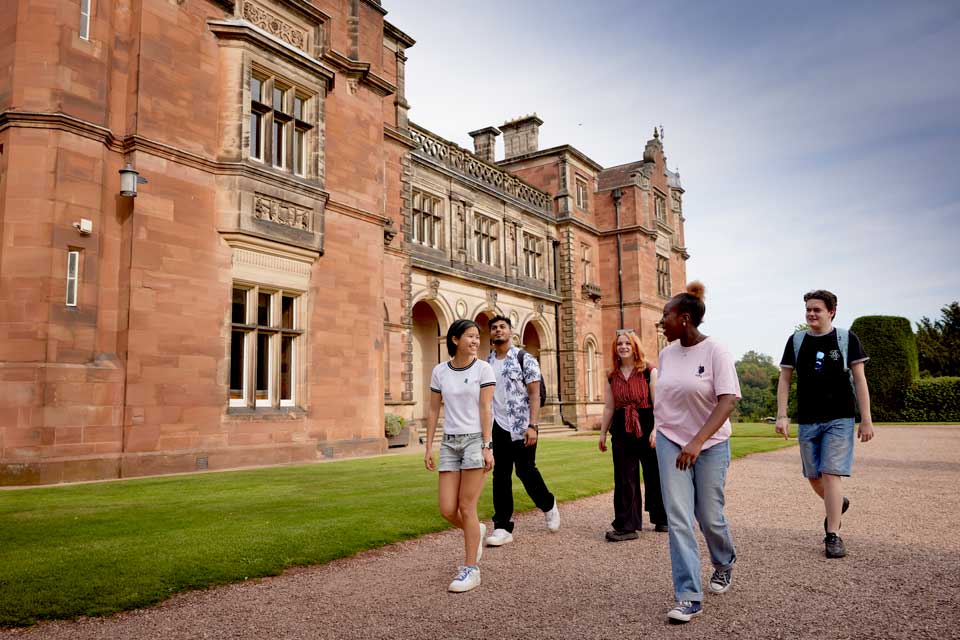
Student life at Keele is vibrant, diverse, and packed with opportunities to make the most of your time at university.

We help students manage their money and ensure that they receive any funding for which they may be eligible.

Make yourself more employable after graduation by taking advantage of the whole host of additional opportunities.