


Year of entry
- 2027
UCAS code
- F600
Duration of study
- 3 years or 4 years with international or placement year
Geology - BSc (Hons)
Course summary
Are you fascinated by science and keen to understand how our planet works? How did the Earth form? How does our planet function and support life? What can we do to protect its future? Discover the answers, develop your own solutions, and explore Earth’s amazing journey with our innovative Geology BSc. Gain the practical, hands-on skills you’ll need as a highly sought-after geologist through fieldwork, laboratory projects, and industry work placement options, enabling you to thrive in a career such as geological engineer, geochemist, or geotechnician.
Why study Geology at Keele University?
 Top 10 in England for Geology (NSS 2026, full-time students in broad-based English universities)*
Our unique 600-acre campus offers a fantastic natural environment to perform fieldwork
This programme is accredited by the Geological Society of London
Top 20 in the UK for Earth and Marine Sciences (Guardian University Guide, 2025)
Top 10 in England for Geology (NSS 2026, full-time students in broad-based English universities)*
Our unique 600-acre campus offers a fantastic natural environment to perform fieldwork
This programme is accredited by the Geological Society of London
Top 20 in the UK for Earth and Marine Sciences (Guardian University Guide, 2025)

Course overview
Your journey towards making a global impact starts here. Earth, our complex and fascinating planet, is facing serious environmental challenges, creating high demand for geologists who understand issues like carbon neutral energy sources and sustainable methods of resource extraction. Our Geology degree will develop your geology knowledge and skills, empowering you to address these matters, and secure a promising future with excellent career prospects.
Never studied Geology before? We've designed this programme to provide you with a solid grounding in the subject during year one, laying the foundation for advanced study in years two and three.
Geology explores Earth’s origins, the evolution of life, and the exploration, extraction, and management of its natural resources. As an interdisciplinary subject, it draws on geography, environmental science, chemistry, biology, and physics. You will develop an understanding of Earth’s and other planets' structures and identify the physical, chemical, and biological processes occurring deep beneath our feet.
We place a strong emphasis on developing practical skills, equipping you with the methods and techniques needed for future employment. You will gain hands-on experience using equipment, samples, and digital resources in our state-of-the-art Central Science Labs while gathering, analysing, and interpreting your own research data through residential and one-day field courses. There are study abroad and work placement options, and Keele’s campus serves as a ‘living laboratory’ with 600 acres of natural environment for fieldwork. From our lake system and extensive woodlands to the mining and industrial heritage of the local area, we offer opportunities to study in an authentic environment while practicing sustainability, preparing you to thrive in your future career.
*We have compared the positivity ratings of all participating UK institutions using the NSS 2026 sector data to determine Keele's position relative to other broad-based universities (i.e. excluding specialist institutions and further education colleges).
Fieldwork
Fieldwork opportunities in our programmes immerse you in real-world situations, allowing you to apply both theoretical knowledge and practical skills while gaining essential hands-on experience. Past students have participated in field courses across the UK in Pembrokeshire, the Peak District, Snowdonia, and Mull in Western Scotland, as well as international locations like Almeria in Spain and southern Italy. Activities may range from designing and interpreting near-surface geophysical surveys, mapping and classifying geological structures, studying various rock types and their formations, and utilising Geographical Information Systems (GIS) and remote sensing techniques to visualise and analyse geoscience data.
Accreditation and professional recognition
This programme is accredited by the Geological Society of London.
Accreditation means our course provides you with the opportunity to gain the core skills necessary to continue to a career as a professional geologist. It also ensures programme content remains relevant to the latest developments in the sector.

Course structure
Modules for Geology
Our courses are designed to develop the skills, experience and expertise you'll need to succeed in your chosen career, informed by the latest research, teaching methods, student feedback, and employer insights. Module details are representative of what we intend to deliver on the course, but may change to reflect best practice and academic development. This information should therefore not be considered a definitive list of available modules.
Compulsory modules
Academic, Professional and Field Skills
This module will introduce you to the essential skills required of Geographers, Geologists and Environmental Scientists. To introduce these skills to you we will explore our ‘living lab’ campus and take you on a series of four, one-day field courses in Staffordshire and Shropshire. The module will help you develop your own academic and professional practice, providing you with the foundations for not only completing your degree successfully, but helping you think about future study or employment.
Earth Structure
In this module you will learn about geological structures, materials and processes ranging in scale from smaller than individual atoms to larger than planets. Lectures introduce the Earth as a planet, the geology of the Earth's Moon, the terrestrial planets and the moons of the gas giant planets in our solar system. They also introduce geological processes such as plate tectonics and how these processes relate to geological structures. Practical workshops and a local field course place emphasis on the development of essential geological skills, including the writing of geological technical reports and the accurate description and classification of geological structures, as well as their recognition and recording on geological maps.
Minerals and Rocks
Rocks and minerals record the Earth’s history. The detailed study of them allows us to not only reconstruct this history, but also interpret what may happen to our planet in the future. This module develops your understanding of description, classification and interpretation of solid Earth materials by examining these in hand specimen and up close using a petrological microscope. An emphasis is placed on the development of accurate description of minerals as well as igneous, sedimentary and metamorphic rocks, including their proportions and inter-relationships, and the recognition and petrographic and textural description of rocks.
Earth and Life Through Time
In this module, you'll explore the basics of geological time and learn about the history of life and evolution, the changing climate, and shifting tectonic plates. You'll become familiar with the terminology, classification, and interpretation of major fossil groups, and understand how fossils help us date rocks and determine their formation environments. A residential field course will teach you how to collect and document geological information in the field, essential geoscience skills you'll develop throughout your degree.
Geoscience Data Interpretation, Analysis and Visualisation
You will learn a variety of digital techniques for the acquisition, interpretation, analysis and visualisation of geological and geophysical data, including the use of Geographical Information Systems (GIS) to integrate spatial geological data as well as digital techniques and specialist software applications for the acquisition and interpretation of field data. You will also learn how to use remote sensing techniques to enhance satellite images for geological interpretation. The module also introduces Python programming for geoscientists.
The Earth System
You will learn about the Earth’s major systems, including the solid earth (geosphere), biosphere, hydrosphere and atmosphere, and how they integrate in terms of physical, geochemical and environmental processes. You will also appreciate some of the anthropogenic causes of global environmental change in the context of the sustainable future of planet Earth. You will gain useful experience of a range of employability skills within a geoscience context.
Optional modules
Roots and Futures: exploring sustainable places
In this module you will explore sustainability within the region, with a particular focus on Staffordshire (Keele's' local area). Topics include environmental issues, renewable energy and community conservation efforts. You will examine regional case studies, engage with local sustainability initiatives and learn about how these activities build on the regions rich geology, geography and history. Through interactive learning on and off campus, you will develop your knowledge of sustainability practices and identify strategies to enhance the regions' ecological resilience and community well-being and how these can be implemented beyond our locality of Staffordshire.
Compulsory modules
Geological Field Skills
This module combines field skills with structural geology, geophysics, GIS, surveying, and lab-based data analysis. You will learn to plan field projects, including logistics, health and safety, and data review, using tools like Google Earth and satellite data. Emphasising fieldwork, and including a residential field course, the module teaches core field skills and modern digital lab methods such as GIS and 3D modelling. This prepares students for independent research and meets the needs of employers and funders in geology.
Igneous and Metamorphic Petrology
This module provides you the chance to apply geochemistry and experimental systems to understand igneous rock suites and their global formation processes. Learn isotopic techniques for identifying magma sources and age dating. Study metamorphic rocks in detail, focusing on how initial composition, fluid migration, and temperature and pressure variations influence their mineral assemblages.
Palaeoclimatology and Quaternary Studies
You will study Quaternary deposits and how they can be interpreted to understand the processes that caused their formation, as well as understanding their use as indicators of palaeoclimatic and palaeoenvironmental conditions. You will also learn about the occurrence, evidence for and causes of climate change over geological time. A field excursion will provide understanding of how surface processes have affected landscape development during the Quaternary as well as covering a variety of field techniques for identifying and mapping superficial deposits.
Reconstructing Past Environments
The module aims to encourage a basic awareness of the use of sedimentological and stratigraphical methods in reconstructing environments of deposition. The objectives are to introduce the concepts, principles and implications of facies analysis; introduce Walther’s principle of accumulation of sedimentary successions; to teach techniques for the study of sedimentology and stratigraphy; and to review environments of sediment deposition and the facies and facies relationships that result in the rock record. Skills that will be acquired include sedimentary logging, description and interpretation of sedimentary rock successions, writing of a structured report, team work, problem-solving scenarios, likelihood assessment scenarios, and enhanced fieldwork skills.
Geochemistry
This module will provide a broad introduction to the principles, applications and analytical techniques used in geochemistry. You will learn through theoretical and practical examples of the use of geochemistry in the geological sciences through problem-based practicals. You will use geochemical equipment in our geochemistry lab, providing you with experience of techniques relevant to academia and industry.
Geoethics and Environmental Justice
In this module you will investigate the ethical dimensions of geosciences and their impact on environmental justice. Topics include principles of geoethics, the role of geoscientists and geographers in society, and the ethical challenges in resource extraction and management. The module addresses environmental justice issues, focusing on the distribution of environmental benefits and burdens, the rights of indigenous and marginalized communities, and the development of sustainable practices. Case studies and interactive discussions will highlight real-world applications and ethical dilemmas.
Optional modules
Flexible Work Placement (Level 5)
In a competitive job market, practical skills and understanding workplace dynamics are crucial. This module allows you to gain hands-on experience, enhance your employability skills, and provide valuable insights into the professional world. You will be supported via a range of activities to secure a role and can source your own placement or apply to university-sourced roles. This module has built-in flexibility on when and how you complete your placement around existing demands.
Earth's Changing Landscapes
Glaciers, volcanoes, coastal erosion, floods... studying Earth’s spectacular landscapes is increasingly significant in the context of climate change and its impacts on human and physical environments. Landscapes tell us about Earth’s past, but also help us face the future as we battle natural hazards such as landslides and work to safeguard resources such as fresh water. This module explores Geomorphology, the science of landscapes, using a global range of examples supported by student-led analysis of remotely-sensed imagery and new scientific research.
Compulsory modules
Independent Research Dissertation
For the capstone research dissertation you will conduct independent research on a topic of your own choice within your field of study. Guided by an academic advisor, you will establish research objectives, undertake fieldwork or data collection, and analyse your findings. This module emphasizes critical thinking, methodological rigor, and effective communication of results. Completing the dissertation allows you to demonstrate your expertise, contribute to subject knowledge, and prepare for professional careers or post-graduate study.
Optional modules
Volcanic and Magmatic Processes
Experience volcanic and magmatic processes first hand with this exciting module, featuring a field course that has previously been to renowned volcanology sites like Southern Italy, Santorini, Greece and Germany. Investigate igneous and volcaniclastic rocks, physical volcanology, petrology, geochemistry, volcanic hazards, and risks. Depending on the location, explore volcano tectonics, archaeology, global environmental change, and economic geology. Prepare with practical workshops before embarking on an immersive field course, gaining invaluable hands-on experience essential for a career in geoscience.
Advanced Geological Field Techniques
This module will provide you with the opportunity to study igneous and metamorphic rocks in the field. In addition, consideration of petrological processes and emphasis on aspects of structural geology will provide you with an understanding of magma emplacement, orogen construction and terrane accretion in the context of the crustal evolution of a major geological terrain un the UK. You will further develop geological fieldwork skills, as well as employability skills, that are essential for a career as a professional geoscientist.
Applied GIS
This module with provide you with the broader context of GIS applications to address a range of real-world societal and environmental issues within human and physical geography, geology and environmental sciences. You will not only gain essential skills in acquiring, analysing, and displaying spatial data but also explore how GIS can be integrated with environmental impact assessment and be used to support decision-making. By the end of the module, you will gain GIS skills that are important across all sectors in business, government, and science, thereby enhancing your future employability.
Engineering and Applied Geology
This module explores key concepts in geotechnical engineering, including the physical and engineering properties of soil and rock. It covers geotechnical and geo-environmental sub-surface hazards, focusing on both anthropogenic and natural subsidence. The study of hydrogeology is integrated, emphasizing groundwater flow and its effects on stability. Practical skills in site investigation, slope stability assessment, and ground engineering are developed using our campus as a site for investigation.
Structures and Sub-Surface Processes
In this module you will learn how geological basins and reservoirs, and their related geological resources, form. Geological reservoirs are a vital source of water, minerals and geothermal energy. This module covers a range of large-scale geological processes including advanced sedimentology, stratigraphy, geodynamics, structures, fluid flow and geophysics.
Extractive Resources and Critical Minerals
In this module, you'll explore ore geology and geological resources, focusing on the geological processes that form these resources and the methods for their exploration, extraction and management. You'll also examine energy resources, including fossil fuels and renewables like wind, solar, geothermal, and hydropower. Gain insights into the environmental and societal impacts of resource extraction, and understand the challenges and opportunities for sustainable and responsible extraction of natural resources.
Natural Hazards
Explore the study of natural hazards in this comprehensive module. You will delve into the origins and impacts of various natural disasters, from minor disruptions to catastrophic events, triggered by both natural and human activity. You will assess risks, learn how these phenomena affect society, the environment, and the economy, and discover strategies to predict and mitigate their devastating effects. Get ready to tackle real-world challenges and make a difference in disaster prevention and management.
Clean Technology
Learn about how to accelerate energy transitions away from fossil fuels with a specific focus on: energy efficiency, clean energy generation and storage, electrification and their integration within smart energy systems. You will develop and enhance your energy literacy skills, which will equip you for careers and research opportunities available in the sustainable energy sector.
Extinction!
This module explores the causes and consequences of extinction events throughout Earth's history. You will investigate mass extinctions, such as the Permian and Cretaceous events, and explore the role of factors like climate change, asteroid impacts, and human activities. You will learn about evolutionary biology, palaeontology, and conservation science, highlighting current biodiversity crises and strategies for species preservation. Through lectures, seminar projects, and case studies, you will gain an in-depth understanding of extinction dynamics and their implications for the future.
Flexible Work Placement (Level 6)
In a competitive job market, practical skills and understanding workplace dynamics are crucial. This module allows you to gain hands-on experience, enhance your employability skills, and provide valuable insights into the professional world. You will be supported via a range of activities to secure a role and can source your own placement or apply to university-sourced roles. This module has built-in flexibility on when and how you complete your placement around existing demands.
Professional Experience in Education
This module gives students interested in pursuing teaching or training as a career the opportunity to gain experience in the world of teaching in schools and colleges. You will develop skills highly valued by employers such as communication, and interpersonal skills, whilst learning to address individual needs and developing engaging teaching materials. You will be supported via a range of activities to prepare for your placement and have the choice to source your own placement or apply to university sourced roles.
You can view the Programme Specification for this course by visiting the Programme Specifications webpage. (opens in new tab)
Double Gold in the Teaching Excellence Framework
Keele is one of only 15 broad-based universities in England - out of over 100 - to have been awarded Gold in both the 2017 and 2023 Teaching Excellence Framework (TEF) exercises, demonstrating our consistent teaching excellence.
Additional opportunities
 Foundation year
 Learn a language
 Placement year
 International year
 Study abroad
 GCP Elective Pathways
Explore more
(opens in a new tab)
GCP Elective Pathways
Explore more
(opens in a new tab)
There are a range of additional opportunities for this course.
Please note that undertaking one may impact the availability of another.
Spend a year in industry
A work placement year between years two and three of your degree is a fantastic way to gain industry experience, helping you stand out in the competitive job market. Employers seek to recruit individuals with high-level knowledge and skills in geology who also understand the workplace. Placements provide insight into working in a specific area of the industry, allowing you to familiarise yourself with the professional environment, develop your networks, and apply the theory you’ve been learning.
Study abroad
In between years two and three of your studies you can choose to spend time studying abroad. This exciting opportunity will enable you to understand your field from different cultural perspectives and to establish international networks. It also shows you have the personal attributes to embrace new experiences which can enhance your employability. We offer exchange opportunities with a wide variety of partner institutions.

Entry requirements
These are the typical entry requirements for this course for a range of UK and international qualifications. If your qualifications aren't listed, please contact us to check if we can accept them. If you don't think you'll meet the stated requirements, you may be able to access this course via a Foundation Year.
Typical offer
Please ensure you read the full entry requirements by selecting your qualifications from the menu below. This will include any subject specific, GCSE/Level 2 Maths, and/or English language requirements.
Please select your qualification from the drop-down list below for the full entry requirement information
A Level
BBC in three A Levels.
Contextual Offer: CCC in three A Levels.
You will also need: 4 / C in GCSE Maths or Level 2 Functional Skills Maths, plus an English language qualification (see below).
Access to HE Diploma
112 UCAS points in any Access to HE Diploma including Distinction in at least 15 Level 3 credits.
You will also need: 4 / C in GCSE Maths or Level 2 Functional Skills Maths, plus an English language qualification (see below).
Algeria
Bangladesh
BTEC Extended Diploma / National Extended Diploma
DMM in any BTEC Extended Diploma / National Extended Diploma.
Contextual Offer: MMM in any BTEC Extended Diploma / National Extended Diploma.
You will also need: 4 / C in GCSE Maths or Level 2 Functional Skills Maths, plus an English language qualification (see below).
BTEC National Diploma / Diploma
Distinction and Merit in any BTEC National Diploma / Diploma and C in one A Level, or Merit and Merit in BTEC Diploma and A in one A Level.
You will also need: 4 / C in GCSE Maths or Level 2 Functional Skills Maths, plus an English language qualification (see below).
BTEC National Extended Certificate / Subsidiary Diploma
Distinction in any BTEC National Extended Certificate / Subsidiary Diploma and CC in two A Levels, or Merit in any BTEC National Extended Certificate / Subsidiary Diploma and BB in two A Levels.
You will also need: 4 / C in GCSE Maths or Level 2 Functional Skills Maths, plus an English language qualification (see below).
Canada - Diploma
60% / BCCCC in five courses in the Grade 12 Diploma.
You will also need: 50% in Grade 11 Maths, plus an English language qualification (see below).
China - Gaokao
66% in the Gaokao.
You will also need: 60% in Senior Secondary School or Gaokao Maths, plus an English language qualification (see below).
Core Maths
If you have B or higher in Core Maths and are studying A Levels, BTEC, the International Baccalaureate, or an Access to HE Diploma, you will typically receive an alternative offer which will be lower than the standard offer. Please see 'Alternative and contextual offers' below.
Cyprus - Apolytirion
17.5 / 83% in the Apolytirion.
You will also need: 14 in Maths in the Apolytirion, plus an English language qualification (see below).
Egypt
European Baccalaureate
70% overall.
You will also need: 6 in European Baccalaureate Maths, plus an English language qualification (see below).
Extended Project Qualification (EPQ)
If you have B or higher in the EPQ and are studying A Levels, BTEC, the International Baccalaureate Diploma, or an Access to HE Diploma, you will typically receive an alternative offer which will be lower than the standard offer. Please see 'Alternative and contextual offers' below.
France - Baccalaureate
12 in the French Baccalaureate / International Option Baccalaureate / Baccalauréat Français International.
You will also need: 10 in Maths in the Baccalaureate, plus an English language qualification (see below).
Germany - Abitur
2.4 overall average in the Abitur.
You will also need: 10 in Maths in the Abitur, plus an English language qualification (see below).
Ghana
We do not accept the West African Senior School Certificate Examination for direct entry. However, you can apply to study an International Foundation Year at Keele University International College. On successful completion, you can progress to an undergraduate degree at Keele.
Hong Kong - Diploma
443 from two electives and one core subject in the HKDSE.
You will also need: 2 in HKDSE Maths (Core), plus an English language qualification (see below).
India - Standard XII
Average of 65% from four subjects in the ICSE, CBSE or Western Bengal Standard XII, or average of 70% from four subjects in any other Standard XII.
You will also need: 6 or C2 in Secondary School Examination Maths, or Pass in Standard XII Maths, plus an English language qualification (see below).
International Baccalaureate Career-Related Programme
We encourage applications with the IBCP but recognise that your combination of qualifications may differ depending on where you are studying.
If you are taking a BTEC National Diploma / Diploma with one or more Higher Levels, your offer will be similar to our BTEC + A Level offer (see 'BTEC National Diploma / Diploma') but with an HL requirement of 6 for A, 5 for B, or 4 for C.
For any other combination, please contact the University Admissions Team for advice.
International Baccalaureate Diploma
554 in three Higher Levels or 29 points.
Contextual Offer: 444 in three Higher Levels or 27 points.
You will also need: 4 / C in GCSE Maths or Level 2 Functional Skills Maths, or 3 in IB Middle Years Maths, or 2 in IB Diploma Standard Level Maths (any), plus an English language qualification (see below).
Ireland - Leaving Certificate
H3, H4, H4, H4, H4, H4 in the Irish Leaving Certificate.
You will also need: O4 / H6 in Maths, plus an English language qualification (see below).
Italy - Diploma di Esame di Stato
75% in the Esame di Stato.
You will also need: 5 in Maths in the Diploma, plus an English language qualification (see below).
Kenya - KCSE / Diploma
We do not accept the Kenya Certificate of Secondary Education for direct entry. However, you can apply to study an International Foundation Year at Keele University International College. On successful completion, you can progress to an undergraduate degree at Keele.
We may accept a two year Diploma. Please contact the University Admissions Team for advice.
Malaysia - STPM
BBC in three Principal Level subjects in the STPM.
You will also need: C in SPM Maths, plus an English language qualification (see below).
NCUK
Pass NCUK Foundation Year with BBC and a C in EAP English Language module and grade A in EAP for Nursing courses.
You will also need: 4 / C in GCSE Maths or international equivalent.
Nepal
75% in the Higher Secondary Certificate (HSSC) (from 2018 onwards).
Nigeria - Senior School Certificate / OND
We do not accept the Senior School Certificate (WAEC or NECO) for direct entry. However, you can apply to study an International Foundation Year at Keele University International College. On successful completion, you can progress to an undergraduate degree at Keele.
We may accept an Ordinary National Diploma with GPA of 2.5 or a Merit / Lower Credit. Please contact the University Admissions Team for advice.
Pakistan - Secondary School Certificate
We do not accept the Secondary School Certificate for direct entry. However, you can apply to study an International Foundation Year at Keele University International College. On successful completion, you can progress to an undergraduate degree at Keele.
Portugal
Overall average of 15 in a Secondary Certificate.
You will also need: 10 in Secondary Certificate Maths, plus an English language qualification (see below).
Scotland - Highers and Advanced Highers
BCCCC in five Highers, or CD in two Advanced Highers and CC in two Highers, or CCD in three Advanced Highers.
You will also need: C in National 5 Maths, or 4 / C in GCSE Maths or Level 2 Functional Skills Maths, plus an English language qualification (see below).
Singapore - A Levels (H2)
BBC in three H2 Levels.
You will also need: C in O-Level Maths, plus an English language qualification (see below).
South Africa - Matric (NSC and IEB)
66655 in five subjects.
You will also need: 4 in NSC Maths, plus an English language qualification (see below).
Spain - Bachillerato
Overall average of 7 in the Título de Bachillerato.
You will also need: 5 in Graduado en Educación Secundaria (GES) Maths or 6 in Título de Bachiller Maths, plus an English language qualification (see below).
Sri Lanka - Advanced Level
BBC in three Advanced Levels.
You will also need: C in O-Level Maths, plus an English language qualification (see below).
T Level
Merit in any T Level.
You will also need: 4 / C in GCSE Maths or Level 2 Functional Skills Maths, plus an English language qualification (see below).
Turkey
Uganda - Advanced Certificate of Education
BBC in three Principal Level subjects in the Advanced Certificate of Education.
You will also need: 6 in UACE or UCE Maths, plus an English language qualification (see below).
USA - Advanced Placement
BBC = three AP tests scores of 444 OR
2 AP tests scores PLUS one of the following:
SAT I: 1190 (min 550 RW)
ACT: 26
Honours course at B-
One year long equivalent Dual Enrolment/College course at B.
You will also need: an English language qualification (see below)
USA Non-AP Curriculum
BBC = Achieved overall GPA of 3.3 with three honours at B+,B+,B
OR
2 honours course and overall GPA of 3.3 PLUS one additional qualification:
SAT I: 1340 (min 550 RW)
ACT: 27
One year-long equivalent Dual Enrolment/College course at B+.
You will also need: an English language qualification (see below)
Welsh Baccalaureate / Bagloriaeth Cymru
The Advanced Skills Baccalaureate Wales is equivalent to one full A Level at the same grade and can be included alongside 2 other A Levels in a standard A Level offer for this course (see A Level). All subject specific requirements will still need to be met.
Zimbabwe - ZIMSEC A level
BBC in three ZIMSEC A Level subjects.
You will also need: 4 / C in GCSE Maths or Level 2 Functional Skills Maths, plus an English language qualification (see below).
English language requirements
All our courses require an English language qualification or test. Most students meet this through a 4 or C in GCSE English. Please visit our English Language pages for details, including test information for international students. For students who require a test, this course requires a result from Group A.
Alternative and contextual offers
We're committed to ensuring equality of opportunity for applicants with the potential and motivation to succeed, regardless of background. We offer alternative offer schemes with clear eligibility criteria, including contextual offers, offers for those studying in the Keele region, and recognition of a range of additional qualifications.
General information
The entry grades outlined indicate the typical offer, along with any subject specific requirements. This is for general information only. Keele University reserves the right to vary conditions based upon a candidate's application. For international students, find out how we work with approved agents as part of our admissions process.
Social life, societies and sports
Find out moreAccommodation
Find out moreLocal area and travel
Find out moreBoost your employability
Find out moreGeology at Keele
Sector-leading in sustainability education
At Keele we're leading the sector in sustainability through our teaching and our ground-breaking research into climate change and renewable technologies. In 2021 we were awarded the prestigious title of Global Sustainability Institution of the Year (International Green Gown Awards). Our geology courses are strongly aligned to the role of geoscience in the UN's Sustainable Development Goals.
Find out more about Keele’s commitment to sustainability.

Fees and funding
Tuition fees for 2027/28 2026/27 academic year
- The tuition fee for UK Home students starting in 2027/282026/27 is set by the UK Government and will be £10,050£9,790.
- International: Band 1, £18,200 for the 2026/27 academic year
International fees for 2027/28 entry have not yet been confirmed. We review all tuition fees annually and will update this page once they are finalised.
In subsequent years of your course, UK Home fees may change in line with government policy or legislative requirements. For continuing international students, fees will increase each year in line with RPI, capped at a maximum of 5% per year.
For details of our international fee bands visit our Undergraduate tuition fees page.
Financial support
Going to university can be daunting as well as exciting. It's important to understand the costs and financial support available.
Our Student Financial Support team offers confidential advice and guidance to help you manage your money, resolve issues with Student Finance, create a budget, explore your options if you're facing financial hardship, and access any funding you are eligible for, such as bursaries and scholarships.
For more information visit our undergraduate fees and funding pages.
Additional costs
The additional costs listed below apply to the 2026/27 academic year. Costs for 2027/28 entry will be confirmed closer to the time, so the information below should be used as a guide only.
Mandatory costs
You can expect some additional costs as a student on this course, which may support learning activities, specialist equipment, fieldwork, placements, or other course-related requirements. Details of these mandatory costs are outlined below to help you plan accordingly.
Optional costs
In addition to the mandatory costs listed below, there may be optional costs that students can choose to incur to enhance their learning experience. These are not required to complete the course. Details of these optional costs are outlined below to help you plan accordingly.
Students may also incur general expenses related to university study, such as for printing, textbooks and other materials. Students who undertake a placement may be responsible for additional costs, such as travel, accommodation, and subsistence costs. For further information, please refer to the additional costs information.
Mandatory:
- Compulsory field courses (levels 4 and 5): Approximately £35 a day to cover subsistence costs for lunches and dinners
- Field Notebook(s): £30
- Waterproof and appropriate clothing and footwear for field courses: £200
Optional:
- Optional international field course: £200-£1,600 depending on location, plus subsistence costs for lunches and dinners (estimated at £35 per day)


Your future career
Geoscientists play a crucial role in tackling global challenges and supporting the UN’s Sustainable Development Goals (SDG’s) and the Paris Agreement. Geology graduates are in high demand for their sub-surface knowledge and geoscientific skills, essential for addressing these goals and climate agreements.
Upon graduating, you will possess a strong set of transferable skills applicable to various sectors, including energy, environmental, engineering, education, and consultancy. To become a professional geologist, you will need to gain professional experience after earning your degree and then apply for Chartered Geologist (CGeol) status. Your accredited degree can give you a head start by reducing the required years of experience for chartered status.
Studying geology at degree level can lead to a job as a:
- Geologist
- Geophysicist
- Geochemist
- Exploration Geologist
- Geological Engineer
- Geoenvironmental Engineer
- Survey Geologist
- Geophysicist
- Volcanologist
- Seismologist
- Geochemist
- Teacher
- Geological Surveyor
- Geotechnical Engineer
- Hydrogeologist
- Mineral Surveyor
- Basin Analyst
- Quarry Manager
Find out more about our careers and employability services, including career planning, alumni mentoring, jobs, internships, starting your own business and much more.

Teaching, learning and assessment
Teaching
On our Geology BSc, we use diverse teaching and learning methods tailored to each module's subject matter and level. These are delivered in a supportive manner, fostering your independence as you develop as a geologist. Teaching methods may include lectures, workshops, practical classes, field courses, individual progress meetings, directed reading, group presentations and discussions, independent study, project work, and engaging with web-based learning through Keele's virtual learning environment (KLE) and other digital platforms.
Assessment
Without traditional exams, you will be assessed through various methods that reflect the breadth of skills and knowledge you will acquire in this program. These methods may include technical reports that demonstrate your research and presentation skills and your ability to communicate ideas clearly and concisely in formats used in the geological industry.
You will produce structured proformas and full laboratory reports based on your work in the geological laboratory, showcasing your practical and analytical skills. Class tests will be conducted in the geological laboratory or via the Keele Learning Environment (KLE), and your understanding of geological features found in the field will be assessed through items such as your field notebook, field sketches, geological logs, and maps.
Oral and poster presentations and reports will assess your subject knowledge and your ability to work as part of a team. Literature syntheses will test your ability to analyse other scholars’ work and create a portfolio of different pieces of work demonstrating your subject knowledge. Additionally, you will have the opportunity to explore an area of particular interest through a focused research project in your dissertation.
Academic expertise
The teaching team at the School of Life Sciences are active researchers in core areas such as biosciences, geosciences, environmental sciences, geography and bioengineering. Their academic expertise informs your learning, incorporating current practices, theories and contemporary themes that encourage discussion within your subject area.
The teaching team consists of professors, readers, senior lecturers, lecturers, demonstrators, and teaching fellows.
Professional support staff are also available to assist with any queries you may have during your undergraduate studies at Keele.
The teaching team at the School of Engineering and Physical Sciences perform research across the school with particular strengths in materials science, synthetic, forensic and analytical chemistry. Their academic expertise informs your learning, incorporating current practices, theories and contemporary themes that encourage discussion within your subject area.
Professional support staff are also available to assist with any queries you may have during your undergraduate studies at Keele.
The teaching team consists of professors, senior lecturers, and lecturers within the School of Engineering and Physical Sciences. They are fellows or senior fellows of the Higher Education Academy, the professional body for teachers in higher education. Fellowship provides individuals with recognition of their practice, impact and leadership of teaching and learning. A number of our academic staff have also achieved national recognition for their excellence and innovation in teaching and hold awards from a variety of institutions, including the Royal Society of Chemistry and AdvanceHE.
The teaching team in the School of Humanities and Social Sciences are active researchers in core areas of Criminology and Sociology such as fields of crime, globalisation and urban spaces and cultures. Their academic expertise informs your learning, incorporating current practices, theories and contemporary themes that encourage discussion within your subject area.
Professional support staff are also available to assist with any queries you may have during your undergraduate studies at Keele.
The teaching team consists of professors, senior lecturers, lecturers and graduate teaching assistants.
The teaching team in the School of Humanities and Social Sciences are active researchers in core areas of Education such as critical social policy and feminism. Their academic expertise informs your learning, incorporating current practices, theories and contemporary themes that encourage discussion within your subject area.
Professional support staff are also available to assist with any queries you may have during your undergraduate studies at Keele.
The teaching team consists of senior lecturers and lecturers.
The teaching team in the School of Engineering and Physical Sciences are active researchers in core areas such as materials, sustainability, and energy. Their academic expertise informs your learning by incorporating current practices, theories, and contemporary themes that encourage discussion within your subject area.
Professional support staff are also available to assist with any queries you may have during your undergraduate studies at Keele University.
The teaching team consists of professors, senior lecturers and lecturers.
The teaching team in the School of Humanities and Social Sciences are active researchers in core areas of English and Creative Writing. Their academic expertise informs your learning, incorporating current practices, theories and contemporary themes that encourage discussion within your subject area.
Professional support staff are also available to assist with any queries you may have during your undergraduate studies at Keele.
The teaching team consists of professors, readers, senior lecturers, lecturers, and graduate teaching assistants.
The teaching team in the School of Humanities and Social Sciences are active researchers in core areas such as twentieth century and contemporary music, cultural politics, social movements and representation. Their academic expertise informs your learning, incorporating current practices, theories and contemporary themes that encourage discussion within your subject area.
Professional support staff are also available to assist with any queries you may have during your undergraduate studies at Keele.
The teaching team consists of professors, readers, senior lecturers, and lecturers.
The teaching team at the School of Engineering and Physical Sciences provide research-led quality teaching, particularly in the fields of forensic chemistry, forensic biology, crime investigations, forensic search and forensic anthropology, taphonomy and archaeology.
Professional support staff are also available to assist with any queries you may have during your undergraduate studies at Keele.
Our teaching team consists of professors, senior lecturers, lecturers, demonstrators and PhD students.
The teaching team at the School of Life Sciences are active researchers in core areas such as biosciences, geosciences, environmental sciences, geography and bioengineering. Their academic expertise informs your learning, incorporating current practices, theories and contemporary themes that encourage discussion within your subject area.
The teaching team consists of professors, readers, senior lecturers, lecturers, demonstrators, and teaching fellows.
Professional support staff are also available to assist with any queries you may have during your undergraduate studies at Keele.
The teaching team in the School of Humanities and Social Sciences are active researchers in core areas of medieval, early modern, and modern history including expertise in historical inequality, democratisation and civil society. Their academic expertise informs your learning, incorporating current practices, theories and contemporary themes that encourage discussion within your subject area.
Professional support staff are also available to assist with any queries you may have during your undergraduate studies at Keele.
The teaching team consists of professors, readers, senior lecturers, lecturers and graduate teaching assistants.
The teaching team at the School of Medicine are either active researchers in core areas such as musculoskeletal health, mental health and well-being, biomedical science, prognosis and big data, or actively engaged with a diverse range of scholarly activities to enhance their roles as educators.
The teaching team consists of professors, readers, senior lecturers, lecturers, senior teaching fellows, teaching fellows, senior research fellows, research fellows, research associates, research assistants, anatomy technicians and PhD students. The School of Medicine teaching team also includes a wide range of health professionals who are actively engaged in clinical research and quality improvement including those based in hospitals and community-based services.
The academic team at the School of Nursing and Midwifery are active researchers in core areas such as loss, bereavement and end of life care; primary, community and district nursing; and women's health. Their academic expertise informs your learning, incorporating current practices, theories and contemporary themes that encourage discussion within your subject area.
Professional support staff are also available to assist with any queries you may have during your undergraduate studies at Keele.
The teaching team consists of readers, senior lecturers, lecturers, research associates and teaching fellows.
The teaching team at the School of Engineering and Physical Sciences perform research across the school with particular strengths in astrophysics, materials science, renewable energy and sustainability. Their academic expertise informs your learning, incorporating current practices, theories and contemporary themes that encourage discussion within your subject area.
Professional support staff are also available to assist with any queries you may have during your undergraduate studies at Keele.
Our teaching team consists of professors, senior lecturers, lecturers, readers, and PhD students.
The teaching team in the School of Humanities and Social Sciences are active researchers in areas including democracy, governance, public policy and idealism. Their academic expertise informs your learning, incorporating current practices, theories and contemporary themes that encourage discussion within your subject area.
Professional support staff are also available to assist with any queries you may have during your undergraduate studies at Keele.
The teaching team consists of professors, senior lecturers, lecturers and graduate teaching assistants in the School of Humanities and Social Sciences.
The teaching team within the Institute of Sport brings together expertise across sport, exercise, health and rehabilitation, reflecting the continuum of human performance and wellbeing across the lifespan. Our staff are actively engaged in research and applied practice spanning physical activity, performance, health and recovery, ensuring that teaching is informed by both scientific evidence and real-world application. As a CASES-accredited partner institution, and with staff holding individual CASES accreditation, the programme is underpinned by recognised professional standards in sport and exercise science.
Staff operate within an interdisciplinary environment, working alongside colleagues from across the Allied Health Professions within the School. This collaboration informs teaching and supports a broader, integrated understanding of health, physical activity and rehabilitation across diverse populations and contexts.
Collectively, this breadth of expertise shapes your learning experience, incorporating current practices, theories and contemporary themes that encourage discussion within your subject area.
Professional support staff are also available to assist with any queries you may have during your undergraduate studies at Keele. The School's teaching team consists of professors, senior lecturers and lecturers.
The teaching team at Keele Business School are active researchers in core areas such as accounting, finance, economics, human resource management, marketing, and management. Their academic expertise informs your learning, incorporating current practices, theories and contemporary themes that encourage discussion within your subject area.
Professional support staff are also available to assist with any queries you may have during your undergraduate studies at Keele.
Our teaching team consists of professors, senior lecturers, and lecturers within Keele Business School. The team is multicultural and multinational, bringing an international dimension to the school's teaching, research, and business engagement.
The teaching team within the School of Allied Health Professions and Pharmacy brings together a diverse community of academics and clinicians working across four interrelated themes: Pharmacy and Pharmaceutical Science, Medical Technologies, Allied Health Therapies, and Active Living and Sport.
Our staff include experts in the biological and clinical sciences, statistics, engineering, and professional practice, who contribute to both research and scholarly activity aligned to their disciplines. This breadth of expertise ensures that teaching is informed by current evidence, practice, and innovation, enabling you to engage with contemporary issues relevant to your chosen field.
The teaching team consists of professors, senior lecturers, lecturers, readers, visiting clinicians, and research fellows.
Our programmes are supported by experienced professional staff who help to ensure a high-quality student experience throughout your studies.
The teaching team at Keele Business School are active researchers in core areas such as accounting, finance, economics, human resource management, marketing, and management. Their academic expertise informs your learning, incorporating current practices, theories and contemporary themes that encourage discussion within your subject area.
Professional support staff are also available to assist with any queries you may have during your undergraduate studies at Keele.
Our teaching team consists of professors, senior lecturers, and lecturers within Keele Business School. The team is multicultural and multinational, bringing an international dimension to the school's teaching, research, and business engagement.
The School of Computer Science and Mathematics is home to active researchers working across a rich range of topics, from artificial intelligence, cyber security and human-centred computing to fluid and solid dynamics, biomechanics and pure mathematics. Whether developing responsible AI, designing smart health technologies, or advancing mathematical methods for waves, materials and structures, our research is wide-ranging and internationally recognised.
This will directly shape your learning. You'll encounter current ideas in AI and its ethical implications, cloud computing, evolutionary systems, usable security, mathematical modelling of materials and discrete mathematics, taught by the people actively advancing these fields.
The teaching team consists of professors, senior lecturers, lecturers, readers and visiting research fellows.
Alongside your teaching team, dedicated professional staff will be on hand to support you throughout your time at Keele.
Our teaching team includes readers, senior lecturers, lecturers, research associates and teaching fellows who are active researchers and educators with expertise across a wide range of health and social care disciplines.
Their research and scholarship span areas including musculoskeletal health, mental health and wellbeing, community nursing, women's health, biomedical science, prognosis and big data, contemporary issues in child and family social work, end-of-life care, and international social work practice. Staff also undertake pedagogic research to advance teaching and learning within health and social care education.
This academic expertise informs your learning by incorporating current practices, theories and contemporary themes that encourage discussion and critical thinking within your subject area.
Professional support staff are also available throughout your undergraduate studies at Keele to provide guidance and answer any queries you may have.
The teaching team in the School of Law consists of professors, senior lecturers, lecturers and solicitors. They are all either active researchers (in fields including social justice and human rights; public and European law; ethics, health and social care; and legal education) or experienced legal practitioners. Their academic and professional expertise informs your learning, incorporating current practices, theories, and contemporary themes that encourage discussion within your subject area.
Professional support staff are also available to assist with any queries you may have during your undergraduate studies at Keele.
The teaching team at the School of Psychology have expertise spanning cognition and neuroscience, health and wellbeing, social identity and change, and justice and security.
Staff research and scholarship expertise inform your learning, incorporating current practices, theories and contemporary themes that encourage active learning and discussion within your subject area.
Professional support staff are also available to assist with any queries you may have during your undergraduate studies at Keele.
The teaching team consists of professors, senior lecturers, lecturers and teaching fellows within the School of Psychology.
The teaching team at the Harper and Keele Veterinary School includes active researchers in areas such as animal health and wellbeing, animal welfare and farming technologies. Many are currently practising veterinary surgeons and allied professionals, and the course draws on a wide range of expertise across many disciplines through contributions by external lecturers. Their academic expertise informs your learning, incorporating current practices, theories and contemporary themes that encourage discussion within your subject area.
Professional support staff are also available to assist with any queries you may have during your undergraduate studies at Keele.
Our teaching team consists of readers, professors, senior lecturers, lecturers and teaching fellows.
The academic expertise in the School of Humanities and Social Sciences informs your learning, incorporating current practices, theories and contemporary themes that encourage discussion within your subject area.
Professional support staff are also available to assist with any queries you may have during your undergraduate studies at Keele.
Our teaching team consists of professors, readers, senior lecturers, and lecturers.
Central Science Laboratories
Develop your practical skills in Keele's state-of-the-art Central Science Laboratories

Foundation year
Our Foundation Year provides an excellent alternative route to Keele, offering preparation for your chosen degree with guaranteed entry onto your undergraduate course once you successfully complete.
This extra year of study can improve your academic skills, expand your subject knowledge, build your confidence, and provide a better understanding of higher education.
On our Foundation Year, you'll join our undergraduate community from the outset, with access to all the facilities and support you'd get as an undergraduate student at Keele.
The information in this Foundation Year section is for UK/Home applicants. Where an international Foundation Year is available, please see the 'Information for international students' tab.
The information within this page is for students wishing to start their studies in September. If you would like to start this course in January, please visit our January pages for further details.
Course content
Our Foundation Year allows you to develop your critical thinking, academic reading, writing, and communication study skills along with subject-specific knowledge and skills which will be invaluable in your academic studies and beyond.
Upon meeting the progression criteria and successfully completing our Foundation Year, you will automatically progress into your Keele undergraduate degree with the confidence that you have the skills, and knowledge needed to successfully complete your course.
This Foundation Year is a two-semester programme which provides a tailored pre-degree programme of study to better prepare you for the BSc (Hons) Geology degree.
For example, the Advancing Geography, Geology and the Environment module takes the knowledge built in 'Foundations of Geography, Geology and the Environment' module and applies it to a variety of human interactions, such as exploitation of the Earth’s resources, rural and urban development, monitoring and management of natural hazards, and environmental change.
Course content has been developed in collaboration with degree teaching teams, so that by the time you begin Year 1, you will be ready to excel at your studies, as the majority of our Foundation Year students do.
You will develop subject-specific and broad based skills that will be invaluable in your academic career and beyond. You can find out more about our Foundation Year, including information on learning, teaching and assessment methods and further opportunities available to you by visiting our homepage.
Module summary
The module details given below are indicative, they are intended to provide you with an idea of the range of subjects that are taught to our current students. The modules that will be available for you to study in future years are prone to change as we regularly review our teaching to ensure that it is up-to-date and informed by the latest research and teaching methods. The information presented is therefore not intended to be construed and/or relied upon as a definitive list of the modules available in any given year.
Semester one modules
|
FYO-00346 |
Sustainability in Action |
15 credits |
|
FYO-00362 |
15 credits |
|
|
FYO-00386 |
30 credits |
Semester two modules
|
FYO-00195 |
30 credits |
|
|
FYO-00364 |
30 credits |
Entry requirements
The entry grades outlined in this section indicate the likely offer or range of offers which would be made to candidates along with any subject specific requirements. This is for general information only. Keele University reserves the right to vary offer conditions depending upon a candidate’s application. Read more about our undergraduate entry requirements.
- 40 UCAS points including at least one Level 3 qualification (such as an A Level, BTEC, Access Course, or T Level).
- Plus C in GCSE English / Level 2 Functional Skills English.
How to apply
Students will need to apply for BSc (Hons) Geology with Foundation Year (UCAS code F603) through UCAS at www.ucas.com
Direct entry students
If you already have your qualifications, are not expecting any further results and only wish to apply to Keele, please contact the Admissions Office directly.
The information in this Foundation Year section is for UK/Home applicants. Where an international Foundation Year is available, please see the 'Information for international students' tab.
We also offer a January start for some of our Foundation Year courses. Adopting a blended learning approach, the January start is particularly useful for students wishing to return to education following time out of studying, or who are seeking a flexible approach to their Foundation Year studies. Our January start is available across most of our Science, Humanities, Social Science, Health and Business courses.
Whilst still being a full-time course, our blended delivery model combines live teaching sessions - both online and on-campus - with self-directed study, enabling you to predominantly study at a time that suits your lifestyle. You will benefit from weekly online taught sessions which encourage you to engage with your teachers and peers.
In addition to online study there will be a series of full study days that you will be required to attend throughout each semester. These sessions may include lab-based activities, group work, review of course and assessment materials studied online. They will emphasise opportunities for you to deepen your knowledge and understanding of your chosen route.
Please refer to the September start tab for more information about the entry requirements and what you will study. The modules that you will take on a January start Foundation Year will be similar to those for the September start, but on a compressed timescale and tailored to a blended learning approach (with the majority of learning taking place online).
For more information, including fees, the UCAS code for this course, how to apply, and how you will be taught, please visit our January Start Foundation Year webpage.
Our International Foundation Year is delivered on campus through Keele University International College (KUIC). Find out more about the International Foundation Year options on the KUIC website.
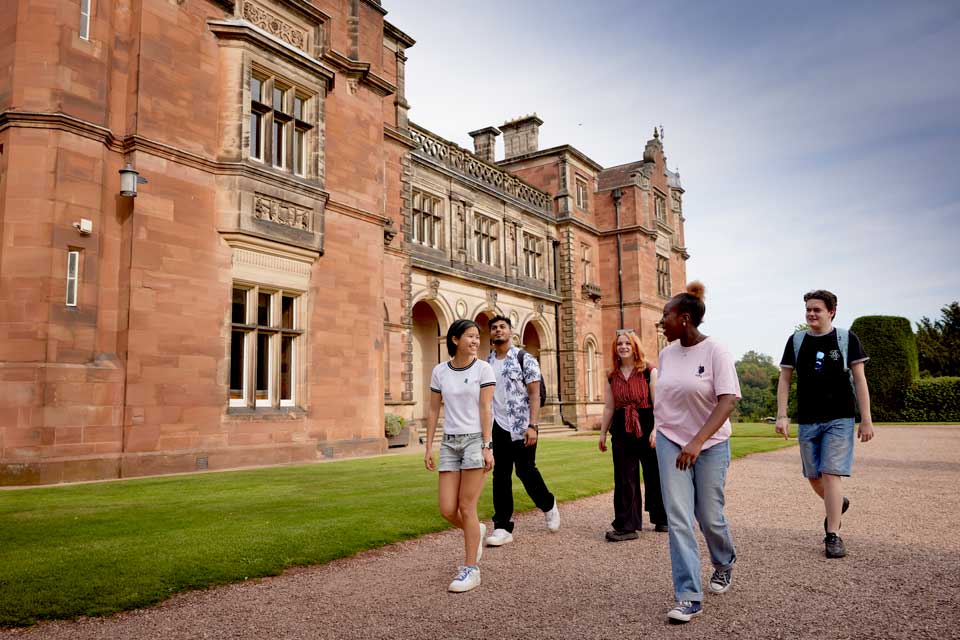
Student life at Keele is vibrant, diverse, and packed with opportunities to make the most of your time at university.

We help students manage their money and ensure that they receive any funding for which they may be eligible.

Make yourself more employable after graduation by taking advantage of the whole host of additional opportunities.