

Year of entry
- 2027
UCAS code
- P303
Duration of study
- 3 years or 4 years with international or placement year
Film Studies - BA (Hons)
Course summary
Do you have a passion for film? Learn to express your creative voice and get to grips with the theory of film with a Film Studies BA at Keele. You will explore an in-depth analysis of film as an art form, alongside gaining hands-on filmmaking skills using industry standard equipment and facilities on campus. Our degree will equip you for a variety of possible careers in the creative industries and other related fields.
Why study Film Studies at Keele University?
 Film Studies and Media at Keele is ranked Top 10 in England for student positivity* NSS 2023 (Broad-based universities) *based on overall student satisfaction, which is an average score across 27 questions asked in the NSS
Top 15 in the UK for Graduate Employability (Uni Compare rankings, 2026)
Work placement opportunities to gain key transferable skills to enhance your career prospects
Discover diverse cultures through an international year at a partner university across the globe
Tailor your degree and explore both theory and practice based on your interests and career aspirations
Film Studies and Media at Keele is ranked Top 10 in England for student positivity* NSS 2023 (Broad-based universities) *based on overall student satisfaction, which is an average score across 27 questions asked in the NSS
Top 15 in the UK for Graduate Employability (Uni Compare rankings, 2026)
Work placement opportunities to gain key transferable skills to enhance your career prospects
Discover diverse cultures through an international year at a partner university across the globe
Tailor your degree and explore both theory and practice based on your interests and career aspirations

Course overview
Become part of the vibrant film community at Keele. Through our Film Studies degree you will become a creative individual with the ability to critically evaluate, synthesise and produce content effectively through various methods. You will study closely with the core academic team, benefitting from their wealth of industry experience in filmmaking, screenwriting, and criticism. You will also have opportunities to draw from the professional expertise of industry partners and gain practical experience on industry placements. In practical modules you will use film equipment and facilities on campus, helping you to gain real world experience using industry standard equipment.
During your studies at Keele you will explore a curriculum looking at the cultural, political and economic dimensions of film in a global context. The learning covers a range of aesthetic and technological resources used by filmmakers both historically, and in the contemporary film and television industries. This carefully considered curriculum balances theoretical and practical learning whilst presenting opportunities to gain invaluable industry experience on placements. Film Studies at Keele will prepare you for careers in the creative industries or other related fields.
Film students have dedicated teaching spaces and access to our bespoke editing suites, as well as opportunities to work in our photographic and sound design studios. The facilities allow you to implement and challenge your practical skills alongside your theoretical learning. You can loan filmmaking equipment to develop your skills and enhance your employability prospects.

Course structure
Modules for Film Studies
Our courses are designed to develop the skills, experience and expertise you'll need to succeed in your chosen career, informed by the latest research, teaching methods, student feedback, and employer insights. Module details are representative of what we intend to deliver on the course, but may change to reflect best practice and academic development. This information should therefore not be considered a definitive list of available modules.
Compulsory modules
Filmmaking Fundamentals
This first-year practice-centred module provides you with the foundational technical knowledge and theoretical tools for approaching creative filmmaking work, and an understanding of the ethics of creative work in contemporary AI contexts. Whether your interests lie in film direction, cinematography or editing, you’ll develop skills in these varied areas of practice, building experience of digital camera-work and post-production tools. The final short film output will demonstrate your acquired technical skills and your creative application of theory and practice.
Sights and Sounds: Analysing Film
This springboard module provides you with essential tools for analysing and discussing film as a vital art form. Looking at films from diverse contexts, you will develop the critical and creative methods needed for your studies, alongside an understanding of film authorship in today’s technological contexts. Producing a visual- or video essay, you’ll display your acquired knowledge and skills, focusing potentially on film style and history, film genre, or critical ideas around the representation of race, class, gender or sexuality.
Animating the Screen
Animating the Screen illuminates the histories, theories and practices of film animation in its various forms, across an international context. You’ll explore the evolving principles and techniques shaping animated film, from Disney to anime to Aardman, as well as the uses of animation in videogames and cinematic visual effects. Your production of a case study, storyboard, or short animated film will showcase your discoveries, and provide a critical and creative platform for later work in film theory or film practice.
Becoming a Cultural Citizen
This module provides you with the foundational tools and skills you need to develop your student profile. You will learn about the different pathways in your cultural or creative field while developing your own identity as a cultural critic, creative, and citizen. You will explore and map out your personal and professional development goals and plans, ensuring you make the most of your time at university and beyond. You will gain professional skills in communication and team working.
Optional Modules
History in Media and Film: The Presentation of the Past in Contemporary Culture
In this module you will encounter how the past is presented in a number of disciplines, including contemporary film and media. Through considering 'public history', you will examine visual culture representations of the past as central to collective memory, constructions of identity, and contemporary politics. Working with students from different subjects, you will begin to develop key skills for Humanities students, including how to evaluate and interpret sources and communicate your arguments to audiences of all backgrounds.
Writing Scripts
This module will introduce you to the key dramatic principles required to write scripts for stage and screen. Drawing on texts from contemporary theatre, film and television, you will learn a series of fundamental skills, developing your understanding of character, dialogue, and structure. You will engage in a combination of lectures, seminar groups, and practical writing workshops, and guided by feedback from peers and tutors alike, you will work towards writing your own original script.
Compulsory modules
The Power of Cinematic Representation
This module explores issues of representation, inequality and activism in global film culture. You’ll build on your knowledge from the first year, critically assessing theories of cinematic representation around aspects of identity including gender, sexuality, race and ethnicity. Through an array of both mainstream and experimental films, you’ll extend your understanding of film form, spectatorship and industry, as well as cinema’s capacity to engage with society and culture, exploring issues such as poverty, migration, transgender rights, and the environment.
Global Cinemas: Beyond Hollywood
Global Cinemas expands the focus of your work and knowledge up to this point, looking towards an increasingly diverse horizon of filmmaking traditions and theories. The module identifies key movements and figures in international filmmaking, looking also at the role of film festivals, exhibition and streaming services in promoting contemporary cinemas. Encouraging you to draw critically on your own viewing of film, the module provides an invaluable platform for the longer research project you might undertake in your final year.
Documentary Film
This module builds on the critical and practical work of your first year, focusing on the arts of documentary filmmaking. Drawing on a range of films, theories and practical methods, you’ll explore the varied creative ways in which real-life experience – from the global, to the political, to the personal – can be depicted on screen. Guided by expert tutors, you will take control of your final project, in the form of your own creative piece, or essay on a chosen case-study.
Professional Experience for Film (Year 2)
This module offers you the chance to contribute to the world outside Keele either through completing a work placement, a project for a client (or a series of projects for different clients), or working as a team to deliver a successful festival or event. You will be trained to showcase your creative and collaborative skills and abilities effectively before applying for an opportunity advertised through the module (or you can source your own, subject to it meeting the module’s requirements).
Pathways with Film: Developing Your Profile
This module broadens your knowledge of the variety of career pathways open to you, enabling and enable you to identify, analyse, and showcase your degree skills and experiences effectively. Through completing and reflecting on problem-based tasks relating to different sectors, such as telling the story of a business, or writing a funding proposal to support a film festival, you will build your creative and collaborative skills and learn how to articulate them in ways that will be attractive to employers.
Students at level 5 must choose to do EITHER Professional Experience for Film (Year 2), OR Pathways with Film: Developing Your Profile
Optional Modules
Screenwriting: Principles and Practices
This module forms a gateway to the worlds of professional screenwriting and story development. You’ll explore key screenwriting concepts in practical, writing-based seminars, as well as analysing a range of film and TV industry texts. You’ll then produce a number of screenplay samples which respond to the theme of the seminars, receiving feedback in regular writing workshops. You’ll go on to develop your own creative project plan, which provides an invaluable basis for any project work in your final year.
Teenage Dreams: Youth Subcultures in Fiction and Film
Youth culture has had a profound influence on society. On this module you will examine the historical development of subcultures from the ‘classic’ period to postmodernism and study a range of representations of youth subcultures, from the 1950s to the present, including fiction, film, fashion, and music. These texts will be explored against prominent theories on subcultures with especial reference to issues of class, gender, sexuality and ethnicity. The module builds on critical skills acquired in year 1.
The American South: US Summer School (Level 5)
Study Southern US culture on location! The American South is a distinctive but difficult to define geographical and cultural entity, and attitudes to the South range from celebration to derision. Studying with others from a range of disciplines, you will think through historical and current constructions of the US South through its history, literature, film, and wider culture. You spend four weeks at one of our partner universities taught by Keele staff, shaping your own research project with their support.
Compulsory modules
Extended Research Project in Film Studies
Your Extended Research Project is the chance to explore in depth a subject of your choosing, specialising in interests built up over previous years of study. With the guidance of a supervisor, you’ll hone your skills in independently seeking out, analysing and making use of film- and critical texts. The form of your project will be matched to your strengths and interests – potentially, a dissertation, a video essay or potentially a blog – showcasing your creativity, knowledge-base, and professional skills.
Britain on Film: Trends, Themes, Debates
This final-year module provides you with the critical frameworks for understanding the histories and current state of British filmmaking, both as part of Britain’s creative industries and a vital means of expression and representation. Alongside the study of key movements and styles, you’ll develop your own research project on a subject of your choice. Your key outputs – potentially a film pitch, film history, or video essay – will display your understanding of the forces shaping British film, both then and now.
Youth and Film: Growing Up on Screen
From infancy to adolescence, to the cusp of adulthood, growing up remains a powerful cinematic subject. Youth and Film allows you to explore this topic from a range of disciplinary perspectives – from the analysis of genre, to aspects of film style, to developmental psychology – encouraging you to take an independent and intensive approach. Your final output will demonstrate your understanding of youth on film as a distinctive aspect of global cinema, highlighting your awareness of the form’s narratives and styles.
Professional Experience for Film (Year 3)
In your final year we offer you another opportunity to complete a work placement, a project for a client (or a series of clients), or work as part of a team to deliver a successful festival or event. Completed during the final stages of your degree, the module gives you cutting-edge experience of the sector you wish to enter following graduation as well as valuable employer contacts, thereby providing you with an effective career launchpad.
Employing Film: Putting Your Subject into Practice
Now you are preparing for life after graduation, this module enables you to put your degree skills into practice and work with employer-clients on a series of real-life projects. Enhancing the creative and collaborative skills you developed in your second year, this final-year module will develop your ability to work effectively with clients from a variety of settings, such as charities, publishers, museums, and will enhance your confidence in presenting your work to your chosen employer-client.
Students at Level 6 can also choose to take the Extended Screenwriting Project, in addition to (but not in place of) the Extended Research Project in Film Studies. They must choose to do EITHER Professional Experience for Film (Year 3), OR Employing Film: Putting Your Subject into Practice. Students who took Professional Experience for Film (Year 2) are eligible to do Professional Experience for Film (Year 3).
Optional Modules
Extended Screenwriting Project
This final-year project is the culmination of your critical and practical work on screenwriting, building on modules undertaken in years one and two. With the consultation of tutors, you will identify and devise your own screenplay idea (for a feature film, TV show ‘pilot’, short film or adaptation), producing a professional-standard treatment to showcase your skills. The module will therefore provide a significant platform and output for anyone hoping to move into careers within the creative film and TV industries.
Science Fiction Cinema
This module takes a consolidated and interdisciplinary approach to this exciting area of film, building on your prior work in film, combined with an in-depth analysis of the cultural and political contexts informing science fiction’s development. You will produce a case study focusing on an area of science fiction specific to your developed interests and skills: such as an analysis of representation in the genre, a history of its technologies and styles, or a study of science fiction’s special effects.
Shakespeare on Film
How have the works of Shakespeare been adapted by the film industry in the modern era, and what motivations lie behind the creative decisions made by screenwriters and directors? In this module, you will explore a range of Shakespeare plays on film, and develop your understanding both of the original works and the possibilities they offer for reinterpretation and adaptation. You will also have the chance to practise film adaptation for yourself, engaging practically with cutting and modernising Shakespeare’s text for the screen.
In the Matrix: Postmodernism in Fiction, Film and Theory
In this module you will explore ideas around postmodernism, a cultural phenomenon developed in the second half of the twentieth century. The module develops work introduced in your second year and encourages a critical assessment of the implications of postmodern thinking for contemporary notions of history, identity, sexuality, politics and consumer society. You will assess the influence of these ideas on writers and directors and study the main themes and techniques in selected postmodern fiction and film.
The Apocalypse will be Televised: Extinction on Film since 1945
Since 1945, we have been fascinated and horrified by the threat of our own extinction, whether real or imaginary. And since the moment of the first nuclear bomb, those fears have been captured on film. In this module, we will focus on film as historical source to guide us through the debates and complexities of environmental crises, extinction panics, and cold war fears that have defined recent history, and their relationship to the real crises of our times.
Social Media Work
From Silicon Valley entrepreneurs to live streamers, influencers, and crowd workers, on this module you will explore what work really looks like in the global digital economy. You will deploy critical tools to understand the role that digital work plays in contemporary political and economic structures and apply this to analysis of working lives by engaging with guest Q&A sessions with workers. The module allows you to communicate your critical ideas about social media work in a creative format.
The American South: US Summer School (Level 6)
Study Southern US culture on location! The American South is a distinctive but difficult to define geographical and cultural entity, and attitudes to the South range from celebration to derision. Studying with others from a range of disciplines, you will think through historical and current constructions of the US South through its history, literature, film, and wider culture. You spend four weeks at one of our partner universities taught by Keele staff, shaping your own research project with their support.
You can view the Programme Specification for this course by visiting the Programme Specifications webpage. (opens in new tab)
Double Gold in the Teaching Excellence Framework
Keele is one of only 15 broad-based universities in England - out of over 100 - to have been awarded Gold in both the 2017 and 2023 Teaching Excellence Framework (TEF) exercises, demonstrating our consistent teaching excellence.
Additional opportunities
 Foundation year
 Learn a language
 Placement year
 International year
 Study abroad
 GCP Elective Pathways
Explore more
(opens in a new tab)
GCP Elective Pathways
Explore more
(opens in a new tab)
There are a range of additional opportunities for this course.
Please note that undertaking one may impact the availability of another.
Work placements
Having the opportunity to undertake a placement is a valuable experience which will enable you to demonstrate and develop your skill set further. Through this course you will become a creative individual with the ability to critically evaluate, synthesise and produce content effectively through various methods.
There is an option to do a work placement module. This could provide you with a platform to work within an organisation, and further develop your professional skills. You’ll have the opportunity to engage with projects and placements, drawing on our extensive network of existing placement partners or using our support to find your own opportunity. This allows you to combine your degree programme with practical experience, apply your learning to real-world situations, and enhance your CV.
You may choose to apply for a Work Placement Year that allows you to apply your knowledge and prepare for employment after university through a year long placement. This will enable you to build your confidence in the workplace and demonstrate your abilities in a professional environment, using the skills you have gained throughout your degree programme.
Study abroad
International year
Enhance your career prospects with an international year at one of our partner institutions. Utilising this opportunity between 2nd and 3rd year can help in your employment search to stand out from the crowd and broaden your horizons, potentially working across the globe.
This can be highly beneficial for your career prospects and through experiencing different cultures; you will not only grow as an individual, but you will also strengthen your knowledge and interests within society.
Alternatively, you may choose to study abroad for just a semester in your second year which will count towards your second-year grades. Our Global Opportunities team will support you through the process, ensuring you are able to get the most out of your international experience. Find out more about our study abroad opportunities.
Study Abroad (Summer School)
In addition to the Study Abroad options of spending a semester or a year at one of Keele’s international partner universities, you can choose a unique 4-week study abroad optional module (15 credits), taking place in the summer before either Year 2 or Year 3: The American South: US Summer School. Previous placements on the module have been funded in part by the Turing Scheme, with additional funding made available for students from Widening Participation backgrounds. In 2023 and 2024, students studied at the University of North Carolina, Wilmington.
Learn a language
Discover languages at Keele, whether you are a complete beginner or already have a foundation of knowledge; we offer a flexible and guided route to developing your skills. We currently offer British Sign Language, Mandarin Chinese, French, Japanese, and Spanish. You also have the opportunity to gain a recognised TESOL qualification.

Entry requirements
These are the typical entry requirements for this course for a range of UK and international qualifications. If your qualifications aren't listed, please contact us to check if we can accept them. If you don't think you'll meet the stated requirements, you may be able to access this course via a Foundation Year.
Typical offer
Please ensure you read the full entry requirements by selecting your qualifications from the menu below. This will include any subject specific, GCSE/Level 2 Maths, and/or English language requirements.
Please select your qualification from the drop-down list below for the full entry requirement information
A Level
BBC in three A Levels.
Contextual Offer: CCC in three A Levels.
You will also need: an English language qualification (see below).
Access to HE Diploma
112 UCAS points in any Access to HE Diploma including Distinction in at least 15 Level 3 credits.
You will also need: an English language qualification (see below).
Algeria
The Baccalauréat de l’Enseignement Secondaire with an overall grade of 16/20
OR
Brevet de Technicien Supérieur with an overall grade of 12/20.
You will also need: an English language qualification (see below).
Bangladesh
2 year undergraduate degree at 60% or above.
We will also consider applications on an individual basis for those who have completed the Higher Secondary Certificate a CGPA of 5.0.
BTEC Extended Diploma / National Extended Diploma
DMM in any BTEC Extended Diploma / National Extended Diploma.
Contextual Offer: MMM in any BTEC Extended Diploma / National Extended Diploma.
You will also need: an English language qualification (see below).
BTEC National Diploma / Diploma
Distinction and Merit in any BTEC National Diploma / Diploma and C in one A Level, or Merit and Merit in BTEC Diploma and A in one A Level.
You will also need: an English language qualification (see below).
BTEC National Extended Certificate / Subsidiary Diploma
Distinction in any BTEC National Extended Certificate / Subsidiary Diploma and CC in two A Levels, or Merit in any BTEC National Extended Certificate / Subsidiary Diploma and BB in two A Levels.
You will also need: an English language qualification (see below).
Canada - Diploma
60% / BCCCC in five courses in the Grade 12 Diploma.
You will also need: an English language qualification (see below).
China - Gaokao
66% in the Gaokao.
You will also need: an English language qualification (see below).
Core Maths
If you have B or higher in Core Maths and are studying A Levels, BTEC, the International Baccalaureate, or an Access to HE Diploma, you will typically receive an alternative offer which will be lower than the standard offer. Please see 'Alternative and contextual offers' below.
Cyprus - Apolytirion
17.5 / 83% in the Apolytirion.
You will also need: an English language qualification (see below).
Egypt
Diploma from Technical, Commercial, Industrial or Health Institutes with a minimum of 60% overall and no subject below 50%
Please contact Admissions for further information if you hold:
Diploma of Industrial Technical Secondary School
Al-Azhar Training Diploma.
European Baccalaureate
70% overall.
You will also need: an English language qualification (see below).
Extended Project Qualification (EPQ)
If you have B or higher in the EPQ and are studying A Levels, BTEC, the International Baccalaureate Diploma, or an Access to HE Diploma, you will typically receive an alternative offer which will be lower than the standard offer. Please see 'Alternative and contextual offers' below.
France - Baccalaureate
12 in the French Baccalaureate/International Option Baccalaureate/Baccalauréate Français International.
You will also need: an English language qualification (see below).
Germany - Abitur
2.4 overall average in the Abitur.
You will also need: an English language qualification (see below).
Ghana
We do not accept the West African Senior School Certificate Examination for direct entry. However, you can apply to study an International Foundation Year at Keele University International College. On successful completion, you can progress to an undergraduate degree at Keele.
Hong Kong - Diploma
443 from two electives and one core subject in the HKDSE.
You will also need: an English language qualification (see below).
India - Standard XII
Average of 65% from four subjects in the ICSE, CBSE or Western Bengal Standard XII, or average of 70% from four subjects in any other Standard XII.
You will also need: an English language qualification (see below).
International Baccalaureate Career-Related Programme
We encourage applications with the IBCP but recognise that your combination of qualifications may differ depending on where you are studying.
If you are taking a BTEC National Diploma / Diploma with one or more Higher Levels, your offer will be similar to our BTEC + A level offer (see 'BTEC National Diploma / Diploma') but with an HL requirement of 6 for A, 5 for B, or 4 for C.
For any other combination, please contact the University Admissions Team for advice.
International Baccalaureate Diploma
554 in three Higher Levels or 29 points.
Contextual Offer: 444 in three Higher levels or 27 points.
You will also need: an English language qualification (see below).
Ireland - Leaving Certificate
H3, H4, H4, H4, H4, H4 in the Irish Leaving Certificate.
You will also need: an English language qualification (see below).
Italy - Diploma di Esame di Stato
75% in the Esame di Stato.
You will also need: an English language qualification (see below).
Kenya - KCSE / Diploma
We do not accept the Kenya Certificate of Secondary Education for direct entry. However, you can apply to study an International Foundation Year at Keele University International College. On successful completion, you can progress to an undergraduate degree at Keele.
We may accept a two year Diploma. Please contact the University Admissions Team for advice.
Malaysia - STPM
BBC in three Principal Level subjects in the STPM.
You will also need: an English language qualification (see below).
NCUK
Pass NCUK Foundation Year with BBC and a C in EAP English Language module.
Nepal
75% in the Higher Secondary Certificate (HSSC) (from 2018 onwards).
Nigeria - Senior School Certificate / OND
We do not accept the Senior School Certificate (WAEC or NECO) for direct entry. However, you can apply to study an International Foundation Year at Keele University International College. On successful completion, you can progress to an undergraduate degree at Keele.
We may accept an Ordinary National Diploma with GPA of 2.5 or a Merit / Lower Credit. Please contact the University Admissions Team for advice.
Pakistan - Secondary School Certificate
We do not accept the Secondary School Certificate for direct entry. However, you can apply to study an International Foundation Year at Keele University International College. On successful completion, you can progress to an undergraduate degree at Keele.
Portugal
Overall average of 15 in a Secondary Certificate.
You will also need: an English language qualification (see below).
Scotland - Highers and Advanced Highers
BCCCC in five Highers, or CD in two Advanced Highers and CC in two Highers, or CCD in three Advanced Highers.
You will also need: an English language qualification (see below).
Singapore - A Levels (H2)
BBC in three H2 Levels.
You will also need: an English language qualification (see below)
South Africa - Matric (NSC and IEB)
66655 or 70% 70% 70% 60% 60% in five subjects.
You will also need: an English language qualification (see below).
Spain - Bachillerato
Overall average of 7 in the Título de Bachillerato.
You will also need: an English language qualification (see below).
Sri Lanka - Advanced Level
BBC in three Advanced Levels.
You will also need: an English language qualification (see below)
T Level
Merit in any T Level.
You will also need: an English language qualification (see below).
Turkey
Uganda - Advanced Certificate of Education
BBC in three Principal Level subjects in the Advanced Certificate of Education.
You will also need: an English language qualification (see below).
USA - Advanced Placement
BBC = three AP tests scores of 444 OR
2 AP tests scores PLUS one of the following:
SAT I: 1190 (min 550 RW)
ACT: 26
Honours course at B-
One year long equivalent Dual Enrolment/College course at B.
You will also need: an English language qualification (see below)
USA Non-AP Curriculum
BBC = Achieved overall GPA of 3.3 with three honours at B+,B+,B
OR
2 honours course and overall GPA of 3.3 PLUS one additional qualification:
SAT I: 1340 (min 550 RW)
ACT: 27
One year-long equivalent Dual Enrolment/College course at B+.
You will also need: an English language qualification (see below)
Welsh Baccalaureate / Bagloriaeth Cymru
The Advanced Skills Baccalaureate Wales is equivalent to one full A Level at the same grade and can be included alongside 2 other A Levels in a standard A Level offer for this course (see A Level). All subject specific requirements will still need to be met.
Zimbabwe - ZIMSEC A level
BBC in three ZIMSEC A Level subjects.
You will also need: an English language qualification (see below).
English language requirements
All our courses require an English language qualification or test. Most students meet this through a 4 or C in GCSE English. Please visit our English Language pages for details, including test information for international students. For students who require a test, this course requires a result from Group A.
Alternative and contextual offers
We're committed to ensuring equality of opportunity for applicants with the potential and motivation to succeed, regardless of background. We offer alternative offer schemes with clear eligibility criteria, including contextual offers, offers for those studying in the Keele region, and recognition of a range of additional qualifications.
General information
The entry grades outlined indicate the typical offer, along with any subject specific requirements. This is for general information only. Keele University reserves the right to vary conditions based upon a candidate's application. For international students, find out how we work with approved agents as part of our admissions process.
Social life, societies and sports
Find out moreAccommodation
Find out moreLocal area and travel
Find out moreBoost your employability
Find out more
Fees and funding
Tuition fees for 2027/28 2026/27 academic year
- The tuition fee for UK Home students starting in 2027/282026/27 is set by the UK Government and will be £10,050£9,790.
- International: Band 1, £18,200 for the 2026/27 academic year
International fees for 2027/28 entry have not yet been confirmed. We review all tuition fees annually and will update this page once they are finalised.
In subsequent years of your course, UK Home fees may change in line with government policy or legislative requirements. For continuing international students, fees will increase each year in line with RPI, capped at a maximum of 5% per year.
For details of our international fee bands visit our Undergraduate tuition fees page.
Financial support
Going to university can be daunting as well as exciting. It's important to understand the costs and financial support available.
Our Student Financial Support team offers confidential advice and guidance to help you manage your money, resolve issues with Student Finance, create a budget, explore your options if you're facing financial hardship, and access any funding you are eligible for, such as bursaries and scholarships.
For more information visit our undergraduate fees and funding pages.
Additional costs
The additional costs listed below apply to the 2026/27 academic year. Costs for 2027/28 entry will be confirmed closer to the time, so the information below should be used as a guide only.
Optional costs
There may be optional costs that students can choose to incur to enhance their learning experience. These are not required to complete the course. Details of these optional costs are outlined below to help you plan accordingly.
Students may also incur general expenses related to university study, such as for printing, textbooks and other materials. Students who undertake a placement may be responsible for additional costs, such as travel, accommodation, and subsistence costs. For further information, please refer to the additional costs information.
Students who opt to take our work-based placement modules at level 5 and 6 may be expected to pay travel costs (usually one day weekly) to their placement.
Optional 4-week US Summer School trip:
Estimated maximum total cost (after taking into account Turing scheme funding): £820 for Widening Access students; £1675 for other students.
(Estimated maximum cost of £2220 (£950 for flights; £1250 for accommodation; £20 for visa waiver application) to be sourced by student, in addition to usual subsistence costs.
Based on 2025 figures, Turing funding is expected to reimburse student costs to a value of approximately £1400 for Widening Access students, and approximately £545 for other students.)


Your future career
Enhance your employability
You may wish to explore a range of roles that are involved with the early stages of production or perhaps a practical approach such as experimenting with film making or related fields.
Upon graduation, you will be equipped with key skills in researching, writing and presenting your ideas through various media forms, and will be able to apply your knowledge in the workplace through practical methods. You will have a clear awareness of technology and the evolving industry and how you can provide your expertise in an area of interest, working independently or with a team of professionals.
You may wish to explore the following careers:
- Film making
- Television
- Broadcasting
- Videography
- Directing
- Marketing
- Photography
- Events
- Education
Keele’s Careers and Employability team (Shortlisted for Best University Careers Employment Service - National Undergraduate Employability Awards, 2021), offers a variety of personal and career development opportunities to enhance your employability.
From mock interviews, careers guidance and CV advice, to careers fairs, alumni mentoring and networking events, along with helping you find part-time and graduate employment - the team will support you throughout your studies and beyond.
Find out more about our careers and employability services, including career planning, alumni mentoring, jobs, internships, starting your own business and much more.

Teaching, learning and assessment
The programme is taught by a core staff of lecturers with expertise across the field of Film Studies. They may be leading researchers in particular areas of film-making, film history or film theory, or experienced creative practitioners, with specialisms in fields such as digital video, documentary film and screenwriting.
You will engage with a range of teaching methods that encourage you to discuss topics with teachers and peers, developing your own critical approach towards analysis. You will be taught through seminars and workshops that allow you to uncover important issues and refine your ideas through research and practice. Regular lectures and screenings provide the historical context and outline the varied approaches to studying film and television.
Film studies challenges you through a variety of creative assessment methods, all of which allow you to develop personally and professionally through different tasks and projects, building on your analytical, organisational and communicational skills.
Assessment methods may include:
- Essays
- Video Essays
- Posters
- Reflective Diaries
- Blog posts
- Pitches
- Treatments of film screenplay projects showcase your own creative work, and how you are able to present this using industry-standard presentational tools, following the formal expectations of professional screenwriters.
- Other assessments, undertaken within the context of your Professional Development modules, may include activities such as programming a film festival or season, the drafting of CVs or job cover letters, or writing and publishing film reviews and articles online. These kinds of assessment are designed to allow you to apply your academic skills to a range of real-world tasks and to think about the ways in which your degree prepares you for a wide variety of different career paths.
Learning and teaching methods used on the programme vary according to the subject matter and level of the module. They include the following:
- Lectures
- Workshops
- Seminars
- Independent study
- Employer-led or project-based sessions
- Web-based learning
- The Extended Research Project in the final year is the capstone of the degree programme and gives students the opportunity to undertake an extended piece of independent research supervised and supported by a member of staff. This may be a dissertation, a video essay or a blog: students choose what they want to do with the support of an assigned academic supervisor.
Students are provided with regular opportunities to talk through particular areas of difficulty, and any special learning needs they may have, with their academic mentors or module tutors on a one-to-one basis and are encouraged to initiate such meetings whenever they need advice.
Apart from these formal activities, students are also provided with regular opportunities to talk through particular areas of difficulty, and any special learning needs they may have, with their Personal Tutors or module lecturers on a one-to-one basis.
Academic expertise
The teaching team at the School of Life Sciences are active researchers in core areas such as biosciences, geosciences, environmental sciences, geography and bioengineering. Their academic expertise informs your learning, incorporating current practices, theories and contemporary themes that encourage discussion within your subject area.
The teaching team consists of professors, readers, senior lecturers, lecturers, demonstrators, and teaching fellows.
Professional support staff are also available to assist with any queries you may have during your undergraduate studies at Keele.
The teaching team at the School of Chemical and Physical Sciences perform research across the school with particular strengths in materials science, synthetic, forensic and analytical chemistry. Their academic expertise informs your learning, incorporating current practices, theories and contemporary themes that encourage discussion within your subject area.
Professional support staff are also available to assist with any queries you may have during your undergraduate studies at Keele.
The teaching team consists of professors, senior lecturers, and lecturers within the School of Chemical and Physical Sciences. They are fellows or senior fellows of the Higher Education Academy, the professional body for teachers in higher education. Fellowship provides individuals with recognition of their practice, impact and leadership of teaching and learning. A number of our academic staff have also achieved national recognition for their excellence and innovation in teaching and hold awards from a variety of institutions, including the Royal Society of Chemistry and AdvanceHE.
The teaching team in the School of Humanities and Social Sciences are active researchers in core areas of Criminology and Sociology such as fields of crime, globalisation and urban spaces and cultures. Their academic expertise informs your learning, incorporating current practices, theories and contemporary themes that encourage discussion within your subject area.
Professional support staff are also available to assist with any queries you may have during your undergraduate studies at Keele.
The teaching team consists of professors, senior lecturers, lecturers and graduate teaching assistants.
The teaching team in the School of Humanities and Social Sciences are active researchers in core areas of Education such as critical social policy and feminism. Their academic expertise informs your learning, incorporating current practices, theories and contemporary themes that encourage discussion within your subject area.
Professional support staff are also available to assist with any queries you may have during your undergraduate studies at Keele.
The teaching team consists of senior lecturers and lecturers.
The teaching team in the School of Chemical & Physical Sciences are active researchers in core areas such as materials, sustainability, and energy. Their academic expertise informs your learning by incorporating current practices, theories, and contemporary themes that encourage discussion within your subject area.
Professional support staff are also available to assist with any queries you may have during your undergraduate studies at Keele University.
The teaching team consists of professors, senior lecturers and lecturers.
The teaching team in the School of Humanities and Social Sciences are active researchers in core areas of English and Creative Writing. Their academic expertise informs your learning, incorporating current practices, theories and contemporary themes that encourage discussion within your subject area.
Professional support staff are also available to assist with any queries you may have during your undergraduate studies at Keele.
The teaching team consists of professors, readers, senior lecturers, lecturers, and graduate teaching assistants.
The teaching team in the School of Humanities and Social Sciences are active researchers in core areas such as twentieth century and contemporary music, cultural politics, social movements and representation. Their academic expertise informs your learning, incorporating current practices, theories and contemporary themes that encourage discussion within your subject area.
Professional support staff are also available to assist with any queries you may have during your undergraduate studies at Keele.
The teaching team consists of professors, readers, senior lecturers, and lecturers.
The teaching team at the School of Chemical and Physical Sciences perform research across the school with strengths in materials science, synthetic, forensic and analytical chemistry. Their academic expertise informs your learning, incorporating current practices, theories and contemporary themes that encourage discussion within your subject area.
Professional support staff are also available to assist with any queries you may have during your undergraduate studies at Keele.
The teaching team consists of professors, senior lecturers, and lecturers within the School of Chemical and Physical Sciences. They are fellows or senior fellows of the Higher Education Academy, the professional body for teachers in higher education. Fellowship provides individuals with recognition of their practice, impact and leadership of teaching and learning. A number of our academic staff have also achieved national recognition for their excellence and innovation in teaching and hold awards from a variety of institutions, including the Royal Society of Chemistry and AdvanceHE.
The teaching team at the School of Life Sciences are active researchers in core areas such as biosciences, geosciences, environmental sciences, geography and bioengineering. Their academic expertise informs your learning, incorporating current practices, theories and contemporary themes that encourage discussion within your subject area.
The teaching team consists of professors, readers, senior lecturers, lecturers, demonstrators, and teaching fellows.
Professional support staff are also available to assist with any queries you may have during your undergraduate studies at Keele.
The teaching team in the School of Humanities and Social Sciences are active researchers in core areas of medieval, early modern, and modern history including expertise in historical inequality, democratisation and civil society. Their academic expertise informs your learning, incorporating current practices, theories and contemporary themes that encourage discussion within your subject area.
Professional support staff are also available to assist with any queries you may have during your undergraduate studies at Keele.
The teaching team consists of professors, readers, senior lecturers, lecturers and graduate teaching assistants.
The teaching team at the School of Medicine are either active researchers in core areas such as musculoskeletal health, mental health and well-being, biomedical science, prognosis and big data, or actively engaged with a diverse range of scholarly activities to enhance their roles as educators.
The teaching team consists of professors, readers, senior lecturers, lecturers, senior teaching fellows, teaching fellows, senior research fellows, research fellows, research associates, research assistants, anatomy technicians and PhD students. The School of Medicine teaching team also includes a wide range of health professionals who are actively engaged in clinical research and quality improvement including those based in hospitals and community-based services.
The academic team at the School of Nursing and Midwifery are active researchers in core areas such as loss, bereavement and end of life care; primary, community and district nursing; and women's health. Their academic expertise informs your learning, incorporating current practices, theories and contemporary themes that encourage discussion within your subject area.
Professional support staff are also available to assist with any queries you may have during your undergraduate studies at Keele.
The teaching team consists of readers, senior lecturers, lecturers, research associates and teaching fellows.
The teaching team at the School of Chemical and Physical Sciences perform research across the school with particular strengths in materials science, synthetic, forensic and analytical chemistry. Their academic expertise informs your learning, incorporating current practices, theories and contemporary themes that encourage discussion within your subject area.
Professional support staff are also available to assist with any queries you may have during your undergraduate studies at Keele.
The teaching team consists of professors, senior lecturers, and lecturers within the School of Chemical and Physical Sciences. They are fellows or senior fellows of the Higher Education Academy, the professional body for teachers in higher education. Fellowship provides individuals with recognition of their practice, impact and leadership of teaching and learning. A number of our academic staff have also achieved national recognition for their excellence and innovation in teaching and hold awards from a variety of institutions, including the Royal Society of Chemistry and AdvanceHE.
The teaching team in the School of Humanities and Social Sciences are active researchers in areas including democracy, governance, public policy and idealism. Their academic expertise informs your learning, incorporating current practices, theories and contemporary themes that encourage discussion within your subject area.
Professional support staff are also available to assist with any queries you may have during your undergraduate studies at Keele.
The teaching team consists of professors, senior lecturers, lecturers and graduate teaching assistants in the School of Humanities and Social Sciences.
The teaching team within the Institute of Sport brings together expertise across sport, exercise, health and rehabilitation, reflecting the continuum of human performance and wellbeing across the lifespan. Our staff are actively engaged in research and applied practice spanning physical activity, performance, health and recovery, ensuring that teaching is informed by both scientific evidence and real-world application. As a CASES-accredited partner institution, and with staff holding individual CASES accreditation, the programme is underpinned by recognised professional standards in sport and exercise science.
Staff operate within an interdisciplinary environment, working alongside colleagues from across the Allied Health Professions within the School. This collaboration informs teaching and supports a broader, integrated understanding of health, physical activity and rehabilitation across diverse populations and contexts.
Collectively, this breadth of expertise shapes your learning experience, incorporating current practices, theories and contemporary themes that encourage discussion within your subject area.
Professional support staff are also available to assist with any queries you may have during your undergraduate studies at Keele. The School's teaching team consists of professors, senior lecturers and lecturers.

Foundation year
Our Foundation Year provides an excellent alternative route to Keele, offering preparation for your chosen degree with guaranteed entry onto your undergraduate course once you successfully complete.
This extra year of study can improve your academic skills, expand your subject knowledge, build your confidence, and provide a better understanding of higher education.
On our Foundation Year, you'll join our undergraduate community from the outset, with access to all the facilities and support you'd get as an undergraduate student at Keele.
The information in this Foundation Year section is for UK/Home applicants. Where an international Foundation Year is available, please see the 'Information for international students' tab.
The information within this page is for students wishing to start their studies in September. If you would like to start this course in January, please visit our January pages for further details.
Course content
Our Foundation Year allows you to develop your critical thinking, academic reading, writing, and communication study skills along with subject-specific knowledge and skills which will be invaluable in your academic studies and beyond. Upon meeting the progression criteria and successfully completing our Foundation Year, you will automatically progress into your Keele undergraduate degree with the confidence that you have the skills, and knowledge needed to successfully complete your course.
This Foundation Year is a two-semester programme which provides a tailored pre-degree programme of study to better prepare you for the BA (Hons) Film Studies degree. For example, the Foundations of Humanities 1 module introduces you to the broad range of source material across the Humanities disciplines - from media to history which enables us to analyse political, social or economic perspectives and attitudes to individuals, marginal groups and 'mainstream' society. Course content has been developed in collaboration with degree teaching teams, so that by the time you begin Year 1, you will be ready to excel at your studies, as the majority of our Foundation Year students do.
Find out more about the Keele Foundation Year, including information about teaching and assessment methods by visiting the Foundation Year homepage.
Course structure
The module details given below are indicative, they are intended to provide you with an idea of the range of subjects that are taught to our current students. The modules that will be available for you to study in future years are prone to change as we regularly review our teaching to ensure that it is up-to-date and informed by the latest research and teaching methods. The information presented is therefore not intended to be construed and/or relied upon as a definitive list of the modules available in any given year.
Semester one modules
| FYO-00247 | Foundations: Breaking the code - Understanding Academic Writing | 15 credits |
| FYO-00257 | Foundations of Humanities - 1 | 15 credits |
| FYO-00259 | Foundations of Humanities - 2 | 15 credits |
|
FYO-00267 |
Foundations of Social Sciences - 3 |
15 credits |
Semester two modules
| FYO-00271 | University Research Portfolio | 30 credits |
| FYO-00261 | Advancing Humanities | 30 credits |
Entry requirements
The entry grades outlined in this section indicate the likely offer or range of offers which would be made to candidates along with any subject specific requirements. This is for general information only. Keele University reserves the right to vary offer conditions depending upon a candidate’s application. Read more about our undergraduate entry requirements.
- Between 40-48 UCAS points from at least 1 A level/level 3 qualification or equivalent, or
- Relevant work experience
AND
- GCSE English Language at grade 4 (C), or Level 2 Functional Skills, or
- IELTS 5.5 (with 5.5 in all subtests)
How to apply
Students should apply for BA (Hons) Film Studies with Foundation Year (UCAS code: P3V0) through UCAS at www.ucas.com
Direct entry students
If you already have your qualifications, are not expecting any further results and only wish to apply to Keele, please contact the Admissions Office directly.
The information in this Foundation Year section is for UK/Home applicants. Where an international Foundation Year is available, please see the 'Information for international students' tab.
We also offer a January start for some of our Foundation Year courses. Adopting a blended learning approach, the January start is particularly useful for students wishing to return to education following time out of studying, or who are seeking a flexible approach to their Foundation Year studies. Our January start is available across most of our Science, Humanities, Social Science, Health and Business courses.
Whilst still being a full-time course, our blended delivery model combines live teaching sessions - both online and on-campus - with self-directed study, enabling you to predominantly study at a time that suits your lifestyle. You will benefit from weekly online taught sessions which encourage you to engage with your teachers and peers.
In addition to online study there will be a series of full study days that you will be required to attend throughout each semester. These sessions may include lab-based activities, group work, review of course and assessment materials studied online. They will emphasise opportunities for you to deepen your knowledge and understanding of your chosen route.
Please refer to the September start tab for more information about the entry requirements and what you will study. The modules that you will take on a January start Foundation Year will be similar to those for the September start, but on a compressed timescale and tailored to a blended learning approach (with the majority of learning taking place online).
For more information, including fees, the UCAS code for this course, how to apply, and how you will be taught, please visit our January Start Foundation Year webpage.
Our International Foundation Year is delivered on campus through Keele University International College (KUIC). Find out more about the International Foundation Year options on the KUIC website.
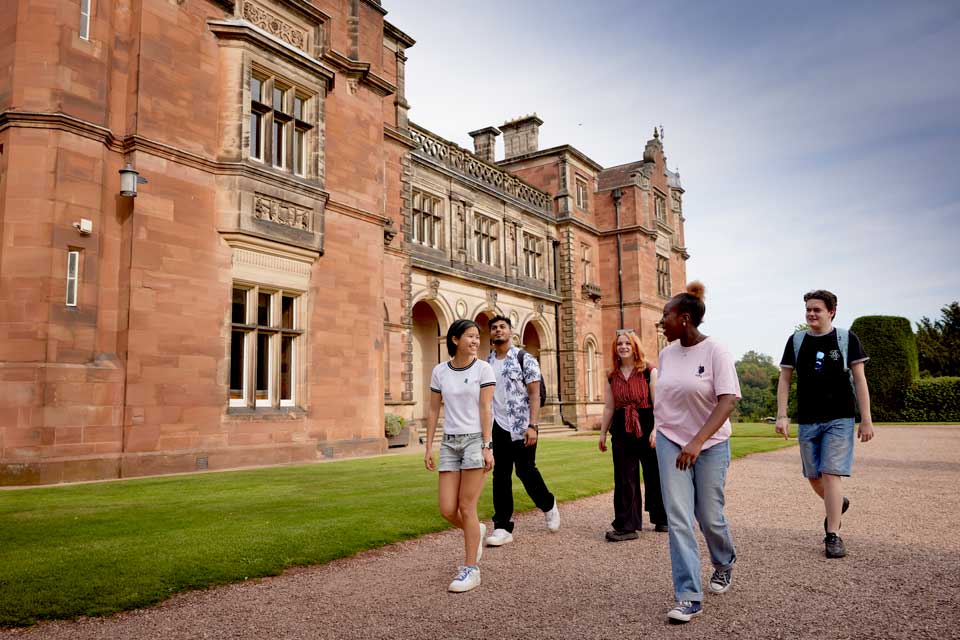
Student life at Keele is vibrant, diverse, and packed with opportunities to make the most of your time at university.

We help students manage their money and ensure that they receive any funding for which they may be eligible.

Make yourself more employable after graduation by taking advantage of the whole host of additional opportunities.