

Year of entry
- 2027
UCAS code
- Q300
Duration of study
- 3 years or 4 years with international or placement year
English - BA (Hons)
Course summary
Develop your skills as a writer, creative thinker and analyst of language, both literary and everyday. Delve into a diverse range of literary works from various cultures and historical periods, and discover how better to understand the world that surrounds us. Our English BA enables you to build advanced skills applicable to a huge variety of careers and take advantage of the placement opportunities embedded throughout the programme to prepare for your chosen career, benefiting from hands-on insights, work experience with skilled practitioners and collaboration with your peers. And specialise as you advance through the degree, focusing more on authors, periods, genres, and approaches that appeal to you.
Why study English at Keele University?
 Top 5 in England for English (Guardian University Guide, 2026)
English ranked Top 10 in England (NSS 2025, broad-based universities)*
Develop an array of skills in interpretation, communication, and critical thinking and build your confidence as a reader, writer and critic
Become a skilled analyst of literature of all kinds, from poetry to graphic novels to everyday language such as political speeches and marketing campaigns
Placement opportunities available with our partners including the National Trust, Wedgwood and the V&A Museum
Top 5 in England for English (Guardian University Guide, 2026)
English ranked Top 10 in England (NSS 2025, broad-based universities)*
Develop an array of skills in interpretation, communication, and critical thinking and build your confidence as a reader, writer and critic
Become a skilled analyst of literature of all kinds, from poetry to graphic novels to everyday language such as political speeches and marketing campaigns
Placement opportunities available with our partners including the National Trust, Wedgwood and the V&A Museum

Course overview
With our English degree at Keele you will engage your imagination with texts from near and far and from the past and present, and develop your understanding of the cultures that they are part of and the ways that they reflect, generate or contradict the ideas of their time. This programme ranges from the classics of literature to contemporary writing such as graphic novels and Young Adult and Children’s Fiction: you’ll get the chance to study poetry, drama and fiction from the Medieval period right up to the present day. You’ll become a skilled critic of literature and build key skills in communication, creativity and critical thinking. You’ll be shown how to develop well-evidenced and reasoned arguments that will culminate in your final-year ‘English Project’ where, with the support of an academic supervisor, you will either complete an extended piece of research or create your very own scholarly edition of a text of your choosing. Benefit too from Keele’s vibrant Creative Writing culture: you can work on your own creative writing skills if you want to, and regularly hear published poets and novelists reading their work in our lively Keele Hall Readings series.
Just as we encourage you to make the most of your time at Keele, we also prepare you for life after university, and even help you kick-start your own career. You’ll have the opportunity to engage with projects and placements, drawing on our extensive network of existing placement partners including the National Trust, Wedgwood, and the V&A Museum, or using our support to find your own opportunity. This allows you to combine your degree programme with practical experience, apply your learning to real-world situations, and enhance your CV.
You’ll also have the opportunity to study abroad with a partner university, to learn a modern language, or to gain a recognised TESOL qualification, which will help you to develop global perspectives and build your awareness and experience of other cultures and practices.
*We have compared the positivity ratings of all participating UK institutions using the NSS 2025 sector data to determine Keele's position relative to other broad-based universities (i.e. excluding specialist institutions and further education colleges).

Placement partnerships
Take advantage of the placement opportunities embedded throughout the programme. Benefit from hands-on insights, work experience with skilled practitioners, and our research partnerships with national and international institutions such as the National Trust, Wedgwood and the Victoria and Albert Museum.


Course structure
Modules for English
Our courses are designed to develop the skills, experience and expertise you'll need to succeed in your chosen career, informed by the latest research, teaching methods, student feedback, and employer insights. Module details are representative of what we intend to deliver on the course, but may change to reflect best practice and academic development. This information should therefore not be considered a definitive list of available modules.
Compulsory modules
Becoming a Critic
How do you craft a compelling university essay, analyse a literary text, and put criticism to use? How can you interpret a work within its historical context, or apply literary theory to it? Through studying a wide range of texts, from novels such as Wuthering Heights, to Renaissance tragedy, to the poetry of Toni Morrison, you'll develop essential skills for academic reading and writing. This module will enhance your appreciation of literature and prepare you for advanced study throughout your degree.
Classic Literature and its Adaptations
What makes a work of literature 'classic'? What do we mean when we call something an example of 'popular culture'? This module invites you to compare 'classic' texts (such as Hamlet, The Great Gatsby, and The Color Purple) with adaptations that share their themes or challenge their values. You'll learn new ways to think about why some texts are called 'classics' and some are not, and enrich your understanding of the way that texts interact with one another across genres.
Gothic Nightmares: Robots, Monsters and Witches
Gothic Nightmares introduces you to the representation of spooks, automatons, monsters and supernatural horrors in literature, film, and TV from the late eighteenth century to the present day. Each week you will read a short story and a critical text, and watch an example of the gothic genre from film or TV. Why has the gothic persisted as it has? Why do we need (or want) to be scared? What are we afraid of anyway?
Voices and Audiences: Building Your Professional Communication Skills
This module introduces you to the many ways that your literary knowledge and communication skills will be useful in future employment. Studying a range of poems, speeches, and plays, you will learn how to employ effective rhetorical strategies to communicate professionally with different audiences, enabling you to give speeches, design lesson plans or exhibitions, or run social media campaigns. The module includes masterclasses from professionals working in, for example, museums, theatres, and social media.
Optional modules
Writing for Children
The module starts at a surprise location. You receive a blank book and start to write. It’s a journal: you submit it later, alongside your creative or critical piece. Back in Keele you look at children’s writing from different periods and cultures. You consider imagination and myth, the politics of representation, the construction and subversion of gender roles. You think about voice and vision. Your expressive skills flower as you explore storytelling techniques and the transformative power of narrative.
Writing Fiction
This module introduces you to key characteristics of fiction. You will gain an understanding of how these can be employed to explore the meaning of a text. Engaging with fiction by writers from all over the world, you will learn how to analyse core elements such as narrative voice, structure and the evocation of place, and develop your own ability to write short, creative prose pieces. Guided by Keele's award-winning novelists, you will attain a solid foundation for writing longer prose pieces in the future.
Compulsory modules
Revolutions in Thought: Medieval Pioneers to Romantic Rebels
The 1500s to the 1830s was a period of rapid historical change, including shifts in cultural norms, new debates about gender, class, empire, and race, and the questioning of traditional religious beliefs. You will explore how English poetry, drama, and fiction responded to these transformations, and develop your understanding of how texts relate to their wider social and cultural contexts. You will acquire the advanced critical skills you will need to draw on in the final year of your degree.
Literature and Society
Building on your first year, in this second-year module you will extend your knowledge of different literary approaches and theories, exploring topics such as feminism, race studies, ecocriticism, and the history of emotions. You will explore how literature reflects and influences social issues, both those contemporary to the literature you study and those relevant in today’s society. You will deepen your skills in critical analysis as you apply your literary understanding to real-world debates and situations.
Cultures in Conflict: Victorian to Contemporary World Literature
This module expands your understanding of literature’s relation to History. You will study novels, poems, and plays from the Victorian period to the present, relating them to social, political and cultural contexts including class, race, gender and sexuality. You will be exposed to a range of literary styles and genres including realism, modernism, postmodernism and the postcolonial, extending your knowledge of different types of literature in preparation for the final year of your degree.
Pathways with English: Developing Your Profile
This module broadens your knowledge of the variety of career pathways open to you, enabling you to identify, analyse, and showcase your degree skills and experiences effectively. Through completing and reflecting on problem-based tasks relating to different sectors, such as telling the story of a business, or writing a funding proposal to support a literary festival, you will build your creative and collaborative skills and learn how to articulate them in ways that will be attractive to employers.
Professional Experience with English (Year 2)
This module offers you the chance to contribute to the world outside the University through completing a work placement, a project for a client (or a series of projects for different clients), or working as a team to deliver a successful festival or event. You will be trained to showcase your creative and collaborative skills and abilities effectively before applying for an opportunity advertised through the module (or you can source your own, subject to it meeting the module’s requirements).
Please note: You must choose either ‘Pathways with English: Developing Your Profile’ or ‘Professional Experience with English (Year 2)'.
Optional modules
Literature, Creativity and the Cultural Industries
This module builds on L4 introductions to cultural platforms/industries and to adaptation/script-writing, enabling a focused study of how the New Vic Theatre adapts texts for the stage; you will explore how the theatre as cultural industry produces social value through programmes of research and creativity; you will use this knowledge to reflect on societal impacts of cultural industries more widely, for example music, film, creative writing. You will be assessed in ways that enable you to reflect on your own creative and critical practice.
Brave New Worlds? Science Fiction and Fantasy
Building on your understanding of genre fiction, ‘popular’ literature, and questions of value developed in year 1, on 'Brave New Worlds?' you'll examine the connections between two types of 'speculative fiction': sci-fi and fantasy. As you explore how their strange fictional worlds critique the real world, you'll think further about the relationship between ‘popular’ genres and the literary establishment, consolidating your skills in independent critical analysis. Why are such genres still often not regarded as ‘serious’ literature? Is this justifiable?
Radical Writing: From Modernity to Counter-Culture
Radical Writing looks at twentieth-century experimental writing, from Modernism's rallying call of 'Make it New!' to the mid and late twentieth century’s experiments with poetry, narrative forms, film, and revolutionary counter-politics. Why did this impulse towards radical politics and disruption of literary form occur in tandem at this time? What do we mean when we call something ‘experimental’? What were these writers trying to do or to rebel against?
Local Literature in Action
As you are introduced to place-writing skills, you will reflect on what writing can do in the world. You will be supported to create vivid settings that are close to home (Stoke or elsewhere). As you think about form, genre, and voice, you will explore writing’s capacity to shape and re-shape people’s lived experiences of cities, towns and regions, and explore the concept of regional and/or global Englishes. You will receive practical training in working with communities outside the University.
Teenage Dreams: Youth Subcultures in Fiction and Film
Youth culture has had profound influences on society. On 'Teenage Dreams' you will examine the historical development of subcultures from the ‘classic’ period to postmodernism and study a range of representations of youth subcultures, from the 1950s to the present, including fiction, film, fashion, and music. These texts will be explored through theories of subcultures, building on critical skills you acquired in year 1, and thinking about pressing issues of class, gender, sexuality and ethnicity.
Screenwriting: Principles and Practices
This module forms a gateway to the worlds of professional screenwriting and story development. You’ll explore key screenwriting concepts in practical, writing-based seminars, as well as analysing a range of film and TV industry texts. You’ll then produce a number of screenplay samples which respond to the theme of the seminars, receiving feedback in regular writing workshops. You’ll go on to develop your own creative project plan, which provides an invaluable basis for any project work in your final year.
The American South: US Summer School (Level 5)
Study Southern US culture on location! The American South is a distinctive but difficult to define geographical and cultural entity, and attitudes to the South range from celebration to derision. Studying with others from a range of disciplines, you will think through historical and current constructions of the US South through its history, literature, film, and wider culture. You spend four weeks at one of our partner universities taught by Keele staff, shaping your own research project with their support.
Compulsory modules
English Project
In your final-year independent research project you will showcase the skills that you have developed over the three years of your degree. In group workshops and individual supervisions you will work closely with a member of the Keele English team to produce either an 8-10,000-word dissertation on a topic of your choosing, or a modern edition of a (normally pre-1800) lesser-known text. Either route will require you to use advanced skills in English literature research, theoretical debate, and textual analysis.
Employing English: Putting Your Subject into Practice
Now you are preparing for life after graduation, this module enables you to put your degree skills into practice and work with employer-clients on a series of real-life projects. Enhancing the creative and collaborative skills you developed in your second year, this final-year module will develop your ability to work effectively with clients from a variety of settings, such as charities, publishers, museums, and will enhance your confidence in presenting your work to your chosen employer-client.
Professional Experience with English (Year 3)
In your final year we offer you another opportunity to complete a work placement, a project for a client (or a series of clients), or work as part of a team to deliver a successful festival or event. Completed during the final stages of your degree, the module gives you cutting-edge experience of the sector you wish to enter following graduation as well as valuable employer contacts, thereby providing you with an effective career launchpad.
Please note: You must take either 'Employing English: Putting Your Subject into Practice’ or ‘Professional Experience with English (Year 3)’
Optional modules
Shakespeare on Film
How have Shakespeare's works been adapted by the film industry, and why do screenwriters and directors make the creative decisions they make? In 'Shakespeare on Film' you will explore a range of Shakespeare plays adapted for film, and develop your understanding both of the original works and of the possibilities they offer for reinterpretation and adaptation. You can practise film adaptation yourself, as you explore possibilities for cutting and modernising Shakespeare’s text for the screen.
Angels and Demons: Conflict and Rebellion in Seventeenth-Century Literature
In 'Angels and Demons' you will focus on one of the most turbulent periods in English history. In the mid-1600s, civil war turned the country upside down, and writers turned to the supernatural to explain their experiences of conflict, as well as to justify or condemn rebellion. Through studying a range of printed matter – including epic supernatural tales, ghost narratives, and religious prophecies – you will enhance your ability to scrutinise the ways in which imaginative writing shaped political debate.
Mean Streets: The Detective and the American City
As you explore the relationship between literary detectives and the city since the early nineteenth century, you will extend the understanding of genre that you established in the first and second year of your degree. Through literature, painting, and film, you will examine how literary detectives reflect anxieties about cultural and political changes in urban worlds, and will consider whether, in their quest to reconstruct plots and deliver explanations, detectives might function as avatars of readers and writers.
Not just superheroes! Contemporary Comics and Graphic Novels
Contemporary comics and graphic novels deal with a startling range of themes: alongside superheroes, they explore questions of racial identity, sexual politics, teenage angst, events such as 9/11 and the legacy of colonialism. You will learn how to read these complex, exciting texts, exploring the challenges and pleasures that graphic narratives offer to readers. In discussing how the combination of text and image offer new approaches to understanding contemporary issues, you will develop an advanced appreciation of different literary genres.
Into the Matrix: Postmodernism in Fiction, Film and Theory
On 'Into the Matrix', you'll explore postmodernism: a cultural and literary movement characterised by scepticism towards authority and an emphasis on irony, playfulness, and fragmentation. You’ll examine its implications for notions of history, identity, sexuality, politics, and consumer society, considering how techniques like intertextuality and unreliable narration challenge traditional structures and conventions. You'll assess the influence of these ideas on authors and film directors and study the main themes and techniques in postmodern fiction and film.
The Alcohol Question
From Shakespeare to Bridget Jones, alcohol has always held a fascination for writers. On this module you will extend considerations of gender, sexuality, and class from previous modules and apply these questions to literary, televisual and filmic representations of alcohol use and drinking cultures. You can produce critical and creative work on key themes such as pub culture, alcoholism, and lads and ladettes – and you can even write your own drinking song or temperance tale!
Life Writing
‘Autobiography’: that’s writing about the self, right? Wrong! That’s Rule One. You look at canonical texts by saints and sinners, scientists and sages. You study key theories. Then you look for other voices. You construct a counter canon and interpret it. This is about your creative practice as well as your academic development, though. What grain of sand will be your pearl? Workshops provide support, but this is your journey through the self to the world. Remember Rule One.
Literature and the Lived Experience of Ageing, 1908-2018
How is the experience of ‘older age’ represented in the literature of the twentieth and twenty first centuries, among men, women, families, people who migrated to Britain from different continents, and people who live on those continents? Is dementia an inevitable feature of ageing? What is it like to live with dementia? We will answer these questions by studying novels, memoirs, films, and policy/critical texts that have shaped a pressing experience of our times.
Writingscapes
This module enables you to specialise in various forms of place-writing. It introduces you to some spatial theories, including sensoryscapes, geopoetics, and psychogeography, offering you different approaches you might adopt in your writing. You’ll be supported to reflect on the relations between theory and practice. You’ll also read published examples of creative texts (poetry, prose, creative nonfiction) by English-language and bi-/multi-lingual writers from the UK and elsewhere, to help you develop your writing and situate it within broader literary landscapes.
Thresholds: Young Adult Fiction
Young Adult Fiction, occupying a borderline between children's and adult fiction, often focuses on moments of crisis, its characters caught between innocence and ruin, naivety and understanding, and sometimes literally between two worlds. What is it about young adulthood that invites these explorations of the threshold and the liminal? Can we read 'growing up', through these fictions, not as gradual development but as series of shocks? This module emphasises diversity and we will read fan-fiction, genre fiction, and ‘issue’ novels.
The American South: US Summer School
Study Southern US culture on location! The American South is a distinctive but difficult to define geographical and cultural entity, and attitudes to the South range from celebration to derision. Studying with others from a range of disciplines, you will think through historical and current constructions of the US South through its history, literature, film, and wider culture. You spend four weeks at one of our partner universities taught by Keele staff, shaping your own research project with their support.
You can view the Programme Specification for this course by visiting the Programme Specifications webpage. (opens in new tab)

"In my third year, I completed my placement with Support Staffordshire, a local environmental charity, working as a Content Assistant. I learnt how to research, create and upload content for their social media channels, alongside building on my soft skills such as communication, problem solving and adaptability. This module has enlightened me to the type of career path I would like to work towards and has provided me with the skills, experience and knowledge I need in order to reach it."
Double Gold in the Teaching Excellence Framework
Keele is one of only 15 broad-based universities in England - out of over 100 - to have been awarded Gold in both the 2017 and 2023 Teaching Excellence Framework (TEF) exercises, demonstrating our consistent teaching excellence.
Additional opportunities
 Foundation year
 Learn a language
 Placement year
 International year
 Study abroad
 GCP Elective Pathways
Explore more
(opens in a new tab)
GCP Elective Pathways
Explore more
(opens in a new tab)
There are a range of additional opportunities for this course.
Please note that undertaking one may impact the availability of another.
Work Placements
Opportunities to enhance your employability are at the heart of our English programme and you will have the chance to undertake a work placement as part of your degree through modules or an additional work placement year (optional). This allows you to collaborate with professionals and demonstrate your creative expertise in the workplace, building key skills in communication, analytical thinking and problem-solving.
Our placement year option between years two and three of your degree programme provides preparation for employment after university, through hands-on experience. This will enable you to build confidence and demonstrate your abilities in a professional environment, using the skills you have gained throughout your degree programme.
The American South: US Summer School
The American South: US Summer School is an exciting optional module that can be taken in Year 2 or 3 to study Southern US culture on location! The American South is a distinctive but difficult to define geographical and cultural entity, and attitudes to the South range from celebration to derision. Studying with others from a range of disciplines, you will explore historical and current constructions of the US South through its history, literature, film, and wider culture. Four weeks are spent at one of our partner universities taught by Keele staff, shaping your own research project with their support. In 2023 and 2024, students studied at the University of North Carolina, Wilmington.
Study abroad
Enhance your career prospects with an International Year at one of our partner institutions in between years two and three of your degree programme. This exciting opportunity enables you to explore different cultural perspectives, establish international networks and gain new experiences whilst building your personal and professional attributes, supporting your career prospects.
Alternatively, you may choose to study abroad for just a semester in your second year which will count towards your second-year grades. Our Global Opportunities team will support you through the process, ensuring you are able to get the most out of your international experience.
Learn a language
Discover languages at Keele. Whether you are a complete beginner or already have a foundation of knowledge, we offer a flexible and guided route to developing your skills. We currently offer British Sign Language, Mandarin Chinese, French, Japanese and Spanish, as well as a TESOL qualification.
Being multilingual can assist with your career prospects and encourage you to stand out against competition, as well as increasing your employment prospects overseas. This is also a fantastic opportunity for your personal development where you can practise your reading, writing and oral skills and build key characteristics such as time management, adaptability, and motivation.

Entry requirements
These are the typical entry requirements for this course for a range of UK and international qualifications. If your qualifications aren't listed, please contact us to check if we can accept them. If you don't think you'll meet the stated requirements, you may be able to access this course via a Foundation Year.
Typical offer
Please ensure you read the full entry requirements by selecting your qualifications from the menu below. This will include any subject specific, GCSE/Level 2 Maths, and/or English language requirements.
Please select your qualification from the drop-down list below for the full entry requirement information
A Level
BBB in three A Levels.
Contextual Offer: BCC in three A Levels.
You will also need: an English language qualification (see below).
Access to HE Diploma
122 UCAS points in any Access to HE Diploma including Distinction in at least 30 Level 3 credits.
You will also need: an English language qualification (see below).
Algeria
The Baccalauréat de l’Enseignement Secondaire with an overall grade of 16/20
OR
Brevet de Technicien Supérieur with an overall grade of 13/20
You will also need: an English language qualification (see below)
Bangladesh
2 year undergraduate degree at 60% or above.
We will also consider applications on an individual basis for those who have completed the Higher Secondary Certificate a CGPA of 5.0.
BTEC Extended Diploma / National Extended Diploma
DDM in any BTEC Extended Diploma / National Extended Diploma.
Contextual Offer: DMM in any BTEC Extended Diploma / National Extended Diploma.
You will also need: an English language qualification (see below).
BTEC National Diploma / Diploma
Distinction and Distinction in any BTEC National Diploma / Diploma and C in one A Level, or
Distinction and Merit in any BTEC National Diploma / Diploma and B in one A Level.
You will also need: an English language qualification (see below).
BTEC National Extended Certificate / Subsidiary Diploma
Distinction in any BTEC National Extended Certificate / Subsidiary Diploma and BC in two A Levels, or
Merit in any BTEC National Extended Certificate / Subsidiary Diploma and AB in two A Levels.
You will also need: an English language qualification (see below).
Canada - Diploma
65% / BBBCC in five courses in the Grade 12 Diplomas.
You will also need: an English language qualification (see below).
China - Gaokao
69% in the Gaokao.
You will also need: an English language qualification (see below).
Core Maths
If you have B or higher in Core Maths and are studying A Levels, BTEC, the International Baccalaureate, or an Access to HE Diploma, you will typically receive an alternative offer which will be lower than the standard offer. Please see 'Alternative and contextual offers' below.
Cyprus - Apolytirion
18 / 86% in the Apolytirion.
You will also need: an English language qualification (see below).
Egypt
Diploma from Technical, Commercial, Industrial or Health Institutes with a minimum of 60% overall and no subject below 50%
Please contact Admissions for further information if you hold:
Diploma of Industrial Technical Secondary School
Al-Azhar Training Diploma
European Baccalaureate
72% overall.
You will also need: an English language qualification (see below).
Extended Project Qualification (EPQ)
If you have B or higher in the EPQ and are studying A Levels, BTEC, the International Baccalaureate Diploma, or an Access to HE Diploma, you will typically receive an alternative offer which will be lower than the standard offer. Please see 'Alternative and contextual offers' below.
France - Baccalaureate
13 in the French Baccalaureate / International Option Baccalaureate, or 12.5 in the Baccalauréat Français International.
You will also need: an English language qualification (see below).
Germany - Abitur
2.2 overall average in the Abitur.
You will also need: an English language qualification (see below).
Ghana
We do not accept the West African Senior School Certificate Examination for direct entry. However, you can apply to study an International Foundation Year at Keele University International College. On successful completion, you can progress to an undergraduate degree at Keele.
Hong Kong - Diploma
444 from two electives and one core subject in the HKDSE.
You will also need: an English language qualification (see below).
India - Standard XII
Average of 70% from four subjects in the ICSE, CBSE or Western Bengal Standard XII, or average of 75% from four subjects in any other Standard XII.
You will also need: an English language qualification (see below).
International Baccalaureate Career-Related Programme
We encourage applications with the IBCP but recognise that your combination of qualifications may differ depending on where you are studying.
If you are taking a BTEC National Diploma / Diploma with one or more Higher Levels, your offer will be similar to our BTEC + A Level offer (see 'BTEC National Diploma / Diploma') but with an HL requirement of 6 for A, 5 for B, or 4 for C.
For any other combination, please contact the University Admissions Team for advice.
International Baccalaureate Diploma
555 in three Higher Levels or 30 points.
Contextual Offer: 544 in three Higher Levels or 28 points.
You will also need: an English language qualification (see below).
Ireland - Leaving Certificate
H3, H3, H4, H4, H4, H4 in the Irish Leaving Certificate.
You will also need: an English language qualification (see below).
Italy - Diploma di Esame di Stato
80% in the Esame di Stato.
You will also need: an English language qualification (see below).
Kenya - KCSE / Diploma
We do not accept the Kenya Certificate of Secondary Education for direct entry. However, you can apply to study an International Foundation Year at Keele University International College. On successful completion, you can progress to an undergraduate degree at Keele.
We may accept a two year Diploma. Please contact the University Admissions Team for advice.
Malaysia - STPM
BBB in three Principal Level subjects in the STPM.
You will also need: an English language qualification (see below).
NCUK
Pass NCUK Foundation Year with BBB and a C in EAP English Language module and grade B in EAP for Law courses.
Nepal
75% in the Higher Secondary Certificate (HSSC) (from 2018 onwards)
Nigeria - Senior School Certificate / OND
We do not accept the Senior School Certificate (WAEC or NECO) for direct entry. However, you can apply to study an International Foundation Year at Keele University International College. On successful completion, you can progress to an undergraduate degree at Keele.
We may accept an Ordinary National Diploma with GPA of 2.5 or a Merit / Lower Credit. Please contact the University Admissions Team for advice.
Pakistan - Secondary School Certificate
We do not accept the Secondary School Certificate for direct entry. However, you can apply to study an International Foundation Year at Keele University International College. On successful completion, you can progress to an undergraduate degree at Keele.
Portugal
Overall average of 15.5 in a Secondary Certificate.
You will also need: an English language qualification (see below).
Scotland - Highers and Advanced Highers
BBBCC in five Highers, or CC in two Advanced Highers and CC in two Highers, or CCC in three Advanced Highers.
You will also need: an English language qualification (see below).
Singapore - A Levels (H2)
BBB in three H2 Levels.
You will also need: an English language qualification (see below).
South Africa - Matric (NSC and IEB)
66666 in five subjects.
You will also need: an English language qualification (see below).
Spain - Bachillerato
Overall average of 7.4 in the Título de Bachillerato.
You will also need: an English language qualification (see below).
Sri Lanka - Advanced Level
BBB in three Advanced Levels.
You will also need: an English language qualification (see below).
T Level
Merit in any T Level.
You will also need: an English language qualification (see below).
Turkey
70% in the Lise Diplomasi/Meslek & Teknik Lisesi Diplomasi
OR
a CGPA of 2.6 or 60% in the Lisans Diplomasi
Uganda - Advanced Certificate of Education
BBB in three Principal Level subjects in the Advanced Certificate of Education.
You will also need: an English language qualification (see below).
USA - Advanced Placement
BBB = three AP tests scores of 444 OR
2 AP tests scores PLUS one of the following:
SAT I: 1240 (min 550 RW)
ACT: 27
Honours course at B
One year long equivalent Dual Enrolment/College course at B.
You will also need: an English language qualification (see below).
USA Non-AP Curriculum
You will also need: an English language qualification (see below).
Welsh Baccalaureate / Bagloriaeth Cymru
The Advanced Skills Baccalaureate Wales is equivalent to one full A Level at the same grade and can be included alongside 2 other A Levels in a standard A Level offer for this course (see A Level). All subject specific requirements will still need to be met.
Zimbabwe - ZIMSEC A level
BBB in three ZIMSEC A Level subjects.
You will also need: an English language qualification (see below).
English language requirements
All our courses require an English language qualification or test. Most students meet this through a 4 or C in GCSE English. Please visit our English Language pages for details, including test information for international students. For students who require a test, this course requires a result from Group A.
Alternative and contextual offers
We're committed to ensuring equality of opportunity for applicants with the potential and motivation to succeed, regardless of background. We offer alternative offer schemes with clear eligibility criteria, including contextual offers, offers for those studying in the Keele region, and recognition of a range of additional qualifications.
General information
The entry grades outlined indicate the typical offer, along with any subject specific requirements. This is for general information only. Keele University reserves the right to vary conditions based upon a candidate's application. For international students, find out how we work with approved agents as part of our admissions process.
Social life, societies and sports
Find out moreAccommodation
Find out moreLocal area and travel
Find out moreBoost your employability
Find out more
Fees and funding
Tuition fees for 2027/28 2026/27 academic year
- The tuition fee for UK Home students starting in 2027/282026/27 is set by the UK Government and will be £10,050£9,790.
- International: Band 1, £18,200 for the 2026/27 academic year
International fees for 2027/28 entry have not yet been confirmed. We review all tuition fees annually and will update this page once they are finalised.
In subsequent years of your course, UK Home fees may change in line with government policy or legislative requirements. For continuing international students, fees will increase each year in line with RPI, capped at a maximum of 5% per year.
For details of our international fee bands visit our Undergraduate tuition fees page.
Financial support
Going to university can be daunting as well as exciting. It's important to understand the costs and financial support available.
Our Student Financial Support team offers confidential advice and guidance to help you manage your money, resolve issues with Student Finance, create a budget, explore your options if you're facing financial hardship, and access any funding you are eligible for, such as bursaries and scholarships.
For more information visit our undergraduate fees and funding pages.
Additional costs
The additional costs listed below apply to the 2026/27 academic year. Costs for 2027/28 entry will be confirmed closer to the time, so the information below should be used as a guide only.
Optional costs
There may be optional costs that students can choose to incur to enhance their learning experience. These are not required to complete the course. Details of these optional costs are outlined below to help you plan accordingly.
Students may also incur general expenses related to university study, such as for printing, textbooks and other materials. Students who undertake a placement may be responsible for additional costs, such as travel, accommodation, and subsistence costs. For further information, please refer to the additional costs information.
Students who opt to take our work-based placement modules at level 5 and 6 may be expected to pay travel costs (usually one day weekly) to their placement.
Optional 4-week US Summer School trip:
Estimated maximum total cost (after taking into account Turing scheme funding): £820 for Widening Access students; £1675 for other students.
(Estimated maximum cost of £2220 (£950 for flights; £1250 for accommodation; £20 for visa waiver application) to be sourced by student, in addition to usual subsistence costs.
Based on 2025 figures, Turing funding is expected to reimburse student costs to a value of approximately £1400 for Widening Access students, and approximately £545 for other students.)

"Initially, I chose the Work Placement module because it enabled me to work on a project I’d been involved in, the Earth Stories Film Festival, and gain credits for my work. Over the past year I have held the role of Assistant Director of the festival, and in completing the module it has helped me in the role far beyond how I envisaged it would. The help and support of the staff have enabled me to appreciate that what I was doing was in fact ‘real world’ work and I have learnt to apply crucial workplace skills to the project."


Your future career
A degree in English prepares you for a broad range of careers because it gives you multiple skills that are transferable to all sorts of different workplaces. You will be a confident writer, researcher and presenter with a critical and creative approach that will encourage you to share ideas in the workplace. You will develop core skills that will enable you to work independently and in collaboration with colleagues to communicate effectively and demonstrate your attention to detail and problem-solving skills.
These are just a few of the professions that welcome English graduates:
- Accountancy
- Advertising
- Charity/ Third Sector
- Civil Service
- Creative Industries
- Law
- Retail Management
- Journalism
- Publishing
- Broadcasting
- Copywriting
- Marketing
- Public Relations
- Editorial
- Librarian
- Teaching
Enhance your employability
Keele’s Careers and Employability team (Shortlisted for Best University Careers Employment Service - National Undergraduate Employability Awards, 2021) offers a variety of personal and career development opportunities to enhance your employability.
From mock interviews, careers guidance and CV advice, to careers fairs, alumni mentoring and networking events, along with helping you find part-time and graduate employment, the team will support you throughout your studies and beyond.
Find out more about our careers and employability services, including career planning, alumni mentoring, jobs, internships, starting your own business and much more.

"I chose to study the Humanities Work Placement module during the final year of my English Literature degree in the hopes of gaining experience working in a library or heritage setting. While on placement, I was given the opportunity to engage with a variety of fascinating archival materials dating back to the 1200s, learning about the archiving process from acquisition to preservation and public access. I also gained experience in community engagement, attending the theatre and public speaking events while working to produce an online blog. The confidence that this experience has enabled me to develop has led to further success in obtaining a job as a Library Assistant since graduating."

Teaching, learning and assessment
Teaching
You will be taught by experienced academic staff from a range of backgrounds, with expertise in a number of research areas. Learning and teaching methods used on the programme vary according to the subject matter and level of the module. Almost all teaching is in person.
English teaching methods are predominantly focused on the communication and discussion of ideas, and aimed at fostering dialogue, debate, thoughtful reflection and the questioning of preconceptions (our own as well as other people’s).
Methods include:
- Lectures
- Workshops
- Seminars
- Independent study
- Employer-led or project-based sessions
- Web-based learning
- The English Project in the final year is the capstone of the degree programme and gives students the opportunity to undertake an extended piece of independent research supervised and supported by a member of staff. This may be a dissertation or an edition of a work: you choose what you want to do with the support of an assigned academic supervisor.
- Individual consultation: You are provided with regular opportunities to talk through particular areas of difficulty, and any special learning needs you may have, with academic mentors or module tutors on a one-to-one basis and are encouraged to initiate such meetings whenever you need advice.
Assessment
English at Keele includes many different types of assessment, which are designed to allow you to demonstrate the multiple skills you’ll be acquiring: for example, to exercise your powers of reasoning, to research the different topics that interest you, and to communicate your conclusions in different ways to many different audiences.
Assessments may include:
- Essays
- Essay plans
- Close reading exercises
- Individual and group presentations
- Reviews, summaries and annotations
- Creative writing reflective commentaries
- Discussion threads
- Debates
- Podcasts
- Blog posts
- Other non-traditional assessments such as designing a virtual exhibition, the drafting of CVs or job cover letters, creating an anthology or edition, or writing a creative piece such as a poem or a screenplay that reflects a module's themes or ideas.
This mix of assessments allows you to showcase your ability to write, present and think creatively. You will be trained in, and then assessed on, all sorts of things that will be valuable in your future career: time management skills, for example, organisation and adaptability to different tasks, and digital design skills.
Academic expertise
The teaching team at the School of Life Sciences are active researchers in core areas such as biosciences, geosciences, environmental sciences, geography and bioengineering. Their academic expertise informs your learning, incorporating current practices, theories and contemporary themes that encourage discussion within your subject area.
The teaching team consists of professors, readers, senior lecturers, lecturers, demonstrators, and teaching fellows.
Professional support staff are also available to assist with any queries you may have during your undergraduate studies at Keele.
The teaching team at the School of Chemical and Physical Sciences perform research across the school with particular strengths in materials science, synthetic, forensic and analytical chemistry. Their academic expertise informs your learning, incorporating current practices, theories and contemporary themes that encourage discussion within your subject area.
Professional support staff are also available to assist with any queries you may have during your undergraduate studies at Keele.
The teaching team consists of professors, senior lecturers, and lecturers within the School of Chemical and Physical Sciences. They are fellows or senior fellows of the Higher Education Academy, the professional body for teachers in higher education. Fellowship provides individuals with recognition of their practice, impact and leadership of teaching and learning. A number of our academic staff have also achieved national recognition for their excellence and innovation in teaching and hold awards from a variety of institutions, including the Royal Society of Chemistry and AdvanceHE.
The teaching team in the School of Humanities and Social Sciences are active researchers in core areas of Criminology and Sociology such as fields of crime, globalisation and urban spaces and cultures. Their academic expertise informs your learning, incorporating current practices, theories and contemporary themes that encourage discussion within your subject area.
Professional support staff are also available to assist with any queries you may have during your undergraduate studies at Keele.
The teaching team consists of professors, senior lecturers, lecturers and graduate teaching assistants.
The teaching team in the School of Humanities and Social Sciences are active researchers in core areas of Education such as critical social policy and feminism. Their academic expertise informs your learning, incorporating current practices, theories and contemporary themes that encourage discussion within your subject area.
Professional support staff are also available to assist with any queries you may have during your undergraduate studies at Keele.
The teaching team consists of senior lecturers and lecturers.
The teaching team in the School of Chemical & Physical Sciences are active researchers in core areas such as materials, sustainability, and energy. Their academic expertise informs your learning by incorporating current practices, theories, and contemporary themes that encourage discussion within your subject area.
Professional support staff are also available to assist with any queries you may have during your undergraduate studies at Keele University.
The teaching team consists of professors, senior lecturers and lecturers.
The teaching team in the School of Humanities and Social Sciences are active researchers in core areas of English and Creative Writing. Their academic expertise informs your learning, incorporating current practices, theories and contemporary themes that encourage discussion within your subject area.
Professional support staff are also available to assist with any queries you may have during your undergraduate studies at Keele.
The teaching team consists of professors, readers, senior lecturers, lecturers, and graduate teaching assistants.
The teaching team in the School of Humanities and Social Sciences are active researchers in core areas such as twentieth century and contemporary music, cultural politics, social movements and representation. Their academic expertise informs your learning, incorporating current practices, theories and contemporary themes that encourage discussion within your subject area.
Professional support staff are also available to assist with any queries you may have during your undergraduate studies at Keele.
The teaching team consists of professors, readers, senior lecturers, and lecturers.
The teaching team at the School of Chemical and Physical Sciences perform research across the school with strengths in materials science, synthetic, forensic and analytical chemistry. Their academic expertise informs your learning, incorporating current practices, theories and contemporary themes that encourage discussion within your subject area.
Professional support staff are also available to assist with any queries you may have during your undergraduate studies at Keele.
The teaching team consists of professors, senior lecturers, and lecturers within the School of Chemical and Physical Sciences. They are fellows or senior fellows of the Higher Education Academy, the professional body for teachers in higher education. Fellowship provides individuals with recognition of their practice, impact and leadership of teaching and learning. A number of our academic staff have also achieved national recognition for their excellence and innovation in teaching and hold awards from a variety of institutions, including the Royal Society of Chemistry and AdvanceHE.
The teaching team at the School of Life Sciences are active researchers in core areas such as biosciences, geosciences, environmental sciences, geography and bioengineering. Their academic expertise informs your learning, incorporating current practices, theories and contemporary themes that encourage discussion within your subject area.
The teaching team consists of professors, readers, senior lecturers, lecturers, demonstrators, and teaching fellows.
Professional support staff are also available to assist with any queries you may have during your undergraduate studies at Keele.
The teaching team in the School of Humanities and Social Sciences are active researchers in core areas of medieval, early modern, and modern history including expertise in historical inequality, democratisation and civil society. Their academic expertise informs your learning, incorporating current practices, theories and contemporary themes that encourage discussion within your subject area.
Professional support staff are also available to assist with any queries you may have during your undergraduate studies at Keele.
The teaching team consists of professors, readers, senior lecturers, lecturers and graduate teaching assistants.
The teaching team at the School of Medicine are either active researchers in core areas such as musculoskeletal health, mental health and well-being, biomedical science, prognosis and big data, or actively engaged with a diverse range of scholarly activities to enhance their roles as educators.
The teaching team consists of professors, readers, senior lecturers, lecturers, senior teaching fellows, teaching fellows, senior research fellows, research fellows, research associates, research assistants, anatomy technicians and PhD students. The School of Medicine teaching team also includes a wide range of health professionals who are actively engaged in clinical research and quality improvement including those based in hospitals and community-based services.
The academic team at the School of Nursing and Midwifery are active researchers in core areas such as loss, bereavement and end of life care; primary, community and district nursing; and women's health. Their academic expertise informs your learning, incorporating current practices, theories and contemporary themes that encourage discussion within your subject area.
Professional support staff are also available to assist with any queries you may have during your undergraduate studies at Keele.
The teaching team consists of readers, senior lecturers, lecturers, research associates and teaching fellows.
The teaching team at the School of Chemical and Physical Sciences perform research across the school with particular strengths in materials science, synthetic, forensic and analytical chemistry. Their academic expertise informs your learning, incorporating current practices, theories and contemporary themes that encourage discussion within your subject area.
Professional support staff are also available to assist with any queries you may have during your undergraduate studies at Keele.
The teaching team consists of professors, senior lecturers, and lecturers within the School of Chemical and Physical Sciences. They are fellows or senior fellows of the Higher Education Academy, the professional body for teachers in higher education. Fellowship provides individuals with recognition of their practice, impact and leadership of teaching and learning. A number of our academic staff have also achieved national recognition for their excellence and innovation in teaching and hold awards from a variety of institutions, including the Royal Society of Chemistry and AdvanceHE.
The teaching team in the School of Humanities and Social Sciences are active researchers in areas including democracy, governance, public policy and idealism. Their academic expertise informs your learning, incorporating current practices, theories and contemporary themes that encourage discussion within your subject area.
Professional support staff are also available to assist with any queries you may have during your undergraduate studies at Keele.
The teaching team consists of professors, senior lecturers, lecturers and graduate teaching assistants in the School of Humanities and Social Sciences.
The teaching team within the Institute of Sport brings together expertise across sport, exercise, health and rehabilitation, reflecting the continuum of human performance and wellbeing across the lifespan. Our staff are actively engaged in research and applied practice spanning physical activity, performance, health and recovery, ensuring that teaching is informed by both scientific evidence and real-world application. As a CASES-accredited partner institution, and with staff holding individual CASES accreditation, the programme is underpinned by recognised professional standards in sport and exercise science.
Staff operate within an interdisciplinary environment, working alongside colleagues from across the Allied Health Professions within the School. This collaboration informs teaching and supports a broader, integrated understanding of health, physical activity and rehabilitation across diverse populations and contexts.
Collectively, this breadth of expertise shapes your learning experience, incorporating current practices, theories and contemporary themes that encourage discussion within your subject area.
Professional support staff are also available to assist with any queries you may have during your undergraduate studies at Keele. The School's teaching team consists of professors, senior lecturers and lecturers.

Foundation year
Our Foundation Year provides an excellent alternative route to Keele, offering preparation for your chosen degree with guaranteed entry onto your undergraduate course once you successfully complete.
This extra year of study can improve your academic skills, expand your subject knowledge, build your confidence, and provide a better understanding of higher education.
On our Foundation Year, you'll join our undergraduate community from the outset, with access to all the facilities and support you'd get as an undergraduate student at Keele.
The information in this Foundation Year section is for UK/Home applicants. Where an international Foundation Year is available, please see the 'Information for international students' tab.
The information within this page is for students wishing to start their studies in September. If you would like to start this course in January, please visit our January pages for further details.
Course content
Our Foundation Year allows you to develop your critical thinking, academic reading, writing, and communication study skills along with subject-specific knowledge and skills which will be invaluable in your academic studies and beyond. Upon meeting the progression criteria and successfully completing our Foundation Year, you will automatically progress into your Keele undergraduate degree with the confidence that you have the skills, and knowledge needed to successfully complete your course.
This Foundation Year is a two-semester programme which provides a tailored pre-degree programme of study to better prepare you for the BA (Hons) English degree. For example, the Foundations of Humanities 1 module introduces you to the broad range of source material across the Humanities disciplines - from media to history which enables us to analyse political, social or economic perspectives and attitudes to individuals, marginal groups and 'mainstream' society. Course content has been developed in collaboration with degree teaching teams, so that by the time you begin Year 1, you will be ready to excel at your studies, as the majority of our Foundation Year students do.
Find out more about the Keele Foundation Year, including information about teaching and assessment methods by visiting the Foundation Year homepage.
Course structure
The module details given below are indicative, they are intended to provide you with an idea of the range of subjects that are taught to our current students. The modules that will be available for you to study in future years are prone to change as we regularly review our teaching to ensure that it is up-to-date and informed by the latest research and teaching methods. The information presented is therefore not intended to be construed and/or relied upon as a definitive list of the modules available in any given year.
Semester one core modules
| FYO-00247 | Foundations: Breaking the code - Understanding Academic Writing | 15 credits |
| FYO-00257 | Foundations of Humanities - 1 | 15 credits |
| FYO-00259 | Foundations of Humanities - 2 | 15 credits |
| FYO-00267 | Foundations of Social Sciences - 3 |
15 credits |
Semester two core modules
| FYO-00271 | University Research Portfolio | 30 credits |
| FYO-00261 | Advancing Humanities | 30 credits |
Entry requirements
The entry grades outlined in this section indicate the likely offer or range of offers which would be made to candidates along with any subject specific requirements. This is for general information only. Keele University reserves the right to vary offer conditions depending upon a candidate’s application. Read more about our undergraduate entry requirements.
- Between 40-48 UCAS points from at least 1 A level/level 3 qualification or equivalent, or
- Relevant work experience
AND
- GCSE English Language at grade 4 (C), or Level 2 Functional Skills or
- IELTS 5.5 (with 5.5 in all subtests)
How to apply
Students will need to apply for BA (Hons) English with Foundation Year (UCAS code Q3VA) through UCAS at www.ucas.com
Direct entry students
If you already have your qualifications, are not expecting any further results and only wish to apply to Keele, please contact the Admissions Office directly.
The information in this Foundation Year section is for UK/Home applicants. Where an international Foundation Year is available, please see the 'Information for international students' tab.
We also offer a January start for some of our Foundation Year courses. Adopting a blended learning approach, the January start is particularly useful for students wishing to return to education following time out of studying, or who are seeking a flexible approach to their Foundation Year studies. Our January start is available across most of our Science, Humanities, Social Science, Health and Business courses.
Whilst still being a full-time course, our blended delivery model combines live teaching sessions - both online and on-campus - with self-directed study, enabling you to predominantly study at a time that suits your lifestyle. You will benefit from weekly online taught sessions which encourage you to engage with your teachers and peers.
In addition to online study there will be a series of full study days that you will be required to attend throughout each semester. These sessions may include lab-based activities, group work, review of course and assessment materials studied online. They will emphasise opportunities for you to deepen your knowledge and understanding of your chosen route.
Please refer to the September start tab for more information about the entry requirements and what you will study. The modules that you will take on a January start Foundation Year will be similar to those for the September start, but on a compressed timescale and tailored to a blended learning approach (with the majority of learning taking place online).
For more information, including fees, the UCAS code for this course, how to apply, and how you will be taught, please visit our January Start Foundation Year webpage.
Our International Foundation Year is delivered on campus through Keele University International College (KUIC). Find out more about the International Foundation Year options on the KUIC website.
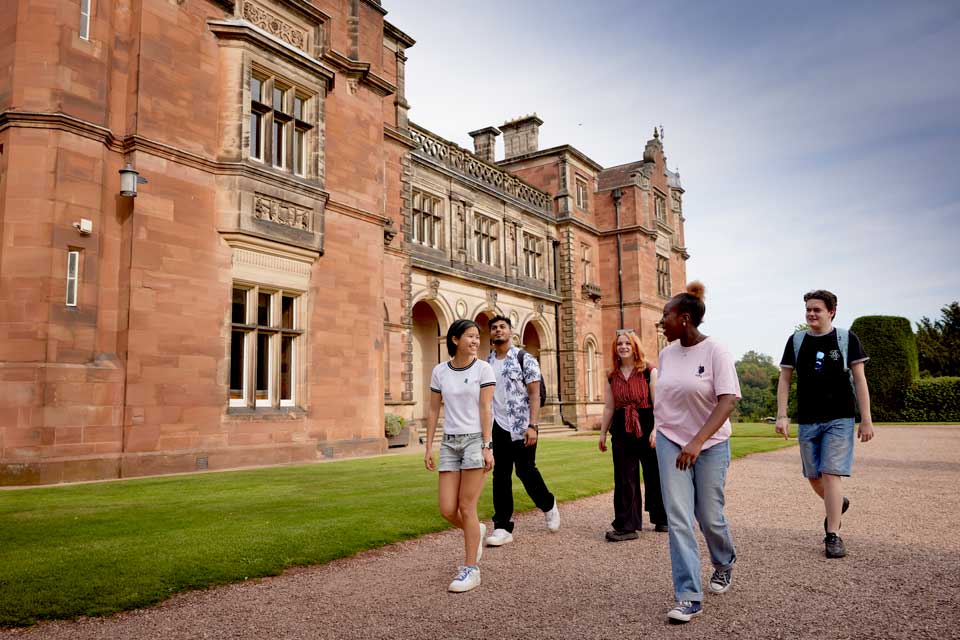
Student life at Keele is vibrant, diverse, and packed with opportunities to make the most of your time at university.

We help students manage their money and ensure that they receive any funding for which they may be eligible.

Make yourself more employable after graduation by taking advantage of the whole host of additional opportunities.