


Year of entry
- 2027
UCAS code
- A100
Duration of study
- 5 years
Medicine - MBChB
Course summary
Medicine at Keele delivers an innovative curriculum underpinned by the three core themes identified by the General Medical Council: Professional Values and Behaviours, Professional Skills, and Professional Knowledge (GMC, 2018). Ranked 5th in England (Guardian University League Table, 2025). Studying Medicine MBChB at Keele you will develop the necessary knowledge and clinical skills to become a doctor who practises with competence and compassion.
Why study Medicine at Keele University?
 No.1 in the West Midlands and 5th in England for Medicine (Guardian University Guide, 2026)
No.1 in the West Midlands for Medicine (Complete University Guide, 2027)
Top 5 in England for Medicine (NSS 2026, full-time students in broad-based English universities)*
1st in UK for overall F1 preparedness (GMC National Training Surveys, 2023)
3rd in the UK for Medicine (Daily Mail University Guide, 2027)
No.1 in the West Midlands and 5th in England for Medicine (Guardian University Guide, 2026)
No.1 in the West Midlands for Medicine (Complete University Guide, 2027)
Top 5 in England for Medicine (NSS 2026, full-time students in broad-based English universities)*
1st in UK for overall F1 preparedness (GMC National Training Surveys, 2023)
3rd in the UK for Medicine (Daily Mail University Guide, 2027)

Course overview
Medicine at Keele adopts a modern, spiral, highly integrated curriculum that combines a range of learning strategies, including early clinical experience, integrated curriculum and clinical skills teaching, practical activities (including dissection), small-group self-directed learning, lectures and seminars. Additionally, inter-professional learning with other health students, including nursing, midwifery, paramedic science, physiotherapy and radiography, is fostered throughout the programme.
We are committed to listening to, responding to and supporting our students to become well-rounded, competent clinicians. Through forums such as our Medical Student Council, we recognise the value of our students' contribution to development and progression of our curriculum and the student experience.
Key course content
To ensure you graduate as a confident and competent clinician, you will study a range of topics including:
- Professional and ethical responsibilities
- Patient safety and quality improvement
- Diagnosis and medical management
- Prescribing medication safely
- The health service and healthcare systems
- Health promotion and illness prevention
Course structure
Our spiral curriculum means you will re-visit core topics, building on your knowledge as you progress through the medicine degree.
In Year 1, you will cover a range of units including: health and disease, the body's defence systems, emergencies, life-course, brain and mind, pregnancy, and lifestyle.
Year 2 sees you re-visit many aspects of biomedical, behavioural and social science, with an increasing emphasis on complexity and pathology. You will learn through integrated units such as: mechanisms of disease, inputs and outputs, movement and trauma, circulation, breath of life and integrated systems.
Years 3 and 4 enable you to build on the foundations of clinical knowledge and skills through immersion in clinical placements, while continuing to develop and apply biomedical, behavioural and social science knowledge. Within year 3 you will cover topics such as: medicine, surgery, elderly care, mental health and paediatrics, and complete a general practice clinical placement. You will revisit many of these topics in Year 4 but will also cover women's health, neurology and musculoskeletal systems.
The final year of the MBChB prepares you for professional practice as a foundation year 1 doctor. You will undertake extensive student assistantships including: out of hours evening and weekend working, general practice, acute and critical care (including emergency medicine, intensive care and anaesthesia), medicine and surgery.
Scholarship and student-selected components
Scholarship activities and student selected components (SSCs) complement our MBChB course. These offer you opportunities to learn about how medical knowledge develops through research, and to focus on particular areas of interest in medical science, clinical medicine or public health in greater depth. You will select a component in several years of study which has clear objectives and will be assessed accordingly. For example in Year 1, you will produce a library-based mini-review of an academic topic under the supervision of a member of the teaching and/or research staff.
Clinical placements
You will have extensive experience of clinical placements in both primary and secondary care settings and in the non-NHS community sector ("third sector"). Clinical placements will take place across Staffordshire, Shropshire and other adjoining counties. We are committed to providing you with opportunities to build your awareness of the health and wellbeing of a variety of demographics to strengthen your appreciation of the wider determinants of health, such as socio-economic, cultural and environmental conditions.
Beginning in Year 1, you will be encouraged to think of community and social dimensions of illness and health throughout your academic studies and placements.
You will have placements with community services and general practices in Years 1 and 2, and over 20% of teaching in Years 3, 4 and 5 takes place in general practice. Examples of other community services we use are schools, workplaces, residential homes and drop-in centres, to name but a few: all places that contribute to the health and care of people.
Hospital placements will take place in multiple centres, providing opportunities to engage with major medical and surgical specialities that are delivered in different locations.
Intercalation
Further opportunities for exploration of special interests are available through intercalation. Options for intercalation to pursue an additional qualification include studying at bachelor’s level after the second year or master’s level after the fourth year.
Intercalation is a year out of your undergraduate medical studies to study a subject area in greater depth before returning to complete the medical course. An intercalated degree provides you with an opportunity to gain an additional qualification in a medicine-related subject that interests you, acquire a better understanding of basic biomedical sciences, medical humanities or research methodologies, publish scientific papers and present at conferences.
Students who are given permission to intercalate may do so either at Keele or at other universities.
*We have compared the positivity ratings of all participating UK institutions using the NSS 2026 sector data to determine Keele's position relative to other broad-based universities (i.e. excluding specialist institutions and further education colleges).

"The holistic nature of the Keele curriculum prepared me very well for life as a junior doctor, but also provided me with a great foundation in clinical research. Research can often be overlooked in the training of medics, given the importance of developing clinical skills required for hospital work. However, creating doctors that understand and can contribute to research is pivotal in the advancement of medical science. Keele allowed me to learn clinical and research skills symbiotically, which has had a tremendous impact on my pursuit of becoming a clinical scientist. "

"Keele prepared me perfectly for life as a junior doctor. From day one we were encouraged to think critically as clinicians evaluating situations and responding accordingly. At Keele there is a strong emphasis on communication and the doctor-patient relationship, which is a key skill to develop as a trainee doctor and has helped me tremendously throughout my career. The early exposure to clinical medicine at Keele made the transition to doctor seamless. I was exposed to a wide range of specialities and was equipped with the mentorship and guidance to be in an excellent position to enter a highly competitive training job in cardiothoracic surgery at the first opportunity.""

Course structure
Modules for Medicine
Our courses are designed to develop the skills, experience and expertise you'll need to succeed in your chosen career, informed by the latest research, teaching methods, student feedback, and employer insights. Module details are representative of what we intend to deliver on the course, but may change to reflect best practice and academic development. This information should therefore not be considered a definitive list of available modules.
|
Compulsory modules |
Compulsory modules |
Credits |
Optional modules |
Credits |
|
Year 1 (Level 4) |
120 |
0 |
0 |
|
Compulsory modules |
Compulsory modules |
Credits |
Optional modules |
Credits |
|
Year 2 (Level 5) |
120 |
0 |
0 |
|
Compulsory modules |
Compulsory modules |
Credits |
Optional modules |
Credits |
|
Year 3 (Level 6) |
120 |
0 |
0 |
|
Compulsory modules |
Compulsory modules |
Credits |
Optional modules |
Credits |
|
Year 4 (Level 6) |
120 |
0 |
0 |
|
Compulsory modules |
Compulsory modules |
Credits |
Optional modules |
Credits |
|
Year 5 (Level 6) |
120 |
0 |
0 |
You can view the Programme Specification for this course by visiting the Programme Specifications webpage. (opens in new tab)
Placements
Throughout the course, you will gain experience in a variety of healthcare settings within different kinds of centres in several different hospital trusts.
Our partner trusts are University Hospitals of North Midlands NHS Trust (Royal Stoke University Hospital and County Hospital, Stafford), Midlands Partnership University NHS Foundation Trust (Bradwell Community Hospital and Haywood Community Hospital in Stoke-on-Trent, St George’s Hospital in Stafford and the Redwoods Centre in Shrewsbury), North Staffordshire Combined Healthcare NHS Trust (Harplands Hospital in Stoke-on-Trent) and Shrewsbury and Telford Hospital NHS Trust (Royal Shrewsbury Hospital and Princess Royal Hospital, Telford). You will also undertake placements in general practice throughout the programme.
It is important that students experience the full variety of settings within which patient care takes place, and you will therefore be expected to spend time in different locations within certain years of the course. These settings include a very large teaching hospital and tertiary referral centre (Royal Stoke), busy district general hospitals (County, Royal Shrewsbury and Princess Royal), specialist psychiatric centres (St George’s, Harplands and Redwoods) and small community hospitals (Bradwell and Haywood), as well as general practice. Patient care is delivered across this range of hospitals, and medical students need to spend time in several of them to engage with delivery of a wide variety of services. This will involve travel between sites within some parts of the MBChB programme.
Currently, years 4 and 5 of the programme are each spent at distinct bases: one year in Staffordshire and the other in Shropshire. Training is not confined to a single hospital within each county.
You will also have the opportunity to engage with a voluntary/third-sector organisation providing patient support outside the NHS.

"I felt Keele prepared me well for life after graduation and really helped me to fit the knowledge, communication, and clinical skills required together and build on this each year. I found the balance of going through necessary placements but also allowing for some student selected components, including the final year elective, meant I was able to gain the knowledge needed but also explore areas of interest to help me later select a speciality (and gave me something to talk about later on at specialty interviews). Keele has smaller numbers of students than many other universities in each year group which meant it was often easier to connect with tutors and I didn’t feel lost in the crowd."
Double Gold in the Teaching Excellence Framework
Keele is one of only 15 broad-based universities in England - out of over 100 - to have been awarded Gold in both the 2017 and 2023 Teaching Excellence Framework (TEF) exercises, demonstrating our consistent teaching excellence.
Additional opportunities

There are a range of additional opportunities for this course.
Please note that undertaking one may impact the availability of another.

Entry requirements
These are the typical entry requirements for this course for a range of UK and international qualifications. If your qualifications aren't listed, please contact us to check if we can accept them. If you don't think you'll meet the stated requirements, you may be able to access this course via a Foundation Year.
Additional information
Students must be 18 years old by 1 October.
- View our full Medicine entry requirements
- Find out how to apply to study medicine at Keele
- View our medicine widening participation information
- Explore our Health Foundation Year
English language requirements
All our courses require an English language qualification or test. Most students meet this through a 4 or C in GCSE English. Please visit our English Language pages for details, including test information for international students. For students who require a test, this course requires a result from .
Alternative and contextual offers
We're committed to ensuring equality of opportunity for applicants with the potential and motivation to succeed, regardless of background. We offer alternative offer schemes with clear eligibility criteria, including contextual offers, offers for those studying in the Keele region, and recognition of a range of additional qualifications.
General information
The entry grades outlined indicate the typical offer, along with any subject specific requirements. This is for general information only. Keele University reserves the right to vary conditions based upon a candidate's application. For international students, find out how we work with approved agents as part of our admissions process.
Social life, societies and sports
Find out moreAccommodation
Find out moreLocal area and travel
Find out moreBoost your employability
Find out more
Fees and funding
Tuition fees for 2027/28 2026/27 academic year
- The tuition fee for UK Home students starting in 2027/282026/27 is set by the UK Government and will be £10,050£9,790.
- International:
£46,700
International fees for 2027/28 entry have not yet been confirmed. We review all tuition fees annually and will update this page once they are finalised.
In subsequent years of your course, UK Home fees may change in line with government policy or legislative requirements. For continuing international students, fees will increase each year in line with RPI, capped at a maximum of 5% per year.
For details of our international fee bands visit our Undergraduate tuition fees page.
Financial support
Going to university can be daunting as well as exciting. It's important to understand the costs and financial support available.
Our Student Financial Support team offers confidential advice and guidance to help you manage your money, resolve issues with Student Finance, create a budget, explore your options if you're facing financial hardship, and access any funding you are eligible for, such as bursaries and scholarships.
For more information visit our undergraduate fees and funding pages.
Additional costs
The additional costs listed below apply to the 2026/27 academic year. Costs for 2027/28 entry will be confirmed closer to the time, so the information below should be used as a guide only.
Mandatory costs
You can expect some additional costs as a student on this course, which may support learning activities, specialist equipment, fieldwork, placements, or other course-related requirements. Details of these mandatory costs are outlined below to help you plan accordingly. Students may also incur general expenses related to university study, such as for printing, textbooks and other materials. Students who undertake a placement may be responsible for additional costs, such as travel, accommodation, and subsistence costs. For further information, please refer to the additional costs information.
- Uniform requirements: Students are required to purchase two sets of uniform (tunic and trousers). Cost: £78.94
- Occupational Health: £92.80
- Lab coats (standard + Howie): £36.75
- Stethoscope (required from year 3): from £18
- Travel to Placements: Students are responsible for reasonable costs incurred in travelling to local placements and making travel arrangements - in the same way as for travel to and from the University generally. However, NHS-bursary-funded students on mandatory clinical placements may be eligible to claim reimbursement for excess travel and, where necessary, placement accommodation costs.
- Enhanced DBS check with digital ID check: £60.70
- Registration to the DBS Update Service: £16 per year. This price is not set by the University and is liable to increase.
- Replacement ID cards (up to £15) Replacement name badge (£5)


Your future career
Graduates of our undergraduate medical degree have gone on to pursue careers spanning a diverse range of specialities, from forensic pathologist to psychiatrist, GP to cardiothoracic surgeon. Our integrated curriculum and emphasis on the application of your learning means you are well-equipped to explore a career within a speciality aligned to your aspirations.
The General Medical Council (GMC) approves your university’s degree as a primary medical qualification (PMQ). This is important because, provided there are no concerns about your fitness to practise, a PMQ entitles you to provisional registration with the GMC for a licence to practise medicine in the UK. For more details visit the UK Foundation Programme website.
In order to practise medicine in the UK you will be required to pass the Medical Licensing Assessment (MLA). The MLA is in two parts: the Applied Knowledge Test (AKT), which you will sit as your final knowledge exam in the Keele MBChB programme, and the Clinical & Professional Skills Assessment (CPSA), which you will sit as your final skills assessment. Successfully completing the degree will therefore mean you have also completed the MLA. You will also sit a national Prescribing Safety Assessment (PSA) in year 5.
Provisionally registered doctors can only practise in approved Foundation Year 1 posts, obtained through the national application process during the final year of the course.
Successful completion of the programme is normally achieved within 12 months and awards a Certificate of Experience. You can then apply for full registration with the General Medical Council. You need this and a licence to practise unsupervised medical practice in the UK for both NHS and private practice. Medical students at UK medical schools who are from outside the UK and Ireland and do not have right of residence must check how the latest information on visa requirements affects their postgraduate training period.
Within the MBChB programme you will have opportunities to learn about the variety of medical speciality pathways and how to enhance your CV for your preferred speciality, as well as to experience particular specialities within SSCs. You will receive support with UK Foundation Programme applications and will build up a portfolio throughout the course to support subsequent medical job applications.
Find out more about our careers and employability services, including career planning, alumni mentoring, jobs, internships, starting your own business and much more.

"I particularly found PBL and case-based learning (CBL) sessions useful in helping develop my problem-solving, team work, and leadership skills. Keele also helped me to confidently use evidence-based research to do self-directed learning, which I still regularly use when keeping my medical knowledge and skills up-to-date. The introduction of hospital placements early on in the degree was also very beneficial in getting me familiar with the everyday running of the ward/emergency department. This helped me during my early days of working as a foundation doctor because I did not find the transition so daunting."

Teaching, learning and assessment
We aim to make learning enjoyable through small class sizes, small group learning and early clinical experience, and will support you to develop into highly competent and self-aware medical professionals.
In your programme you will sometimes be expected to role play and engage in simulated clinical scenarios with other students, such as the practice and observation of practical skills in physical contact with other students. For some specific practices, this may necessitate modification of dress - e.g., to shorts and t-shirt. These activities will be conducted in a professional, safe, respectful and culturally sensitive way, under the supervision of academic staff, according to a defined protocol.
We offer students varied learning opportunities including:
- Clinical placements
- Small-group learning based on clinical cases and real-world scenarios
- Lectures
- Anatomy and laboratory practicals
- Experiential learning
- Simulation
Small-group self-directed learning
Years 1 and 2 of the Keele MBChB curriculum make use of small-group self-directed learning in which students work together in tutorial groups on questions related to written clinical cases or clinically relevant scenarios. This involves independent study by individual students to acquire relevant theoretical and practical learning that is then shared among the group while discussing the case or scenario. Other scheduled teaching activities will contribute to the learning needed for the case/scenario discussions.
From year 3 onwards, this approach develops into case-based and case-illustrated learning, where the written scenarios are augmented using discussions of patients encountered by students in their clinical placements.
The small-group learning is supported by a variety of methods which include plenary lectures, seminars, laboratory practical classes, and a wide variety of placement experiences in primary and secondary care. Placements begin in year 1 and you will learn the skills needed to get the best out of placement opportunities prior to their occurrence. rom Year 3 onwards, students learn primarily through immersive clinical placements in a wide range of clinical settings. Being part of the clinical team is a core course requirement and ensures students achieve the GMC’s ‘Outcomes for Graduates’. The emphasis throughout the course is firmly on student-led, self-directed and collaborative learning.
Assessment
We utilise a range of assessment modes appropriate to assess each of the intended learning objectives of the programme. In every year all domains will be summatively assessed using appropriate assessment methods.
Assessment methods include:
- Written knowledge examinations - Knowledge is examined in a range of formats designed to test students' ability to apply relevant scientific and medical knowledge to professional practice. Methods include single best answer (SBA) and short answer question (SAQ) exams. The final written knowledge assessment includes the GMC’s Applied Knowledge Test (AKT), sat at the end of Year 4 of the programme.
- Practical examinations - These examinations are designed to enable you to demonstrate safe and effective clinical practice. These include objective structured clinical examinations (OSCEs) and a variety of workplace-based assessments (WBAs). The final assessment of clinical skills includes the GMC’s Clinical and Professional Skills Assessment (CPSA).
- In-course assignments - These assignments test your ability to apply a range of professional attributes, including your reflective practice and presentation skills. Methods include written reviews and case reports, presentations and posters.
- Portfolio - As part of the course, students will be required to build a portfolio of evidence demonstrating their developing clinical skills and reflection on their learning experiences in practice.
As a professionally regulated programme, students must be aware of the standards set out in the GMC’s Achieving Good Medical Practice - A Guide for Medical Students and are required to comply with these expectations throughout the course.
Key programme expectations
Before applying, it is important to understand the core physical and psychological demands of training for a career in this field. To help you make an informed choice, our programme aligns with fitness to train standards detailed by the Higher Education Occupational Practitioners (HEOPS) group. We encourage all prospective students to review these core capabilities to ensure they feel confident meeting the day-to-day expectations of both the academic study and clinical placements.

Medical Fitness to Train & Work
Medical students must meet essential medical fitness standards to ensure they can safely train and practice. This includes immunity screening, infectious disease precautions, and meeting functional health requirements.

Physically Demanding Role
Studying medicine requires reliable ability to mobilise independently, perform examinations and practical clinical procedures using safe moving and handling techniques, and respond effectively in emergencies (including performing CPR), across varied healthcare environments.

Mentally Demanding Role
Medical students will regularly encounter distressing, unpredictable, stressful and traumatic clinical situations. Students should have the cognitive ability, memory, judgement, emotional resilience and wellbeing required to study and practice safely.

Extensive Clinical Placements
Medical students spend significant time on placement in primary care, hospitals and specialist units to gain hands‑on experience. Students are required to contribute actively to multi-professional teams. Placements are mandatory (not optional).

Travel Requirements
Medical students must be prepared to travel to and from placement sites, often across large geographical areas, as part of routine clinical education. This is a course requirement (not optional).

Shift Work & 24‑Hour Service Expectations
The NHS operates 24/7, and therefore medical students and doctors must expect shift work, including weekend and night duties, and exposure to unpredictable workloads during training.

Academic expertise
The teaching team at the School of Life Sciences are active researchers in core areas such as biosciences, geosciences, environmental sciences, geography and bioengineering. Their academic expertise informs your learning, incorporating current practices, theories and contemporary themes that encourage discussion within your subject area.
The teaching team consists of professors, readers, senior lecturers, lecturers, demonstrators, and teaching fellows.
Professional support staff are also available to assist with any queries you may have during your undergraduate studies at Keele.
The teaching team at the School of Engineering and Physical Sciences perform research across the school with particular strengths in materials science, synthetic, forensic and analytical chemistry. Their academic expertise informs your learning, incorporating current practices, theories and contemporary themes that encourage discussion within your subject area.
Professional support staff are also available to assist with any queries you may have during your undergraduate studies at Keele.
The teaching team consists of professors, senior lecturers, and lecturers within the School of Engineering and Physical Sciences. They are fellows or senior fellows of the Higher Education Academy, the professional body for teachers in higher education. Fellowship provides individuals with recognition of their practice, impact and leadership of teaching and learning. A number of our academic staff have also achieved national recognition for their excellence and innovation in teaching and hold awards from a variety of institutions, including the Royal Society of Chemistry and AdvanceHE.
The teaching team in the School of Humanities and Social Sciences are active researchers in core areas of Criminology and Sociology such as fields of crime, globalisation and urban spaces and cultures. Their academic expertise informs your learning, incorporating current practices, theories and contemporary themes that encourage discussion within your subject area.
Professional support staff are also available to assist with any queries you may have during your undergraduate studies at Keele.
The teaching team consists of professors, senior lecturers, lecturers and graduate teaching assistants.
The teaching team in the School of Humanities and Social Sciences are active researchers in core areas of Education such as critical social policy and feminism. Their academic expertise informs your learning, incorporating current practices, theories and contemporary themes that encourage discussion within your subject area.
Professional support staff are also available to assist with any queries you may have during your undergraduate studies at Keele.
The teaching team consists of senior lecturers and lecturers.
The teaching team in the School of Engineering and Physical Sciences are active researchers in core areas such as materials, sustainability, and energy. Their academic expertise informs your learning by incorporating current practices, theories, and contemporary themes that encourage discussion within your subject area.
Professional support staff are also available to assist with any queries you may have during your undergraduate studies at Keele University.
The teaching team consists of professors, senior lecturers and lecturers.
The teaching team in the School of Humanities and Social Sciences are active researchers in core areas of English and Creative Writing. Their academic expertise informs your learning, incorporating current practices, theories and contemporary themes that encourage discussion within your subject area.
Professional support staff are also available to assist with any queries you may have during your undergraduate studies at Keele.
The teaching team consists of professors, readers, senior lecturers, lecturers, and graduate teaching assistants.
The teaching team in the School of Humanities and Social Sciences are active researchers in core areas such as twentieth century and contemporary music, cultural politics, social movements and representation. Their academic expertise informs your learning, incorporating current practices, theories and contemporary themes that encourage discussion within your subject area.
Professional support staff are also available to assist with any queries you may have during your undergraduate studies at Keele.
The teaching team consists of professors, readers, senior lecturers, and lecturers.
The teaching team at the School of Engineering and Physical Sciences provide research-led quality teaching, particularly in the fields of forensic chemistry, forensic biology, crime investigations, forensic search and forensic anthropology, taphonomy and archaeology.
Professional support staff are also available to assist with any queries you may have during your undergraduate studies at Keele.
Our teaching team consists of professors, senior lecturers, lecturers, demonstrators and PhD students.
The teaching team at the School of Life Sciences are active researchers in core areas such as biosciences, geosciences, environmental sciences, geography and bioengineering. Their academic expertise informs your learning, incorporating current practices, theories and contemporary themes that encourage discussion within your subject area.
The teaching team consists of professors, readers, senior lecturers, lecturers, demonstrators, and teaching fellows.
Professional support staff are also available to assist with any queries you may have during your undergraduate studies at Keele.
The teaching team in the School of Humanities and Social Sciences are active researchers in core areas of medieval, early modern, and modern history including expertise in historical inequality, democratisation and civil society. Their academic expertise informs your learning, incorporating current practices, theories and contemporary themes that encourage discussion within your subject area.
Professional support staff are also available to assist with any queries you may have during your undergraduate studies at Keele.
The teaching team consists of professors, readers, senior lecturers, lecturers and graduate teaching assistants.
The teaching team at the School of Medicine are either active researchers in core areas such as musculoskeletal health, mental health and well-being, biomedical science, prognosis and big data, or actively engaged with a diverse range of scholarly activities to enhance their roles as educators.
The teaching team consists of professors, readers, senior lecturers, lecturers, senior teaching fellows, teaching fellows, senior research fellows, research fellows, research associates, research assistants, anatomy technicians and PhD students. The School of Medicine teaching team also includes a wide range of health professionals who are actively engaged in clinical research and quality improvement including those based in hospitals and community-based services.
The academic team at the School of Nursing and Midwifery are active researchers in core areas such as loss, bereavement and end of life care; primary, community and district nursing; and women's health. Their academic expertise informs your learning, incorporating current practices, theories and contemporary themes that encourage discussion within your subject area.
Professional support staff are also available to assist with any queries you may have during your undergraduate studies at Keele.
The teaching team consists of readers, senior lecturers, lecturers, research associates and teaching fellows.
The teaching team at the School of Engineering and Physical Sciences perform research across the school with particular strengths in astrophysics, materials science, renewable energy and sustainability. Their academic expertise informs your learning, incorporating current practices, theories and contemporary themes that encourage discussion within your subject area.
Professional support staff are also available to assist with any queries you may have during your undergraduate studies at Keele.
Our teaching team consists of professors, senior lecturers, lecturers, readers, and PhD students.
The teaching team in the School of Humanities and Social Sciences are active researchers in areas including democracy, governance, public policy and idealism. Their academic expertise informs your learning, incorporating current practices, theories and contemporary themes that encourage discussion within your subject area.
Professional support staff are also available to assist with any queries you may have during your undergraduate studies at Keele.
The teaching team consists of professors, senior lecturers, lecturers and graduate teaching assistants in the School of Humanities and Social Sciences.
The teaching team within the Institute of Sport brings together expertise across sport, exercise, health and rehabilitation, reflecting the continuum of human performance and wellbeing across the lifespan. Our staff are actively engaged in research and applied practice spanning physical activity, performance, health and recovery, ensuring that teaching is informed by both scientific evidence and real-world application. As a CASES-accredited partner institution, and with staff holding individual CASES accreditation, the programme is underpinned by recognised professional standards in sport and exercise science.
Staff operate within an interdisciplinary environment, working alongside colleagues from across the Allied Health Professions within the School. This collaboration informs teaching and supports a broader, integrated understanding of health, physical activity and rehabilitation across diverse populations and contexts.
Collectively, this breadth of expertise shapes your learning experience, incorporating current practices, theories and contemporary themes that encourage discussion within your subject area.
Professional support staff are also available to assist with any queries you may have during your undergraduate studies at Keele. The School's teaching team consists of professors, senior lecturers and lecturers.
The teaching team at Keele Business School are active researchers in core areas such as accounting, finance, economics, human resource management, marketing, and management. Their academic expertise informs your learning, incorporating current practices, theories and contemporary themes that encourage discussion within your subject area.
Professional support staff are also available to assist with any queries you may have during your undergraduate studies at Keele.
Our teaching team consists of professors, senior lecturers, and lecturers within Keele Business School. The team is multicultural and multinational, bringing an international dimension to the school's teaching, research, and business engagement.
The teaching team within the School of Allied Health Professions and Pharmacy brings together a diverse community of academics and clinicians working across four interrelated themes: Pharmacy and Pharmaceutical Science, Medical Technologies, Allied Health Therapies, and Active Living and Sport.
Our staff include experts in the biological and clinical sciences, statistics, engineering, and professional practice, who contribute to both research and scholarly activity aligned to their disciplines. This breadth of expertise ensures that teaching is informed by current evidence, practice, and innovation, enabling you to engage with contemporary issues relevant to your chosen field.
The teaching team consists of professors, senior lecturers, lecturers, readers, visiting clinicians, and research fellows.
Our programmes are supported by experienced professional staff who help to ensure a high-quality student experience throughout your studies.
The teaching team at Keele Business School are active researchers in core areas such as accounting, finance, economics, human resource management, marketing, and management. Their academic expertise informs your learning, incorporating current practices, theories and contemporary themes that encourage discussion within your subject area.
Professional support staff are also available to assist with any queries you may have during your undergraduate studies at Keele.
Our teaching team consists of professors, senior lecturers, and lecturers within Keele Business School. The team is multicultural and multinational, bringing an international dimension to the school's teaching, research, and business engagement.
The School of Computer Science and Mathematics is home to active researchers working across a rich range of topics, from artificial intelligence, cyber security and human-centred computing to fluid and solid dynamics, biomechanics and pure mathematics. Whether developing responsible AI, designing smart health technologies, or advancing mathematical methods for waves, materials and structures, our research is wide-ranging and internationally recognised.
This will directly shape your learning. You'll encounter current ideas in AI and its ethical implications, cloud computing, evolutionary systems, usable security, mathematical modelling of materials and discrete mathematics, taught by the people actively advancing these fields.
The teaching team consists of professors, senior lecturers, lecturers, readers and visiting research fellows.
Alongside your teaching team, dedicated professional staff will be on hand to support you throughout your time at Keele.
Our teaching team includes readers, senior lecturers, lecturers, research associates and teaching fellows who are active researchers and educators with expertise across a wide range of health and social care disciplines.
Their research and scholarship span areas including musculoskeletal health, mental health and wellbeing, community nursing, women's health, biomedical science, prognosis and big data, contemporary issues in child and family social work, end-of-life care, and international social work practice. Staff also undertake pedagogic research to advance teaching and learning within health and social care education.
This academic expertise informs your learning by incorporating current practices, theories and contemporary themes that encourage discussion and critical thinking within your subject area.
Professional support staff are also available throughout your undergraduate studies at Keele to provide guidance and answer any queries you may have.
The teaching team in the School of Law consists of professors, senior lecturers, lecturers and solicitors. They are all either active researchers (in fields including social justice and human rights; public and European law; ethics, health and social care; and legal education) or experienced legal practitioners. Their academic and professional expertise informs your learning, incorporating current practices, theories, and contemporary themes that encourage discussion within your subject area.
Professional support staff are also available to assist with any queries you may have during your undergraduate studies at Keele.
The teaching team at the School of Psychology have expertise spanning cognition and neuroscience, health and wellbeing, social identity and change, and justice and security.
Staff research and scholarship expertise inform your learning, incorporating current practices, theories and contemporary themes that encourage active learning and discussion within your subject area.
Professional support staff are also available to assist with any queries you may have during your undergraduate studies at Keele.
The teaching team consists of professors, senior lecturers, lecturers and teaching fellows within the School of Psychology.
The teaching team at the Harper and Keele Veterinary School includes active researchers in areas such as animal health and wellbeing, animal welfare and farming technologies. Many are currently practising veterinary surgeons and allied professionals, and the course draws on a wide range of expertise across many disciplines through contributions by external lecturers. Their academic expertise informs your learning, incorporating current practices, theories and contemporary themes that encourage discussion within your subject area.
Professional support staff are also available to assist with any queries you may have during your undergraduate studies at Keele.
Our teaching team consists of readers, professors, senior lecturers, lecturers and teaching fellows.
The academic expertise in the School of Humanities and Social Sciences informs your learning, incorporating current practices, theories and contemporary themes that encourage discussion within your subject area.
Professional support staff are also available to assist with any queries you may have during your undergraduate studies at Keele.
Our teaching team consists of professors, readers, senior lecturers, and lecturers.

Foundation year
Our Foundation Year provides an excellent alternative route to Keele, offering preparation for your chosen degree with guaranteed entry onto your undergraduate course once you successfully complete.
This extra year of study can improve your academic skills, expand your subject knowledge, build your confidence, and provide a better understanding of higher education.
On our Foundation Year, you'll join our undergraduate community from the outset, with access to all the facilities and support you'd get as an undergraduate student at Keele.
The information in this Foundation Year section is for UK/Home applicants. Where an international Foundation Year is available, please see the 'Information for international students' tab.
Foundation year overview
We are now offering an exciting gateway route into medicine for students from some under-represented groups. This course offers standard medical training with the addition of a foundation year (a total of six years). The foundation year for Medicine has specific eligibility requirements. Please see September entry overview tab.
For more information about the medicine MBChB with Health Foundation Year course, including entry requirements and progression, please visit the Medicine with Health Foundation Year page.
Foundation year course content
The medicine MBChB with Health Foundation Year course will provide you with the requisite science knowledge, enhance your study skills and give you an introduction to the employability skills required by health professionals. The foundation year is a well established and successful programme that offers progression onto the full range of health degrees at Keele.
The foundation year for medicine is a gateway route into medicine for students from some under-represented groups. Students entering the foundation year will undertake a range of modules to bring your academic level up to an equivalent standard to that of direct entrants to year 1 of the MBChB programme. Progression requirements are currently 40% (45 credits) in all semester 1 modules and 70% (75 credits) in semester 2.
Students who gain entry to the health foundation year for medicine after interview, and complete the foundation year successfully, will automatically progress to Year 1 of the regular MBChB programme as long as they meet all occupational health and fitness-to-practise requirements. Progression to the MBChB programme from any of the other Keele foundation years is not possible.
Essential criteria
Please note that alongside the academic entry requirements, applicants must also meet essential criteria indicating that they belong to particular under-represented groups. These criteria are specified on the Medicine with Health Foundation Year page.
Extenuating circumstances
All requests to consider extenuating circumstances should be sent to medicine@keele.ac.uk at the time of application submission and no later than 31 October 2024.
Please note that if you wish extenuating circumstances to be considered, you must notify us in this way. We won't act on details of extenuating circumstances in the UCAS personal statement. We will take account of extenuating circumstances mentioned in the relevant section of the UCAS reference but we may need to request additional information and this should be done as early as possible in the cycle, so you should alert us to any need for extenuating circumstances to be considered by e-mailing before the 31 October deadline. We cannot take supplementary requests for consideration by your school/college, etc., into account unless you have submitted a request by the deadline.
Module summary
The module details given below are indicative, they are intended to provide you with an idea of the range of subjects that are taught to our current students. The modules that will be available for you to study in future years are prone to change as we regularly review our teaching to ensure that it is up-to-date and informed by the latest research and teaching methods. The information presented is therefore not intended to be construed and/or relied upon as a definitive list of the modules available in any given year.
First semester
| FYO-00237 | Foundations of Human Biology for Health | 15 credits |
| FYO-00241 | Foundations of Chemistry - Health | 15 credits |
| FYO-00213 | Foundations of Numerical and Quantitative Methods for Health Science | 15 credits |
Second semester
| FYO-00239 | Advancing Human Biology for Health | 30 credits |
| FYO-00241 | Advancing Chemistry for Health | 15 credits |
Year-long modules (across semester one and semester two)
| FYO-00181 | Academic and Professional Development | 30 credits |
How to apply for the Medicine MBChB with Health Foundation Year
Applications must be made through UCAS by the deadline of 15 October.
Medicine MBChB with Health Foundation Year UCAS course code: A104
The information in this Foundation Year section is for UK/Home applicants. Where an international Foundation Year is available, please see the 'Information for international students' tab.
We also offer a January start for some of our Foundation Year courses. Adopting a blended learning approach, the January start is particularly useful for students wishing to return to education following time out of studying, or who are seeking a flexible approach to their Foundation Year studies. Our January start is available across most of our Science, Humanities, Social Science, Health and Business courses.
Whilst still being a full-time course, our blended delivery model combines live teaching sessions - both online and on-campus - with self-directed study, enabling you to predominantly study at a time that suits your lifestyle. You will benefit from weekly online taught sessions which encourage you to engage with your teachers and peers.
In addition to online study there will be a series of full study days that you will be required to attend throughout each semester. These sessions may include lab-based activities, group work, review of course and assessment materials studied online. They will emphasise opportunities for you to deepen your knowledge and understanding of your chosen route.
Please refer to the September start tab for more information about the entry requirements and what you will study. The modules that you will take on a January start Foundation Year will be similar to those for the September start, but on a compressed timescale and tailored to a blended learning approach (with the majority of learning taking place online).
For more information, including fees, the UCAS code for this course, how to apply, and how you will be taught, please visit our January Start Foundation Year webpage.
Our International Foundation Year is delivered on campus through Keele University International College (KUIC). Find out more about the International Foundation Year options on the KUIC website.
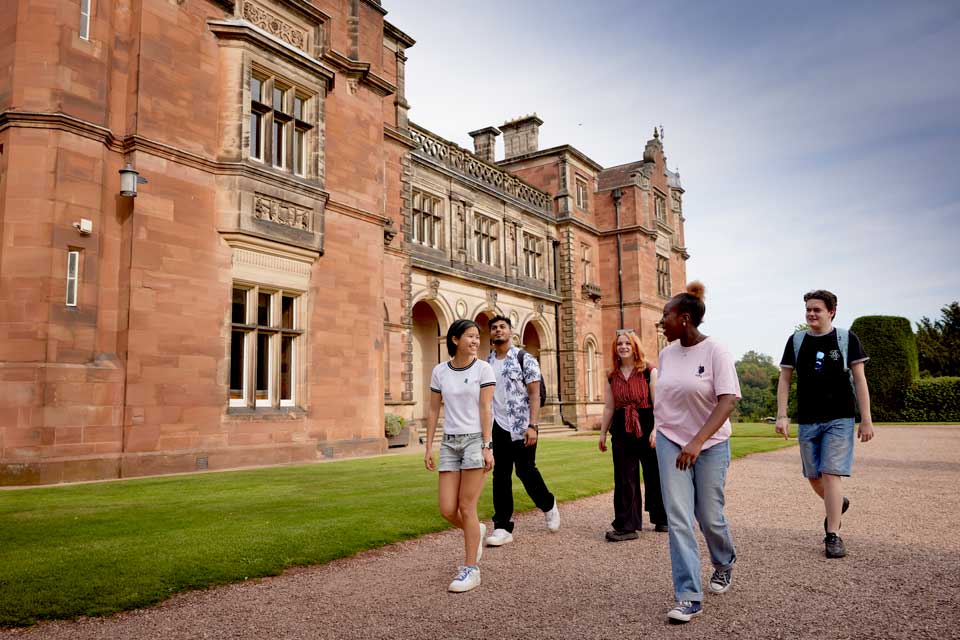
Student life at Keele is vibrant, diverse, and packed with opportunities to make the most of your time at university.

We help students manage their money and ensure that they receive any funding for which they may be eligible.

Make yourself more employable after graduation by taking advantage of the whole host of additional opportunities.