


History - MA
Our MA in History offers you the opportunity to advance your explorations of History in a supported and structured programme of study. The broad and comprehensive expertise of our world-leading historians – ranging in time from the Middle Ages to the recent past, and in place from the local Potteries to continental Europe, the US, South Asia and Africa – offers a wide scope for your research pursuits. Developing as a researcher and communicator, you will enjoy support from a passionate and collaborative community, and you will also benefit from access to extensive digital, material and archival research resources.
Month of entry
- September
Mode of study
- Full time, Part time
Fees for 2026/27 academic year
- UK - Full time £9,400 per year. Part time £5,200 per year.
International - £17,100 per year.
Fees
Duration of study
- Full time - 1 year, Part time - 2 years
This course is no longer accepting applications from international students for the 2026/27 academic year.
Why study History at Keele University?

Course summary
On Keele’s MA in History, you’ll delve into the politics, culture, economics, crime and governance of past societies – from as far back as the Middle Ages to the present day – examining the motivations and behaviour of individuals and societies when organising life materially and conceptually, individually and collectively.
History at Keele offers the chance to join an active, dedicated department of educators and researchers who are internationally recognised leaders in their fields, committed to pastoral care and personalised learning.
We offer a collegial community which benefits from smaller class sizes, allowing you to engage with colleagues and peers, while supporting you to undertake the highest quality historical research. You’ll deepen your knowledge of research design, methods and processes, learning how to use real-world and digital archives, while enhancing your analytical, critical thinking and problem-solving skills.
Staff expertise spans the medieval period to the present day, and geographically covering the entire globe, with particular expertise in Britain, Europe, South Asia, South Africa, and the US.
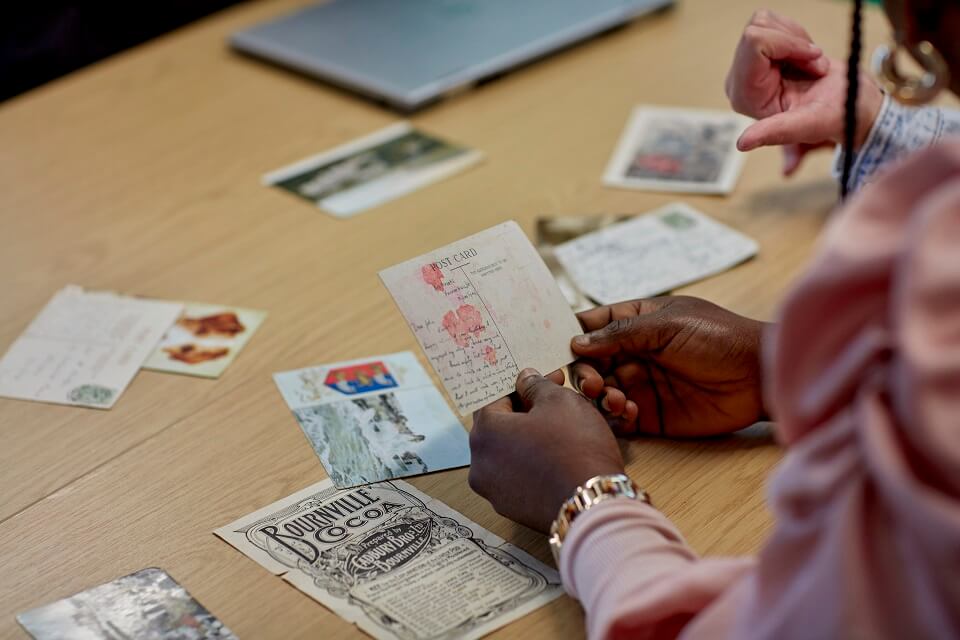
Optional modules provide an opportunity to learn a language, explore palaeography, enrol in an interdisciplinary module outside of the School of Humanities, or complete a work placement, using our contacts or through your own networks here in the UK or abroad. In the past, students within the School have helped staged exhibitions, catalogued an archive, reviewed educational material and reflected on the selection of historical textbooks in a school.
Upon graduation, you will become equipped to excel in any career which values critical thinking, communications skills, and the gathering, assessment and analysis of data and evidence. Our students have gone on to work in law, teaching, libraries, archives, museums, the civil service, journalism, politics, research for charities, non-governmental organisations (NGOs), government bodies, think tanks, broadcasting, advertising, or continued research at PhD level.
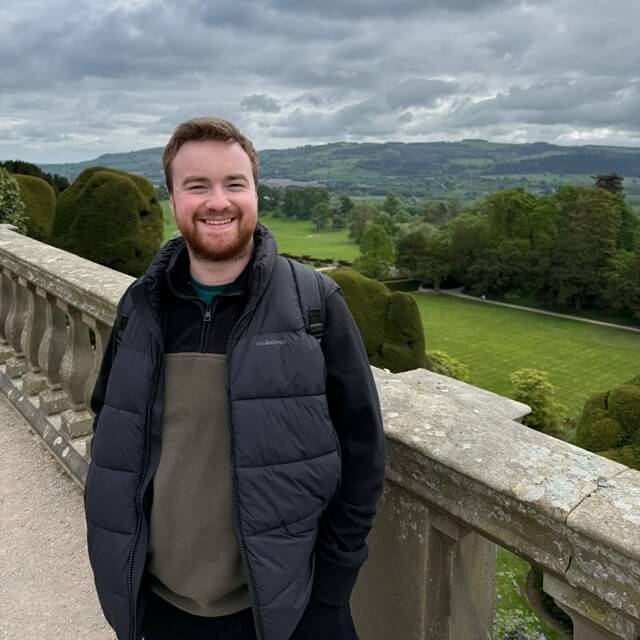
"Being able to work at the V&A Wedgwood Museum and Collection was a privilege for me. During my placement, I assisted with the cataloguing of hundreds of ceramic objects alongside volunteers and cataloguers. This placement gave me the opportunity to learn critical skills and processes that are vital to successfully maintaining and operating museums and collections. My experience at the V&A Wedgwood has been invaluable for advancing my career prospects in the heritage sector, particularly given the essential role of volunteering in entering this field. Without Keele and the work experience module, I would not have had the opportunity to work with such an established museum and helped to contribute to the continuation of Stoke-on-Trent’s pottery heritage. "

Course structure
The principal purpose of the MA in History at Keele is to familiarise you with a variety of historical periods, historiographical perspectives and approaches. The range of material covered within the programme extends in chronological terms from the Middle Ages to the present day, and offers a broad geographical coverage from Britain to Europe, South Asia, Africa and the United States.
We also place great emphasis upon exploring the insights offered by other disciplines, such as Psychology, Politics and English, as well as using a variety of methods and techniques for studying historical, historiographical and methodological issues.
The MA provides an opportunity to develop your interdisciplinary skills and undertake wide-ranging, systematic training in research skills, producing original research within your discipline and the Humanities more generally under the supervision of specialised scholars. You’ll develop practical, project management, analytical and critical research skills, relevant in almost any profession.
The MA History can be studied as either a one-year full-time or two-year part-time course, The MA History consists of 180 credits, which can be completed either full-time over 12 months, or part-time over 24 months. You can commence the programme in either September or January.
You will complete 180 credits to obtain the master’s qualification, comprising one core and a minimum of four optional choices, together with the Dissertation, which is studied throughout the duration of the course.
The module details given below are indicative, they are intended to provide you with an idea of the range of subjects that are taught to our current students. The modules that will be available for you to study in future years are prone to change as we regularly review our teaching to ensure that it is up-to-date and informed by the latest research and teaching methods, as well as student voice. The information presented is therefore not intended to be construed and/or relied upon as a definitive list of the modules available in any given year.
Modules
The module details given below are indicative, they are intended to provide you with an idea of the range of subjects that are taught to our current students. The modules that will be available for you to study in future years are prone to change as we regularly review our teaching to ensure that it is up-to-date and informed by the latest research and teaching methods, as well as student voice. The information presented is therefore not intended to be construed and/or relied upon as a definitive list of the modules available in any given year.
Core Modules
The Theory and Practice of Historical Research (30 credits)
This module will help you navigate the world of historical theory and practice. You'll be encouraged to engage with the different ways that history is researched and presented within and outside academia; you'll be able to test different theories on your own research idea; and you'll be given the opportunity to refine your presentation, writing, and analytical and organisational skills through the assessments for this module. Designed to help you think through and even rethink your own historical research at each stage of its development, this core module encapsulates the expertise and support of the history team (and beyond) that is there to guide you through your Master's programme.
Optional Modules
You will study optional modules to make up 150 credits from the following, choosing from a range of Subject Specialism, Research Training and Professional History modules and either a 60 or 90 credit dissertation.
Research Methods in the Humanities, Media, and Creative Arts (15 credits)
This interdisciplinary module equips you with the skills that you need to conduct advanced research in your discipline. Taught by staff from across the School of Humanities, the module introduces you to concepts that are integral to successful research: research ethics, diversity in research, research methods, bibliographic and information skills, writing and performing for different audiences, managing large research projects, applying for research funding, and more! You will be in seminars with postgraduate students from across the School of Humanities, providing an opportunity to learn from those with different research backgrounds and perspectives. As well as preparing you for undertaking advanced research, this module gives you important transferable skills in developing plans and proposals for transforming ideas into completed projects.
Reflective Practice in the Humanities, Media, and Creative Arts (15 credits)
In the Humanities, we tend to work within our own disciplines – even those of us who truly work across disciplines usually identify ourselves as having a disciplinary ‘home’. But there is much to be gained from looking beyond our disciplines, to other approaches and theories adopted in, and beyond, the Humanities. In this research training module you will be exposed to a variety of approaches to Humanities research, and you will be encouraged to reflect on how those approaches might enhance your own research. What are the Humanities? Who are they for?
Work Placement for Humanities Postgraduates (30 credits)
This module is designed to give you an opportunity to contribute to the world beyond the University, in any workplace where the research, analytical, and communication skills developed as part of a postgraduate Humanities degree can be used. The chosen workplace may be, for example, a local museum, theatre, charity, library, school or education provider, marketing company, PR firm, local newspaper, local radio, or another suitable opportunity identified by you and approved by the module leader. While on the placement, you will produce a theoretically informed portfolio critically reflecting on and giving evidence of the activities/outputs completed at your chosen workplace. These may include, for example, researching and producing materials advertising or supporting current or proposed exhibits or performances, researching and producing written or audio pieces, and/or planning small-group educational activities on Humanities-related topics. Advice will be given on identifying and contacting placements and composing a CV in semester 1, and support will be provided throughout the placement, which will usually take place in Semester 2.
Professional Practice for History (30 credits)
In this module, you will first critically analyse public history as a key approach in the discipline, and then you will create your own public history project. In doing so, you will develop professional experience in your support of partner organizations' ongoing projects to apply History to engage their local communities. In the past, these partner organizations have included the V&A and the V&A Wedgwood Collection.
Qualitative and Quantitative Methodologies in Social Science (30 credits)
Qualitative and Quantitative Methodologies offers a comprehensive introduction to key research methods in the social sciences. You will explore the theoretical foundations, strengths, and limitations of each approach, gaining hands-on experience with data collection, analysis, and interpretation techniques. Sessions cover survey design, statistical analysis, interviews, focus groups, and thematic coding. Emphasis is placed on integrating methodological approaches to address complex social phenomena, enabling you to develop the skills necessary for conducting robust, rigorous research in diverse social science contexts.
The American South: US Summer School (Level 7) (30 credits)
Study Southern US culture on location! This summer school is a unique chance to immerse yourself in the Southern United States and complete an interdisciplinary module. The American South is acknowledged as a distinctive but difficult to define geographical and cultural entity. Attitudes to the South range from celebration to derision. The module takes an interdisciplinary, cultural studies approach, thinking through historical and current constructions of the US South through its history, literature, film, and wider culture. You have the chance not only to spend four weeks at one of our partner universities taught by Keele staff, but also to shape your own research project with the support of module tutors.
Dissertation (90 credits)
This extended dissertation module allows you to showcase deep understanding of a historical subject and to engage critically with a range of primary sources to build and sustain complex arguments. In choosing this dissertation option, you have the opportunity to produce an extended piece of writing (20,000 words) similar to that produced by professional Historians. This module will be invaluable both in developing skills in managing large research projects and writing extended pieces of work, and/or if you are considering going on to undertake a PhD in History or a cognate discipline.
Dissertation (60 credits)
Through your Master's research project you will showcase the advanced historical skills that you have developed, and consolidate the type of Historian that you have become. You will work closely with a member of the Keele History team to produce either a 15,000-word History Master's dissertation, a digital, public-facing project, or a critical edition of an original text, allowing you to pursue a project to which your own skills and interests are best suited. All routes require you to use advanced skills in historical research, scholarly debate, and primary source analysis.
Subject Specialism 1 Semester 1 (15 credits) & Subject Specialism 2 Semester 2 (15 credits)
As a postgraduate History student, you can choose subject specialisms from a range of options and explore the theory, historiography, and source base for these topics in advanced ways. In building on and enhancing previous knowledge from your undergraduate work, and reflecting on the ways that your chosen topic informs your broader MA research, these modules will underpin your MA dissertation research. Please note that Subject Specialism topics are based on individual staff specialisms and may change each year. This is an indicative list:
Gender and Sexuality in Victorian Britain (15 credits)
Do you want to explore private lives and public scandals? The popular image of the Victorian period in Britain is often one of a fear of sex and a sharp separation of the roles of men and women. While there is some truth in this picture the reality was more complicated and intriguing. The nineteenth century saw the rise of sexological science that began to classify people according to their sexual tastes. Public life was, meanwhile, beset with controversies over adultery and prostitution. At the end of the century the trials of Oscar Wilde drew public attention to the issue of homosexuality. In this module we will be exploring the ways in which disputes over gender and sexuality can take us to the core of understanding many of the social and cultural tensions that make the study of the Victorian period so complex and fascinating.
The Apocalypse will be Televised: Extinction on film since 1945 (15 credits)
Since 1945, we have been fascinated and horrified by the threat of our own extinction, whether real or imaginary. And since the moment of the first nuclear bomb, those fears have been captured on film. In this module, you will focus on film as historical source to guide you through the debates and complexities of environmental crises, extinction panics, and cold war fears that have defined recent history, and their relationship to the real crises of your times.
The Making of Contemporary Africa since c.1945 (15 credits)
Can a continent possess 'a history' or 'a people'? To what extent are ideas of Africa and Africans still tied to race and other colonial legacies? To understand the ways we imagine Africa today, this module examines the cultural, political and economic dialogues which took place regarding Africa c.1945 to the present. While the main focus will be on English-language primary sources and former British colonies, there will also be a chance to compare different colonial legacies within Africa. You will have a chance to read the works of: Leopold Senghor, Kwame Nkrumah, Frantz Fanon, Steven Biko, Nelson Mandela, Chinua Achebe, Wole Soyinka, Ngugi wa Thiong’o, Julius Nyerere, Walter Rodney, George Padmore, and recent works by people like C N Adichie and Thabo Mbeki.
'Eyes on the Prize': The Struggle for Civil Rights in America (15 credits)
This module allows you to study one of the most dramatic processes to shape the modern United States: the struggle for African American civil rights. From a nation blighted by white supremacy (and an especially racially oppressive South) to a country where legal equality was achieved but significant racial disparities remained, we will assess the aims and achievements of Black leadership, and the contribution of ordinary men and women, Black and white, northern and southern, to re-shaping American society through their activism. You will also study the actions of opponents of racial change. Through engagement with a range of primary and secondary materials, this module will give you an in-depth familiarity with the struggle for civil rights and key historiographical debates about the period, with a particular focus on the 1940s through the 1960s.
The contested city: a spatial history of Rome, 1870-1978 (15 credits)
In 1870, Rome was a city of 250,000 under the political rule of the Popes and only just beginning to resemble something like a modern city. In the following hundred years, Rome's territory and population expanded tenfold; but more importantly, the city went through dramatic political change, modernisation, conflict, economic transformation, and bitter social struggles. You will journey this turbulent history—from Italian unification in 1870 to the extreme political violence of the 1970s—examining how nationalism, democracy, fascism, war, violence, and modernity shaped Rome's cityscape, the lives of its people, and their collective memory. In interactive seminars, you will analyse key historical moments through specific locations, interpreting diverse primary sources including maps, photographs, and eyewitness accounts. Using digital mapping tools, you will develop a nuanced understanding of how power, religion, class, and memory are inscribed in urban spaces. Studying the history of Rome during this tumultuous period will also serve as a window into the history of Italy and Europe as a whole.
Religion, Reform and Social Change in Eleventh-century Europe (15 credits)
This module is a social history of eleventh-century Europe. This was a time of tremendous religious, social, economic, political and intellectual transformation, indeed a time, according to many historians, when European civilisation -as we know it- was created. Through the study of a wide range of primary sources in translation, we will address a variety of key areas of social change in eleventh-century Europe and you will develop the ability to evaluate critically the analyses of transformation (and continuity) offered both by contemporaries and modern scholars. Primary sources revealing the exercise of power by the landed elite will be considered in the context of radical changes in family structure such as the institution of primogeniture, the changing position of women and the ‘crisis’ of masculinity. A crucial question arising from these sources is the extent to which we can see the impact of the changes among the elite on the people. Using sources describing the Peace of God, the persecution of heretics and the apocalyptic year 1000, we will assess the claim that the ‘crowd enters European history’ during this period.
News and Knowledge in the early-modern Atlantic World – (15 credits)
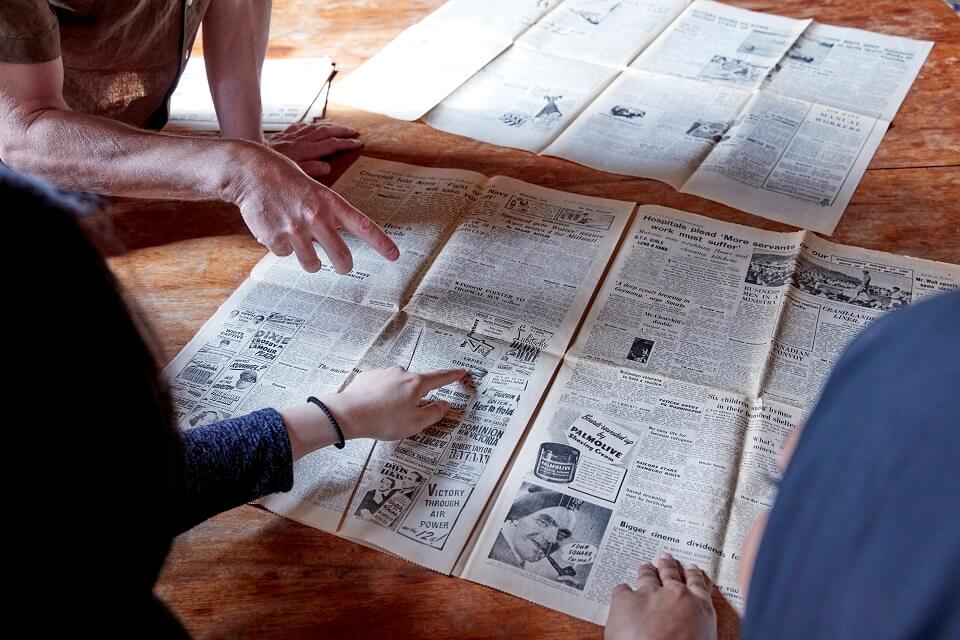
The early-modern period was shaped by an increase in printed information, including newspapers and educational texts – a ‘print revolution’ that has attracted a lot of attention from historians. However, knowledge and information continued to be exchanged in other ways – in manuscript form (e.g. in letters) and orally (through both formal and informal conversation). This module explores the ways in which information was created, exchanged and acquired in the early-modern Atlantic world – focusing on Britain and North America, and also considering Western Europe, West Africa and the Caribbean. We will debate the importance of print versus manuscript information; consider how ‘news’ and ‘information’ can be defined; and explore how education was delivered and accessed in the early-modern Atlantic world. By investigating how previous generations have managed knowledge and information, we will be able to consider the lessons we can learn from this history about how we access news, information and education in today’s society. Throughout the module, you will further develop your skills in analysis, critical thinking, and the communication of ideas.
Violence and Power in Antebellum America – (15 credits)
In this module, you will explore the ways in which antebellum America became reliant upon the use of force. You will take an in-depth look at the expansion of slavery, removal of Native Americans and 1850s political violence. In doing so, you will consider violence as a mechanism of social control and political power in nineteenth-century America: How did state and non-state actors use violence to secure their social and political agendas? How did individuals express agency and resistance within institutions of power? How were the politics of race, gender and sex manipulated to justify the use of violence? In terms of methodology, you will consider interdisciplinary approaches and incorporate sources from literary and historical studies, as well as from ‘history from above’ and ‘history from below’ perspectives. At its core, this module seeks to answer a fundamental and hotly debated question in early American history: How ‘exceptional’ was nineteenth-century America’s culture of violence?
Sites of Sexual Conflict in South Asia (15 credits)
If I was to say sex and South Asia what comes to mind? Do you think of the Kama Sutra, an ancient sex manual, do you see a place where four countries have been led by women or do you see South Asian women as victims: of rape, honour killings and forced marriages? Did you know that India, Pakistan, Bangladesh and Sri Lanka have all been led, at some time in recent history, by women. Both images are accurate to a degree and have deep roots in the colonial past before 1947 and in the recent history of India, Pakistan, Bangladesh and Sri Lanka. This module will study a series of sites where sexuality has been constructed, defined, changed and debated in the Indian sub-continent. We will focus specifically at the way ancient sexual images have been looked at and described and used historically, how does contemporary India deal with nudity? We will look at female spaces, the harem, the zenana, the brothel, the family home and examine power dynamics and representations of each one. And we’ll look at sexuality and the law, famous obscenity trials, the colonial law against homosexuality that was just overturned only a few years ago and the attempts by the governments of South Asia to control who people choose as their sexual partners. We’ll look at these issues through film, case studies, group discussion and debate and, as you can imagine, cover a wide timespan from pre to postcolonial times.
The English Civil War, c.1640-46 - (15 credits)
The English civil war was one of the most dramatic events in English history, retaining its hold today over both popular and scholarly imaginations. Many issues of the period - such as the nature of the relationship between England, Scotland, and Ireland, the character of the political process, or what to do about the monarchy - find echoes today. This special subject will seek to explore the character and events of the first civil war in England from the collapse of the king's authority in 1640 to the end of the first civil war in 1646. Topics to be covered will include the causes of the war; the development of Royalist and Parliamentarian parties; the military course of the first civil war; the impact of the war on society; the diversity of religious beliefs; and the political fragmentation of the Parliamentarian cause.
Please note, if you were an undergraduate at Keele, you may not take a module which overlaps with your third year special subject.

"The opportunity to complete a work placement module at Keele University's Special Collections and Archives, helped to develop my connections and also confirmed which career path I wanted to pursue. "

Entry requirements
The following section details our typical entry requirements for this course for a range of UK and international qualifications. If you don't see your qualifications listed, please contact us to find out if we can accept your qualifications.
Typical offer
Please ensure that you read the full entry requirements by selecting your qualifications from the dropdown menu below. This will include any subject specific, GCSE/Level 2 Maths, and English language requirements you may need.
Please select your country from the drop-down list below for the full entry requirement information
UK
2:2 degree in any humanities or social science subject
or
demonstrated professional or relevant qualifications or experience
You will also need: an English language qualification (see below)
Algeria
12/20 or Assez Bien degree in any humanities or social science subject
or
demonstrated professional or relevant qualifications or experience
You will also need: an English language qualification (see below)
Bahrain
Bachelor's degree with a minimum CGPA of 2.7/4.0 in any humanities or social science subject
or
demonstrated professional or relevant qualifications or experience
You will also need: an English language qualification (see below)
Bangladesh
60% in a 4-year degree or 3-year degree with a 2-year Master's in any humanities or social science subject from a public university
or
CGPA 2.8 in a 4-year degree or 3-year degree with a 2-year Master's in any humanities or social science subject from a private university
or
demonstrated professional or relevant qualifications or experience
We don’t accept degrees from certain universities, please see our Bangladesh Country Page for more information
You will also need: an English language qualification (see below)
Canada
70% or C or a GPA of 2.5 in a degree (Ordinary or Honours) in any humanities or social science subject
or
demonstrated relevant professional qualifications or experience
You will also need: an English language qualification (see below)
China
70% in a degree in any humanities or social science subject or 65% in a degree in any humanities or social science subject from a '211' university
or
demonstrated professional or relevant qualifications or experience
You will also need: an English language qualification (see below)
Egypt
Bachelor degree from a Public or Private University with 65%/CGPA = 2.7/Good degree in any humanities or social science subject
or
demonstrated professional or relevant qualifications or experience
You will also need: an English language qualification (see below)
Ghana
Second class degree in any humanities or social science subject
or
demonstrated professional or relevant qualifications or experience
You will also need: an English language qualification (see below)
Hong Kong
Bachelor's Honours degree with 2:2 or CGPA of 2.5 OR Bachelor Ordinary degree with a CGPA of 3.4 in any humanities or social science subject
or
demonstrated professional or relevant qualifications or experience
You will also need: an English language qualification (see below)
India
55% or CGPA 6/10 in a degree of at least 3 years in any Humanities, or Social Science subject
or
demonstrated professional or relevant qualifications or experience
You will also need: an English language qualification (see below)
Kenya
Second class degree in any humanities or social science subject
or
demonstrated professional or relevant qualifications or experience
You will also need: an English language qualification (see below)
Kuwait
Bachelor's degree with a minimum CGPA of 2.75/4.0 or 3.5/5.0 in any humanities or social science subject
or
demonstrated professional or relevant qualifications or experience
You will also need: an English language qualification (see below)
Nepal
60% / 2.4 in a 4-year Bachelor's degree in any humanities or social science subject
or
65% / CGPA 2.8 in a 3-year Bachelor's degree in any humanities or social science subject
or
demonstrated professional or relevant qualifications or experience
You will also need: an English language qualification (see below)
Nigeria
Second class degree in any humanities or social science subject
or
demonstrated professional or relevant qualifications or experience
You will also need: an English language qualification (see below)
Oman
Bachelor's degree with a minimum CGPA of 2.5/4.0 in any humanities or social science subject
or
demonstrated professional or relevant qualifications or experience
You will also need: an English language qualification (see below)
Pakistan
We accept a range of qualifications from Pakistan. Please visit our Pakistan Country Page for more information or we will consider demonstrated relevant professional qualifications or experience.
You will also need an English language qualification (see below)
Qatar
Bachelor's degree with a minimum CGPA of 2.75/4.0 in any humanities or social science subject
or
demonstrated professional or relevant qualifications or experience
You will also need: an English language qualification (see below)
South Africa
Second class division 2 / 60% in a Bachelor's degree with Honours in any humanities or social science subject
or
Second class division 1 / 70% in an Ordinary Bachelor's degree in any humanities or social science subject
or
demonstrated professional or relevant qualifications or experience
You will also need: an English language qualification (see below)
Sri Lanka
55% in a Special Bachelor's degree in any humanities or social science subject
or
demonstrated professional or relevant qualifications or experience
You will also need: an English language qualification (see below)
Turkey
A CGPA of 2.5/4.0 in a Bachelor degree (Lisans Diplomasi) in any humanities or social science subject
or
demonstrated professional or relevant qualifications or experience
You will also need: an English language qualification (see below)
UAE
Bachelor's degree with a CGPA of 2.5/77%/B- in any humanities or social science subject
or
demonstrated professional or relevant qualifications or experience
You will also need: an English language qualification (see below)
Uganda
Second class degree in any humanities or social science subject
or
demonstrated professional or relevant qualifications or experience
You will also need: an English language qualification (see below)
USA
Bachelor's degree with a minimum CGPA of 2.6 in any humanities or social science subject
or
demonstrated professional or relevant qualifications or experience
You will also need: an English language qualification (see below)
Zimbabwe
Second class degree in any humanities or social science subject
or
demonstrated professional or relevant qualifications or experience
You will also need: an English language qualification (see below)
English language requirements
All of our courses require an English language qualification or test. For most students, this requirement can be met with a 4 or C in GCSE English. Please see our English Language guidance pages for further details, including English language test information for international students. For those students who require an English language test, this course requires a test from Group B.
References
Normally, you will need to provide at least one academic reference to support your application unless you have been out of study longer than two years. If it has been more than two years since you last studied on a degree-level programme, you will normally need to provide an employment reference instead. For more information about Academic References, please see our Postgraduate how to apply web pages.
Personal Statement/Statement of Purpose
Please see our Postgraduate how to apply web pages for guidance on what to include in your personal statement.
Recognition of Prior Learning
The Recognition of Prior Learning (RPL) is a process which enables applicants to receive recognition and formal credit for learning acquired in the past through formal study or work and life experiences.
RPL can also be requested for admission onto the start of a programme in lieu of the admission requirements. For more information, see our Recognition of Prior Learning web pages.
Professional qualifications and work experience
The majority of our courses will consider relevant work experience and/or professional qualifications at the appropriate level, as an alternative to an undergraduate degree for entry. The work experience should be for a sustained period and at a suitable level, based within a relevant sector to your chosen course.
Admissions staff will review your work experience and/or professional qualifications during the assessment of your application to ensure suitability in terms of relevancy, level and appropriate learning outcomes.
General information
The entry grades outlined in this section indicate the typical offer which would be made to candidates, along with any subject specific requirements. This is for general information only. Keele University reserves the right to vary offer conditions depending upon a candidate's application. For international students, find out how we work with approved agents as part of our admissions process.
Social life, societies and sports
Find out moreAccommodation
Find out moreLocal area and travel
Find out moreBoost your employability
Find out more
Postgraduate funding and scholarshipsFees, funding and scholarships
Fees
For continuing students, fees will increase annually by RPIX, with a maximum cap of 5% per year.
Funding
Whether you're continuing from undergraduate study or returning to education, our dedicated financial support team is here to help.
Please note, if your course offers a January start date, the January 2026 start date falls in the 2025/26 academic year. Please see the tuition fees archive for the 2025/26 fees.
Planning your funding
It's important to plan carefully for your funding before you start your course. Please be aware that not all postgraduate courses and not all students are eligible for the UK government postgraduate loans and, in some cases, you would be expected to source alternative funding yourself. If you need support researching your funding options, please contact our financial support team.
Scholarships
We are committed to rewarding excellence and potential. Please visit our scholarships and bursaries webpage for more information.
This course is recognised by the Economic and Social Research Council’s Doctoral Training Pathway and is eligible for applications for a combined MA and PhD, or direct PhD applications. Visit here to learn more.
For continuing students, fees will increase annually by RPIX, with a maximum cap of 5% per year.
Scholarships
We know that understanding what support is available for postgraduate students is an important step in planning your future and we are committed to rewarding excellence and potential.
Visit our scholarships and bursaries webpage to find out more about our scholarships, including:
- Keele Global Scholarship – up to £5000 tuition fee discount for international students (2027/28)
- Keele Graduate Scholarship – up to £3000 tuition fee discount for home students (2027/28)
Terms and conditions apply.
Additional costs
You do not need to budget for additional mandatory or optional costs beyond standard study expenses. For general information, see the university's additional costs information.

Teaching, learning and assessment
How you'll be taught
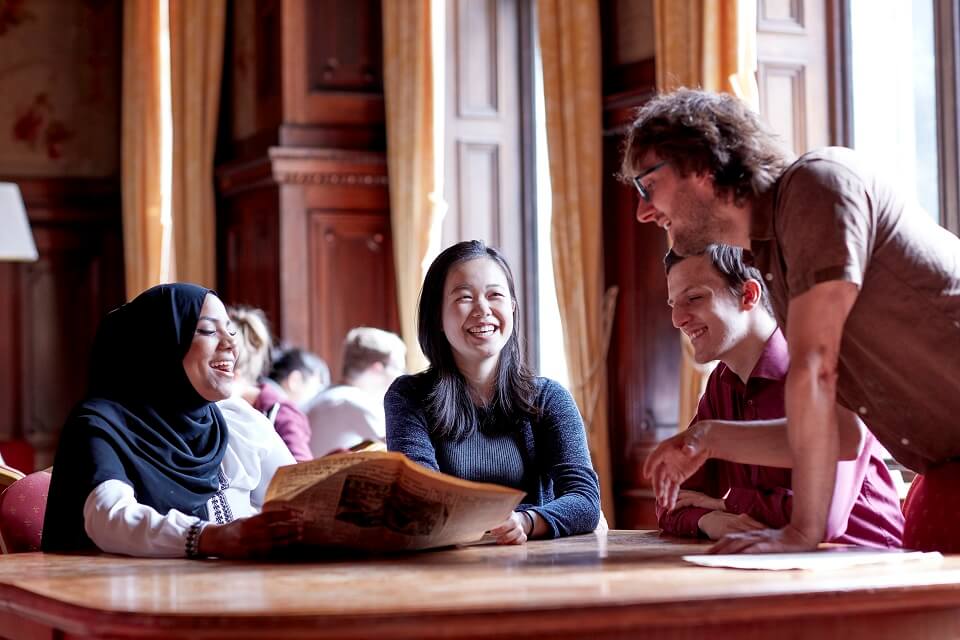
With smaller-sized classes, our ethos is very much about learning co-operatively and supportively in a friendly, nurturing environment, sharing and debating your ideas with tutors and peers.
Typically, the taught elements of the course includes a combination of taught classes, lectures, seminars, large and small group work and guided independent study, alongside one-on-one supervision.
This course is best suited for those who wish, for a variety of reasons, to have structured classroom guidance during their studies, or for those wanting more support for planning their dissertation research project.
As a postgraduate student, you are also able to attend the programme's research seminar series, which will enable you to become involved in the School's research culture. Past seminars have included: 'The (Re-)Shaping of the Church’s Political Character: An Historical Perspective through the Lens of Canon Law’, 'Political Androgyny: Radical Resistance to the Gender Binary, 1820-1850’ and ‘Mexican Immigration and American Nativists' Attempts to Fortify the U.S. Border in the 1920s’.
You will be encouraged to attend and participate in our programme of academic research seminars and conferences and become involved in Work in Progress seminars specifically tailored to doctoral and students’ presentations. Many of our postgraduates get involved in organising and attending conferences and research events, which gives you a well-rounded experience of academia for those considering this career.
How you’ll be assessed
Assessment on the course is designed to develop the research and communication skills necessary to complete a substantial dissertation. Conducted through coursework and (in some cases) individual presentations, this is achieved through a variety of different methods:, short and long essays; annotated bibliographies; project outlines; reflective study diaries; and the dissertation.
You’ll be encouraged to attend dissertation workshops to develop writing skills, write reports of any research seminars you attend, and present your research proposals within your discipline cohort and to the wider humanities community in our annual research symposia.